Jump to Content
Cardiac Catheterization Market - Size, Share, Industry Trends, and Forecasts (2025-2032)
Cardiac Catheterization Market Size:
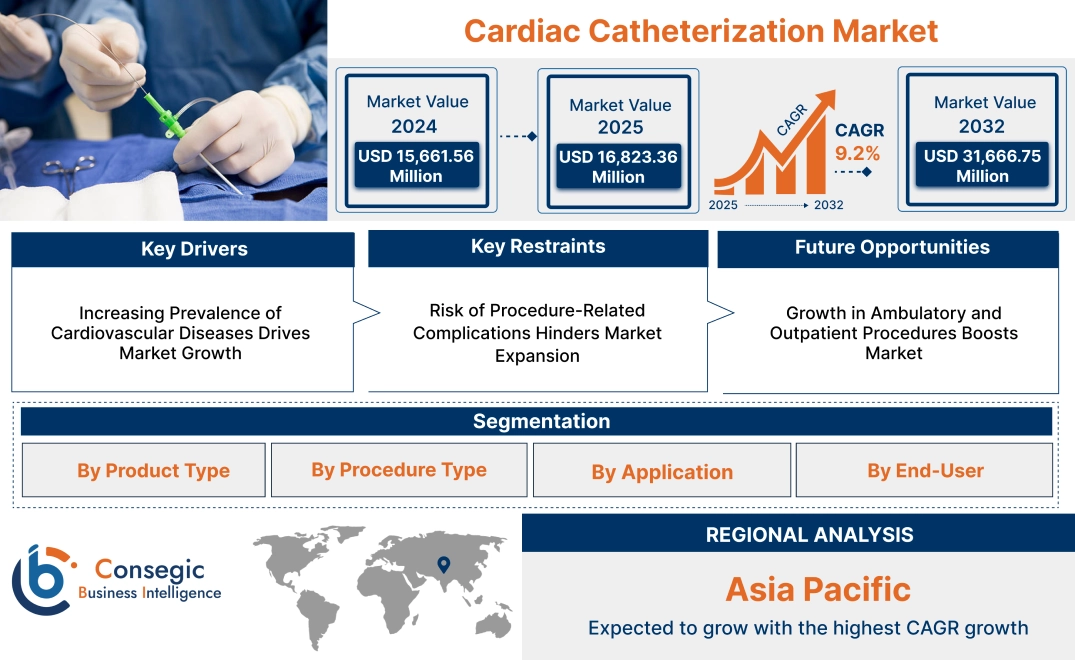
Cardiac catheterization market size is estimated to reach over USD 31,666.75 Million by 2032 from a value of USD 15,661.56 Million in 2024 and is projected to grow by USD 16,823.36 Million in 2025, growing at a CAGR of 9.2% from 2025 to 2032.
Cardiac Catheterization Market Scope & Overview:
Cardiac catheterization is a minimally invasive medical procedure used to diagnose and treat cardiovascular conditions by inserting a thin, flexible tube into the blood vessels leading to the heart. It enables precise assessment of heart function, measurement of blood pressure within chambers, and identification of blockages or abnormalities. The procedure is commonly used for coronary angiography, balloon angioplasty, and stent placement, providing critical insights for effective cardiovascular treatment.
Hospitals, specialized cardiac centers, and ambulatory surgical units rely on this procedure for managing conditions such as congenital heart defects, valve disorders, and coronary artery disease. The ability to deliver targeted interventions with reduced recovery time makes it an essential technique in modern cardiology. Continuous advancements in imaging technologies and catheter designs are further refining procedural accuracy and patient outcomes, reinforcing its role in interventional and diagnostic cardiology.
Cardiac Catheterization Market Dynamics - (DRO) :
Key Drivers:
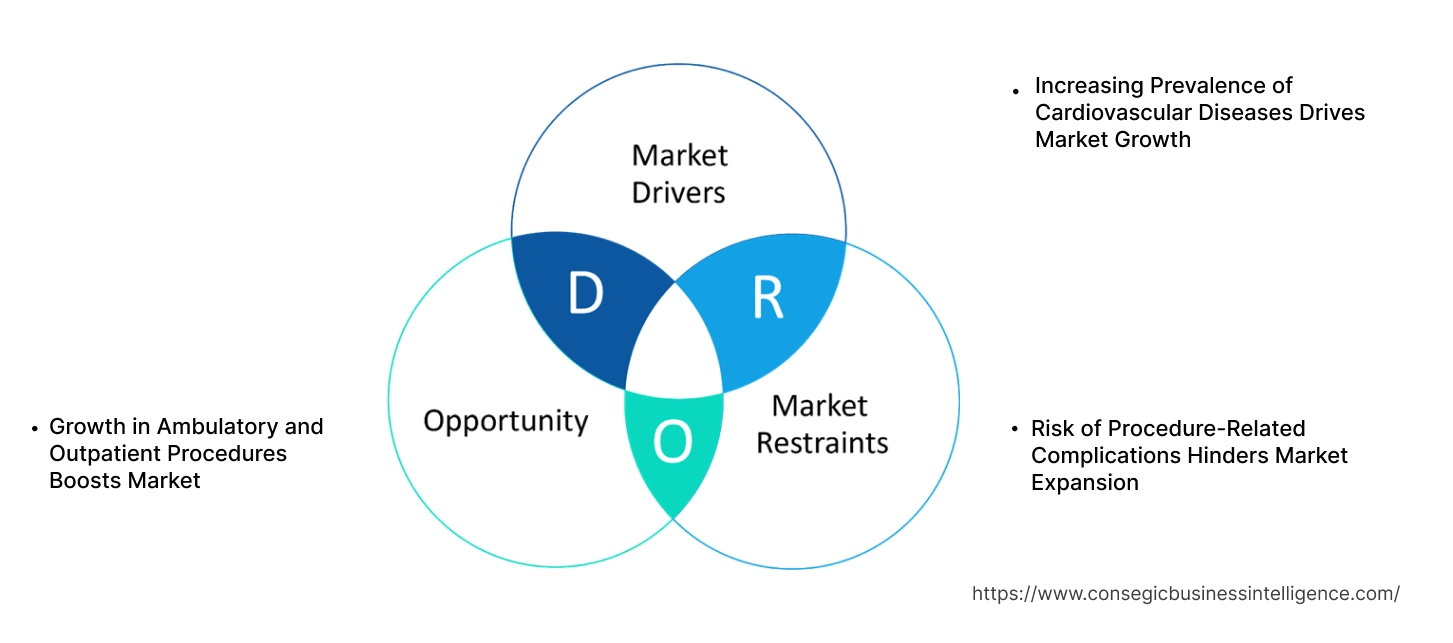
Increasing Prevalence of Cardiovascular Diseases Drives Market Growth
The rising cases of cardiovascular diseases (CVDs) like coronary artery disease, arrhythmias, and structural heart conditions necessitate advanced diagnostic and interventional procedures. Sedentary lifestyles, poor dietary habits, and the growing incidence of hypertension and diabetes contribute to the surge in CVD-related complications, escalating the need for minimally invasive cardiac interventions. Cardiac catheterization plays a crucial role in diagnosing and treating heart disorders, offering real-time imaging, precise diagnostics, and targeted therapeutic solutions. The rising demand for early disease detection and effective treatment is prompting healthcare providers to invest in advanced catheterization labs equipped with high-precision imaging and robotic-assisted catheterization systems. Additionally, the increasing adoption of ambulatory surgical centers for catheter-based interventions is further boosting procedure volumes. As CVD prevalence continues to escalate, the cardiac catheterization market expansion is expected to accelerate, driven by technological advancements and improved healthcare accessibility.
Key Restraints:
Risk of Procedure-Related Complications Hinders Market Expansion
Complications such as bleeding, vascular injury, arrhythmias, stroke, and contrast-induced nephropathy present significant challenges, particularly in high-risk patients with pre-existing conditions like diabetes, hypertension, or kidney disease. While cardiac catheterization is a marginally invasive procedure, the potential for adverse outcomes necessitates extensive monitoring, skilled intervention, and post-procedural care, increasing the overall burden on healthcare systems. The demand for safer, more effective catheterization techniques is rising, yet procedural risks limit widespread adoption, particularly in facilities with limited access to advanced imaging and robotic-assisted systems. Additionally, concerns regarding radiation exposure for both patients and healthcare professionals further impact procedural uptake. Addressing these risks through enhanced catheter designs, refined procedural techniques, and operator training is essential to improving patient outcomes and mitigating barriers to cardiac catheterization market growth.
Future Opportunities :
Growth in Ambulatory and Outpatient Procedures Boosts Market
Ambulatory and outpatient procedures reduce hospital stays and offer lower treatment costs, providing new market opportunities. Advances in catheterization techniques, including radial access procedures and improved imaging technologies, have enabled safer and more efficient treatments in outpatient settings. Patients benefit from shorter recovery times, reduced risk of hospital-acquired infections, and lower overall healthcare expenditures, driving the demand for catheter-based interventions outside of traditional hospital environments. The increasing adoption of ambulatory surgical centers (ASCs) and outpatient catheterization labs is expanding access to care, particularly in regions where hospital-based services are limited. Additionally, reimbursement policies favoring cost-effective treatment models are further supporting cardiac catheterization market growth. As healthcare systems emphasize efficiency and patient-centered care, the rise of outpatient cardiac procedures is expected to be a key driver of cardiac catheterization market opportunities.
Cardiac Catheterization Market Segmental Analysis :
By Product Type:
By product type, the cardiac catheterization market is segmented into guiding catheters, angiography catheters, electrophysiology catheters, balloon catheters, and others.
The guiding catheters segment held the largest revenue share in 2024.
- Guiding catheters are essential for precise navigation and positioning of interventional devices in cardiac procedures.
- These catheters provide better support, torque control, and flexibility, making them integral in coronary angiography and percutaneous coronary interventions (PCI).
- The rising prevalence of coronary artery disease (CAD) and structural heart diseases is driving demand for guiding catheters.
- Continuous innovations in coating materials and catheter tip flexibility enhance procedural safety and efficiency, further fueling market growth.
- As per segmental trends analysis, increasing prevalence of cardiovascular diseases and continuous innovation in catheters drives cardiac catheterization market demand.
The electrophysiology catheters segment is expected to have the fastest CAGR in the forecast period.
- Electrophysiology catheters are widely used in cardiac mapping, ablation therapy, and arrhythmia diagnosis, making them crucial in the treatment of atrial fibrillation and other conduction disorders.
- The increasing adoption of minimally invasive electrophysiology procedures and the growing prevalence of cardiac arrhythmias are key factors driving this segment’s rapid development.
- Technological advancements in 3D mapping catheters and robotic-assisted electrophysiology procedures are further accelerating adoption.
- Additionally, Pulse Biosciences announced the latest data from the first-in-human feasibility study of its nanosecond pulsed field ablation (nsPFA) 360-degree cardiac catheter system in January 2025.
- Market trends indicate a significant rise in demand for electrophysiology catheters due to the increasing number of radiofrequency and cryoablation procedures worldwide.
By Procedure Type:
The market is categorized into diagnostic and interventional based on procedure types.
The interventional procedure type held the largest cardiac catheterization market share in 2024.
- Interventional cardiac catheterization is a key minimally invasive approach used for angioplasty, valve repair, and stent placement, reducing the need for open-heart surgery.
- The rising preference for catheter-based interventions over traditional surgical procedures is driving the growth of this segment.
- The increasing adoption of robot-assisted catheter-based procedures and drug-coated balloon technologies is fueling rapid market development.
- For instance, in May 2024, Royal Phillips introduced their VeriSight Pro 3D Intracardiac Echocardiography (ICE) catheter to Hong Kong hospitals for the first time. These catheters provide more advanced imaging of the patients and optimize interventional procedures.
- Market forecasts indicate a surge in requirement for interventional procedures, driven by the growing elderly population and increasing adoption of structural heart interventions.
The diagnostic procedure segment is anticipated to have the fastest CAGR in the forecast period.
- Diagnostic cardiac catheterization is widely used for coronary angiography and hemodynamic assessments, providing critical insights into heart function and vascular blockages.
- The high prevalence of cardiovascular diseases (CVDS) and the growing adoption of early diagnostic techniques support the dominance of this segment.
- Advances in low-radiation imaging and AI-based diagnostic catheterization systems are further enhancing procedural efficiency and safety.
- Hospitals and cardiac centers continue to invest in advanced catheterization labs for diagnostic procedures due to these factors, reinforcing cardiac catheterization market expansion.
By Application:
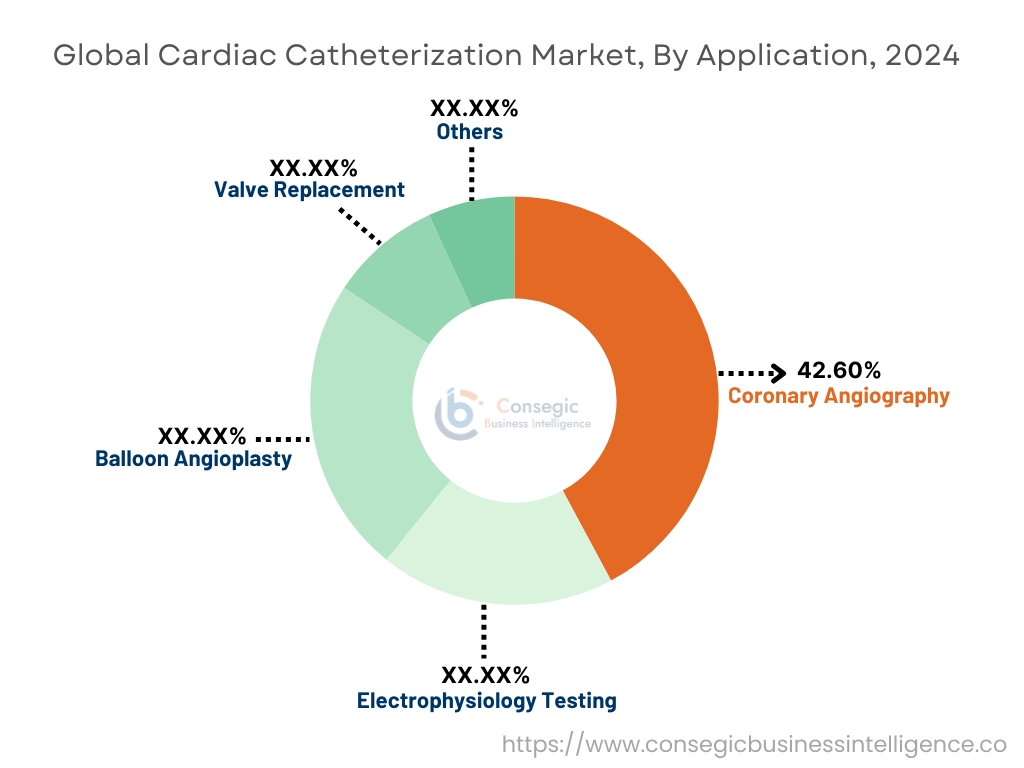
By application, the market is divided into coronary angiography, electrophysiology testing, balloon angioplasty, valve replacement, and others.
The coronary angiography segment held the largest revenue share of 42.60% in 2024.
- Coronary angiography is a gold standard diagnostic tool for detecting coronary artery disease (CAD) and evaluating heart function.
- The increasing number of coronary angiography procedures globally due to rising CVD cases and an aging population is driving growth.
- Advances in real-time imaging and digital catheterization systems enhance diagnostic accuracy and procedural efficiency.
- Government and private investments in cardiac imaging infrastructure are further supporting cardiac catheterization market trends.
The electrophysiology testing segment is expected to have the greatest CAGR in the forecast period.
- Electrophysiology (EP) testing is gaining rapid traction due to the rising incidence of cardiac arrhythmias, including atrial fibrillation and ventricular tachycardia.
- The growing adoption of catheter-based ablation procedures for arrhythmia treatment is driving the expansion of EP testing.
- Technological advancements, such as 3D electroanatomical mapping systems and real-time navigation tools, are improving the precision and success rates of EP studies.
- Cardiac catheterization market analysis indicates a significant increase in EP procedures, fueled by the increasing preference for minimally invasive approaches and advancements in cryoablation and radiofrequency ablation techniques.
By End-User:
Based on end-user, the market is categorized into hospitals, cardiac centers, ambulatory surgical centers (ASCS), and others.
The hospital segment held the largest cardiac catheterization market share in 2024.
- Hospitals serve as the primary centers for these procedures, equipped with advanced cath labs, multidisciplinary care teams, and high patient inflow.
- Increasing investments in hospital-based cardiovascular care units and government reimbursement policies are driving this segment’s growth.
- The growing number of emergency catheterization procedures for acute coronary syndrome (ACS) further reinforces hospital dominance.
- Integration of AI-based diagnostic tools and robotic-assisted catheterization systems is improving procedural accuracy and efficiency in hospital settings.
- Therefore, as per segmental trends analysis, these factors support cardiac catheterization market opportunities.
The cardiac centers share is anticipated to have the greatest CAGR in the forecast period.
- Cardiac centers are specialized facilities focusing exclusively on diagnostic and interventional cardiology, offering state-of-the-art catheterization labs and nominally invasive treatment options.
- The growing preference for dedicated cardiovascular centers over general hospitals is driving demand, as these facilities provide shorter wait times, expert cardiologists, and specialized post-procedural care.
- Increasing investment in private and standalone cardiac centers, particularly in urban areas, is further expanding access to high-quality, cost-efficient cardiac interventions.
- The rising number of patients opting for elective interventional procedures, including transcatheter valve replacement and complex angioplasties, is fueling cardiac catheterization market demand.
Regional Analysis:
The regional analysis includes North America, Europe, Asia Pacific, the Middle East & Africa, and Latin America.
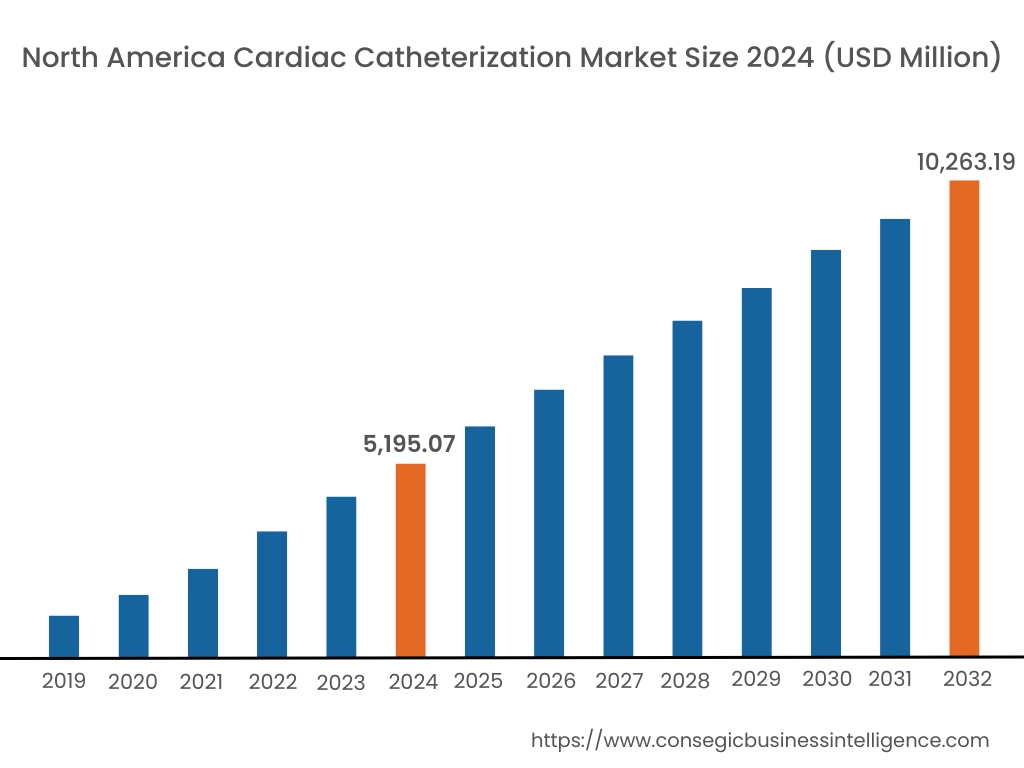
North America is estimated to reach over USD 10,263.19 Million by 2032 from a value of USD 5,195.07 Million in 2024 and is projected to grow by USD 5,569.78 Million in 2025. In North America, the U.S. accounted for the highest share of 72.46% during the base year of 2024.
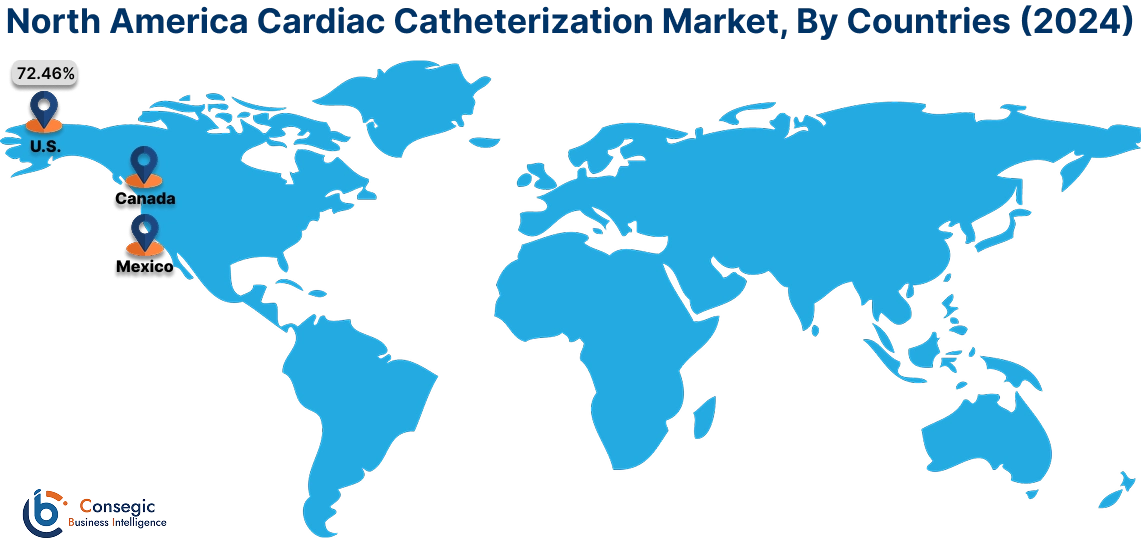
In the North American region, the prevalence of cardiovascular diseases has led to a well-established healthcare infrastructure that supports advanced diagnostic and therapeutic procedures. The integration of innovative technologies, such as robotic-assisted catheterization, is a notable trend in enhancing procedural precision and patient outcomes. Furthermore, favorable reimbursement policies and substantial investments in research and development contribute to the region's prominence in the cardiac catheterization market. The presence of key industry players further solidifies North America's leading position.
Asia Pacific region was valued at USD 4,612.46 Million in 2024. Moreover, it is projected to grow by USD 4,968.63 Million in 2025 and reach over USD 9,642.53 Million by 2032. The Asia-Pacific region is witnessing a remarkable surge in the adoption of these procedures, positioning it as the fastest-growing market globally. The cardiac catheterization market trends are propelled by increasing healthcare expenditures, improving medical infrastructure, and a rising burden of cardiovascular diseases. Countries such as China and India are investing heavily in healthcare modernization, leading to greater accessibility to advanced cardiac care. Additionally, growing awareness about heart health and the availability of skilled healthcare professionals contribute to the region's rapid progression in this field.
Europe maintains a significant position in the cardiac catheterization industry, driven by a combination of public health initiatives and technological innovation. The region's emphasis on marginally invasive procedures aligns with the growing patient preference for reduced recovery times and lower procedural risks. Collaborative efforts among healthcare providers, research institutions, and industry stakeholders foster an environment conducive to advancements in catheterization techniques. Regulatory frameworks that ensure patient safety and device efficacy also play a crucial role in shaping the market dynamics within Europe.
In Latin America, the cardiac catheterization market is evolving, supported by efforts to enhance healthcare services and address the rising incidence of heart diseases. Urban centers are experiencing improvements in medical facilities, enabling better access to catheterization procedures. Public health campaigns aimed at early detection and management of cardiovascular conditions are influencing patient awareness and healthcare-seeking behaviors. However, disparities in healthcare access between urban and rural areas remain a challenge that the region continues to address.
The Middle East and Africa present a diverse landscape for the cardiac catheterization market. In certain countries, substantial investments in healthcare infrastructure and a focus on medical tourism have led to the establishment of state-of-the-art cardiac care centers. These developments are aligned with trends toward adopting advanced medical technologies and improving patient care standards. Nonetheless, in other parts of the region, limited resources and access to specialized care pose challenges to the widespread implementation of these procedures.
This regional cardiac catheterization market analysis underscores the varying degrees of adoption and advancement across different geographies, influenced by factors such as healthcare infrastructure, economic conditions, and disease prevalence.
Top Key Players & Market Share Insights:
The market is highly competitive with major players providing products and solutions to the national and international markets. Key players are adopting several strategies in research and development (R&D), product innovation, and end-user launches to hold a strong position in the market. Key players in the cardiac catheterization industry include-
- Abbott Laboratories (USA)
- Boston Scientific Corporation (USA)
- Edwards Lifesciences Corporation (USA)
- Johnson & Johnson (USA)
- BIOTRONIK SE & Co. KG (Germany)
- Medtronic plc (USA)
- Becton, Dickinson and Company (USA)
- Terumo Medical Corporation (Japan)
- Getinge AB (Sweden)
- Teleflex Incorporated (USA)
Recent Industry Developments :
New Product Launches:
- In October 2024, Boston Scientific launched the next-generation cardiac mapping with the FARAPULSE™ Pulsed Field Ablation System. This product builds on the original catheter by adding magnetic navigation capabilities, enabling cardiac mapping and PFA therapy delivery within a single integrated catheter along with visual presentation software.
- In February 2023, Abbott announced the approval of its TactiFlex and FlexAbility catheters. TactiFlex, the world's first flexible tip, contact force-sensing ablation catheter, received CE Mark approval and was introduced in the European market for treating patients with atrial fibrillation. FlexAbility ablation catheter received U.S. FDA approval for treating patients with complex heart diseases.
Cardiac Catheterization Market Report Insights:
| Report Attributes | Report Details |
| Study Timeline | 2019-2032 |
| Market Size in 2032 | USD 31,666.75 Million |
| CAGR (2025-2032) | 9.2% |
| By Product Type |
|
| By Procedure Type |
|
| By Application |
|
| By End User |
|
| By Region |
|
| Key Players |
|
| North America | U.S. Canada Mexico |
| Europe | U.K. Germany France Spain Italy Russia Benelux Rest of Europe |
| APAC | China South Korea Japan India Australia ASEAN Rest of Asia-Pacific |
| Middle East and Africa | GCC Turkey South Africa Rest of MEA |
| LATAM | Brazil Argentina Chile Rest of LATAM |
| Report Coverage |
|
Key Questions Answered in the Report
How big is the Cardiac Catheterization Market? −
Cardiac catheterization market size is estimated to reach over USD 31,666.75 Million by 2032 from a value of USD 15,661.56 Million in 2024 and is projected to grow by USD 16,823.36 Million in 2025, growing at a CAGR of 9.2% from 2025 to 2032.
What specific segmentation details are covered in the Cardiac Catheterization Market report? +
The cardiac catheterization market report includes specific segmentation details for procedure type, end-user, product type, and application.
Which is the fastest-growing region in the Cardiac Catheterization Market? +
Asia Pacific is the fastest-growing region in the cardiac catheterization market. These trends are encouraged by increasing healthcare expenditures, improving medical infrastructure, and a rising burden of cardiovascular diseases.
Who are the major players in the Cardiac Catheterization Market? +
The key participants in the cardiac catheterization market are Abbott Laboratories (USA), Boston Scientific Corporation (USA), Medtronic plc (USA), Becton, Dickinson and Company (USA), Terumo Medical Corporation (Japan), Teleflex Incorporated (USA), Edwards Lifesciences Corporation (USA), Johnson & Johnson (USA), BIOTRONIK SE & Co. KG (Germany) and Getinge AB (Sweden).
Overview
Reputation & Certifications


Our Services
- Market Intelligence & Forecasting
- Custom Research Solutions
- Market Entry Strategy
- Competitive Intelligence
- Customer Insights
- Industry Innovation Analysis
- Investment Advisory