Jump to Content
Crack Tooth Syndrome Market - Size, Share, Industry Trends, and Forecasts (2025-2032)
Crack Tooth Syndrome Market Size:
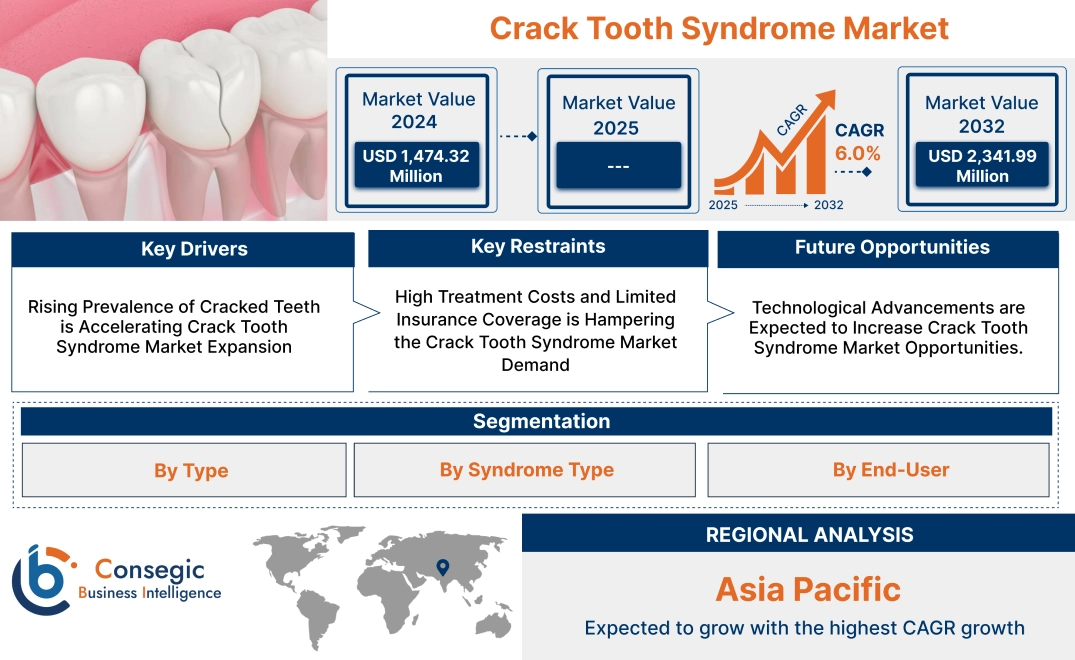
Crack Tooth Syndrome Market size is growing with a CAGR of 6.0% during the forecast period (2025-2032), and the market is projected to be valued at USD 2,341.99 Million by 2032 from USD 1,474.32 Million in 2024.
Crack Tooth Syndrome Market Scope & Overview:
Cracked tooth syndrome (CTS) is a dental condition where a tooth has a fracture, causing intermittent pain when chewing or sensitivity to temperature changes. It primarily affects posterior teeth due to the higher forces exerted during biting and grinding. Cracked teeth result from various factors, including age-related wear and tears, biting hard objects, weakening from dental procedures such as fillings or root canals, and the stress-induced habit of teeth grinding. Additionally, trauma, sudden temperature changes, poor oral hygiene, a diet high in sugars, and inadequate dental care also contribute to tooth fractures. Diagnosing crack tooth syndrome typically involves a combination of methods, including visual inspection, imaging techniques such as radiography, and transillumination amongst others. Management depends on the severity. Stabilization with crowns, root canal therapy for pulp damage, or extraction for irreparable fractures are common approaches.
Crack Tooth Syndrome Market Dynamics - (DRO) :
Key Drivers:
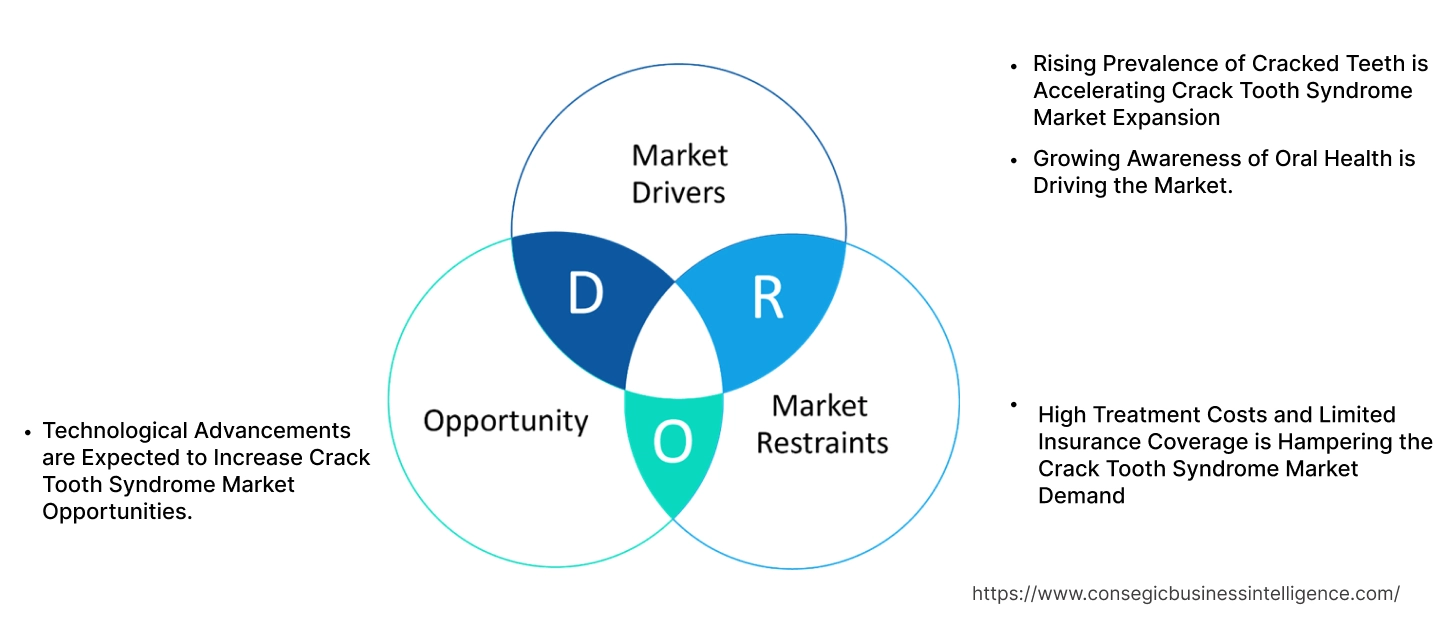
Rising Prevalence of Cracked Teeth is Accelerating Crack Tooth Syndrome Market Expansion
Cracked teeth refer to fractures or splits in the structure of a tooth, ranging from minor surface cracks to deep fractures affecting the pulp and root. These cracks result from trauma, excessive grinding, or biting hard objects. Cracked teeth cause discomfort, especially when biting or chewing. Other signs include sensitivity to hot or cold foods, intermittent pain, and gum swelling around the affected tooth. In severe cases, the crack leads to infection, resulting in persistent pain and visible swelling.
Treatment for cracked teeth depends on the severity of the crack and involves stabilization with bonding or splinting, restoration with a dental crown, root canal therapy for infected pulp, or extraction in severe cases. An aging population with increased susceptibility to tooth wear and tear and dental diseases such as tooth decay, gum disease, and bruxism has significantly increased the risk of cracked teeth.
- More than 60% percent of dentists surveyed by the American Dental Association (ADA) Health Policy Institute reported an increase in prevalence of cracked teeth. This has led to increased diagnosis and treatments, positively influencing crack tooth syndrome market trends.
Overall, the high increase in cracked teeth cases is significantly boosting the crack tooth syndrome market expansion.
Growing Awareness of Oral Health is Driving the Market.
Rising awareness about dental health is a significant driver of the market. Patients are increasingly educated about the importance of early diagnosis and treatment of dental issues, including cracked teeth. Public health campaigns, dental awareness programs, and the proliferation of online resources have played a crucial role in improving knowledge about oral health.
- St Leonards Dental published an article in 2023, explaining what a cracked tooth is, the various types of cracks, the associated symptoms, preventative strategies, and the range of treatment options available. This has increased dental visits regarding CTS, positively influencing the crack tooth syndrome market trends.
Moreover, the widespread availability of information through digital platforms has empowered patients to recognize symptoms such as tooth sensitivity and pain, prompting them to seek timely professional care. Additionally, dental practitioners and organizations highlight preventive care, encouraging regular check-ups that aid in the early detection of conditions such as crack tooth syndrome. Furthermore, the growing adoption of cosmetic dentistry has also contributed to the market. Many patients visit dentists for aesthetic treatments and inadvertently discover underlying dental conditions, including cracks, positively impacting the market.
Overall, growing awareness of oral health is accelerating the global crack tooth syndrome market growth.
Key Restraints:
High Treatment Costs and Limited Insurance Coverage is Hampering the Crack Tooth Syndrome Market Demand
The high cost of treatment is a significant restraint in the market. Procedures such as crown placement, root canal therapy, or tooth extraction are expensive, especially when using advanced materials and techniques. Moreover, advanced diagnostic tools such as CBCT scans and specialized dental equipment further increase the financial burden. These high costs discourage patients from seeking timely treatment, potentially worsening their condition.
Additionally, limited reimbursement for dental procedures compounds the issue of affordability. In many countries, dental treatments are not fully covered under health insurance plans, leaving patients to bear significant out-of-pocket expenses. For instance, insurance policies only partially cover preventive care but exclude more costly restorative procedures, such as crown or implant placement. This limited coverage creates a barrier for patients in middle- and low-income groups, particularly in regions where dental insurance penetration is low. As a result, many patients either delay treatment or opt for less expensive, temporary solutions, affecting the overall demand for CTS-related services.
Overall, analysis shows that the high cost of treatment and limited insurance coverage pose significant financial barriers for patients, hampering the crack tooth syndrome market demand.
Future Opportunities :
Technological Advancements are Expected to Increase Crack Tooth Syndrome Market Opportunities.
Technological advancements play a pivotal role in transforming the diagnosis and treatment of cracked tooth syndrome. In treatment, advancements in dental materials and techniques have improved outcomes for patients. The development of durable and aesthetic materials, such as zirconia and lithium disilicate, has revolutionized crown and restoration procedures, ensuring both functionality and a natural appearance.
Moreover, 3D printing technology enables the creation of customized dental restorations, reducing treatment time and improving precision. Additionally, minimally invasive procedures contribute to improved treatment success rates and patient comfort. Furthermore, innovative diagnostic tools have significantly enhanced the accuracy of detecting cracks that are often challenging to identify.
- According to an article published by Fifth Avenue Endodontics, 2024, cone-beam computed tomography (CBCT) provides three-dimensional imaging, allowing dentists to visualize cracks in intricate detail, even in hard-to-reach areas. This has enabled more accurate diagnosis and treatment planning, positively influencing the market.
Overall, technological advancements, including CBCT imaging, improved dental materials, and minimally invasive procedures, are expected to increase crack tooth syndrome market opportunities.
Crack Tooth Syndrome Market Segmental Analysis :
By Type:
Based on type, the market is categorized into diagnosis and treatment.
Trends in Type:
- Increased use of cone beam computed tomography (CBCT) imaging for improved diagnosis and treatment planning.
- Growing need for minimally invasive treatments.
The treatment segment accounted for the largest market share in 2024 and is expected to grow at the fastest CAGR over the forecast period.
- Treatment is further categorized into stabilization, crown restoration, root canal therapy, and tooth extraction. These treatment options offer several advantages, depending on the severity of the condition.
- Stabilization through bonding or filling prevents further damage to the tooth and alleviates pain. Crown restoration strengthens the tooth, restoring its structure and functionality, while offering an aesthetic solution with materials such as porcelain or zirconia.
- Root canal therapy is essential for cracks that involve the pulp, preserving the tooth by removing infected tissue and preventing further complications. Lastly, tooth extraction is performed when the damage is irreparable, ensuring the health of surrounding teeth. Technological advancements have significantly enhanced the treatment of cracked tooth syndrome, driving the segment.
- For instance, according to an article published by Huntington Dental, in 2024, computer-aided design (CAD) same-day crowns offer numerous advantages, including time-saving convenience with single-visit completion, precision fit for optimal comfort, natural-looking aesthetics that blend seamlessly with the smile, minimal tooth preparation for greater preservation, and long-lasting durability for years. This has increased its reach for the patients, and a driving segment in the market.
- Overall, as per the market analysis, the availability of various treatment options, coupled with their technological advancements, is driving the segment in the global crack tooth syndrome market growth.
By Syndrome Type:
The syndrome type segment is categorized into craze line, fractured cusp, cracked tooth, split tooth, and vertical root fractures.
Trends in the Syndrome Type
- Increasing recognition of bruxism is a major risk factor for CTS.
- Prior dental restorations increase the susceptibility to CTS.
The craze line segment accounted for the largest market share of 2024.
- A craze line is a superficial, fine crack that typically affects the enamel of a tooth, caused by everyday wear, stress, or biting forces. Craze lines do not extend into deeper layers of the tooth.
- They usually do not cause pain or sensitivity but are more sensitive to hot or cold foods and drinks. These cracks are commonly seen in older adults and are discovered during routine dental exams.
- For teeth craze lines, the most common treatment option is cosmetic dental bonding where a tooth-colored resin fills in the lines. Veneers are also chosen as a popular treatment choice due to their multiple benefits.
- For instance, according to an article published by Breathe Modern Dentistry, in 2023, veneers offer a more comprehensive solution for correcting significant cosmetic flaws associated with crazing. Unlike some other treatments, they are resistant to staining and not only alter the color of teeth but also provide long-lasting results, potentially enduring for up to 20 years with proper care and gentle use.
- Overall, as per the market analysis, growing awareness of oral health and aesthetics, an aging population with increased dental needs, and advancements in cosmetic dentistry are driving this segmental growth in the crack tooth syndrome industry.
The fractured cusp segment is expected to grow at the fastest CAGR over the forecast period.
- A fractured cusp occurs when a portion of a tooth's cusp, which is the pointed or raised part of the tooth, breaks off. This is caused by factors such as chewing hard foods, grinding teeth, or trauma. A fractured cusp leads to sensitivity, discomfort, or sharp edges, and it affects the overall strength of the tooth.
- The treatment for a fractured cusp typically depends on the severity of the fracture. If the fracture is small and does not expose the pulp, cosmetic bonding or a dental filling is used to restore the tooth. For larger fractures or those involving deeper layers, a dental crown is required to cover and protect the tooth. In some cases, if the fracture involves the pulp, a root canal is necessary before placing a crown.
- The rising prevalence of dental diseases such as bruxism (teeth grinding), and advancements in diagnostic and treatment technologies that enable earlier detection and more effective treatment of fractured cusps create the potential for the segment in the upcoming years.
By End-User:
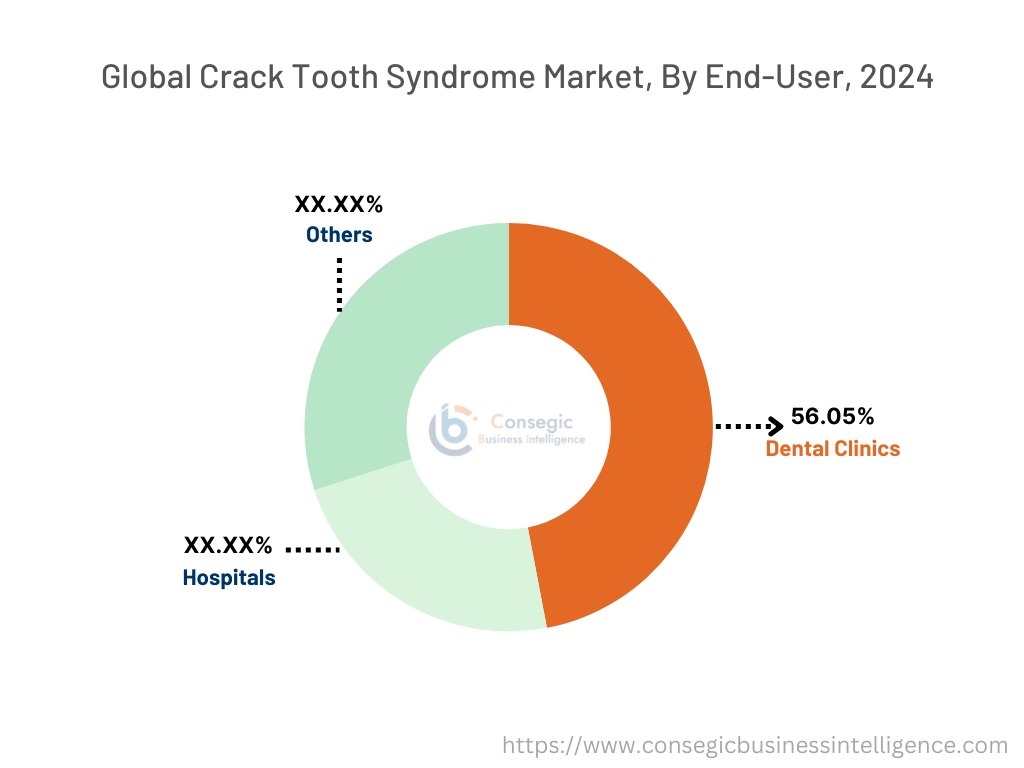
The end-user segment is categorized into hospitals, dental clinics, and others.
Trends in End-User
- Adoption of advanced technologies such as CAD/CAM, AI, and 3D printing for improved diagnosis and treatment.
- Expanding use of telehealth for consultations, remote monitoring, and patient education.
The dental clinics segment accounted for the largest market share of 56.05% in 2024.
- Dental clinics dominate the market due to multiple factors. These clinics are specifically equipped to diagnose and treat dental issues, including cracked teeth, with a range of specialized tools and technologies such as X-rays, CBCT imaging, and CAD/CAM systems for creating crowns and restorations. This specialization attracts many patients seeking efficient and accurate treatment for cracked teeth.
- Moreover, dental clinics are more accessible than hospitals, with a widespread presence in urban and suburban areas. They typically offer shorter waiting times and flexible hours, making it easier for patients to seek prompt treatment.
- Additionally, dental clinics offer competitive pricing compared to hospitals, making them a more affordable option for many patients. The increased number of dental professionals, especially in emerging economies, is driving the segment.
- For instance, according to a study published in the National Center for Biotechnology Information, in January 2023, the number of active dentists in Taiwan rose to 16,533, which is a significant increase from the previous year. This surge in dental professionals has directly contributed to a rise in registered dental clinics, leading to enhanced diagnostic capabilities and treatment options for conditions such as cracked teeth, positively influencing the market.
- Overall, accessibility, affordability, and a growing pool of dental professionals are driving the segment.
The hospitals segment is expected to grow at the fastest CAGR over the forecast period.
- Hospitals are emerging due to several key factors. They are at the forefront of adopting and integrating new diagnostic technologies, such as AI-powered imaging, robotic surgery, and precision medicine. These advancements enable more accurate diagnoses, less invasive procedures, and personalized treatment plans, leading to improved patient outcomes.
- Moreover, many hospitals are expanding their dental departments to offer more advanced dental care. With growing awareness and better technology, hospitals are now capable of performing a wide range of treatments for crack tooth syndrome, making them more appealing to patients seeking comprehensive care.
- Furthermore, hospitals in rural or underserved regions are becoming primary sources of dental care, helping to increase their role in the market.
- Also, hospitals are increasingly focusing on patient-centered care, emphasizing patient experience, comfort, and engagement. This includes initiatives like creating more welcoming environments, offering digital health services, and fostering strong doctor-patient relationships.
- According to market analysis, increased healthcare needs, technological advancements in medical care, rising healthcare industry expenditures, and government initiatives to improve healthcare access and quality will drive the segment for the upcoming years.
Regional Analysis:
The regional segment includes North America, Europe, Asia Pacific, the Middle East and Africa, and Latin America.
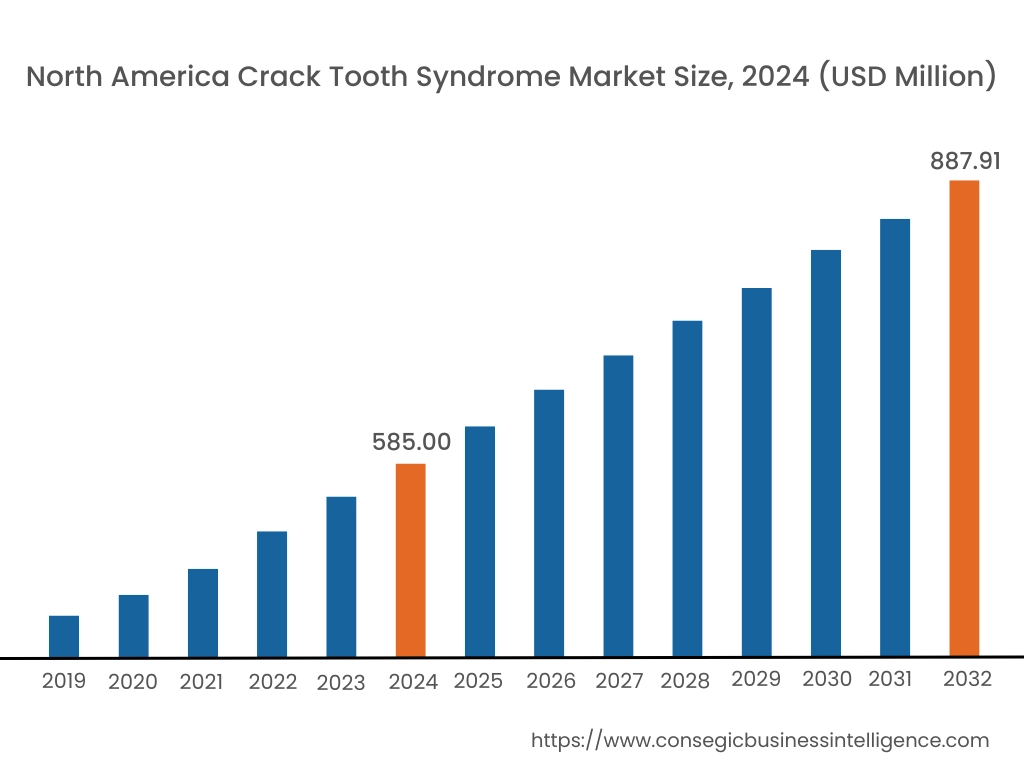
In 2024, North America accounted for the highest crack tooth syndrome market share at 39.68% and was valued at USD 585.00 Million and is expected to reach USD 887.91 Million in 2032. In North America, the U.S. accounted for the highest crack tooth syndrome market share of 71.14% during the base year of 2024. North America, particularly the United States and Canada, boasts a highly developed healthcare infrastructure. Dental clinics and hospitals in the region are equipped with the latest technologies. Launches of techniques such as laser treatments, CAD/CAM systems, and CBCT imaging, enabling accurate diagnosis and effective treatment of CTS.
- In May 2024, Planmeca, a leading provider of dental equipment and software, introduced its latest CBCT device, the Planmeca Viso G3, in the North American market. This cutting-edge technology boasts enhanced usability and image quality while prioritizing patient safety. This has enabled more precise treatment planning and execution, leading to better patient outcomes, and positively influencing the market.
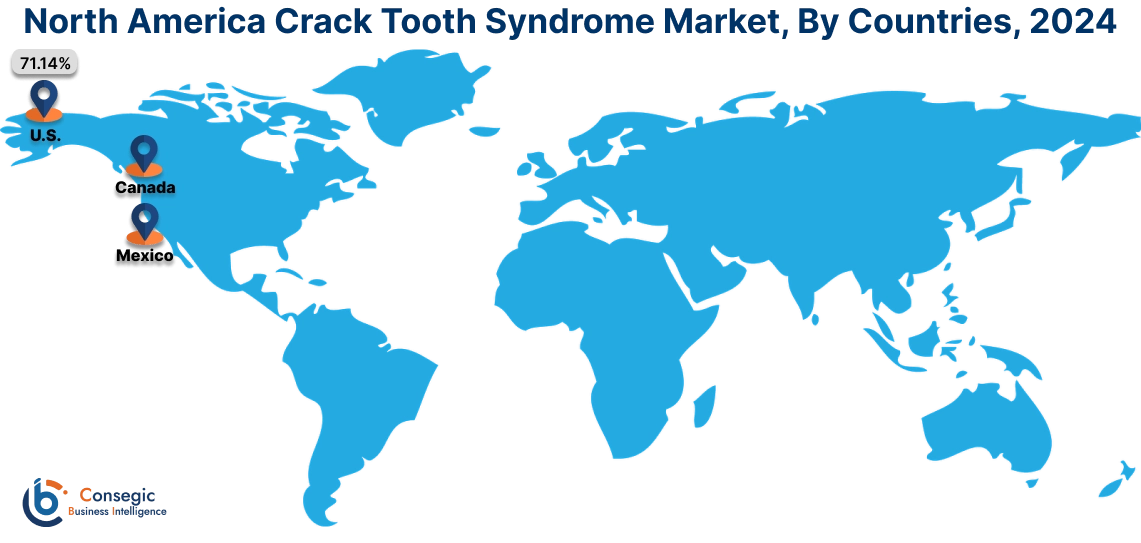
Moreover, North America has a high level of disposable income, allowing patients to afford treatments for CTS, including cosmetic procedures such as dental crowns and bonding. This has led to a rise in the need for aesthetic dental treatments. Additionally, growing awareness about oral health and the importance of early detection of dental issues in North America leads to a higher rate of dental visits. Routine check-ups and preventive care are standard practices that help in the early identification of cracked teeth, boosting market growth. Overall, advanced healthcare infrastructure, high disposable income, and a strong emphasis on preventive dental care are driving the region’s dominance.
In Asia Pacific, the crack tooth syndrome market is experiencing the fastest growth with a CAGR of 7.1% over the forecast period. The rapid increase in the APAC population and urbanization, particularly in countries such as China, India, and Japan, is contributing to an increase in dental care demand. Urban areas have better access to dental facilities, enabling more patients to seek treatment for CTS. Moreover, as healthcare infrastructure improves, dental clinics in APAC are becoming more accessible, especially in rural areas. Governments are investing in healthcare, ensuring a wider reach for dental services, which directly benefits the crack tooth syndrome market. Additionally, with the rise in disposable income in key APAC countries, patients are becoming more willing to invest in dental treatments, including those for cracked teeth. This growing middle class is driving the need for advanced dental care, such as crowns and root canal treatments. Also, increased consumption of processed food contributes to the higher prevalence of cracked teeth, making the APAC region a key player in the CTS market.
Europe's crack tooth syndrome market analysis states that several trends are responsible for the progress of the market in the region. The market is driven by high dental care standards, advanced technology, and a strong healthcare system. The region's aging population is a major contributor to the market, as older adults experience more tooth wear, leading to cracked teeth. Countries such as Germany, the UK, and France see high demand for dental crowns, root canal treatments, and cosmetic restorations. Moreover, there is a growing trend in cosmetic dentistry, with patients seeking aesthetic solutions for cracked teeth, which has increased the need for advanced treatments. Additionally, Europe also has a well-established network of dental professionals and clinics equipped with the latest technologies, such as CAD/CAM systems for accurate diagnosis and restoration.
The Middle East and Africa (MEA) crack tooth syndrome market analysis states that the region is also witnessing a notable surge. The market is driven by improving healthcare infrastructure and rising dental awareness. Countries such as Saudi Arabia, UAE, and South Africa have made substantial investments in healthcare, improving access to dental services. Moreover, as the MEA population becomes more aware of oral health, there is a growing trend of preventive dental care, which includes regular check-ups for cracked teeth. With the influx of medical tourists seeking advanced dental care, the MEA market is expanding, especially in countries such as Turkey and the UAE. However, the market faces challenges in rural areas where access to quality dental care is limited.
Latin America's crack tooth syndrome market size is also emerging. In countries such as Brazil, Mexico, and Argentina, dental tourism has become a significant factor in driving market growth, as patients seek affordable yet high-quality dental care, including treatments for cracked teeth. Moreover, the region has witnessed significant advancements in dental care infrastructure, with many dental clinics offering cutting-edge technologies such as laser treatments and 3D imaging for accurate diagnosis and treatment of cracked teeth. This has led to higher adoption of advanced procedures such as crowns, fillings, and root canal treatments. Rising awareness of dental health has also contributed to early diagnosis and treatment. However, challenges such as income disparities and uneven distribution of dental services in rural areas may slow market growth.
Top Key Players and Market Share Insights:
The Crack Tooth Syndrome market is highly competitive with major players providing products to the national and international markets. Key players are adopting several strategies in research and development (R&D) and product innovation to hold a strong position in the global Crack Tooth Syndrome market. Key players in The Crack Tooth Syndrome industry include-
- 3M (U.S.)
- Dentsply Sirona (U.S.)
- GC Corporation (Japan)
- SHOFU Incorporated (Japan)
- Vatech (South Korea)
- Planmeca Oy (Finland)
- Danaher Corporation (U.S.)
- Institut Straumann AG (Switzerland)
- Henry Schein, Inc. (U.S.)
- Ivoclar Vivadent (Liechtenstein)
Recent Industry Developments :
Product Launch
- In February 2024, Carestream Dental launches CS 82003D Access, which is a versatile 4-in-1 CBCT imaging system designed to simplify the transition to 3D imaging for dental professionals. This user-friendly system enhances patient care through improved diagnoses and enables practices to expand their service offerings, including full-arch scans, leading to increased business growth.
Crack Tooth Syndrome Market Report Insights :
| Report Attributes | Report Details |
| Study Timeline | 2019-2032 |
| Market Size in 2032 | USD 2,341.99 Million |
| CAGR (2025-2032) | 6.0% |
| By Type |
|
| By Syndrome Type |
|
| By End-User |
|
| By Region |
|
| Key Players |
|
| North America | U.S. Canada Mexico |
| Europe | U.K. Germany France Spain Italy Russia Benelux Rest of Europe |
| APAC | China South Korea Japan India Australia ASEAN Rest of Asia-Pacific |
| Middle East and Africa | GCC Turkey South Africa Rest of MEA |
| LATAM | Brazil Argentina Chile Rest of LATAM |
| Report Coverage |
|
Key Questions Answered in the Report
How big is the Crack Tooth Syndrome market? −
In 2024, the Crack Tooth Syndrome market is USD 2,341.99 Million.
Which is the fastest-growing region in the Crack Tooth Syndrome market? +
Asia Pacific is the fastest-growing region in the Crack Tooth Syndrome market.
What specific segmentation details are covered in the Crack Tooth Syndrome market? +
Syndrome Type and End-User segmentation details are covered in the Crack Tooth Syndrome market
Who are the major players in the Crack Tooth Syndrome market? +
3M (U.S.), Dentsply Sirona (U.S.), Planmeca Oy (Finland), Danaher Corporation (U.S.), Institut Straumann AG (Switzerland), Henry Schein, Inc. (U.S.), Ivoclar Vivadent (Liechtenstein), GC Corporation (Japan), SHOFU Incorporated (Japan), and Vatech (South Korea).
Overview
Reputation & Certifications


Our Services
- Market Intelligence & Forecasting
- Custom Research Solutions
- Market Entry Strategy
- Competitive Intelligence
- Customer Insights
- Industry Innovation Analysis
- Investment Advisory