Jump to Content
Dedicated Outdoor Air System (DOAS) Market - Size, Share, Industry Trends, and Forecasts (2025-2032)
DOAS Market Key Insights:
- 2024 Market Size: USD 4.61 Billion
- 2025 Market Size: USD 4.99 Billion
- 2035 projected Market Size: USD 11.02 Billion
- CAGR (2025-2035): 8.26%
- Largest Market in 2025: Asia Pacific
Key Takeaways:
- New construction led the market with a 5% share in 2024.
- Rising construction of commercial buildings is increasing demand for advanced ventilation systems.
- Growing focus on indoor air quality is supporting adoption across residential and commercial facilities.
- Rising adoption of net-zero energy buildings creates opportunity for DOAS integration.
- Rising Demand from Data Centers and Cleanrooms Driving Precision DOAS Opportunities.
- Asia Pacific accounted for the major share of the Dedicated Outdoor Air System Market in 2024.
Definition of Dedicated Outdoor Air Systems (DOAS):
Dedicated Outdoor Air Systems, or DOAS, is used to condition and supply 100% fresh outdoor air independently of the main heating and cooling system. The DOAS system controls the ventilation air temperature, humidity, and quality before supplying it to the indoor space. The DOAS system is independent of the space conditioning system. Therefore, it can control the indoor space to a great extent. Our analysis shows that DOAS industry is valued at USD 4.61 Bn in 2024 and projected to hit USD 11.02 Bn by 2035, with an astonishing CAGR of 8.26% from 2025-2035.
DOAS improves energy efficiency and indoor air quality by decoupling ventilation from heating and cooling loads. This approach reduces the burden on conventional HVAC systems and supports better humidity management, which is critical in commercial and institutional buildings. The system has gained popularity in offices, healthcare facilities, educational institutions, and industrial spaces owing to the comfort levels it provides.
Market Dynamics and Trends Affecting DOAS Industry Globally:
Growth in global construction and infrastructure investment is increasing the demand for DOAS systems
The governments and investors are investing more in commercial buildings, healthcare centers, and educational institutions. The increase in construction activities requires better ventilation systems to improve indoor air quality. Dedicated outdoor air systems are becoming popular in new buildings as they allow for better supply of fresh air, thus enhancing better performance from HVAC systems.
For example, according to Oxford Economics, the output for the construction industry worldwide is estimated to increase from 9.7 trillion USD in 2022 to 13.9 trillion USD in 2037, mainly due to the growth in China, the US, and India for green infrastructure. This expansion in construction activity is increasing the demand for dedicated outdoor air systems.
Rising focus on indoor air quality driving DOAS adoption across residential and commercial facilities
Rising focus on indoor air quality is increasing the adoption of DOAS systems across residential and commercial buildings. Increasing awareness of indoor pollutants is leading to the implementation of dedicated ventilation systems to ensure that fresh air is supplied and humidity levels are controlled. The focus of building owners on investing in advanced HVAC systems to ensure proper indoor air quality is contributing to the market growth.
According to American Lung Association, the levels of indoor air pollution were between 2 to 5 times higher than those of outdoor air pollution. At times, indoor levels were even 100 times higher. People spend nearly 90% of their time indoors, which makes this an alarming situation.
High initial installation cost compared to conventional HVAC ventilation systems restrains the market growth
For the installation of dedicated outdoor air systems, specialized equipment is needed. The cost of installation is still high compared to conventional systems. The high cost of installation of dedicated outdoor air systems compared to conventional HVAC systems is a challenge to their adoption. For example, DOAS systems cost around USD 38,000 on average, while HVAC systems typically cost up to USD 12,000. Small and medium building projects focus on cost-effective HVAC systems during the design stage. Therefore, the high cost of installation of dedicated outdoor air systems compared to conventional HVAC systems is a challenge to their adoption.
High maintenance complexity and skilled workforce dependency increasing operational burden
Another challenge to the adoption of dedicated outdoor air systems is the complexity of maintenance which cost around USD 2500 per year. Dedicated outdoor air systems need skilled personnel to carry out maintenance activities. The high cost of maintenance is another challenge to the adoption of dedicated outdoor air systems. The availability of skilled personnel is limited in some regions. The complexity of maintenance is another challenge to the adoption of dedicated outdoor air systems.
Rising construction of net zero energy buildings creates growth opportunities in the market
Developers are paying more attention to energy-efficient infrastructure to achieve sustainability goals and comply with green building requirements. Net zero energy buildings demand better ventilation systems to ensure indoor air quality and optimize energy consumption. The dedicated outdoor air system can be used to achieve efficient ventilation and optimize energy consumption in buildings.
The IEA Net Zero Emissions by 2050 scenario offers a pathway for the world’s energy sector to achieve net zero CO2 emissions by 2050, as well as improving air quality and energy access by 2030. This shift toward net zero construction is increasing the demand for dedicated outdoor air systems.
Rising demand from data centers and cleanrooms driving precision DOAS opportunities
Expansion of data centers and cleanrooms is increasing demand for precision ventilation systems, which supports DOAS adoption. These buildings need precise control of temperature, humidity, and pollutants in the air in order to be effective and produce quality products. The rise in investments in digital infrastructure and semiconductor manufacturing is driving the market for advanced ventilation systems.
IEA reported that global data center investment touched nearly 500 billion US dollars in 2024, with a double-digit increase since 2022. Thus, it accelerates demand for precision ventilation systems in the DOAS market.
Impact of AI on the Dedicated Outdoor Air Systems (DOAS) Market
Integration of AI is enhancing the monitoring and control systems in the dedicated outdoor air systems (DOAS) market. The application of the AI systems promotes the optimization of the use of fresh air based on the assessment of the level of occupation, outdoor climate, and ventilation. The application of the AI systems promotes the optimization of the use of fresh air based on the assessment of the level of occupation, outdoor climate, and ventilation.
In November 2024, Johnson Controls has upgraded the AI capabilities in its OpenBlue digital platform. The digital platform can monitor air quality in real-time, perform predictive maintenance, and control ventilation systems. These developments have improved the efficiency of operations, reduced system downtime, and improved the management of energy. They are applicable in the development of urban infrastructure, which has improved the construction of commercial buildings.
Regional Market Intelligence:
The study covers key geographic markets including North America, Europe, Asia Pacific, Latin America, and the Middle East & Africa.
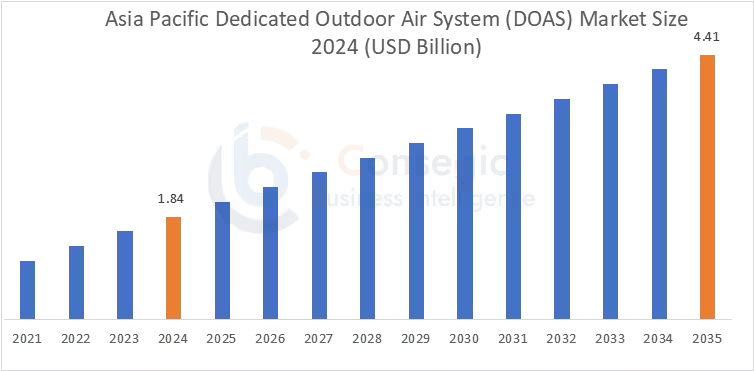
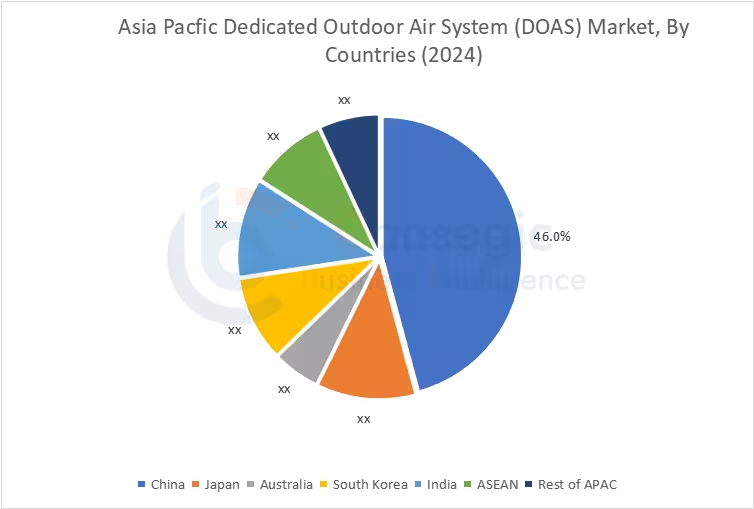
Asia Pacific held the highest share in the global market in 2024, accounting for around 40% share, with a valuation of USD 1.84 billion, and is expected to reach USD 4.41 billion by 2035. China was the highest contributor in the Asia Pacific region, accounting for around 46% share in the base year. The region DOAS market is driven by rapid development of infrastructure in urban areas, including the development of commercial buildings. The government is implementing policies to ensure the efficiency of the building system, thus enhancing the quality of indoor air.
The Asian Development Bank (ADB) estimates that developing countries in Asia Pacific need to invest 26 trillion dollars in infrastructure between 2016 and 2030, with 1.7 trillion dollars spent each year. This large-scale investment is increasing construction activity is driving the demand for DOAS solutions.
North America has forecasted to experience the fastest growth during the forecast period, driven by the increasing focus on indoor air quality standards and building energy regulations. In addition, the increasing practice of retrofitting existing commercial buildings with advanced ventilation systems has also driven the growth of the market. In Canada, the increasing healthcare infrastructure and emphasis on sustainable building designs have accelerated the adoption of DOAS systems.
For example, in April 2025, the American Lung Association has stated that around 46% of Americans or 156.1 million people are exposed to unhealthy levels of ozone or particle pollution in 2025. It has increased by 25 million from the previous year. Thus, the increasing levels of exposure have driven the growth of the market for DOAS systems.
Europe is witnessing steady demand for DOAS systems, driven by the strict standards of energy efficiency regulations and building regulations in Germany, France, and the UK. Building developers are placing more emphasis on efficient ventilation systems, which are essential for the development of sustainable buildings. Hence, driving the demand for the DOAS adoption across the European region.
In January 2025, according to WHO, humans spend 90% of their time indoors in Europe. Moreover, the European Commission also announced that new public buildings should adhere to zero emission standards by 2028, and new buildings should adhere to this standard by 2030. This trend is driving the demand for DOAS systems for better indoor air quality and other energy-efficient building requirements.
Segment-Wise Market Insights:
By Capacity
The 20–50 tons segment dominated the market in 2024, driven by its wide use across medium to large commercial buildings. As office complexes, hospitals, and educational institutions require balanced ventilation capacity, which supports stable airflow and humidity control. Building operators prefer mid-range capacity systems for energy-efficient ventilation management, which is increasing adoption across commercial infrastructure.
The segment for more than 50 tons is projected to grow at the highest CAGR during the forecast period. This is due to the rising demand for large commercial spaces. Airports, data centers, and healthcare facilities require large-scale ventilation systems. Furthermore, the rise in large-scale infrastructure development is driving the demand for DOAS.
By Construction Type
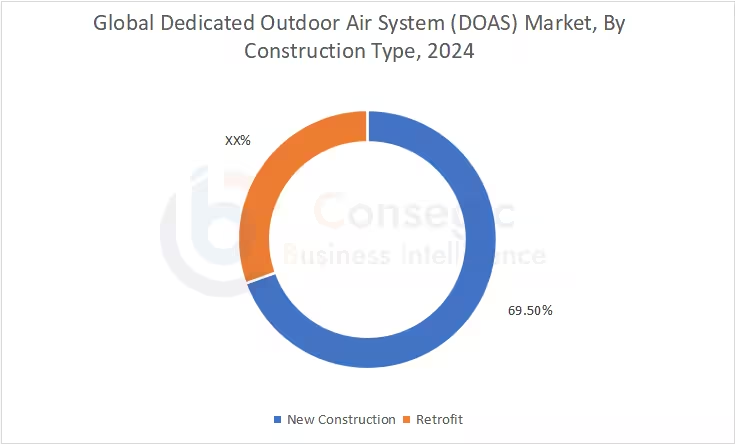
The new construction segment led the market in 2024, with a 69.5% share. This is due to the inclusion of DOAS systems while designing the HVAC system. The emphasis on the development of efficient systems to achieve green building ratings is boosting the adoption of the technology for controlled fresh air delivery. Moreover, the increase in the development of commercial infrastructure is boosting the need for advanced technology for modern structures.
The retrofit segment is likely to exhibit the highest CAGR during the forecast period, owing to increasing retrofit activities in existing buildings. Older buildings are characterized by inefficient fresh air management in existing HVAC equipment. This is prompting building owners to change their existing equipment. Also, increasing emphasis on indoor air quality standards and renovations of commercial buildings are adding to the demand for retrofit DOAS equipment.
By Function
The ventilation segment accounted for a significant share in 2024. The primary function of DOAS is to provide fresh outdoor air. Commercial buildings require a constant airflow to maintain indoor air quality. Increasing emphasis on fresh air circulation in commercial building HVAC equipment is fueling demand for ventilation equipment.
The dehumidification segment is expected to record the highest CAGR during the forecast period. This is owing to the increasing need for humidity control in healthcare, laboratories, and commercial settings. In humid climates, there is a need for advanced moisture control, and building operators focus on maintaining a comfortable and healthy indoor environment. The integration of humidity control with ventilation systems is driving this segment.
By End-User
The commercial segment was the leading contributor to the market in 2024. This is owing to the strong need for consistent and reliable ventilation and indoor air quality management in commercial settings. In large commercial settings, there is a need to control fresh air circulation and building codes are driving the adoption of advanced ventilation systems. The increasing rate of commercial infrastructure development is driving this segment growth.
Residential segment is expected to witness the fastest CAGR during the forecast period. This is due to the increase in the adoption of advanced HVAC ventilation systems in residential projects. Homeowners are becoming aware of the need to improve indoor air quality. Also, modern residential construction practices are incorporating energy-efficient ventilation systems.
By Capacity
The 20–50 tons segment dominated the market in 2024, driven by its wide use across medium to large commercial buildings. As office complexes, hospitals, and educational institutions require balanced ventilation capacity, which supports stable airflow and humidity control. Building operators prefer mid-range capacity systems for energy-efficient ventilation management, which is increasing adoption across commercial infrastructure.
Leading Companies Analysis in the DOAS Market:
The dedicated outdoor air system market shows a moderately fragmented structure, with multiple players offering ventilation units, air handling systems, and integrated HVAC solutions. Enterprises are diversifying their product offerings to cater to the growing need for energy-efficient ventilation and enhanced indoor air quality in commercial and institutional spaces.
Major companies leading the DOAS industry are Daikin Industries, Ltd., Carrier Global Corporation, Trane Technologies plc, Johnson Controls International plc, Lennox International Inc., Munters Group AB, Greenheck Fan Corporation, FläktGroup Holding GmbH, Systemair AB, and TROX GmbH.
Latest Developments in the DOAS Industry:
- In September 2024, AAONlaunched a Delta Class DOAS that supplies 100% fresh and dehumidified outdoor air. The system comprises variable capacity compressors, modulating reheat, and energy recovery. It is designed to be a compact solution for high-occupancy spaces.
- In July 2025, Greenheck developed a dedicated outdoor air system that provides conditioned 100% outdoor air with efficient operation. This supports the need for better indoor air quality and control of ventilation.
Smart Water Management Market Report Insights:
| Report Attributes | Report Details |
|---|---|
| Study Timeline | 2019-2035 |
| Market Size in 2035 (USD Billion) | USD 11.02 Billion |
| CAGR (2025-2035) | 8.26% |
| By Capacit |
|
| By Construction Type |
|
| By Function |
|
| By End User |
|
| By Region |
|
| Key Players |
|
| Report Coverage |
|
Key Questions Answered in the Report
How big is the dedicated outdoor air system market? −
The dedicated outdoor air system market sizeis estimated to reach over USD 11.02 Billion by 2035 from a value of USD 4.61 Billion in 2024 and is projected to grow by USD 4.99 Billion in 2025, growing at a CAGR of 8.26% from 2025 to 2035.
Which segmentation details are covered in the dedicated outdoor air system report? +
The dedicated outdoor air system report includes specific segmentation details for capacity, construction type, function, end user, and regions.
Which is the fastest segment anticipated to impact the market growth? +
Dehumidification is the fastest growing segment due to rising demand for humidity control in buildings.
Who are the major players in the dedicated outdoor air system market? +
The key participants in the dedicated outdoor air system marketare Daikin Industries, Ltd. (Japan), Carrier Global Corporation (US), Trane Technologies plc (Ireland), Johnson Controls International plc (Ireland), Lennox International Inc. (US), Munters Group AB (Sweden), Greenheck Fan Corporation (US), FläktGroup Holding GmbH (Germany), Systemair AB (Sweden), TROX GmbH (Germany), and others.
What are the key trends in the dedicated outdoor air system market? +
Growing adoption of energy efficient ventilation systems and green building construction is shaping the market.
Overview
Reputation & Certifications


Our Services
- Market Intelligence & Forecasting
- Custom Research Solutions
- Market Entry Strategy
- Competitive Intelligence
- Customer Insights
- Industry Innovation Analysis
- Investment Advisory