Jump to Content
Europe Critical Infrastructure Protection (CIP) Market - Size, Share, Industry Trends, and Forecasts (2025-2034)
Executive Summary
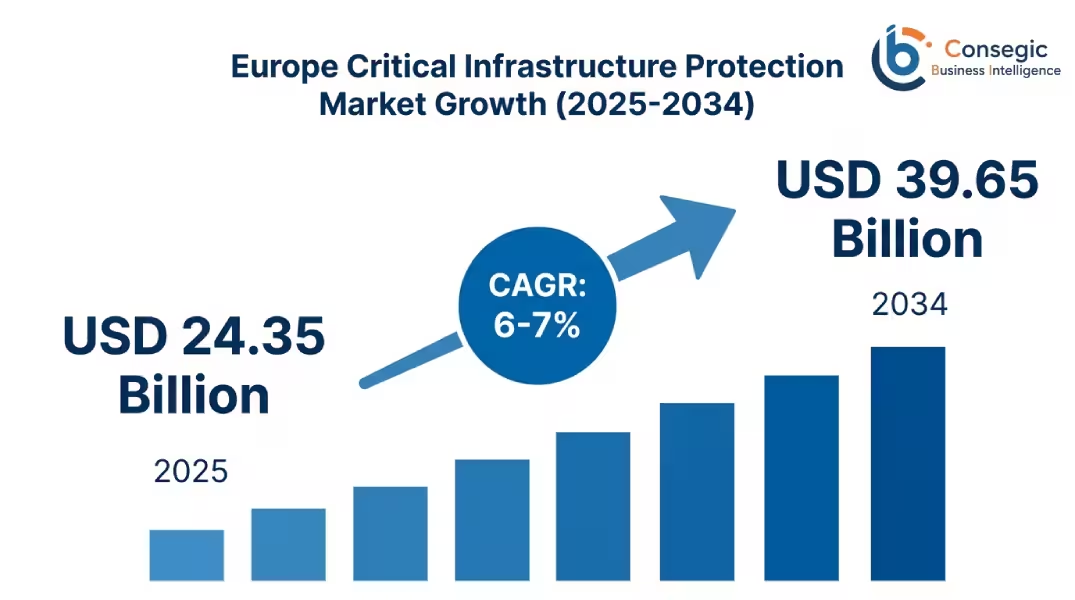
The European Critical Infrastructure Protection (CIP) market represents a transformative sector undergoing rapid evolution driven by the convergence of cyber and physical security threats, increasingly sophisticated attack methodologies, and comprehensive regulatory restructuring through the NIS2 and CER Directives. The market is valued at USD 24.35 billion in 2025 and is projected to reach USD 39.65 billion by 2034, representing a compound annual growth rate (CAGR) of 6–7% throughout the forecast period.
The complete range of critical infrastructure assets needs protection because its essential components which include energy systems and transport networks and water utilities and healthcare facilities and digital infrastructure and financial institutions and public administration systems face multiple threats which consist of cyberattacks and physical sabotage and natural disasters and hybrid attack scenarios. The market is undergoing a crucial transformation which shifts away from conventional security designs that operate in separate compartments toward resilience-by-design systems that provide unified platforms for managing cyber and physical security threats through complete risk management solutions.
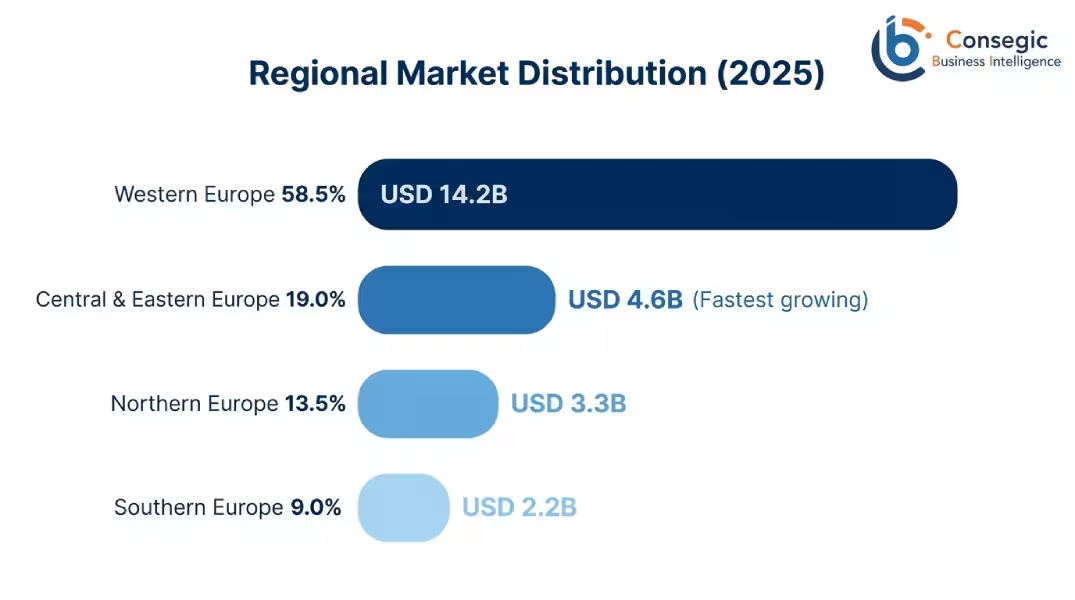
The Western European market operates the largest market share because advanced infrastructure and regulatory enforcement operate at high levels while the region has received major investment commitments. Central and Eastern Europe emerge as the fastest-growing region because infrastructure modernization projects receive European Union funds while people become more aware of the geopolitical dangers that exist near conflict zones. Infrastructure failures result in major financial losses which stem from critical incidents that generate recovery expenses exceeding hundreds of millions of euros while causing both extended service interruptions and subsequent economic damage across all affected sectors.
The NIS2 Directive establishes a regulatory requirement which extends cybersecurity obligations to 18 essential industries while the CER Directive makes operational and physical resilience mandatory for essential functions of infrastructure protection. The infrastructure protection requirement has shifted from an optional business expense to a mandatory legal obligation which imposes heavy fines of EUR 10 million or 2% of global annual revenue for non-compliance with NIS2 Directive requirements.
Market Size and Growth:
- 2024:USD 22.8–32.4 billion
- 2025 (Base Year):USD 24.1–34.8 billion
- 2034 (Forecast):USD 39.6–65.2 billion
- CAGR (2026–2034):6–7%
Market Scope & Overview
The Europe CIP market encompasses an extensive portfolio of integrated technologies, specialized services, and comprehensive frameworks designed to protect critical assets against contemporary and emerging threats. The complete set of solutions provides protection against all possible attack methods which include synchronized cyber-physical attacks and supply chain vulnerabilities and threats from nation-states that use interconnected infrastructure systems to launch attacks.
Modern CIP solutions represent advanced convergence of cybersecurity and physical security disciplines, integrating Security Information and Event Management (SIEM) systems, Operational Technology and Industrial Control System (OT/ICS) security platforms, advanced access control mechanisms, comprehensive surveillance systems, and real-time monitoring capabilities into unified command centers. The system enables organizations to detect anomalies which occur in multiple networks while they handle security events through established response protocols and their systems restore operations during security breaches. The components of cybersecurity include endpoint protection platforms and intrusion detection and prevention systems and identity and access management solutions and advanced firewall architectures and specialized OT/ICS security tools.
Physical security systems include perimeter intrusion detection, advanced surveillance incorporating video analytics and drone-based monitoring, biometric access control, secure facility design incorporating hardening principles, and integrated command centers enabling real-time threat visualization and response coordination. The market demonstrates market segmentation which reflects European infrastructure complexity in various critical sectors that have different security needs and threat profiles and regulatory requirements. Organizations across regions are adopting comprehensive prevention bundles which integrate products and protocols and professional services to achieve systematic improvement in infrastructure resilience and security posture based on their regulatory requirements.
Key Market Driver: Regulatory Transformation Through NIS2 and CER Directives
The European CIP market is undergoing its most significant transformation because NIS2 Directive and CER Directive implementation establishes EU-wide mandatory regulations which require complete protection of critical infrastructure. The NIS2 Directive requires cybersecurity measures to protect eighteen critical infrastructure sectors, which include energy, transport, digital services, financial services, healthcare, and public administration. The NIS2 Directive cybersecurity requirements compel essential service providers and critical infrastructure operators to establish sophisticated risk management systems and incident response capabilities and resilience planning.
The regulatory frameworks require organizations to execute operational mandates, which include complete asset identification and inventory management, standardized risk assessment through established methods, security measure deployment that matches identified risks, and incident reporting which mandates authorities to be informed within twenty-four hours of incident detection, and supply chain security management which contains vendor assessment protocols and organizational resilience demonstration through continuous testing and validation. Non-compliance with these regulations results in financial penalties that reach EUR 10 million or 2% of worldwide annual revenue, which represents a major financial burden for large infrastructure operators. Organizations now need to make CIP investment decisions based on mandatory compliance requirements for infrastructure protection because of the regulatory transformation which changed their operational approach from treating it as an optional capital expense to evaluating it through cost-benefit analysis for compliance needs.
Organizations operating throughout the European Union must follow unified regulatory standards, yet each member state can choose its own methods to implement those standards and establish its enforcement schedule. Regulatory harmonization creates standardized solutions and unified compliance pathways as market opportunities, which increase operational challenges for multinational operators who must handle multiple different regulatory systems that exist between countries.
Key Market Restraint: Legacy System Modernization and High Implementation Costs
The technical complexity and financial cost of upgrading outdated European infrastructure systems serve as the primary constraint which prevents faster market growth. Many critical infrastructure operators maintain legacy Supervisory Control and Data Acquisition (SCADA) systems and Operational Technology (OT) infrastructure that were designed decades ago without integrated cybersecurity capabilities, having been developed during eras when infrastructure operated in isolated environments without connectivity to public networks.
Retrofitting legacy environments with modern security controls such as advanced encryption and multi-factor authentication and continuous monitoring systems and anomaly detection requires both high technical expertise and very expensive implementation costs. The retrofit process requires operators to suspend operations for extended periods, which creates challenges because their facilities must continue to operate all the time creating additional problems that result in longer project timelines and increased operational risks through all periods of equipment transition.
Small and mid-sized infrastructure operators and publicly owned entities frequently lack the financial resources and technical expertise required for comprehensive system modernization which results in prolonged implementation timelines and potential delays in meeting regulatory requirements. Organizations need to handle their transition strategies through precise management because any operational interruptions will put their essential service delivery to dependent populations and economic sectors at risk.
Key Opportunity and Trend: Cyber-Physical Convergence and AI-Driven Predictive Security
The European CIP market undergoes a fundamental transformation through the integration of cyber and physical security systems which create platforms that enable users to detect threats and coordinate responses while maintaining operational security. The system integration connects surveillance systems with access control mechanisms while securing operational technologies and industrial control systems and IT cybersecurity platforms and operational monitoring systems to enable complete situational awareness through unified analytics. Predictive analytics through artificial intelligence and machine learning enable organizations to shift their security strategies from reacting to threats toward proactive threat detection through predictive analytics which enables detection of threats before they reach operational systems.
The digital twin technology allows organizations to build virtual models of critical infrastructure systems which they can use to practice different attack scenarios and test their defensive measures and disaster recovery plans while making infrastructure investment decisions based on complete scenario assessments. Through its AI-driven analytics platforms organizations maintain ongoing surveillance of their networked systems and sensor networks and operational systems to identify early warning signs of potential attacks which enables them to respond before their vital assets face danger from attacks. The technological capabilities enable protective measures for infrastructure to evolve from fixed defense systems into security frameworks which automatically adjust their protection based on acquired threat intelligence while improving their ability to detect new threats.
Market Segmentation Analysis
By Security Type
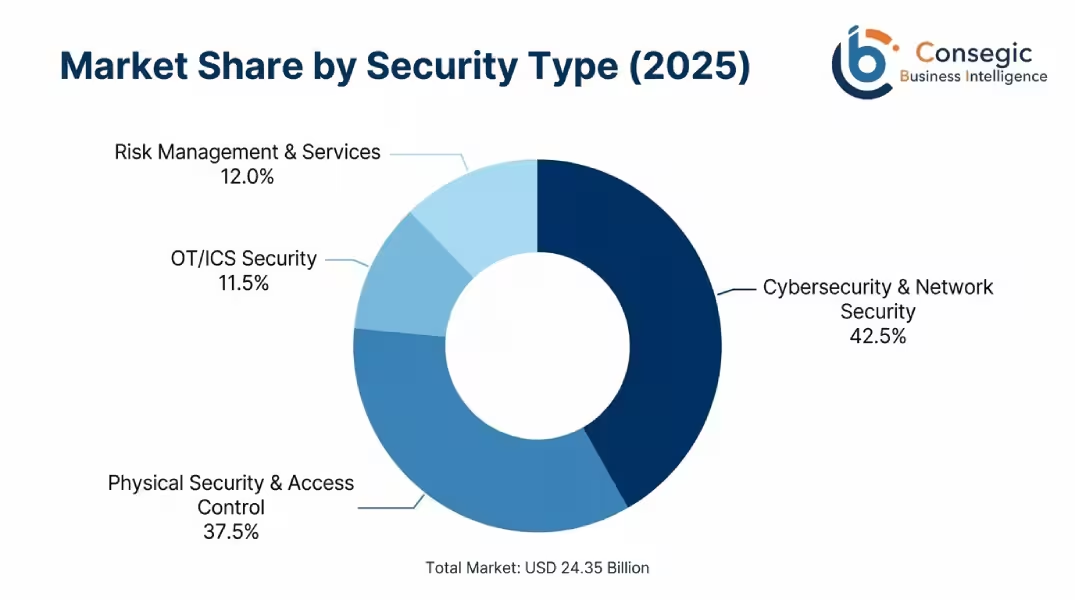
Cybersecurity and Network Security (40–45%)
The market for cybersecurity and network security solutions represents its most rapid expansion because organizations need to comply with growing regulatory demands and security experts have proven that complete cyber defense systems deliver effective protection against threats. The category includes Security Information and Event Management (SIEM) systems which collect and analyze security data from multiple security systems that protect different parts of the organization.
The segment experiences accelerated growth because organizations must implement complete cybersecurity programs which result from regulatory requirements and because ransomware attacks against critical infrastructure have become more advanced and frequent and because tracking of advanced persistent threat (APT) campaigns by nation-states has revealed their existence and because organizations now recognize that cyber threats can destroy their critical infrastructure systems.
Physical Security and Access Control (33–42%)
The market for physical security and access control solutions which combines both security and access management experiences ongoing technological improvements. The traditional physical security systems which include perimeter intrusion detection systems and closed-circuit television surveillance systems, drone-based monitoring systems and standard access control systems and hardened secure facility designs, now move toward intelligent systems which use artificial intelligence and biometric authentication with cyber security platforms.
Modern physical security systems use video analytics to detect unauthorized access attempts and suspicious movement patterns while biometric authentication systems confirm identity through distinctive physical traits and integrated command centers provide real-time security event monitoring for multiple physical locations. The security segment now evolves into AI-based systems which provide predictive abilities to assess potential security threats before any actual security breaches take place.
Operational Technology and Industrial Control System (OT/ICS) Security (10–13%)
The protection of SCADA platforms and Programmable Logic Controllers and their associated field devices which control essential infrastructure systems in the energy and water and manufacturing industries require OT/ICS security solutions. The security of these systems becomes challenging because their design focuses on maintaining operational availability and safety throughout all situations which makes standard IT security methods ineffective.
The demand for OT/ICS security solutions exists because they need to create detection systems which run on their current network protocols and detect threats without interrupting their vital operational activities and their security system needs to support systems which require protection from operational security updates. This specialized category requires deep expertise in industrial environments and specialized vendors and solutions serve as the technical market segment which needs dedicated expertise in industrial environments.
Risk Management, Resilience, and Professional Services (9–15%)
Professional services which support infrastructure protection include consulting services which help organizations achieve NIS2 and CER compliance through their guidance, organizational assessments which identify security gaps that exist between current practices and required regulations, crisis simulation exercises which allow organizations to practice their incident response skills during controlled emergency situations, red team engagements which provide a testing environment for security specialists to use their knowledge of actual attacker techniques to breach system defenses, security training and awareness programs which teach staff members about different threat methods and the security practices of their organization, and business continuity planning services which help organizations sustain vital operations through their security incident response systems.
The service category functions as an essential technology solution component because it enables organizations to establish regulatory compliance through their ability to detect and respond to and recover from incidents by using validated protocols and trained personnel.
By End-Use Sector
Energy and Utilities (30–34%)
The energy and utilities sector represents the highest-value market segment which shows how essential reliable electricity supply is and how difficult it is to protect all distributed infrastructure elements that include generation facilities and transmission networks and distribution systems and control centers.
The energy sector protection system includes electrical grid protection which defends against physical and cyber threats to transmission and distribution systems and substation security which safeguards voltage transformation facilities from both physical and cyber-attacks and pipeline security which protects natural gas and liquid hydrocarbon transportation systems and Operational Technology security which safeguards SCADA systems that manage energy infrastructure. Nation-state attackers choose energy sector infrastructure as their main target because successful attacks can disrupt vital services which affect both dependent populations and entire economic sectors. The sector experiences the highest incident rate while CIP investments keep growing because of increasing threat complexity.
Transport (24%)
The market segment which requires integrated cyber-physical protection consists of transport infrastructure assets which include airports and rail systems and maritime facilities and road networks. The protection of the transport sector includes airport security which safeguards air traffic control systems and passenger screening and vital airport functions together with rail system security which protects signaling and operational control systems and maritime facility security which safeguards port operations and vessel traffic management systems and digital systems that control transportation operations through cyber protection.
Terrorism and cyber espionage and advanced attackers who intend to disrupt operational control systems that manage vehicle movements pose major threats to transport infrastructure systems.
Banking and Financial Market Infrastructure (17–18%)
The protection of banking and financial systems includes cyber resilience measures that protect payment systems from attacks while maintaining their ability to process transactions, trading system security which safeguards financial markets from manipulation and disruption threats, and clearing system defense which secures the correct execution of financial transactions. The financial sector must comply with strict regulations that financial regulators enforce while facing cybercriminal threats from criminals who aim to compromise transaction systems for financial gain.
Financial sector resilience is essential because economic sectors that rely on it experience rapid disruptions which create systemic financial instability that impacts entire national economies.
Healthcare and Public Health (10%)
Healthcare sector protection investments dedicate resources to defense against ransomware attacks which target healthcare facilities through encryption-based extortion attacks and they protect patient care ability to deliver services. Physical security protects patient safety through measures which secure hospitals against external threats and safeguard their sensitive data. Network segmentation establishes boundaries between clinical systems and administrative networks to prevent security breaches from spreading throughout the entire network. Backup systems function as essential organizational tools which enable companies to sustain their business operations during times of operational disruptions.
The rising number of ransomware attacks which specifically target hospitals forces healthcare organizations to invest in protection measures while they create new requirements for healthcare facilities to build complete incident response systems.
Public Administration, Water, Telecom, and Other Sectors
The remaining essential infrastructure sectors include public administration systems which safeguard government operations, water utilities which safeguard drinking water and wastewater treatment facilities, telecommunications infrastructure which maintains network connections, space infrastructure, and food supply chain systems. The sectors of the economy obtain their market share while protection investments grow rapidly because of regulatory demands and actual security breaches which demonstrate the need for protection.
Regional Analysis
Western Europe: Largest Market
The Western Europe market holds its leading position since it will generate an estimated revenue between USD 14.7 billion and USD 19.5 billion in 2025. The area contains advanced infrastructure systems which result from many years of investment, and the local community possesses effective regulatory enforcement and highly developed organizational capabilities. The three nations of Germany, United Kingdom, and France control the region through their extensive base of vital infrastructure and their advanced systems which safeguard security and their long-term programs for protecting infrastructure.
Western European organizations show security maturity at high levels through their advanced threat landscape understanding and their financial strength which enables complete protection spending. The region maintains strong presence of specialized OT/ICS security solutions, managed security operations centers providing 24/7 monitoring and incident response, and integrated command centers enabling coordinated security operations across distributed infrastructure. Organizations across Western Europe currently implement NIS2 and CER standards with high compliance rates because of regulatory oversight and internal safeguarding needs.
Central and Eastern Europe: Fastest-Growing Region
The CIP market in Central and Eastern Europe shows the fastest growth among European markets although its total market size remains smaller at around USD 4.1–4.2 billion for 2025 which constitutes 17–21% of the overall market. The region has the highest growth rate with a CAGR between 7.8% and 9.5% because of ongoing infrastructure modernization projects which European Union funding supports and organizations increase their resilience efforts due to their proximity to areas of geopolitical conflict.
The Baltics, Poland, and Romania are making major upgrades to their infrastructure protection systems while they replace their Soviet-era infrastructure through new security systems that use advanced technologies. The European Union financing systems deliver important funding sources which help organizations to modernize their operations while they develop security systems at a faster rate despite their previous budget constraints. The nearby geographical area of geopolitical unrest creates an immediate need for organizations to protect their infrastructure through improved security measures.
Recent Industry Developments (2024–2025)
Regulatory Milestones
The time frame from 2024 to 2025 marked essential implementation achievements for EU regulatory systems as member countries enacted NIS2 and CER Directives through their national lawmaking process. The regulatory implementation process required organizations operating in critical sectors to complete specific tasks which included registering as essential service providers or critical infrastructure operators conducting full risk evaluations and creating incident response systems while establishing necessary security protocols. Organizations needed to comply with regulations which created strong market demand for consulting services that helped organizations meet compliance requirements and for technology solutions which provided necessary security protections and for training programs which developed organizational security capabilities.
Strategic Partnerships and Acquisitions
The competitive landscape experienced significant consolidation and partnership activity. Thales acquired Imperva to build complete data protection systems which would benefit critical infrastructure clients in their mission to protect vital data. Siemens Energy created a partnership with Dragos to bring their specialized OT security knowledge into wider infrastructure safety solutions. Airbus Defence and Space won important contracts to upgrade communication systems in Belgium and Finland which showed a growing need for secure communication systems in vital infrastructure.
Technology Innovation
Market leaders continued developing integrated protection systems which protect against cyber-physical convergence. Siemens launched Siemens Xcelerator framework which delivers complete cyber-physical security solutions. Schneider Electric developed new EcoStruxure solutions which provide complete infrastructure protection. Digital twin technology and AI-based analytics have become popular in major grid and transport modernization projects which let organizations create threat simulations to evaluate their response capabilities before actual operation.
Sectoral Security Incidents
The 2024–2025 period saw multiple significant security breaches which impacted essential infrastructure systems. Ransomware attacks on hospital systems created patient care disruptions and the hospital incurred more than 6 million euros in recovery expenses. Coordinated attacks targeted grid operators which showed how threat actors had developed more advanced techniques. The logistics and supply chain systems experienced operational interruptions which impacted port activities and showed how interconnected infrastructure remains susceptible to disruptions.
Europe Critical Infrastructure Protection Market Report Insights
| Report Attributes | Report Details |
|---|---|
| Study Timeline | 2022–2034 |
| Base Year | 2025 |
| Forecast Period | 2026–2034 |
| Market Size in 2025 | USD 24.1–34.8 Billion |
| Market Size in 2034 | USD 39.6–65.2 Billion |
| CAGR (2026–2034) | 6–7% |
| By Security Type | Cyber (40–45%), Physical (33–42%), OT/ICS (10–13%), Services (9–15%) |
| By End-Use Sector | Energy (30–34%), Transport (24%), Banking (17–18%), Healthcare (10%), Others |
| By Region | Western Europe (56–61%), Central/Eastern (17–21%), Northern (12–15%), Southern (8–10%) |
| Key Players | Thales, Siemens, BAE Systems, Schneider Electric, Honeywell, Airbus Defence, Atos, Leonardo, Fortinet, Palo Alto Networks, Darktrace |
| Report Coverage |
|
Key Questions Answered in the Report
What is the current size of the Europe CIP market and what growth rate is expected through 2034? −
The European Critical Infrastructure Protection market has a valuation of USD 24.35 billion in 2025 and will grow to USD 39.65 billion by 2034 with an annual growth rate between 6 and 7 percent during this time period. The growth of this market occurs because organizations need to meet regulations that require complete infrastructure security and because threats have become more advanced through cyberattacks and physical sabotage and because organizations now understand that infrastructure security functions as a fundamental business need.
What are the primary factors driving market growth? +
Market growth depends on regulatory changes because NIS2 and CER Directives force thousands of critical infrastructure organizations to establish complete protection systems which secure organizations against all current cyber threats including advanced nation-state attacks and organized cybercriminal activities and digital infrastructure attacks which happen because of digital infrastructure expansion and organizations which build resilience-by-design systems that protect against cyber threats and physical dangers. The regulatory mandate combined with escalating threat environment creates compelling business case for substantial protection investments.
What key constraints limit more rapid market expansion? +
The primary constraint limiting faster growth is the technical and financial challenge of modernizing aging infrastructure systems prevalent throughout Europe. Most critical facilities operate SCADA and OT systems which use legacy technology without built-in cybersecurity protection systems. Smaller operators and publicly owned entities face particularly acute challenges due to limited financial resources, resulting in extended implementation timelines and delayed compliance. Central and Eastern European organizations must address their modernization challenge because they operate outdated systems which were inherited from earlier times.
Which region represents the largest market, and which demonstrates fastest growth? +
Western Europe holds the largest market share because its infrastructure systems are highly developed, and its regulations are strictly enforced, and its organizations have large financial resources which enable them to make total security system investments. Central and Eastern Europe show the fastest growth for the period because its infrastructure systems are being modernized, and European Union financial aid is being increased and resilience standards are being made more rigorous because of geopolitical threats. The regional growth differential reflects transition from mature but extensively protected Western European markets toward emerging Eastern European markets beginning protection modernization initiatives.
What emerging technology trends are reshaping the CIP market? +
The integration of surveillance systems and access control systems and operational technology security and IT security measures into one platform creates an integrated system that enables organizations to monitor threats and manage security incidents. The system uses artificial intelligence and machine learning to identify potential future threats which will occur before they disrupt business operations. Digital twin technology enables organizations to create virtual simulations of attack scenarios and disaster situations which their needs for testing response capabilities and strategic protective investment decisions. The new technological developments enable infrastructure protection to shift from reactive security measures toward security systems which continuously learn and enhance their protection capabilities.
What is the competitive landscape and who are leading market players? +
The European critical infrastructure protection market operates through intense competition which established security vendors Thales and Siemens and BAE Systems and Schneider Electric and Honeywell and Airbus Defence and Space and Atos and Leonardo and Fortinet and Palo Alto Networks and Darktrace control. The distribution of market leadership between multiple competitors shows the different security needs which arise from various critical infrastructure sectors. The top vendors in the industry compete against each other through their extensive product offerings and their particular knowledge of critical infrastructure protection and their proven ability to deliver cybersecurity solutions and their established partnerships with infrastructure providers and their capacity to create solutions which solve the security needs of cyber-physical systems.
How are regulatory requirements shaping market development? +
The NIS2 and CER Directives have fundamentally transformed the CIP market by converting infrastructure protection from discretionary expense into legal requirement. The directives require organizations to practice complete risk management while developing their incident response capabilities and protecting their supply chains and building their operational resilience. The system imposes financial penalties on non-compliance which can reach EUR 10 million or 2% of total annual global revenue thus creating strong reasons for businesses to comply with regulations. Organizations need consulting services to achieve compliance with regulations which requires both technology protection solutions and training programs for their organizational capacity development. The European Union mandates regulatory harmonization, which facilitates the creation of standardized solutions but demands that systems adapt to different national implementation requirements.
What opportunities exist for market expansion in emerging sectors? +
The new business opportunities include using cyber-physical convergence to enter new markets and using artificial intelligence and digital twin technologies for infrastructure protection and creating protection requirements that extend to both supply chain partners and interdependent infrastructure systems and developing security solutions that specifically target smaller operators and emerging critical sectors. The space and food supply chain sectors represent emerging critical infrastructure requiring increasing protection attention. The regulatory environment keeps changing to handle both new threats and upcoming technology developments, which creates market possibilities for businesses which develop solutions that meet regulatory standards.
Overview
Reputation & Certifications


Our Services
- Market Intelligence & Forecasting
- Custom Research Solutions
- Market Entry Strategy
- Competitive Intelligence
- Customer Insights
- Industry Innovation Analysis
- Investment Advisory