Jump to Content
Fibromuscular Dysplasia Market - Size, Share, Industry Trends, and Forecasts (2025-2032)
Fibromuscular Dysplasia Market Size:
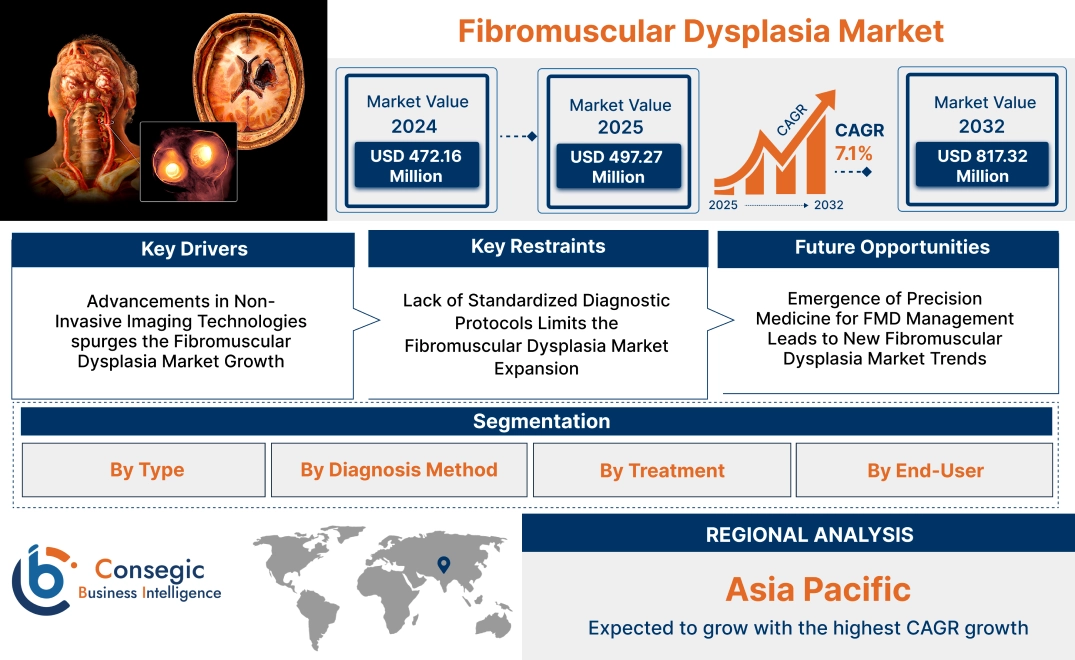
Fibromuscular Dysplasia Market size is estimated to reach over USD 817.32 Million by 2032 from a value of USD 472.16 Million in 2024 and is projected to grow by USD 497.27 Million in 2025, growing at a CAGR of 7.1% from 2025 to 2032.
Fibromuscular Dysplasia Market Scope & Overview:
Fibromuscular dysplasia (FMD) is a rare vascular condition characterized by abnormal cell growth in the arteries, leading to narrowing, aneurysms, or dissections. FMD predominantly affects medium-sized arteries, including those in the renal and carotid regions. Its features include asymptomatic progression, arterial stenosis, and higher risks of stroke and hypertension. Effective management of FMD includes early detection, lifestyle adjustments, and interventional therapies. The condition requires careful monitoring to prevent complications. FMD treatments and diagnostics are widely utilized in healthcare settings, including hospitals, diagnostic laboratories, and specialized vascular clinics. These solutions ensure improved patient outcomes through timely intervention. End-use industries involve healthcare providers, medical device manufacturers, and pharmaceutical companies focused on treating and managing vascular diseases.
Fibromuscular Dysplasia Market Dynamics - (DRO) :
Key Drivers:
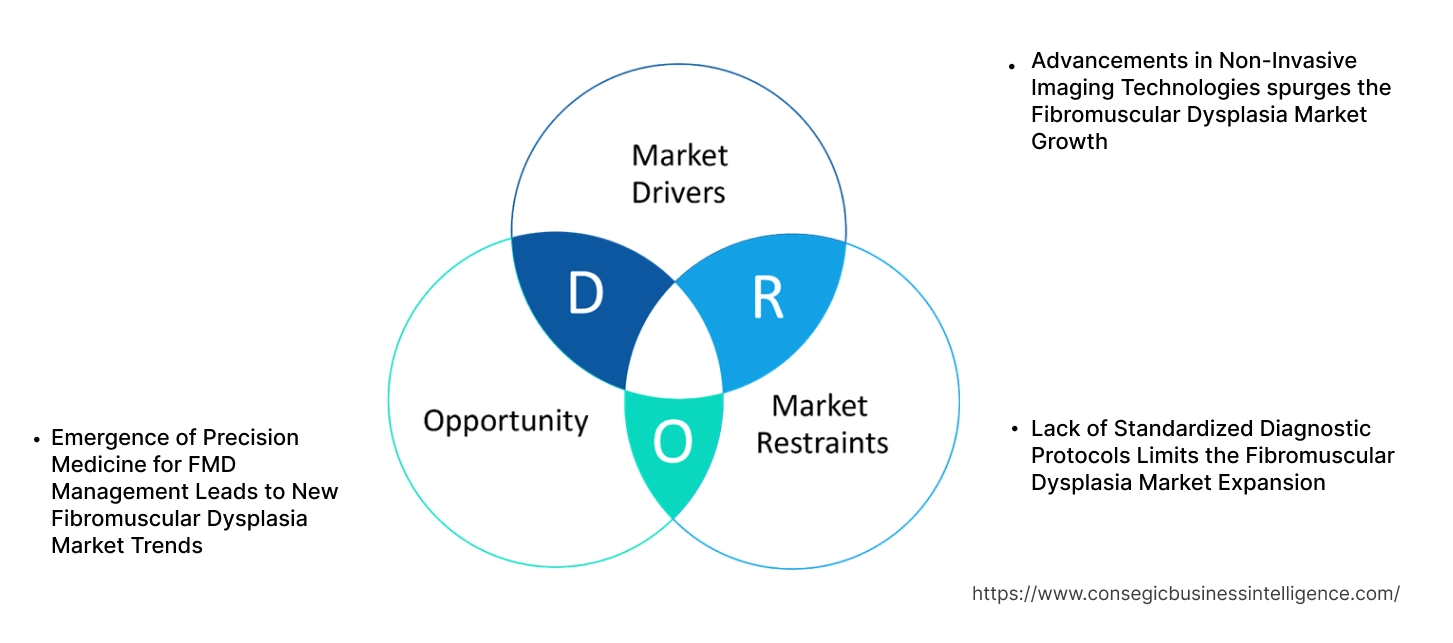
Advancements in Non-Invasive Imaging Technologies spurges the Fibromuscular Dysplasia Market Growth
The development of non-invasive imaging technologies like duplex ultrasound and computed tomography angiography (CTA) is revolutionizing the diagnosis of FMD. These technologies provide precise visualization of arterial abnormalities, significantly improving early detection rates. For instance, CTA offers detailed imaging of arterial walls, aiding in identifying vascular irregularities without invasive procedures. The enhanced accuracy and safety of these diagnostic tools encourage widespread adoption among healthcare professionals, facilitating timely interventions for FMD. Therefore, the continuous advancements in non-invasive imaging technologies are bolstering the Fibromuscular Dysplasia market expansion.
Key Restraints:
Lack of Standardized Diagnostic Protocols Limits the Fibromuscular Dysplasia Market Expansion
The absence of standardized diagnostic protocols for FMD poses significant challenges to consistent diagnosis and treatment. FMD often presents with varying symptoms, leading to misdiagnosis or delayed identification. Healthcare providers rely on a combination of imaging techniques, clinical evaluations, and expert interpretation, which creates disparities in diagnostic outcomes. For instance, the reliance on subjective expertise rather than standardized criteria affects diagnostic accuracy, particularly in under-resourced regions. This lack of uniformity limits the effective management of FMD and hampers market growth. Therefore, addressing the absence of standardized diagnostic protocols is critical to overcoming this down trend.
Future Opportunities :
Emergence of Precision Medicine for FMD Management Leads to New Fibromuscular Dysplasia Market Trends.
The application of precision medicine in managing FMD is anticipated to create transformative fibromuscular dysplasia market opportunities. Precision medicine focuses on tailoring treatment plans based on genetic, environmental, and lifestyle factors specific to each patient. This approach is especially a promising trend for conditions like FMD, where pathophysiological variations complicate standard treatment approaches. Research initiatives exploring genetic markers and individualized therapies are gaining momentum. For example, collaborations between biotech firms and academic institutions are working towards identifying biomarkers to predict disease progression and response to treatment. The adoption of precision medicine is expected to redefine FMD management, offering targeted therapies that enhance patient outcomes and foster innovation within the fibromuscular dysplasia industry, leading to far-reaching uptrends.
Fibromuscular Dysplasia Market Segmental Analysis :
By Type:
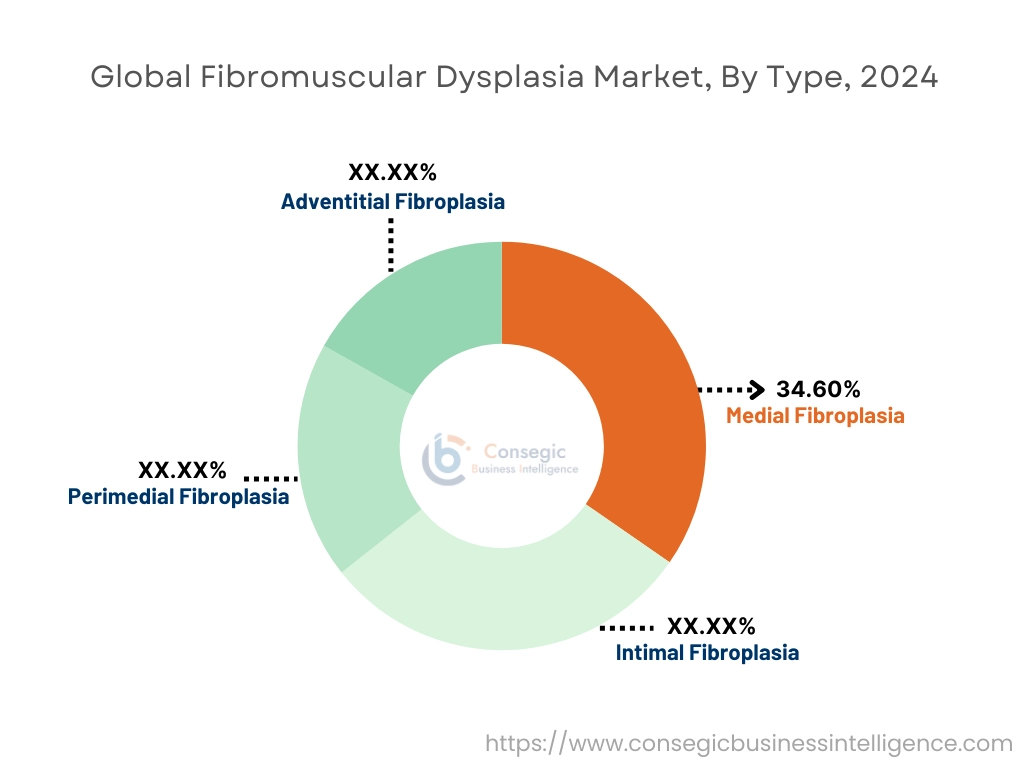
Based on type, the market is segmented into intimal fibroplasia, medial fibroplasia, perimedial fibroplasia, and adventitial fibroplasia.
The medial fibroplasia segment accounted for the largest revenue in the fibromuscular dysplasia market share by 34.60% in 2024.
- Medial fibroplasia primarily affects middle-aged women, with renal arteries being the most affected sites.
- It is often associated with hypertension, leading to a higher prevalence in populations with chronic cardiovascular conditions.
- Supportive programs aimed at increasing public awareness and early detection initiatives bolster the dominance of this segment.
- Comprehensive treatment protocols for medial fibroplasia enhance patient outcomes, ensuring sustained Fibromuscular Dysplasia Market demand.
- Therefore, Fibromuscular Dysplasia Market analysis suggests that Medial fibroplasia is a current Fibromuscular Dysplasia Market trend owing to its prevalence, association with hypertension, and enhanced detection and treatment efforts.
The perimedial fibroplasia segment is anticipated to register the fastest CAGR during the forecast period.
- Enhanced awareness and improved imaging techniques aid in identifying perimedial fibroplasia, previously underdiagnosed due to its rarity.
- Its association with complex arterial complications increases reliance on advanced therapeutic approaches.
- Research collaborations to understand its pathophysiology further stimulate growth in this segment.
- The increasing number of specialized healthcare facilities focused on rare arterial conditions supports this segment's expansion.
- Thus, according to market analysis, Perimedial fibroplasia is gaining trend due to improved diagnostic capabilities and the growing focus on rare arterial complications, leading to Fibromuscular Dysplasia Market growth.
By Diagnosis Method:
Based on diagnosis method, the market is categorized into angiography, duplex ultrasound, magnetic resonance angiography (MRA), computed tomography angiography (CTA), and others.
The angiography segment accounted for the largest revenue share in 2024.
- Angiography remains essential for detailed visualization of arterial irregularities, aiding in effective treatment planning.
- Its ability to identify aneurysms and stenosis with high accuracy ensures its continued application in clinical settings.
- Integration of digital advancements in angiography systems enhances workflow efficiency and diagnostic accuracy.
- Training programs for healthcare professionals ensure widespread adoption and effective utilization of angiographic techniques.
- Therefore, the Fibromuscular Dysplasia Market analysis says that, Angiography trends in the diagnostic methods due to its precision in visualizing arterial irregularities and advancements in related technologies.
The CTA segment is anticipated to register the fastest CAGR during the forecast period.
- CTA provides enhanced patient comfort by minimizing procedural invasiveness while maintaining high diagnostic precision.
- Increasing affordability and availability of CTA equipment across emerging markets drive its adoption.
- Technological upgrades in CT scanners improve imaging speeds and radiation safety, promoting their clinical use.
- Demand for quick turnaround times in diagnostics fosters growth in the CTA segment.
- Thus, according to market analysis, CTA is experiencing rapid uptrend, owing to the demand for its non-invasive nature, technological advancements, and rising accessibility in emerging regions leading to Fibromuscular Dysplasia Market opportunities.
By Treatment:
Based on treatment, the market is segmented into medication, surgery, and others.
The medication segment accounted for the largest revenue share in 2024.
- Pharmacological interventions such as beta-blockers and ACE inhibitors address hypertension effectively, a common symptom in FMD.
- Easy accessibility of medications through retail pharmacies ensures consistent Fibromuscular Dysplasia market demand.
- The availability of generic drugs lowers treatment costs, enhancing adoption rates across income groups.
- Ongoing clinical trials for novel therapeutic drugs expand the treatment landscape for FMD.
- Therefore, according to market analysis, the medication segment dominates due to its efficacy in managing symptoms and widespread accessibility across healthcare systems.
The surgery segment is anticipated to register the fastest CAGR during the forecast period.
- Minimally invasive procedures, such as percutaneous transluminal angioplasty, are becoming the preferred surgical options for arterial narrowing.
- Increasing healthcare investments in surgical infrastructure enable access to advanced treatments globally.
- High success rates of surgical interventions encourage greater adoption among patients with severe conditions.
- Partnerships between hospitals and device manufacturers contribute to innovations in surgical tools and techniques.
- Therefore, market analysis suggests that, surgery exhibits robust development potential, fueled by advancements in minimally invasive techniques and increasing healthcare investments.
By End-User:
Based on end-user, the market is segmented into hospitals, specialty clinics, and diagnostic centers.
The hospitals segment accounted for the largest revenue share in 2024.
- Hospitals house advanced diagnostic and treatment equipment, providing end-to-end solutions for FMD.
- Multidisciplinary teams in hospitals ensure comprehensive care, improving patient outcomes and boosting demand.
- Government funding for hospital infrastructure supports advancements in FMD care services.
- Integration of telemedicine platforms enhances accessibility, particularly in underserved areas, furthering Fibromuscular Dysplasia Market share.
- Hospitals lead the end-user segment, offering advanced diagnostic and treatment capabilities alongside comprehensive care approaches.
The specialty clinics segment is anticipated to register the fastest CAGR during the forecast period.
- Specialty clinics focus exclusively on vascular conditions, enabling personalized and accurate treatment pathways.
- Rising patient preference for outpatient settings due to convenience and shorter wait times drives demand.
- Increasing collaborations between clinics and research institutions for clinical trials enhance treatment options.
- Expansion of specialty clinic networks in urban and suburban areas facilitates access to advanced care services.
- Specialty clinics demonstrate strong growth prospects due to their targeted services and growing preference for outpatient care.
Regional Analysis:
The regions covered are North America, Europe, Asia Pacific, the Middle East and Africa, and Latin America.
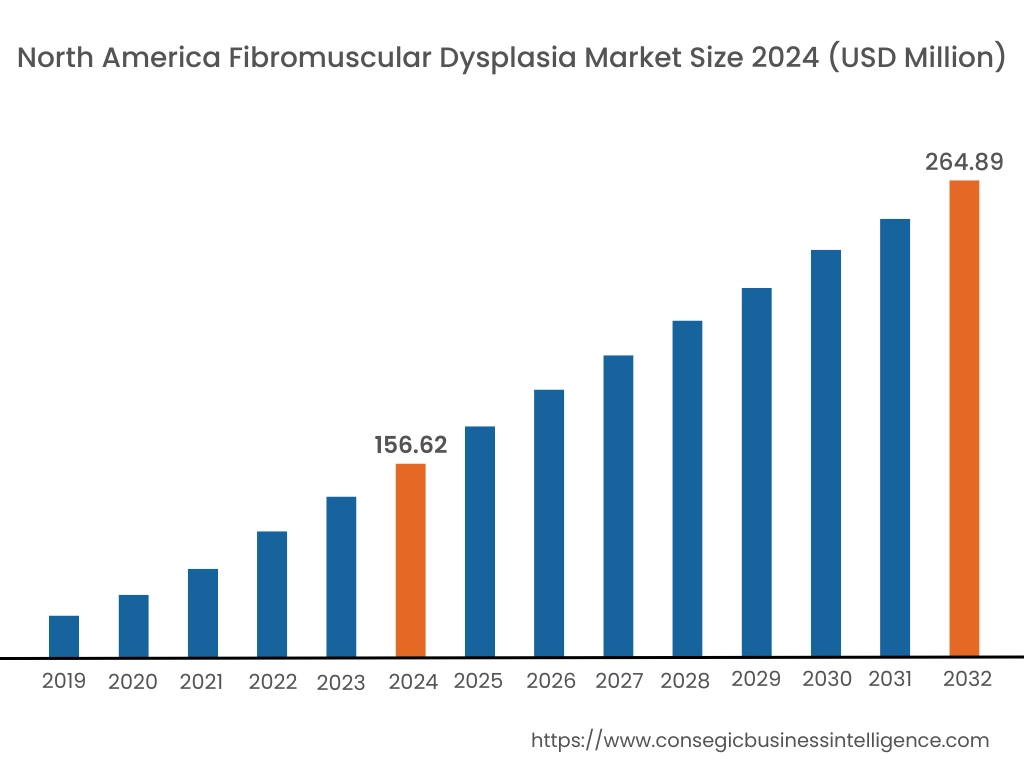
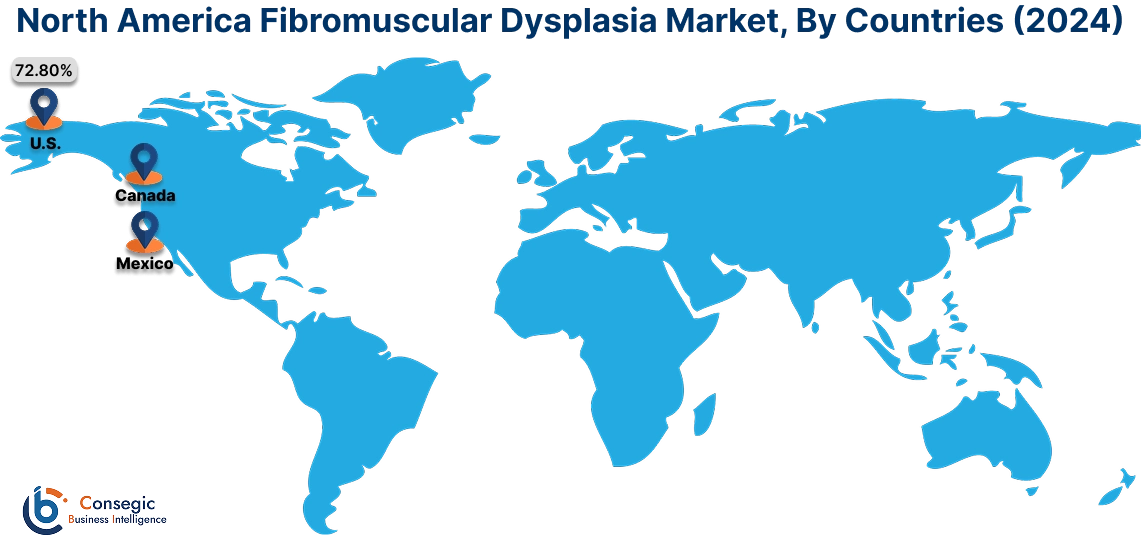
In 2024, North America was valued at USD 156.62 Million and is expected to reach USD 264.89 Million in 2032. In North America, the U.S. accounted for the highest share of 72.80% during the base year of 2024. The Fibromuscular Dysplasia Industry in North America benefits from advanced healthcare infrastructure and high awareness among patients and healthcare providers. The United States leads in research initiatives, focusing on early diagnosis and effective treatment approaches. Access to specialized healthcare facilities supports market performance in this region. Increasing prevalence among middle-aged women further influences demand for advanced diagnostic tools and minimally invasive procedures.
In Asia Pacific, the market is experiencing the fastest growth with a CAGR of 7.5% over the forecast period. In Asia-Pacific, the market is growing due to improving healthcare access and increasing awareness campaigns. Countries like China and India are investing in healthcare infrastructure, enabling better diagnosis of rare diseases. The region experiences challenges due to limited knowledge of fibromuscular dysplasia among medical professionals, particularly in rural areas. However, government support for healthcare advancements encourages market development.
Europe's Market is supported by well-established healthcare systems and strong focus on research collaborations. Countries like Germany, the UK, and France emphasize early diagnosis through advanced imaging techniques. Regional health organizations promote awareness among healthcare providers, improving patient outcomes. Ongoing studies on genetic predisposition and treatment efficacy contribute to the market's progression.
The Market in the Middle East and Africa faces challenges due to limited specialized diagnostic capabilities in certain regions. However, countries like the UAE and Saudi Arabia are enhancing healthcare infrastructure to address rare diseases. Awareness initiatives are gradually improving knowledge among healthcare professionals, which aids in timely diagnosis. Access to advanced treatment options remains concentrated in urban areas.
Latin America’s Fibromuscular Dysplasia Market is shaped by rising investments in healthcare and increasing diagnostic capabilities in countries like Brazil and Mexico. Efforts to improve medical education about rare conditions enhance awareness among healthcare providers. Economic disparities in the region affect access to advanced diagnostic tools, limiting market penetration in remote areas. Local collaborations with global healthcare organizations support market activity.
Top Key Players & Market Share Insights:
The global fibromuscular dysplasia market is highly competitive with major players providing treatments to the national and international markets. Key players are adopting several strategies in research and development (R&D), product innovation, and end-user launches to hold a strong position in the Fibromuscular Dysplasia Market. Key players in the Fibromuscular Dysplasia industry include-
- Abbott Laboratories (United States)
- Medtronic plc (Ireland)
- Boston Scientific Corporation (United States)
- AngioDynamics, Inc. (United States)
- Merit Medical Systems, Inc. (United States)
- Koninklijke Philips N.V. (Netherlands)
- Cook Medical LLC (United States)
- Terumo Corporation (Japan)
- Braun Melsungen AG (Germany)
- Cardinal Health, Inc. (United States)
Recent Industry Developments :
Innovations:
- In September 2024, researchers at Mount Sinai identified a key driver of FMD, the protein-coding gene UBR4 and its associated gene expression supernetwork, which regulates vascular function. This discovery could lead to new treatments for FMD in the future.
Fibromuscular Dysplasia Market Report Insights:
| Report Attributes | Report Details |
| Study Timeline | 2019-2032 |
| Market Size in 2032 | USD 817.32 Million |
| CAGR (2025-2032) | 7.1% |
| By Type |
|
| By Diagnosis Method |
|
| By Treatment |
|
| By End-User |
|
| By Region |
|
| Key Players |
|
| North America | U.S. Canada Mexico |
| Europe | U.K. Germany France Spain Italy Russia Benelux Rest of Europe |
| APAC | China South Korea Japan India Australia ASEAN Rest of Asia-Pacific |
| Middle East and Africa | GCC Turkey South Africa Rest of MEA |
| LATAM | Brazil Argentina Chile Rest of LATAM |
| Report Coverage |
|
Key Questions Answered in the Report
How big is the Fibromuscular Dysplasia Market? −
In 2024, the Fibromuscular Dysplasia Market was USD 472.16 million.
What will be the potential market valuation for the Fibromuscular Dysplasia Market by 2032? +
In 2032, the market size of Fibromuscular Dysplasia Market is expected to reach USD 817.32 million.
What are the segments covered in the Fibromuscular Dysplasia Market report? +
The type, diagnosis method, treatment, and end-user are the segments covered in this report.
Who are the major players in the Fibromuscular Dysplasia Market? +
Abbott Laboratories (United States), Medtronic plc (Ireland), Boston Scientific Corporation (United States), Koninklijke Philips N.V. (Netherlands), Cook Medical LLC (United States), Terumo Corporation (Japan), B. Braun Melsungen AG (Germany), Cardinal Health, Inc. (United States), AngioDynamics, Inc. (United States), Merit Medical Systems, Inc. (United States) are the major players in the Fibromuscular Dysplasia market.
Overview
Reputation & Certifications


Our Services
- Market Intelligence & Forecasting
- Custom Research Solutions
- Market Entry Strategy
- Competitive Intelligence
- Customer Insights
- Industry Innovation Analysis
- Investment Advisory