Jump to Content
Flexible Endoscopes Market - Size, Share, Industry Trends, and Forecasts (2025 - 2032)
Flexible Endoscopes Market Size:
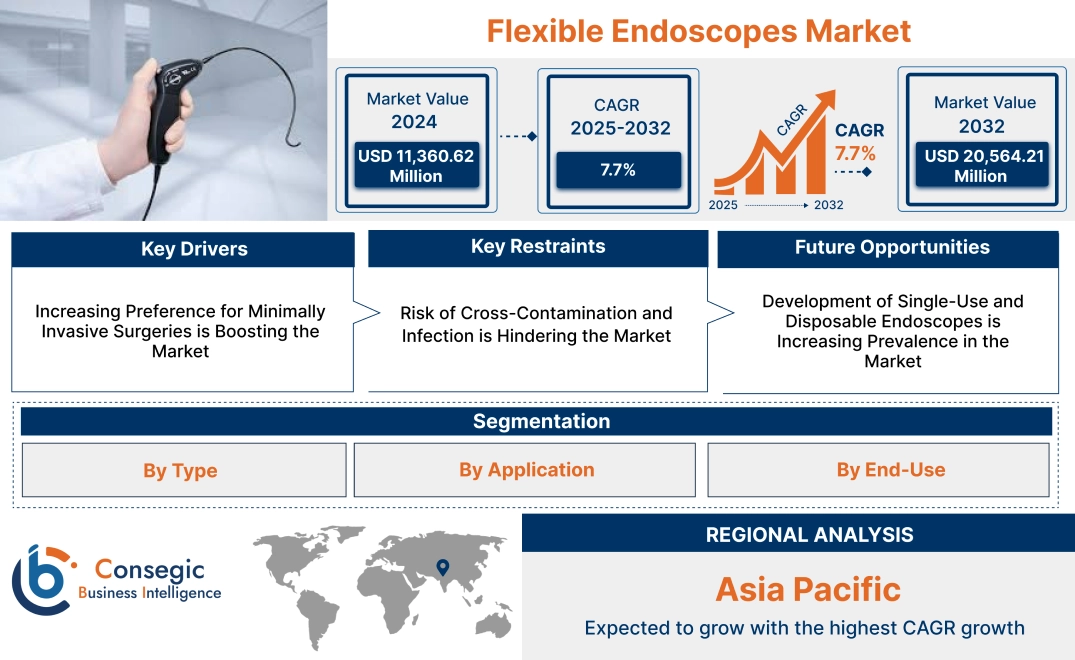
Flexible Endoscopes Market size is estimated to reach over USD 20,564.21 Million by 2032 from a value of USD 11,360.62 Million in 2024 and is projected to grow by USD 12,032.96 Million in 2025, growing at a CAGR of 7.7% from 2025 to 2032.
Flexible Endoscopes Market Scope & Overview:
Flexible endoscopes are advanced medical devices used for minimally invasive diagnostic and therapeutic procedures across various medical specialties. Flexible endoscopes are designed with a pliable, slender structure that allows access to internal organs and cavities with minimal patient discomfort. These devices are equipped with advanced imaging and illumination systems to provide real-time visuals of the targeted areas. Key characteristics of flexible endoscopes include high maneuverability, superior optical quality, and compatibility with a range of medical tools for biopsy, suction, or therapeutic interventions. The benefits include improved diagnostic accuracy, reduced recovery time for patients, and enhanced procedural efficiency. Applications span gastrointestinal endoscopy, bronchoscopy, urology, gynecology, and otolaryngology. End-users include hospitals, specialty clinics, and ambulatory surgical centers, driven by the increasing prevalence of chronic diseases, rising trends for minimally invasive procedures, and advancements in endoscopic technology.
Flexible Endoscopes Market Dynamics - (DRO) :
Key Drivers:
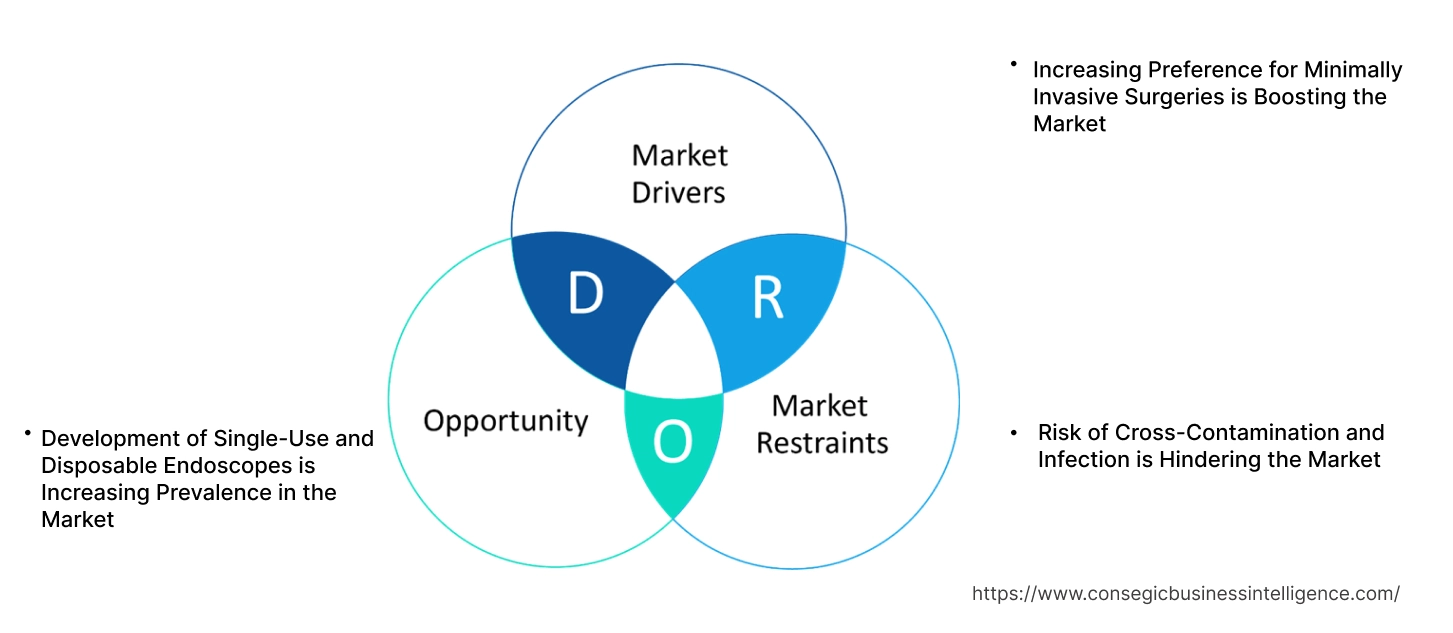
Increasing Preference for Minimally Invasive Surgeries is Boosting the Market
Minimally invasive surgeries (MIS) have revolutionized modern healthcare by offering procedures that reduce recovery time, minimize complications, and lower hospitalization durations compared to traditional open surgeries. Flexible endoscopes are integral to this trend as they provide enhanced visualization and access to internal organs through small incisions or natural orifices. Their application spans various specialties, including gastrointestinal endoscopy, bronchoscopy, and urological procedures.
Trends in patient-centric care and advancements in surgical techniques have elevated the adoption of flexible endoscopes for diagnostics and treatment. These devices enhance procedural precision, allowing physicians to perform complex interventions with minimal trauma. The analysis underscores their critical role in improving procedural outcomes and patient satisfaction, making them indispensable in the era of minimally invasive healthcare.
Key Restraints:
Risk of Cross-Contamination and Infection is Hindering the Market
One of the significant challenges associated with flexible endoscopes is the risk of cross-contamination and healthcare-associated infections (HAIs). Improper cleaning, disinfection, or sterilization during reprocessing can result in residual pathogens, posing serious health risks to patients. This concern is especially pronounced in high-volume healthcare settings, where the risk of lapses in reprocessing protocols increases.
Trends in infection prevention and stricter regulatory guidelines are placing greater emphasis on effective reprocessing practices. However, adhering to these stringent protocols requires investments in training, equipment, and monitoring systems, which can increase operational complexities and costs. The analysis highlights that addressing these challenges is vital to maintaining patient safety and the credibility of flexible endoscopic procedures.
Future Opportunities :
Development of Single-Use and Disposable Endoscopes is Increasing Prevalence in the Market
The development of single-use and disposable flexible endoscopes offers a transformative solution to the challenges of cross-contamination and reprocessing. These devices eliminate the need for cleaning and sterilization, ensuring a completely sterile instrument for each procedure. This innovation aligns with flexible endoscopes market trends in infection control and operational efficiency, addressing both patient safety concerns and procedural convenience.
Single-use flexible endoscopes are particularly advantageous in outpatient clinics, emergency settings, and remote healthcare facilities where access to advanced reprocessing equipment may be limited. Analysis suggests that their growing availability and cost-effectiveness are creating significant flexible endoscopes market opportunities for manufacturers to cater to healthcare providers seeking reliable and simplified endoscopic solutions. By reducing infection risks and streamlining workflows, these devices are reshaping the landscape of endoscopic procedures.
Flexible Endoscopes Market Segmental Analysis :
By Type:
Based on type, the endoscopy devices market is segmented into video endoscopes and fiber optic endoscopes.
The video endoscopes segment accounted for the largest revenue in the flexible endoscopes market share in 2024.
- Video endoscopes dominate the market due to their ability to provide high-resolution images, enabling precise diagnosis and treatment.
- These devices are widely used across various applications, including gastrointestinal and bronchoscopy procedures, for their superior visualization capabilities.
- Advancements in video endoscope technology, such as 4K and 3D imaging, have significantly enhanced their adoption in hospitals and specialty clinics.
- The increasing flexible endoscopes market trends for minimally invasive procedures and the growing prevalence of gastrointestinal and respiratory disorders have further propelled the growth of this segment.
The fiber optic endoscopes segment is anticipated to register the fastest CAGR during the forecast period.
- Fiber optic endoscopes are gaining traction due to their flexibility, lightweight nature, and cost-effectiveness compared to video endoscopes.
- These devices are especially beneficial for procedures requiring narrow and intricate pathways, such as ENT and urology endoscopy.
- The rising adoption of portable and compact endoscopic solutions in ambulatory surgical centers and diagnostic centers is driving the growth of this segment.
- Continuous innovation in fiber optic technology, aimed at improving image clarity and procedural efficiency, is expected to boost their adoption further.
By Application:
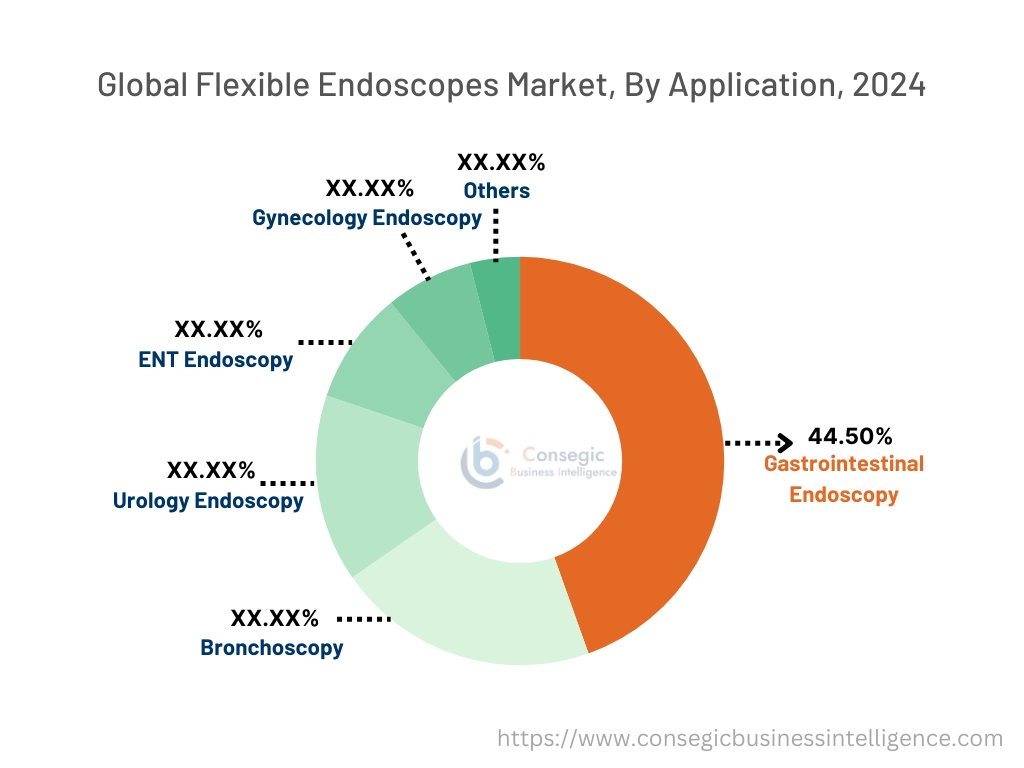
Based on application, the endoscopy devices market is segmented into gastrointestinal endoscopy, bronchoscopy, urology endoscopy, ENT endoscopy, gynecology endoscopy, and others.
The gastrointestinal endoscopy segment accounted for the largest revenue of 44.50% in the flexible endoscopes market share in 2024.
- Gastrointestinal endoscopy is widely used for diagnosing and treating conditions such as ulcers, colorectal cancer, and inflammatory bowel diseases.
- The increasing prevalence of gastrointestinal disorders globally has driven the demand for advanced endoscopic devices in this segment.
- Technological advancements, such as capsule endoscopy and robotic-assisted procedures, have significantly improved diagnostic accuracy and patient outcomes.
- The growing emphasis on preventive healthcare and routine screenings for gastrointestinal cancers has further supported the flexible endoscopes market growth of this segment.
The urology endoscopy segment is anticipated to register the fastest CAGR during the forecast period.
- Urology endoscopy is increasingly adopted for procedures such as cystoscopy and ureteroscopy, driven by the rising prevalence of urological conditions like kidney stones and urinary tract infections.
- The growing geriatric population, which is more prone to urological disorders, has further boosted the demand for advanced urology endoscopic devices.
- Minimally invasive techniques enabled by endoscopy devices reduce recovery time and complications, enhancing their adoption in urology.
- Continuous innovation in endoscopic instruments, such as flexible and disposable cystoscopes, is expected to drive significant growth in this segment.
By End-Use:
Based on end-use, the endoscopy devices market is segmented into hospitals, ambulatory surgical centers, specialty clinics, diagnostic centers, and others.
The hospitals segment accounted for the largest revenue share in 2024.
- Hospitals are the primary end-users of endoscopy devices due to the high volume of diagnostic and therapeutic procedures performed in these settings.
- The availability of advanced infrastructure and skilled professionals in hospitals has strengthened the adoption of high-tech endoscopy devices.
- Increasing investments in hospital infrastructure, especially in emerging economies, are driving the demand for modern endoscopic technologies.
- The rising prevalence of chronic diseases and the growing emphasis on early diagnosis and minimally invasive treatments have further propelled the trends for endoscopy devices in hospitals.
The ambulatory surgical centers segment is anticipated to register the fastest CAGR during the forecast period.
- Ambulatory surgical centers are increasingly adopting endoscopy devices due to their cost-effectiveness and shorter patient stays compared to hospitals.
- These centers cater to the growing trends for outpatient procedures, particularly in gastrointestinal, ENT, and gynecological endoscopy.
- The rising focus on healthcare accessibility and the establishment of advanced surgical centers in rural and urban areas are driving the flexible endoscopes market growth of this segment.
- Technological advancements in portable and user-friendly endoscopic devices have further fueled their adoption in ambulatory surgical centers.
Regional Analysis:
The regions covered are North America, Europe, Asia Pacific, the Middle East and Africa, and Latin America.
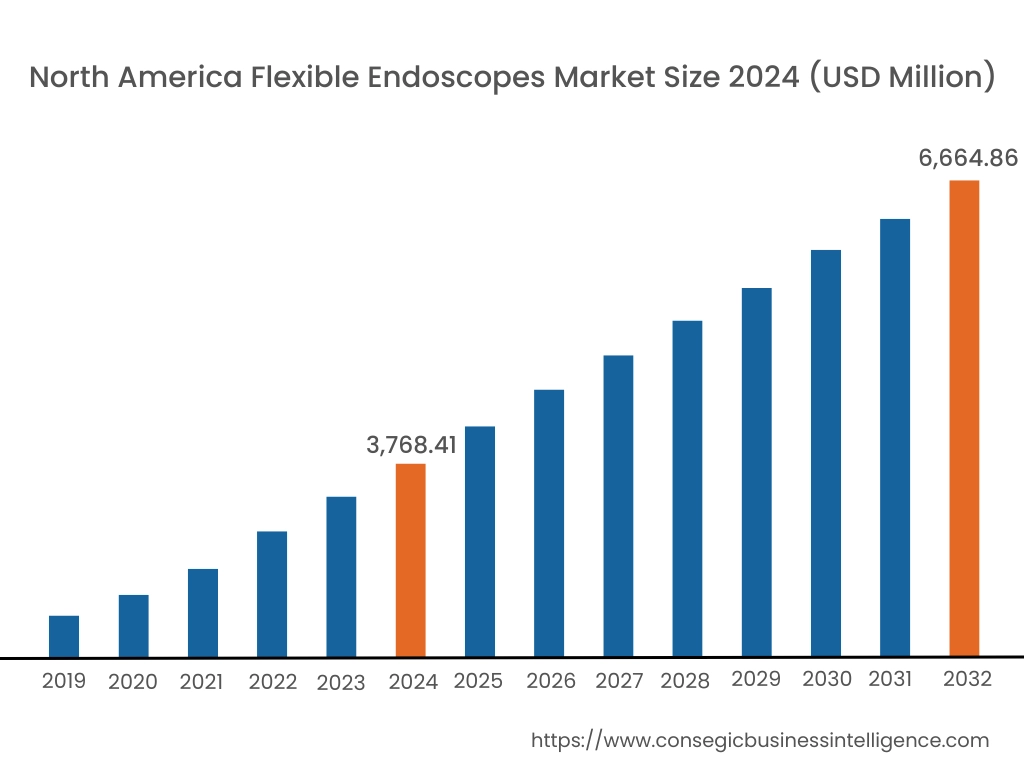
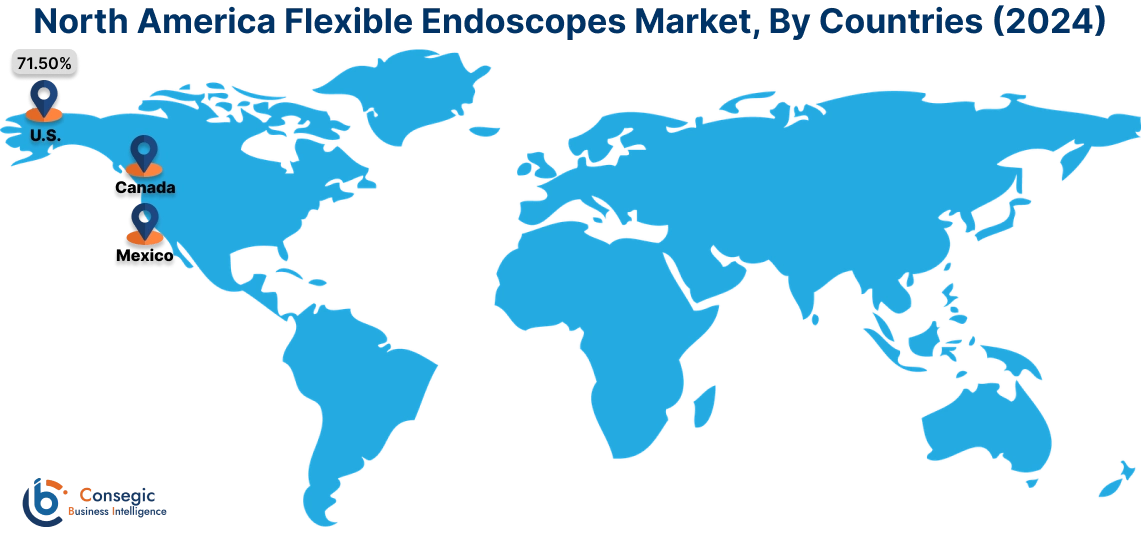
In 2024, North was valued at USD 3,768.41 Million and is expected to reach USD 6,664.86 Million in 2032. In North America, the U.S. accounted for the highest share of 71.50% during the base year of 2024. North America holds a significant share in the flexible endoscopes market, driven by advanced healthcare infrastructure, high adoption of minimally invasive procedures, and increasing prevalence of gastrointestinal and respiratory disorders. As per the flexible endoscopes market analysis, the U.S. leads the region due to strong demand for diagnostic and therapeutic endoscopies, supported by well-established healthcare systems and growing awareness about early disease detection. Canada contributes with rising investments in advanced medical technologies and increasing trends for flexible endoscopes in smaller healthcare facilities. However, the high cost of endoscopic procedures may limit access for certain patient groups.
In Asia Pacific, the market is experiencing the fastest growth with a CAGR of 8.1% over the forecast period. The flexible endoscopes market analysis portrays, that it is fueled by rapid urbanization, growing healthcare investments, and increasing prevalence of gastrointestinal and respiratory diseases in China, India, and Japan. China dominates the region with rising trends for advanced endoscopic technologies in hospitals and diagnostic centers, supported by government initiatives to improve healthcare infrastructure. India’s growing healthcare sector drives the adoption of cost-effective flexible endoscopes for diagnostics and treatment. Japan focuses on high-precision endoscopic systems, leveraging its strong medical technology industry. However, affordability issues in rural areas and limited access to advanced technologies may hinder development in certain parts of the region.
Europe is a prominent market, supported by an aging population, an increasing prevalence of chronic diseases, and strong government healthcare policies. Countries like Germany, France, and the UK are key contributors. Germany drives demand with its advanced healthcare facilities and high adoption of endoscopic techniques in diagnostics and treatment. France emphasizes the use of flexible endoscopes in gastroenterology and pulmonology, while the UK focuses on leveraging innovative endoscopy solutions to improve patient outcomes. However, budget constraints in some public healthcare systems may pose challenges to widespread adoption.
The Middle East & Africa region is witnessing steady growth in the global flexible endoscopes market, driven by increasing investments in healthcare infrastructure and rising awareness about minimally invasive procedures. In the Middle East, countries like Saudi Arabia and the UAE are adopting advanced endoscopic technologies in hospitals and specialty clinics to enhance diagnostic capabilities. As per the analysis of Africa, South Africa is an emerging market, focusing on improving access to diagnostic tools for gastrointestinal and respiratory diseases. However, limited healthcare infrastructure and reliance on imports for advanced medical devices may restrict flexible endoscopes market expansion in the region.
Latin America is an emerging market for flexible endoscopes, with Brazil and Mexico leading the region. Brazil’s expanding healthcare sector and increasing prevalence of gastrointestinal and pulmonary disorders drive trends for flexible endoscopes in diagnostic and therapeutic procedures. Mexico emphasizes the use of these devices in public and private healthcare facilities to address rising patient needs. The region is also exploring partnerships with global medical device manufacturers to enhance access to advanced endoscopic systems. However, economic instability and inconsistent healthcare policies may pose challenges to market expansion in smaller economies.
Top Key Players and Market Share Insights:
The flexible endoscopes market is highly competitive with major players providing products to the national and international markets. Key players are adopting several strategies in research and development (R&D), product innovation, and end-user launches to hold a strong position in the flexible endoscopes market. Key players in the flexible endoscopes industry include -
- Olympus Corporation (Japan)
- Fujifilm Holdings Corporation (Japan)
- Ambu A/S (Denmark)
- Richard Wolf GmbH (Germany)
- Becton, Dickinson and Company (BD) (USA)
- HOYA Corporation (PENTAX Medical) (Japan)
- Karl Storz SE & Co. KG (Germany)
- Boston Scientific Corporation (USA)
- Stryker Corporation (USA)
- Medtronic plc (Ireland)
Recent Industry Developments :
Collaborations:
- In May 2024, the Korea Institute of Machinery and Materials (KIMM), in collaboration with Chungnam National University Hospital, developed an innovative robotic bronchial endoscopic system designed to address airway blockages in infants, young children, and the elderly.
Flexible Endoscopes Market Report Insights :
| Report Attributes | Report Details |
| Study Timeline | 2019-2032 |
| Market Size in 2032 | USD 20,564.21 Million |
| CAGR (2025-2032) | 7.7% |
| By Type |
|
| By Application |
|
| By End-Use |
|
| By Region |
|
| Key Players |
|
| North America | U.S. Canada Mexico |
| Europe | U.K. Germany France Spain Italy Russia Benelux Rest of Europe |
| APAC | China South Korea Japan India Australia ASEAN Rest of Asia-Pacific |
| Middle East and Africa | GCC Turkey South Africa Rest of MEA |
| LATAM | Brazil Argentina Chile Rest of LATAM |
| Report Coverage |
|
Key Questions Answered in the Report
What is the projected size of the Flexible Endoscopes Market by 2032? −
Flexible Endoscopes Market size is estimated to reach over USD 20,564.21 Million by 2032 from a value of USD 11,360.62 Million in 2024 and is projected to grow by USD 12,032.96 Million in 2025, growing at a CAGR of 7.7% from 2025 to 2032.
What factors are driving the growth of the Flexible Endoscopes Market? +
The increasing preference for minimally invasive surgeries, advancements in endoscopic technologies, and the rising prevalence of chronic diseases are key drivers of the market. q
What challenges does the Flexible Endoscopes Market face? +
The risk of cross-contamination and healthcare-associated infections (HAIs) due to improper cleaning and sterilization of reusable devices poses significant challenges.
What are the emerging opportunities in the Flexible Endoscopes Market? +
The development of single-use and disposable flexible endoscopes represents a transformative opportunity. These devices eliminate the need for reprocessing, and addressing infection concerns while ensuring operational efficiency and safety in outpatient and remote healthcare settings.
Overview
Reputation & Certifications


Our Services
- Market Intelligence & Forecasting
- Custom Research Solutions
- Market Entry Strategy
- Competitive Intelligence
- Customer Insights
- Industry Innovation Analysis
- Investment Advisory