Jump to Content
Hemangioblastoma Market - Size, Share, Industry Trends, and Forecasts (2025-2032)
Hemangioblastoma Market Size:
Hemangioblastoma Market size is growing with a CAGR of 7.1% during the forecast period (2025-2032), and the market is projected to be valued at USD 5,218.77 Million by 2032 from USD 3,021.38 Million in 2024.
Hemangioblastoma Market Scope & Overview:
Hemangioblastomas (HBs) are rare, benign, and highly vascularized tumors that primarily arise within the central nervous system, most commonly in the cerebellum and spinal cord. It also arises in the retina. These tumors originate from abnormal blood vessel growth and cause various neurological symptoms depending on their location and size. While generally benign, this tumor still significantly impacts a patient's quality of life due to the pressure they exert on surrounding tissues, potentially leading to symptoms such as headaches, dizziness, loss of balance, and neurological deficits. Importantly, these tumors are often associated with von Hippel-Lindau (VHL) disease, a genetic disorder that increases the risk of developing various types of tumors, including those in the brain, spinal cord, and other organs.
The diagnosis of this condition typically involves a combination of imaging studies, such as MRI and CT scans, along with angiography and genetic testing among others. Treatment options generally include surgical resection, radiotherapy, and targeted therapies among others. The key end-users in this market include hospitals, clinics, ambulatory surgical centers, and diagnostic centers among others.
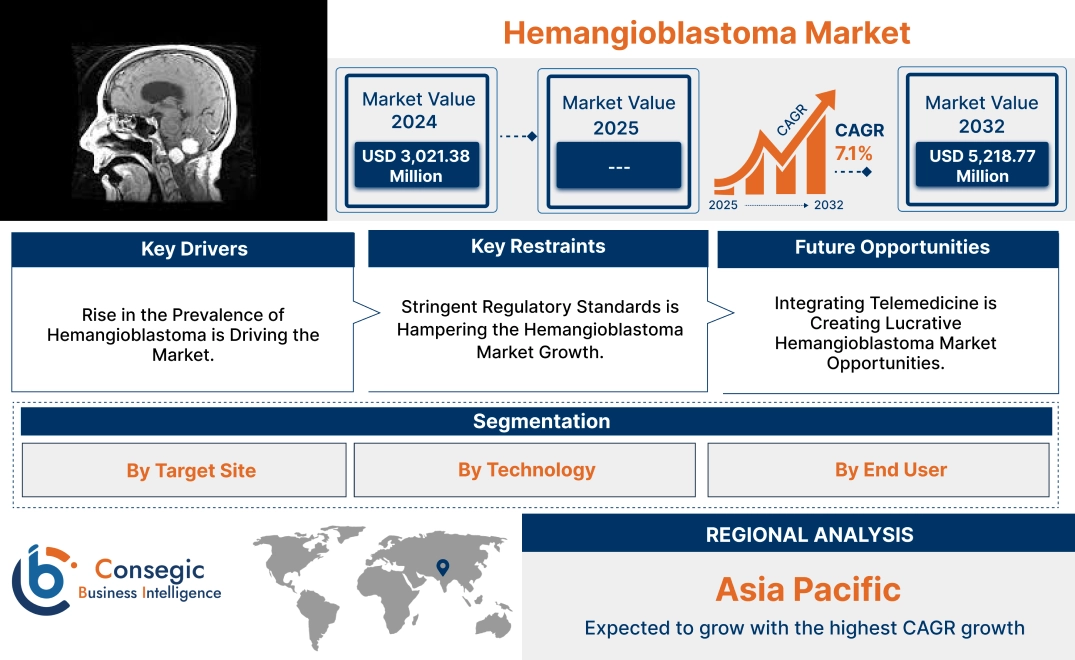
Hemangioblastoma Market Dynamics - (DRO) :
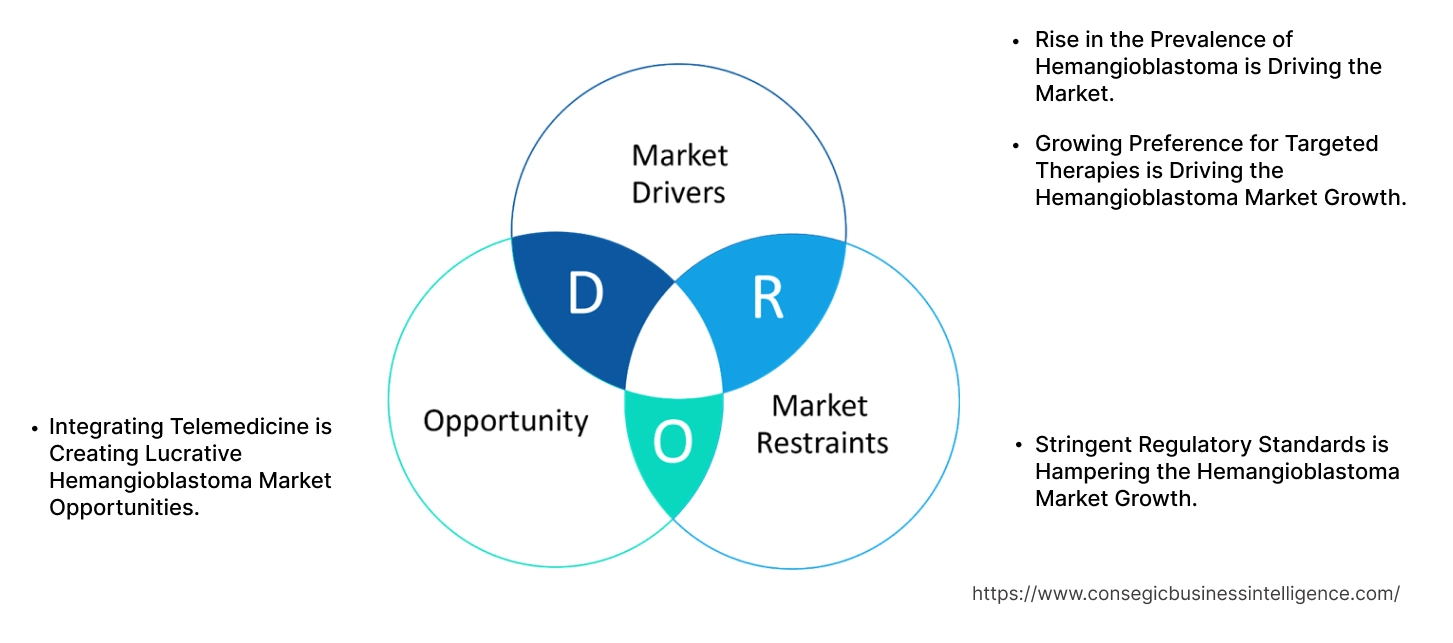
Key Drivers:
Rise in the Prevalence of Hemangioblastoma is Driving the Market.
The rising prevalence of hemangioblastoma is a key driver of market development. While relatively rare, the incidence of this tumor is increasing, particularly among individuals with von Hippel-Lindau (VHL) disease. This increase in incidence is directly linked to improved diagnostic capabilities, such as advanced neuroimaging techniques (MRI), which allow for earlier and more accurate diagnosis of these tumors.
- According to the article published in the Exploration of Neuroscience journal states that, hemangioblastomas are considered rare, accounting for only 1-2.5% of all intracranial tumors. Within the central nervous system (CNS), they represent approximately 3%, and specifically within the posterior cranial fossa, they comprise 7-8% of all tumors.
Furthermore, the growing awareness among healthcare professionals about the clinical procedures and diagnostic criteria of this tumor is leading to earlier detection and improved patient management. Thus, this increased awareness and early diagnosis are driving the demand for effective treatment options, such as surgical resection, radiotherapy, and emerging targeted therapies, thereby propelling the hemangioblastoma market expansion.
Growing Preference for Targeted Therapies is Driving the Hemangioblastoma Market Growth.
The growing preference for targeted therapies is significantly driving the development of the market. Traditional treatment approaches for this tumor, such as surgery and radiotherapy, while effective in many cases, have limitations and potential side effects. In recent years, there has been a significant shift towards targeted therapies, which aim to specifically inhibit the development and proliferation of tumor cells while minimizing damage to healthy tissues. The development of novel targeted therapies, such as tyrosine kinase inhibitors (TKIs), offers a promising therapeutic route for this condition, particularly in patients with von Hippel-Lindau (VHL) disease. These agents specifically target the molecular pathways involved in tumor development and angiogenesis, providing a more personalized and potentially more effective treatment approach compared to traditional therapies. Additionally, there are advancements in the treatment of this tumor, offering a targeted therapeutic approach with the potential to effectively manage these tumors and improve patient outcomes.
- In April 2021, Belzutifan, a targeted inhibitor of hypoxia-inducible factor (HIF)-2α, has been approved by the FDA for the treatment of patients with VHL disease-associated central nervous system hemangioblastomas, as well as renal cell carcinomas and pancreatic neuroendocrine tumors that do not require immediate surgery.
Thus, this growing preference for targeted therapies is driving significant innovation and investment in the market, with the development of new agents and combination therapies expected to further enhance treatment outcomes for patients with this rare condition.
Key Restraints:
Stringent Regulatory Standards is Hampering the Hemangioblastoma Market Growth.
The development of the market is being hindered by stringent regulatory standards governing the development and approval of new therapies. The pharmaceutical industry faces significant hurdles in navigating the complex regulatory landscape, which necessitates rigorous clinical trials to demonstrate safety and efficacy. These trials are often lengthy and expensive, requiring substantial time and resources. Moreover, obtaining regulatory approvals for novel therapies is a time-consuming and crucial process, delaying the market entry of promising new treatments for this tumor.
These stringent regulatory requirements, while crucial for ensuring patient safety, inadvertently impede market development by increasing the time and cost associated with drug development and commercialization. They also result in significant disruptions to traditional industry supply chains and loss of current raw materials uses. Moreover, evolving federal regulations accelerate annual compliance and operating costs throughout healthcare industry supply chains, Thus, the impact of these stringent regulations on the market expansion is multifaceted.
Future Opportunities :
Integrating Telemedicine is Creating Lucrative Hemangioblastoma Market Opportunities.
Telemedicine platforms accelerate remote consultations with neurologists and other specialists, enabling earlier diagnosis and access to expert opinions, particularly for patients residing in remote or underserved areas. Telemedicine also facilitates the remote monitoring of patients, allowing for early detection of disease progression or complications. Furthermore, telemedicine platforms use various educational resources and provide support to patients and their families, improving overall patient outcomes and enhancing the quality of life.
The increasing adoption of telemedicine technologies is expected to significantly impact the market by improving patient access to care, enhancing treatment adherence, and ultimately improving patient outcomes. Furthermore, telemedicine platforms facilitate the exchange of patient information, including medical history, images, and treatment responses, between healthcare providers, improving coordination of care and optimizing treatment outcomes.
- In June 2024, Apollo Telehealth's launch of a telemedicine-driven primary health center in India. By leveraging telemedicine technology, the center connects patients with specialists from across India, facilitating timely diagnosis and treatment of various health conditions such as HB, including those requiring targeted medications. This initiative plays a crucial role in improving health care in the region by enhancing access to specialized expertise and ensuring continuity of care for patients with conditions like HB.
Thus, the growing adoption of telemedicine, coupled with advancements in digital health technologies, is expected to drive market growth by improving patient access to care, and enhancing treatment outcomes, thus creating lucrative hemangioblastoma market opportunities in the coming years.
Hemangioblastoma Market Segmental Analysis :
By Target Site:
Based on target site, the market is categorized into cerebellum, spinal cord, retina, and others.
Trends in the Target site:
- The rise in the frequency of tumor occurrence and its significant impact on motor coordination and balance is influencing the segment.
- Spinal cord hemangioblastoma are associated with neurological deficits making them a critical factor for research and treatment.
The cerebellum segment accounted for the largest market share in 2024.
- Cerebellar hemangioblastomas are the most common type, arising within the cerebellum, a crucial part of the brain responsible for coordinating movement, balance, and posture.
- These tumors, characterized by abnormal blood vessel growth, cause a range of symptoms, including headaches, dizziness, loss of balance, difficulty coordinating movements, and problems with speech.
- For instance, according to the article published in the Radiopedia, in November 2024, states that, hemangioblastomas have a strong predilection for the cerebellum accounting for 45-65% of all cases.
- Treatment primarily focuses on surgical removal of the tumor, aiming for complete resection while minimizing neurological damage.
- Thus, these aforementioned factors are influencing the hemangioblastoma market demand.
The retina segment is expected to grow at the fastest CAGR over the forecast period.
- Retinal hemangioblastomas are rare, benign tumors that originate within the retina of the eye.
- These tumors vary in size and appearance, often presenting as reddish-orange masses within the retina.
- They cause a range of visual disturbances, including blurred vision, floaters, and vision loss, due to factors like retinal detachment, hemorrhage, and exudation.
- Early detection and appropriate management are crucial for preserving vision in patients with this condition.
- Treatment options include laser photocoagulation, cryotherapy, photodynamic therapy, and in some cases, surgical intervention.
- Thus, these aforementioned factors are influencing the hemangioblastoma market trends in the coming years.
By Type:
Based on type, the market is categorized into diagnosis and treatment.
Trends in Type:
- Rise in the trends for functional MRI, is increasing for tumors in critical area for brain stem to map functional regions.
- Integration of AI in imaging tools is influencing the development of the segment.
The treatment segment accounted for the largest market share in the year 2024 and is expected to grow at the fastest CAGR over the forecast period.
- The treatment segment is further classified into surgical resection, radiotherapy, targeted therapies, and others.
- Surgical resection remains the vital option of treatment, aiming for complete removal of the tumor while minimizing neurological damage.
- Additionally, stereotactic radiosurgery (SB), a non-invasive technique that delivers highly focused radiation to the tumor, is an effective option for smaller tumors.
- Moreover, radiotherapy possesses a positive success rate for the treatment of this condition.
- For instance, according to the data published in the Exploration of Neuroscience Journal, in 2023, the success rate for SB is reported to be 100%, while whole brain radiation therapy has a success rate of 38.8% for the treatment of HB.
- Thus, based on the market analysis, these aforementioned factors are influencing the hemangioblastoma market demand in the coming years.
By End User:
Based on end user, the market is categorized into hospitals & clinics, ambulatory surgical centers, diagnostics centers, and others
Trends in the End User:
- Rise in the trends for specialized clinics and care centers for enhanced treatment is influencing the treatment development.
- Growing trend for advanced diagnostic tools in hospitals is propelling the development of the segment.
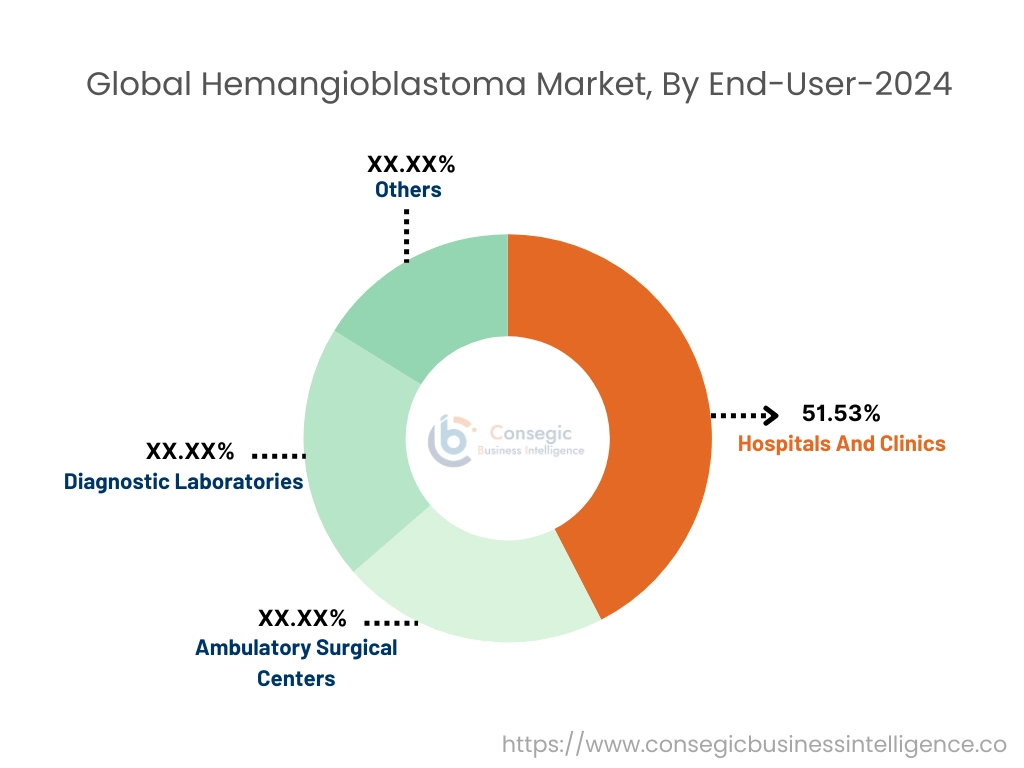
The hospitals & clinics segment accounted for the largest market share of 51.53% in the year 2024.
- Hemangioblastomas tumor mainly require advanced diagnostic imaging techniques like MRI and specialized surgical interventions. Hospitals with dedicated neurosurgery departments and equipped with novel technology are crucial for the successful management of these cases.
- Furthermore, hospitals mainly consist of multidisciplinary teams of specialists, who collaborate to provide comprehensive care for patients with this condition.
- Hospitals also play a vital role in research and development, conducting clinical trials to evaluate new treatment options and improve patient outcomes for this rare and challenging condition.
- For instance, in 2024, UCLA's multidisciplinary program for von Hippel-Lindau (VHL) disease including hemangioblastomas, significantly transforms the outlook for affected individuals.
- Thus, based on the market analysis, these aforementioned factors are influencing the hemangioblastoma market expansion.
The ambulatory surgical centers segment is expected to grow at the fastest CAGR over the forecast period.
- Ambulatory surgical centers (ASCs) are increasingly playing a significant role as end-users in the market.
- These facilities offer a cost-effective and convenient alternative to hospital settings for various diagnostics and treatment.
- ASCs are equipped with modern technology and staffed by experienced physicians and nurses, enabling them to perform a range of outpatient procedures safely and efficiently.
- The shift towards outpatient settings for the treatment and diagnosis offers several advantages, including reduced healthcare costs, improved patient convenience, and faster recovery times.
- Thus, based on the market analysis, the aforementioned factors are influencing segment growth and hemangioblastoma market trends in the coming years.
Regional Analysis:
The regional segment includes North America, Europe, Asia Pacific, the Middle East and Africa, and Latin America.
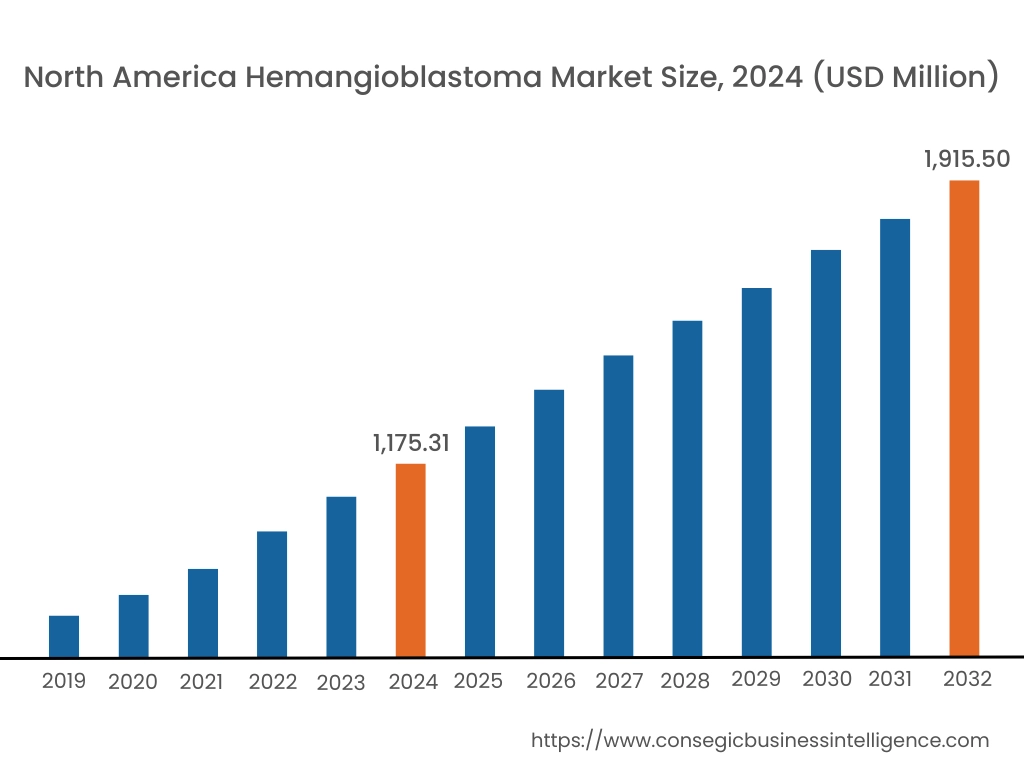
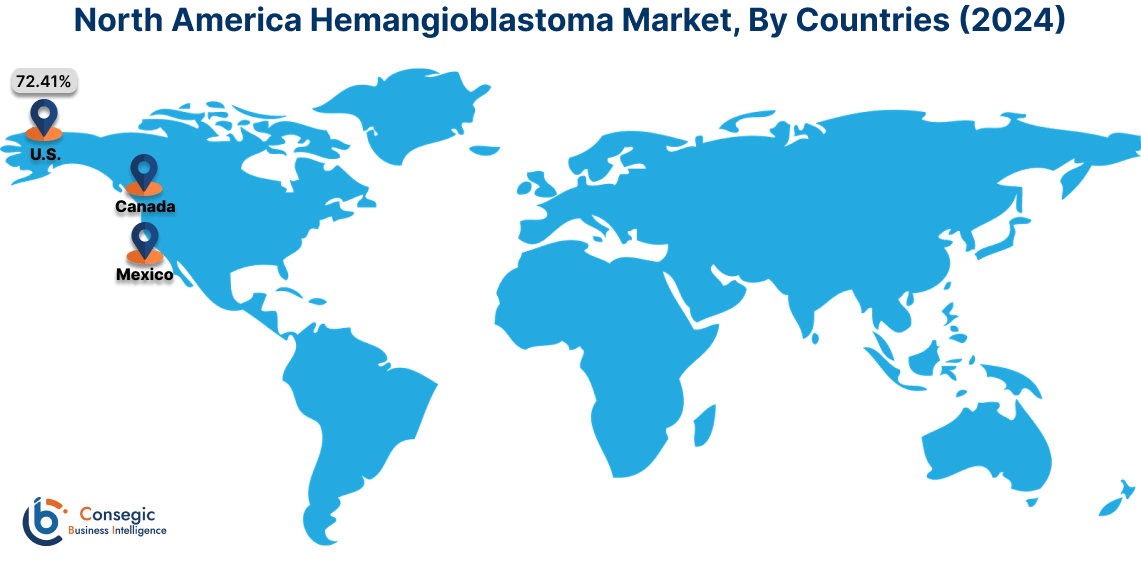
In 2024, North America accounted for the highest hemangioblastoma market share at 38.9% and was valued at USD 1,175.31 Million and is expected to reach USD 1,915.50 Million in 2032. In North America, U.S. accounted for the highest market share of 72.41%during the base year of 2024. In North America, advancements in neuroimaging techniques like MRI have significantly improved the diagnosis and management of hemangioblastomas. This has led to earlier detection and more accurate characterization of these tumors, allowing for timely interventions. Additionally, ongoing research and clinical trials are actively exploring novel therapeutic approaches, such as targeted therapies, to improve patient outcomes and enhance the quality of life for individuals affected by this condition.
- According to the data published by the Journal of Pathology and Translational Medicine, states that Hemangioblastomas are rare CNS neoplasms, with an estimated incidence of 0.141 per 100,000 person-years in the United States.
Thus, as per the hemangioblastoma market analysis, the prevalence of the condition along with the development of novel diagnostic and treatment approaches is influencing the market demand.
Asia Pacific is experiencing the fastest growth with a CAGR of 8.4% over the forecast period. Asia Pacific region consists of developing research and development developing facilities along with a developed healthcare industry. Access to specialized healthcare facilities and advanced diagnostic and treatment modalities vary significantly across different countries within the region. This disparity in healthcare access impacts on the timely diagnosis and management of this condition, in turn leading to delays in treatment and poorer outcomes. Raising awareness among healthcare professionals and the general public about the signs and symptoms of this condition, improving access to quality healthcare, and developing more affordable and accessible treatment options are crucial for improving the management of this condition in the Asia-Pacific region.
Europe makes a significant contribution to the Hemangioblastoma market analysis. Innovations such as rapid advancements in diagnostic imaging technologies enable accurate and timely diagnoses of HB conditions. This is crucial for effective treatment outcomes. Additionally, there is a growing awareness of rare neurological conditions amongst both healthcare professionals and the public. This has increased awareness, in turn leading to increased research efforts. Overall, these combined factors are not only driving development in the European market but are also fostering a more proactive and informed healthcare landscape.
The Middle East and Africa (MEA) region is witnessing notable market demand characterized by significant potential. Healthcare systems in these regions exhibit significant heterogeneity, with varying levels of access to advanced diagnostic tools like MRI and specialized neurosurgical care. This disparity led to delays in diagnosis and limited access to optimal treatment options, such as surgical resection or stereotactic radiosurgery. Furthermore, the prevalence of von Hippel-Lindau (VHL) disease, a genetic disorder that increases the risk of this condition, varies across different populations within the region. Raising awareness about the signs and symptoms of hemangioblastoma is also crucial for early detection and timely intervention.
Latin America is an emerging region in the Hemangioblastoma market share, with significant potential for innovation. Advancements in neuroimaging and neurosurgical techniques are improving patient outcomes. Factors such as limited access to specialized neurologists, neurosurgeons, and advanced imaging modalities in some regions delay diagnosis and hinder timely access to appropriate care. Moreover, socioeconomic factors, such as poverty and limited healthcare insurance coverage, pose significant barriers to accessing quality healthcare and affording necessary treatments. This analysis presents a substantial potential for the development of new therapies to capitalize on this burgeoning market and contribute to the region's market demand.
Top Key Players and Market Share Insights:
The Hemangioblastoma market is highly competitive with major players providing precise products to the national and international markets. Key players are adopting several strategies in research and development (R&D) and product innovation to hold a strong position in the global Hemangioblastoma market. Key players in the market include-
- Merck & Co., Inc (United States)
- SimSon Pharma Limited (India)
- BEBIG Medical. (Germany)
- Siemens Healthcare Private Limited (India)
- Elekta (Sweden)
- Varian Medical Systems, Inc. (United States)
- Accuray Incorporated (United States)
- GE HealthCare (United States)
Hemangioblastoma Market Report Insights :
| Report Attributes | Report Details |
| Study Timeline | 2019-2032 |
| Market Size in 2032 | USD 5,218.77 Million |
| CAGR (2025-2032) | 7.1% |
| By Target Site |
|
| By Technology |
|
| By End User |
|
| By Region |
|
| Key Players |
|
| North America | U.S. Canada Mexico |
| Europe | U.K. Germany France Spain Italy Russia Benelux Rest of Europe |
| APAC | China South Korea Japan India Australia ASEAN Rest of Asia-Pacific |
| Middle East and Africa | GCC Turkey South Africa Rest of MEA |
| LATAM | Brazil Argentina Chile Rest of LATAM |
| Report Coverage |
|
Key Questions Answered in the Report
How big is the Hemangioblastoma market? −
In 2024, the Hemangioblastoma market is USD 3,021.38 Million.
Which is the fastest-growing region in the Hemangioblastoma market? +
Asia Pacific is the fastest-growing region in the Hemangioblastoma market.
What specific segmentation details are covered in the Hemangioblastoma market? +
By Target Site, Type and End User segmentation details are covered in the Hemangioblastoma market.
Who are the major players in the Hemangioblastoma market? +
Merck & Co., Inc (United States), SimSon Pharma Limited (India), Elekta (Sweden) are some of the major players in the market.
Overview
Reputation & Certifications


Our Services
- Market Intelligence & Forecasting
- Custom Research Solutions
- Market Entry Strategy
- Competitive Intelligence
- Customer Insights
- Industry Innovation Analysis
- Investment Advisory