Jump to Content
Hydrophobic Interaction Chromatography Market - Size, Share, Industry Trends, and Forecasts (2025-2032)
Hydrophobic Interaction Chromatography Market Size:
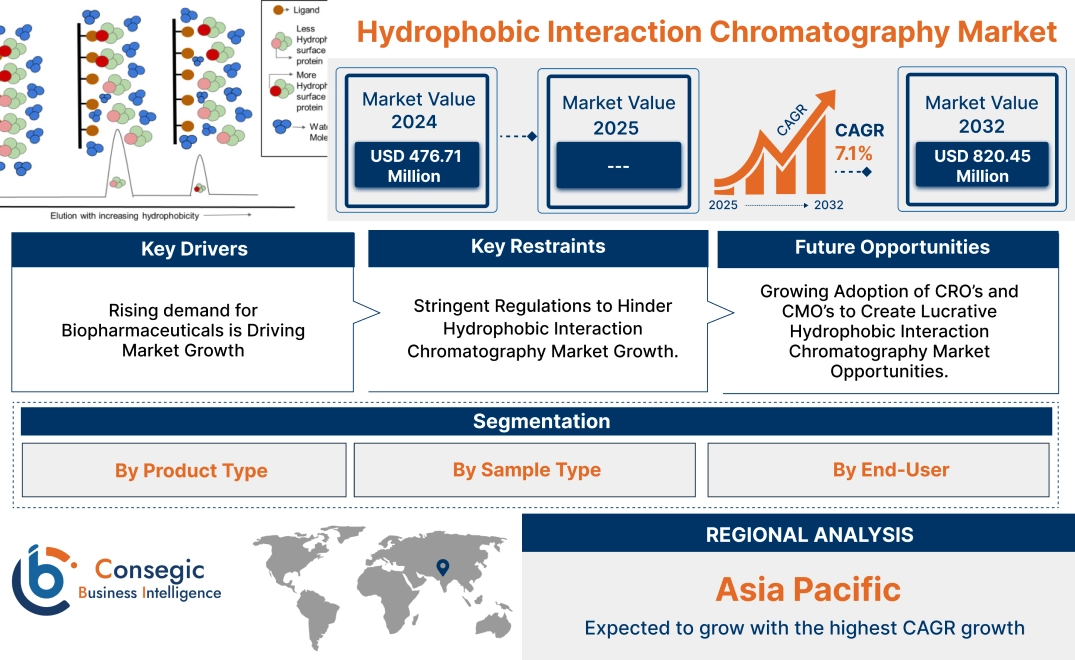
The Hydrophobic Interaction Chromatography Market size is growing with a CAGR of 7.1% during the forecast period (2025-2032), and the market is projected to be valued at USD 820.45 Million by 2032 from USD 476.71 Million in 2024.
Hydrophobic Interaction Chromatography Market Scope & Overview:
Hydrophobic Interaction Chromatography Market is a technique that separated molecules on the basis of their hydrophobicity. This technique is used for protein purification while simultaneously managing biological activity. This technique is widely used due to the application of matrices and conditions which operate under less changing conditions. One of the primary advantages of this technique is the increase in detection sensitivity. Few of the key applications of HIC are purification of antibody, manufacturing of vaccine, amongst others. For monoclonal antibody purification, HIC is widely incorporated. It separates antibodies from DNA impurities and host cell proteins. Additionally, it acts as an alternative to affinity chromatography.
Hydrophobic Interaction Chromatography Market Dynamics - (DRO) :
Key Drivers:
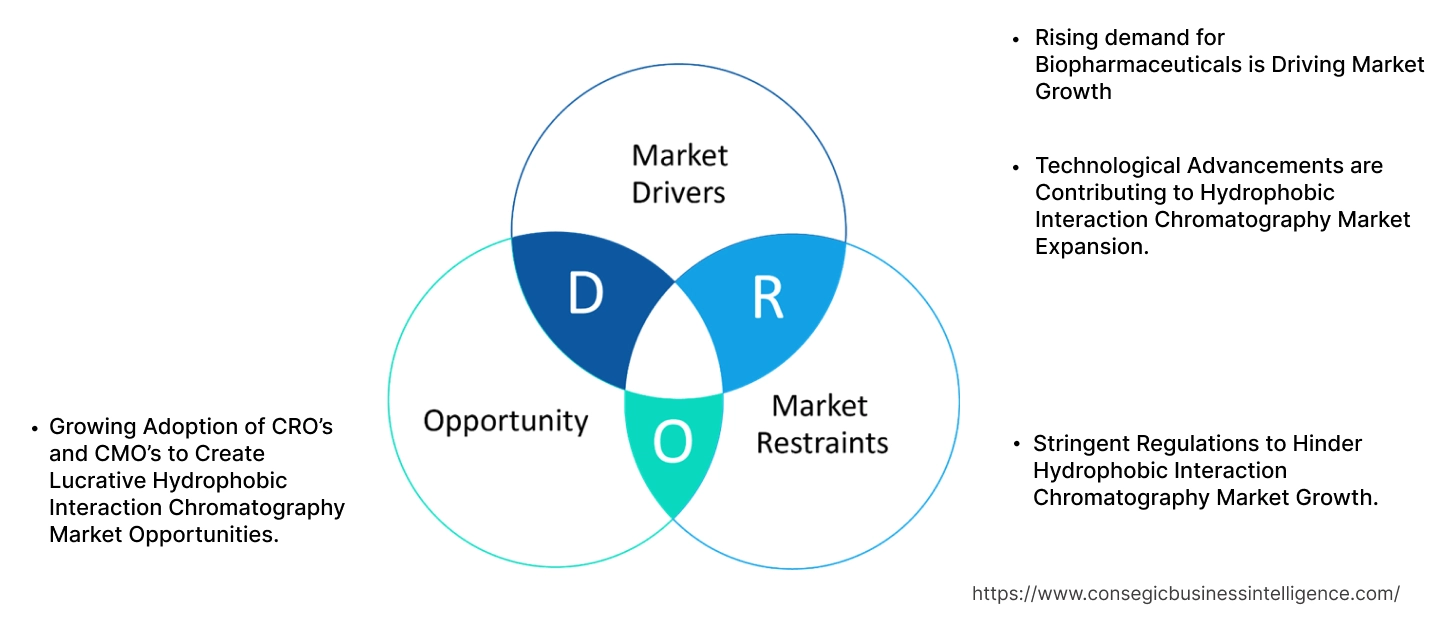
Rising demand for Biopharmaceuticals is Driving Market Growth
The rising requirement of biopharmaceuticals is due to an increase in the prevalence of chronic diseases. Biopharmaceuticals include monoclonal antibodies, vaccines amongst others. These are used for targeted treatments for diseases such as cancer, diabetes, and autoimmune disorders, amongst others.
- For instance, in 2023, according to NCBI, the increase in overall auto-immune disease prevalence and incidences grew by 12.5% and 19.1% respectively
Additionally, to produce biomolecules to treat chronic diseases, stringent purification processes have to be conducted. HIC is a prevalent technique for their purification process. As the requirement for these therapies continues to rise, need of HIC is also increasing. This signifies the importance of HIC technique as a critical driver of growth within the biopharmaceutical industry.
Technological Advancements are Contributing to Hydrophobic Interaction Chromatography Market Expansion.
Several innovative advancements have been observed in the HIC industry within the past few years. A few of the key advancements include the design of ligands. These ligands are tailored specifically to enhance the protein separation and binding. This is done by tailoring the ligand with hydrophobic properties. Additionally, the development in columns allows for higher flow rate, improved mass transfer is observed. This has led to an increase in the time required for the separation process.
- For instance, in 2022, Bio-Rad Laboratories introduced EconoFit Low-Pressure Prepacked Chromatography Column Packs. These columns are designed specifically for screening of resin. This allows key players to select the optimal chemistry for the targeted condition.
These technological advancements are enhancing the effectiveness of HIC along with expanding its application in several industries.
Key Restraints:
Stringent Regulations to Hinder Hydrophobic Interaction Chromatography Market Growth.
The primary factor hindering the hydrophobic interaction chromatography market growth due to the stringent regulations is their approval and development process of new HIC’s. The development of new HIC resins require a significant amount of time as well as the initial investment required is substantial. The entire process requires thorough testing, regulatory paperwork amongst others in order to ensure the safety and effectiveness of the resin.
This length process impacts the launch of advanced and innovative HIC technologies that are expected to improve the process of antibody purification. Additionally, key players need to comply with the Good Manufacturing Practices (GMP) regulations to develop and use HIC systems and materials. In order to follow GMP regulations, a significant cost needs to be borne by the key players. Moreover, changes in these regulations disrupt the market growth, therefore suspending the time frame required for the development of HIC resins. This in turn leads to additional costs. These regulatory hurdles combined create significant hurdles in the HIC market.
Future Opportunities :
Growing Adoption of CRO’s and CMO’s to Create Lucrative Hydrophobic Interaction Chromatography Market Opportunities.
Contract Research Organizations (CROs) provide services to pharmaceutical and biotechnological companies. These services include research and development services at an early stage. The primary objective of CRO’s is to help these companies with clinical trial services. A few of these services are clinical research, clinical trial planning, regulatory frameworks amongst others. Similarly, Contract Manufacturing Organizations (CMOs) provide manufacturing solutions to pharmaceutical and biotechnological companies for their innovative product. A few of these solutions include formulation development, commercial production amongst others.
- For instance, according to Clinical Trials Arena, the introduction of clinical trials through CRO in 2024 are roughly more than 500.
These CROs and CMOs have advanced equipment and solutions, including expertise in chromatography, specialized hydrophobic interaction chromatography resins amongst others. This expertise helps them to provide purification services of high quality. These services help players that have limited in-house production. Additionally, by outsourcing purification of protein to CRO’s and CMO’s, key players can reduce significant cost. Therefore, by increase in the number of CRO’s and CMO’s creates lucrative hydrophobic interaction chromatography market opportunities over the forecast period.
Hydrophobic Interaction Chromatography Market Segmental Analysis :
By Product Type:
Based on Product Type, the market is categorized into resins, columns, membranes and others
Trends in the Product Type:
- There is an increased focus for reduction in environmental impact and improved biocompatibility while developing HIC resins
- The rising rate of adoption for high performance columns to provide increased throughput
The resin segment accounted for the largest market share in 2024 and is expected to grow at the fastest CAGR over the forecast period.
- HIC resin is currently dominating the market due to consistent new innovations. These innovations lead to advancement in turn contributing to the development of the market
- Innovative resins provide several properties such as greater recovery of protein, increase in binding capacities amongst others.
- Additionally, there is an increase in the adoption rate of resins in the biopharmaceutical industry for tailor specific purifications.
- This has led to the need for tailor specific resins that purify the proteins effectively by minimizing potential damage.
- For instance, in 2025, Bio-Rad Laboratories, Inc. introduced Nuvia wPrime 2A Media. It features polyacrylamide (acrylamide polymer) base bead resin that is used for small scale purification.
- Therefore, based on the market analysis, due to the above-mentioned factors, the insulin therapy segment is dominating the hydrophobic interaction chromatography market trend.
By Sample Type:
The sample type segment is categorized into monoclonal antibodies, enzymes, hormones, and others
Trends in the Sample Type
- The growing focus on production of tailor-specific monoclonal antibody therapies.
- The prevalence of hormonal disorders and demand for its treatment are increasing.
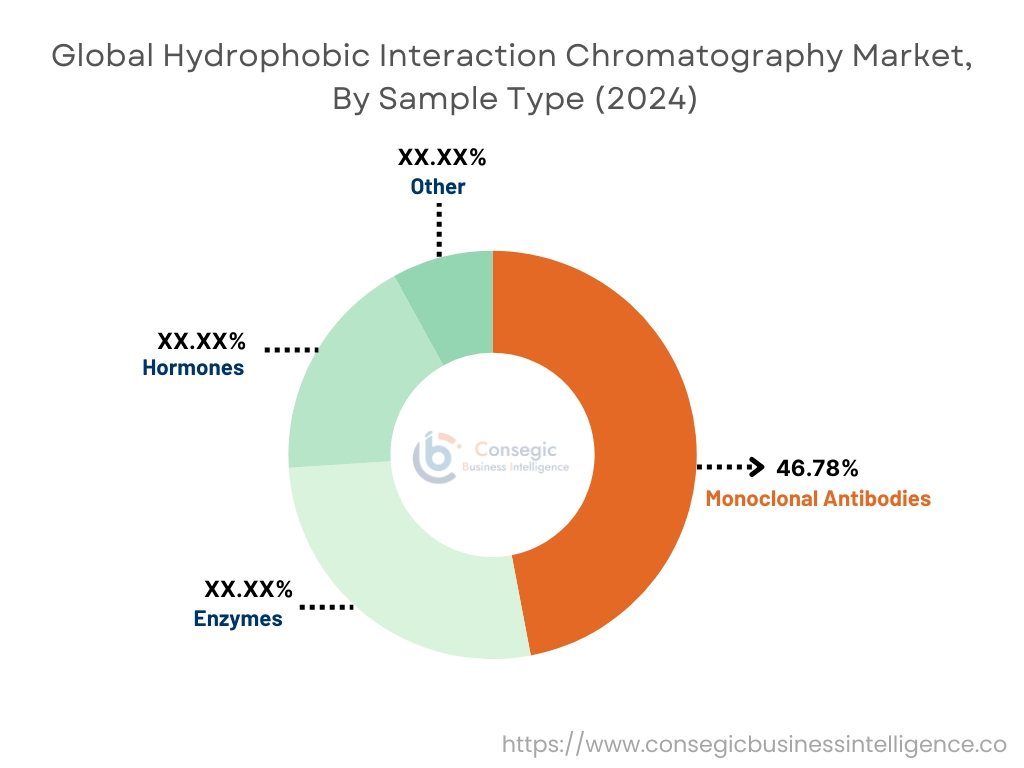
The monoclonal antibody segment accounted for the largest market share of 46.78% in 2024.
- The monoclonal antibodies segment is dominating the market in current scenarios. One of the factors that are contributing to its dominance is increasing cases of cancer, infectious diseases amongst others.
- To target this condition, monoclonal antibody-based therapies using HIC technique have shown higher effectives for treatment purposes as well as having helped to reduce the side effects when compared with the traditional treatment methods.
- For instance, according to Thermo Scientific, their MAbPac™ HIC column is one of the most widely used HIC column for separation of monoclonal antibodies. This separation has been conducted using HIC
- Thus, based on the market analysis, due to the above-mentioned factors, the monoclonal antibodies segment is dominating the market.
The hormonal segment is expected to grow at the fastest CAGR over the forecast period.
- The increasing prevalence of hormonal disorders is a major factor contributing to its fastest CAGR over the forecast period. Hormonal disorders include reproductive issues, diabetes amongst others.
- Thus, there is an increasing demand for HIC technique for effective purification to make sure the therapeutic agents are safe and quality.
- Additionally, new development has been observed in the hormonal therapies regarding the HIC technique. A few if the therapies include peptide hormones. These therapies require thorough purification process so that the desired outcome is achieved,
- Moreover, the requirements related to quality for development of hormones showcases the vital role of HIC to achieve high purity standards.
- These factors collectively contribute to the several opportunities provided by hormonal segment in the Hydrophobic Interaction Chromatography Market.
By End User:
Based on end user, the market is categorized into pharmaceutical and biotechnology companies, academic and research institutions, contract research organizations, and others
Trends in the End User:
- The increasing need for vaccines, monoclonal antibodies, and recombinant proteins in the biopharmaceutical industry.
The pharmaceutical and biotechnology companies segment accounted for the largest market share in 2024.
- The pharmaceutical and biotechnology companies play a prominent role in the
Hydrophobic Interaction Chromatography (HIC) market. This prominence is due to the drive in need for recombinant proteins, monoclonal antibodies amongst others.
- Additionally, these biomolecules have a critical role in addressing chronic conditions. Chronic conditions include cancer and autoimmune diseases, and pharmaceutical and biotechnology companies are the key players that develop treatment for these. Thus, an increase in this these cases leads to an increase in market revenue of these companies.
- For instance, in 2024, Tosoh Bioscience expanded its European headquarters in Germany. This expansion will specifically deal with purification, polymer analytical technologies and biomolecule analysis.
- Therefore, the strong reliance on hydrophobic interaction chromatography by pharmaceutical and biotechnology contributes to their prominence in the market, thus driving the hydrophobic interaction chromatography market demand and trends.
The contract research organizations segment is expected to grow at the fastest CAGR over the forecast period.
- The growing trend of pharmaceutical and biotechnology companies outsourcing their research and development activities is the primary factor driving the CRO market development.
- The pharmaceutical and biotechnology companies outsource in order to reduce the cost significantly
- CROs provide expertise in different chromatography techniques such as HIC. In addition to this, these organizations have advanced equipment and a skilled workforce. This allows them to provide superior services at less cost.
- CRO’s are preferred by companies that have a small or limited in-house production facility.
- Additionally, CROs also aim towards innovations for purification of protein by improving their effectiveness and safety.
- Based on the market analysis, these factors collectively contribute to the fastest CAGR for CRO segment, further leading to hydrophobic interaction chromatography market expansion.
Regional Analysis:
The regional segment includes North America, Europe, Asia Pacific, the Middle East and Africa, and Latin America.
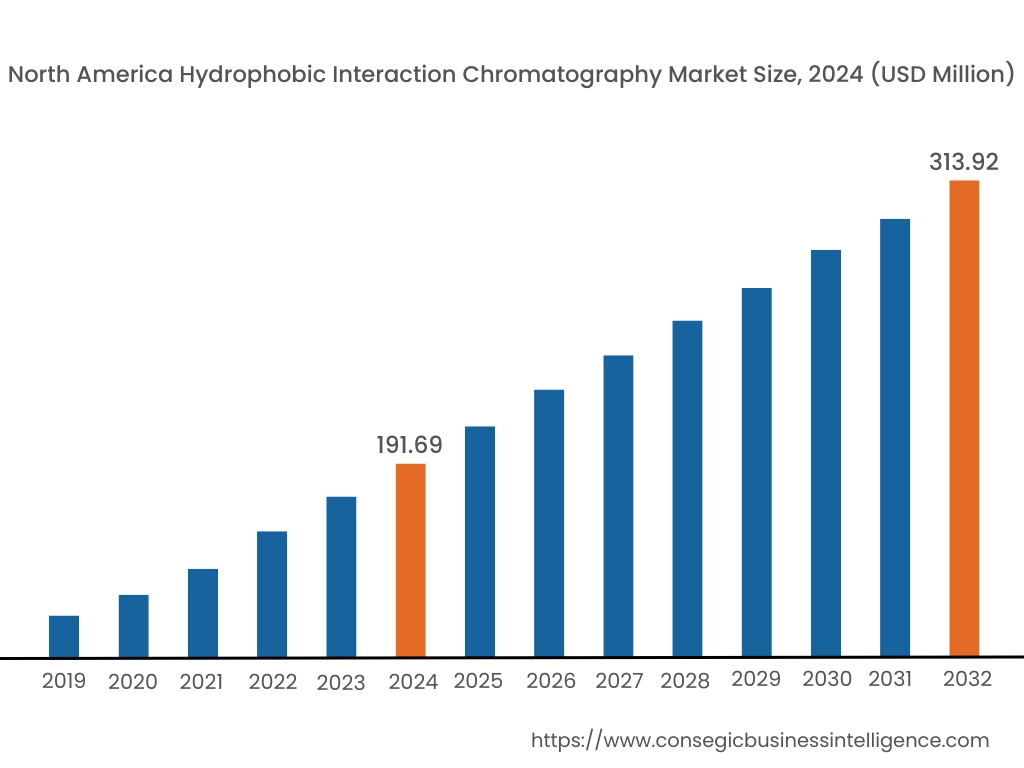
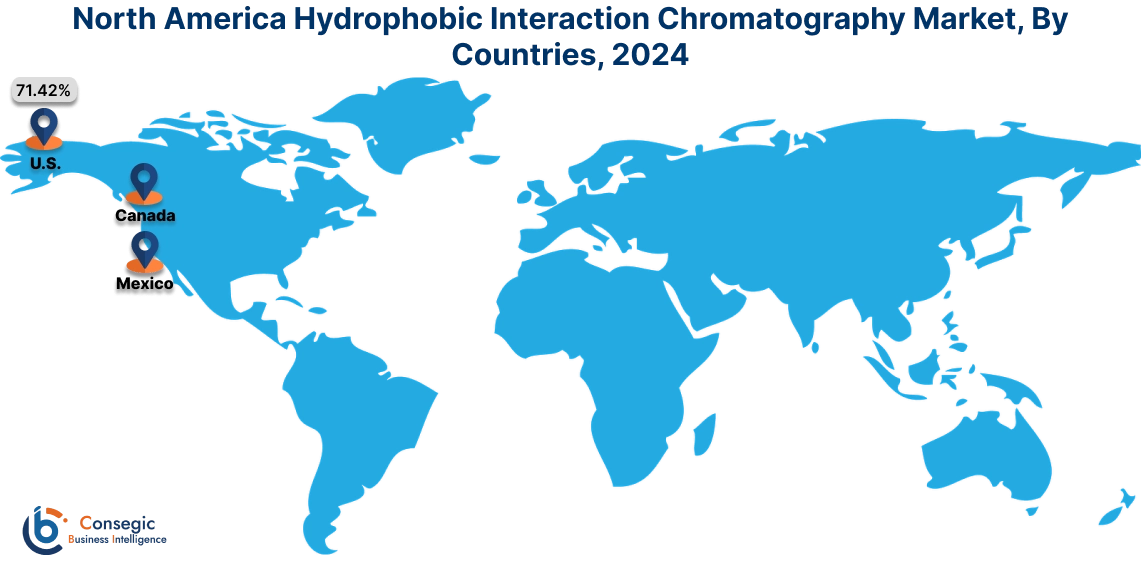
In 2024, North America accounted for the highest hydrophobic interaction chromatography market share at 40.21% and was valued at USD 191.69 Million and is expected to reach USD 313.92 Million in 2032. In North America, the U.S. accounted for the hydrophobic interaction chromatography market share of 71.42% during the base year of 2024.
North America prominence is due to the presence of well-established key industry players. A few of the major key players operating in the market in North America are Bio-Rad Laboratories, Thermo Fisher Scientific amongst others. These companies aim to invest in the development, manufacturing and research of therapeutic agents in the biopharmaceutical industry. Additionally, players operating in the North American market are observed to be early adopters of technologies that are innovative. These also include advancements in hydrophobic interaction chromatography techniques. This approach generates the demand for new innovative HIC resins and columns. Based on the hydrophobic interaction chromatography market analysis, it also provides motivation for manufacturers to develop new tailor specific solutions and demonstrate North America as a key market for Hydrophobic Interaction Chromatography Market.
In Asia Pacific, the hematology diagnostics market is experiencing the fastest growth with a CAGR of 8.4% over the forecast period. The Asia Pacific Region has seen a rise in initiatives for the economic development of the region. This economic development has led to a substantial increase in the investments and initiative for the development of healthcare infrastructure. A few of these developments include the increase of hospitals with advanced equipment, subsidies for research facilities as well as the establishment of diagnostic centers. This development in the healthcare infrastructure leads to development in the biopharmaceutical sector. This in turn increases the demand for several healthcare facilities such as the requirement of HIC based protein purification techniques amongst others. Additionally, investment in specific research purposes has been expected to increase. This leads to production of new vaccines, monoclonal antibodies amongst others. Based on the hydrophobic interaction chromatography market analysis, these factors combined are expected to create lucrative trends for the Asia-Pacific region in the HIC market.
The European region has a well-established HIC Market. A few of the major factors contributing to this are the increase from support of the government and regulatory framework put forth by the regulatory authorities. Government initiatives play a vital role in the European region in order to promote and develop new biopharmaceuticals as well as provide funding for research and development purposes to the pharmaceutical and biotechnology companies.
- For instance, in 2024, Thermo Fisher Scientific expanded its laboratory services by introducing a new bioanalytical lab in Sweden. This lab will majorly focus on pharmaceutical and biotech players.
Furthermore, the European Union has a stringent regulatory framework for pharmaceuticals and biopharmaceuticals companies. This regulatory environment requires manufacturing processes of high quality. This process includes HIC purification techniques. This combination of government support and regulatory framework creates driving as well as futuristic approach in the European region, thus driving the hydrophobic interaction chromatography market trends in the coming years.
The Middle East and Africa (MEA) regions are experiencing an increase of local players catering to the specific sub segments of the pharmaceutical sectors. As these pharmaceutical sectors grow, there is an increase in the number of local players catering to these specific sectors. The local players operating in these sectors are aiming towards the development of their own pharmaceutical products. This has led to an increasing requirement for purification techniques such as HIC to ensure safety and effectiveness. Additionally, the region is expected to gain significant investments in healthcare infrastructure and research particularly in GCC Countries. Governments in several MEA countries are providing funds for the development of research institutions, hospitals, and diagnostic centers. These investments are focused on the enhancement of healthcare delivery and foster advancements in medical research including HIC techniques. In conclusion, the emergence of local pharmaceutical sector and significant investments in healthcare infrastructure and research are driving the hydrophobic interaction chromatography market demand within the Middle East and Africa region.
The increasing prevalence of chronic diseases is one the major factors contributing to the market development of the market. The number of cardiovascular diseases and cancer cases are of the highest prevalence in Latin America. These chronic conditions require biopharmaceuticals for treatment for individuals suffering from these conditions. Biopharmaceuticals required are monoclonal antibodies, recombinant proteins amongst others. Thus, due to the rising incidence of these diseases, there has been an increase in the adoption rate of therapies, consequently driving the need for efficient purification techniques like HIC. Additionally, countries such as Brazil and Mexico are experiencing development in the biopharmaceutical sector with global players vying for market share in the Latin American Market. This sector requires purification technologies like HIC to support the production of high-quality biotherapeutics. In conclusion, the rising prevalence of chronic diseases and the development of the biopharmaceutical sector within Latin America are contributing to market development.
Top Key Players and Market Share Insights:
The global Hydrophobic Interaction Chromatography Market is highly competitive with major players providing products to the national and international markets. Key players are adopting several strategies in research and development (R&D) and product innovation to hold a strong position in the global Hydrophobic Interaction Chromatography market. Key players in the Hydrophobic Interaction Chromatography industry include-
- Bio-Rad Laboratories (U.S)
- Sartorius AG (Germany)
- JNC Corporation (Japan)
- Agilent Technologies (U.S.)
- Danaher Corporation (U.S.)
- Avantor Performance Materials (U.S.)
- Thermo Fisher Scientific (U.S.)
- Tosoh Corporation (Japan)
- Waters Corporation (U.S.)
- Geno Technology (U.S.)
- Sepax Technologies (U.S.)
Hydrophobic Interaction Chromatography Market Report Insights :
| Report Attributes | Report Details |
| Study Timeline | 2019-2032 |
| Market Size in 2032 | USD 820.45 Million |
| CAGR (2025-2032) | 7.1% |
| By Product Type |
|
| By Sample Type |
|
| By End-User |
|
| By Region |
|
| Key Players |
|
| North America | U.S. Canada Mexico |
| Europe | U.K. Germany France Spain Italy Russia Benelux Rest of Europe |
| APAC | China South Korea Japan India Australia ASEAN Rest of Asia-Pacific |
| Middle East and Africa | GCC Turkey South Africa Rest of MEA |
| LATAM | Brazil Argentina Chile Rest of LATAM |
| Report Coverage |
|
Key Questions Answered in the Report
How big is the Hydrophobic Interaction Chromatography market? −
In 2024, the Hydrophobic Interaction Chromatography market is USD 476.71 Million.
Which is the fastest-growing region in the Hydrophobic Interaction Chromatography market? +
Asia Pacific is the fastest-growing region in the Hydrophobic Interaction Chromatography market.
What specific segmentation details are covered in the Hydrophobic Interaction Chromatography market? +
By Product Type, Sample Type and End User segmentation details are covered in the Hydrophobic Interaction Chromatography market.
Who are the major players in the Hydrophobic Interaction Chromatography market? +
Geno Technology (U.S.), Sepax Technologies (U.S.), JNC Corporation (Japan), Agilent Technologies (U.S.) are some of the major players in the market.
Overview
Reputation & Certifications


Our Services
- Market Intelligence & Forecasting
- Custom Research Solutions
- Market Entry Strategy
- Competitive Intelligence
- Customer Insights
- Industry Innovation Analysis
- Investment Advisory