Jump to Content
Lichen Nitidus Treatment Market - Size, Share, Industry Trends, and Forecasts (2025-2032)
Lichen Nitidus Treatment Market Size:
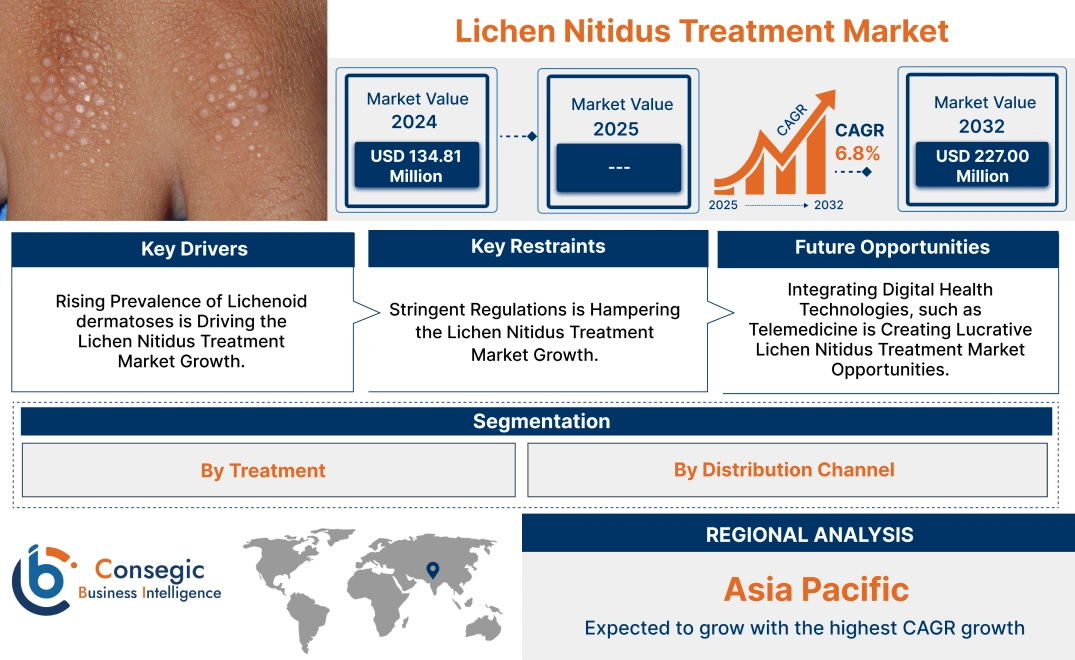
Lichen Nitidus Treatment Market size is growing with a CAGR of 6.8% during the forecast period (2025-2032), and the market is projected to be valued at USD 227.00 Million by 2032 from USD 134.81 Million in 2024.
Lichen Nitidus Treatment Market Scope & Overview:
Lichen nitidus is a rare chronic skin condition characterized by the appearance of small, firm, shiny, flesh-colored or reddish-brown papules (bumps) on the skin. While often asymptomatic, it causes itching or discomfort in some individuals. Primarily affecting children and young adults, lichen nitidus typically resolves spontaneously within a year or two. Lichen nitidus treatment is generally not required due to its self-resolving nature. However, in cases where the papules are numerous, widespread, or cause significant itching or discomfort, treatment is considered. Treatment approaches typically involve a combination of therapies, including topical corticosteroids, calcineurin inhibitors, emollients, and in some cases, systemic treatments such as oral medications and phototherapy.
Lichen Nitidus Treatment Market Scope & Overview:
AI is impacting the lichen nitidus treatment market primarily through enhanced diagnostic capabilities and the potential for more personalized therapies. AI-powered image analysis can assist dermatologists in accurately identifying the subtle characteristics of lichen nitidus, aiding early and precise diagnosis, which is crucial for effective management. This improved diagnostic accuracy can reduce misdiagnosis and streamline the path to treatment. Furthermore, AI's ability to analyze extensive patient data could lead to personalized treatment plans, optimizing responses to existing therapies and potentially accelerating the discovery or repurposing of new drugs for this relatively rare skin condition.
Lichen Nitidus Treatment Market Dynamics - (DRO) :
Key Drivers:
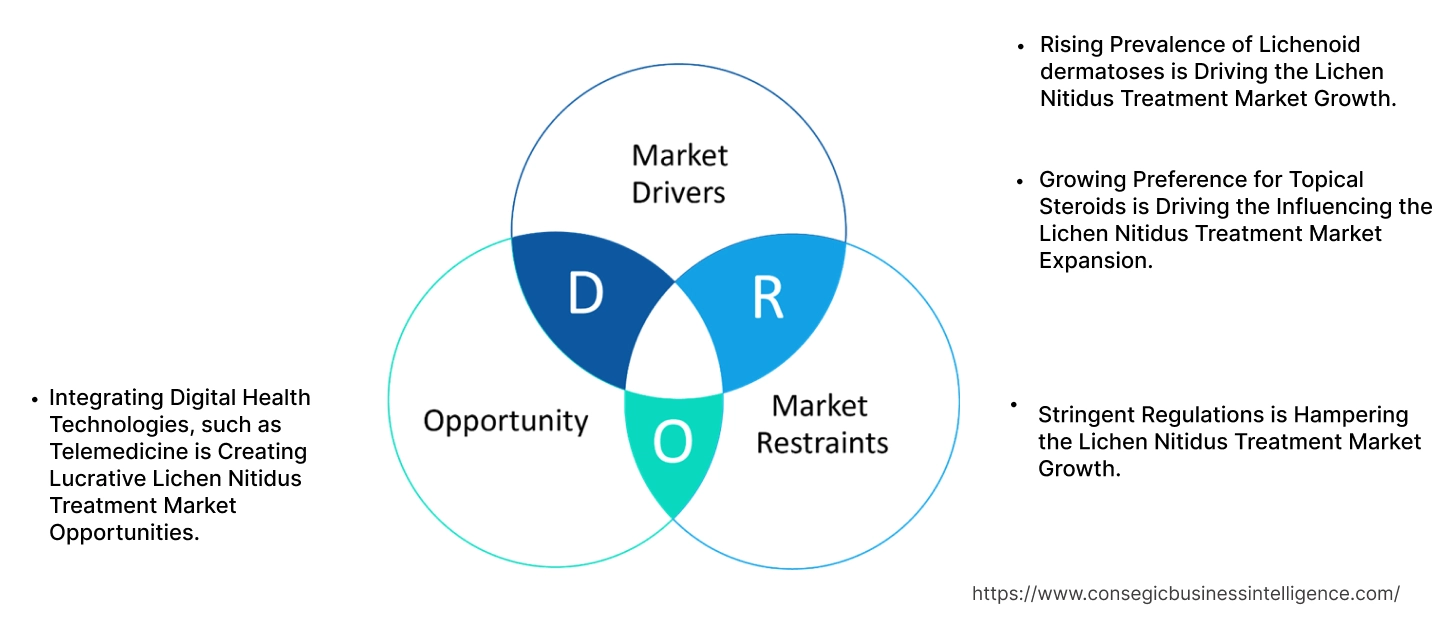
Rising Prevalence of Lichenoid dermatoses is Driving the Lichen Nitidus Treatment Market Growth.
The rising prevalence of lichenoid dermatoses, a group of inflammatory skin conditions that include lichen nitidus, is a significant driver of growth within the lichen nitidus treatment market. Lichenoid dermatoses encompass a group of inflammatory skin conditions that share similar clinical and histopathological features, characterized by the presence of lichenoid tissue changes. These changes include thickening of the outermost layer of the skin, inflammation, and the presence of specific immune cells. Lichen planus is the most common type of lichenoid dermatosis, but the group also includes conditions like lichen nitidus, lichen simplex chronicus, and drug-induced lichenoid eruptions. Lichenoid dermatoses are characterized by similar clinical and histopathological features, and their increasing incidence contributes to a heightened awareness and demand for effective treatment options within this broader spectrum of skin conditions.
- According to a study published by International Journal of Academic Medicine and Pharmacy, in 2024, states that among 125 histopathological diagnosed cases of Lichenoid lesions 3% of the diagnosed cases are reported to be lichen nitidus.
Thus, the growing cases of lichenoid dermatoses requires effective development of novel treatment options for rare conditions such as lichen nitidus, further driving the development of lichen nitidus treatment.
Growing Preference for Topical Steroids is Driving the Influencing the Lichen Nitidus Treatment Market Expansion.
The growing preference for topical steroids is significantly influencing the expansion of novel lichen nitidus treatment. Topical corticosteroids are widely recognized as a first-line treatment option for managing the symptoms of lichen nitidus, such as itching and inflammation. Their ease of application, targeted delivery to the affected skin, and generally good safety profile make them a preferred choice for many patients and healthcare providers.
- According to the study published in the Journal of Cutaneous Immunology and Allergy states that treatment strategies for lichen nitidus predominantly involved the use of topical steroids in 27 patients, with improvement noted in 21 cases, this explains the significant role of these medications in managing the condition. This clinical experience highlights the preference for topical steroids as a first-line treatment option for lichen nitidus.
Furthermore, advancements in topical corticosteroid formulations, such as the development of newer, more potent corticosteroids with improved safety profiles, have further enhanced their appeal. Thus, this growing preference for topical steroids, coupled with ongoing research and development efforts to optimize their efficacy and minimize potential side effects, is expected to drive continued growth within the lichen nitidus treatment.
Key Restraints:
Stringent Regulations is Hampering the Lichen Nitidus Treatment Market Growth.
The treatment market for lichen nitidus faces substantial issues due to stringent regulatory requirements and approval processes for new therapies. These regulatory frameworks are crucial for ensuring patient safety and efficacy of treatments, yet they are significantly prolong the timeline required for drug development. Pharmaceutical companies often encounter complex and demanding protocols that require extensive clinical trials and rigorous testing to demonstrate the safety and effectiveness of new drugs. This process not only increases the time it takes to bring a new treatment to market but also imposes considerable financial burdens on these companies, which must invest heavily in research and development.
As a result, the combination of time-intensive regulatory measures and the high costs associated with compliance of these regulations, resist many companies from pursuing innovative research in the lichen nitidus treatment field. Consequently, patients continue to endure a condition for which they lack sufficient and innovative treatment solutions, emphasizing the need for a balance between regulatory oversight and the encouragement of medical advancements.
Future Opportunities :
Integrating Digital Health Technologies, such as Telemedicine is Creating Lucrative Lichen Nitidus Treatment Market Opportunities.
The integration of digital health technologies, such as telemedicine, is creating lucrative lichen nitidus treatment market opportunities. Telemedicine platforms facilitate remote consultations with dermatologists, enabling patients in remote areas or with limited mobility to access expert care. This enhances access to specialized dermatological expertise, facilitates timely diagnosis, and enables ongoing monitoring of treatment progress. Furthermore, telemedicine platforms facilitate the exchange of patient information, including medical history, images, and treatment responses, between healthcare providers, improving coordination of care and optimizing treatment outcomes.
- In June 2024, Apollo Telehealth's launch of a telemedicine-driven primary health center in India. By leveraging telemedicine technology, the center connects patients with specialists from across India, facilitating timely diagnosis and treatment of various health conditions including skin conditions such as lichen nitidus, including those requiring medications like topical and systematic medications. This initiative play a crucial role in improving health care in the region by enhancing access to specialized expertise and ensuring continuity of care for patients with conditions like lichen nitidus.
Thus, based on the market analysis, this integration of digital health technologies is expected to significantly impact the lichen nitidus treatment market by improving patient access to care, enhancing treatment outcomes, and ultimately improving the overall patient experience.
Lichen Nitidus Treatment Market Segmental Analysis :
By Treatment:
Based on treatment, the market is categorized into systematic treatment, and topical treatment.
Trends in the Treatment:
- Growing trend for combination medication for reducing inflammation caused by lichen nitidus
- The rise in the preference for topical corticosteroid treatment is influencing the segment demand.
The topical treatment segment accounted for the largest market share in 2024.
- The topical treatment is further categorized into topical corticosteroids, topical calcineurin inhibitors, emollients, and others.
- Topical treatments play a significant role in managing the symptoms of lichen nitidus, particularly itching and inflammation.
- These medications are applied directly to the affected skin, allowing for targeted delivery and minimizing systemic side effects.
- A variety of topical treatments are available in different strengths and formulations, such as creams, ointments, and lotions.
- Topical corticosteroids are often considered the first-line treatment option due to their anti-inflammatory properties.
- The choice of corticosteroid and its strength will depend on the severity of the condition and the location of the affected skin.
- Topical calcineurin inhibitors (like tacrolimus and pimecrolimus), help to reduce inflammation by suppressing the activity of certain immune cells.
- Various manufacturers are developing generic medications for various inflammatory dermatoses conditions such as lichen nitidus.
- For instance, Lupin has developed Clobetasol Propionate Cream USP 0.05%, which has been approved by the United States Food and Drug Administration (FDA). This cream is a super-high potency corticosteroid used to relieve inflammation and itching associated with corticosteroid-responsive skin conditions, such as lichen nitidus.
- Thus, based on the market analysis, the demand of novel topical treatments for lichen nitidus is influencing the lichen nitidus treatment market trends.
The systematic treatment segment is expected to grow at the fastest CAGR over the forecast period.
- The systematic treatment is further categorized into oral treatment, phototherapy, and others.
- Systemic treatments for lichen nitidus are generally reserved for cases that are severe, widespread, or unresponsive to topical therapies.
- These treatments often involve medications taken orally or administered through other systemic routes.
- One common systemic treatment option is oral retinoids, a class of medications derived from vitamin A. Retinoids help to reduce inflammation and regulate skin cell growth.
- In some cases, immunosuppressant medications are considered for severe or resistant cases of lichen nitidus. These medications work by suppressing the activity of the immune system, which are overactive in individuals with this condition.
- Additionally, phototherapy, such as narrowband ultraviolet B (NB-UVB) light therapy, is also considered in certain cases. This involves exposing the affected skin to controlled doses of ultraviolet light, which helps to reduce inflammation and improve skin symptoms.
- Thus, based on the lichen nitidus treatment market analysis, the aforementioned factors are influencing the lichen nitidus treatment market demand and trends in the coming years.
By Distribution Channel:
Based on the distribution channel, the market is categorized into hospital pharmacies, retail pharmacies, online pharmacies.
Trends in the Distribution Channel:
- Growing trend of purchasing prescription medicines through online pharmacies.
- Rise in the use of over-the counter medications is influencing the segment demand.
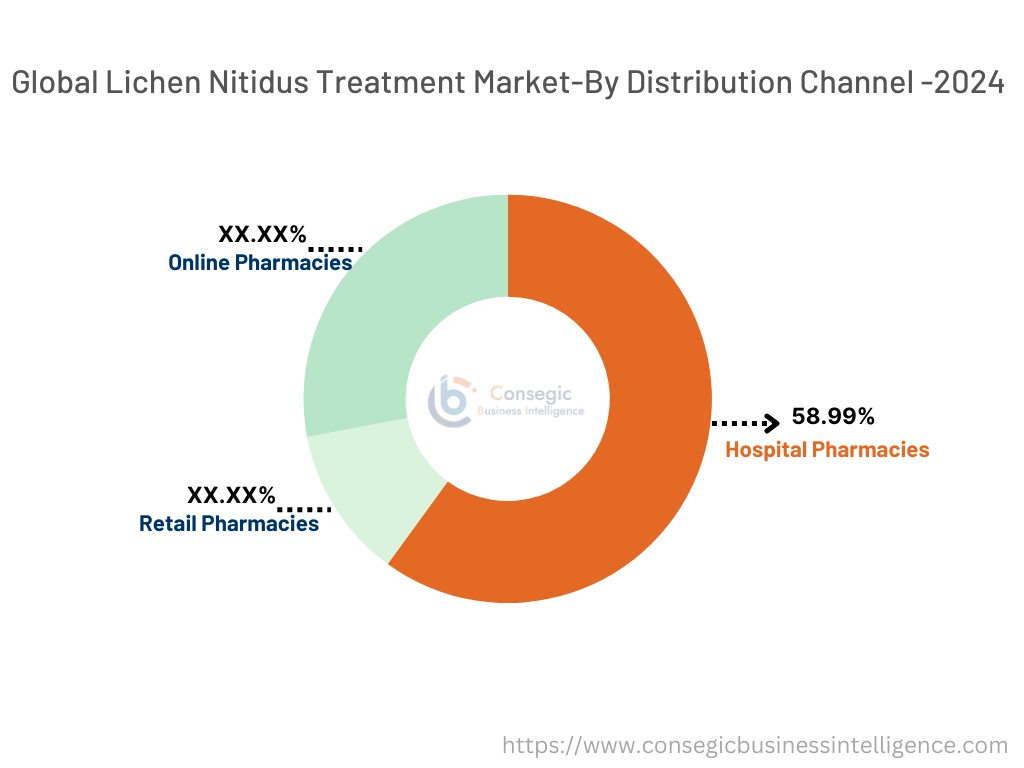
The hospital pharmacies segment accounted for the largest market share of 58.99% in the year 2024.
- Hospital pharmacies play a crucial role in the distribution of both topical and systemic medications used to treat lichen nitidus. As the primary point of dispensing medications within healthcare institutions, hospital pharmacies are responsible for procuring, storing, and dispensing a wide range of pharmaceuticals, including those used to manage skin conditions like lichen nitidus.
- For topical medications such as corticosteroids and calcineurin inhibitors, hospital pharmacies serve as a vital source for inpatients and outpatients receiving treatment within the hospital setting.
- They ensure the availability of these medications, manage inventory levels, and dispense medications according to physician prescriptions.
- Furthermore, hospital pharmacies are crucial for the distribution of systemic medications used to treat lichen nitidus, such as oral retinoids and immunosuppressants.
- These medications often require careful monitoring and patient counseling, which are readily available within the hospital setting.
- Hospital pharmacists play a vital role in ensuring the safe and effective use of these medications, providing patient education, and monitoring for potential side effects.
- In conclusion, hospital pharmacies serve as a critical distribution channel for both topical and systemic medications used in the management of lichen nitidus, ensuring their timely and appropriate availability to patients within the healthcare setting, thus influencing the trend of the segment.
The online pharmacies segment is expected to grow at the fastest CAGR over the forecast period.
- The emergence of online pharmacies has significantly impacted the distribution of both topical and systemic medications used to treat lichen nitidus.
- These platforms offer patients convenient access to a wide range of medications, including those for skin conditions like lichen nitidus.
- Patients are able to order prescriptions online, receive medications directly to their doorstep, and access valuable information and resources related to their condition.
- Additionally, various novel online pharmacies are being introduced to provide same day delivery for various prescription medications for the treatment of lichen nitidus.
- For instance, For instance, in October 2024, Amazon Pharmacy, a digital-first pharmacy plans in providing same-day delivery of prescription medications. This creates the potential for the distribution of prescription topical and systematic medications for lichen nitidus through online pharmacies.
- Thus, these factors are influencing the lichen nitidus treatment market expansion in the coming years.
Regional Analysis:
The regional segment includes North America, Europe, Asia Pacific, the Middle East and Africa, and Latin America.
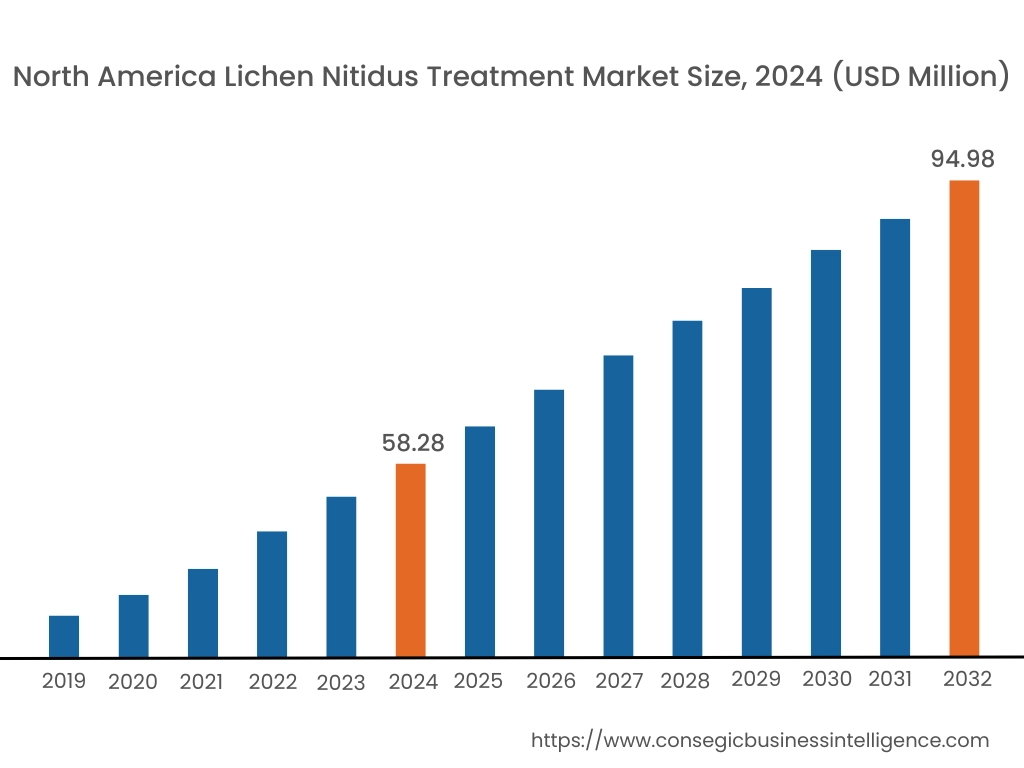
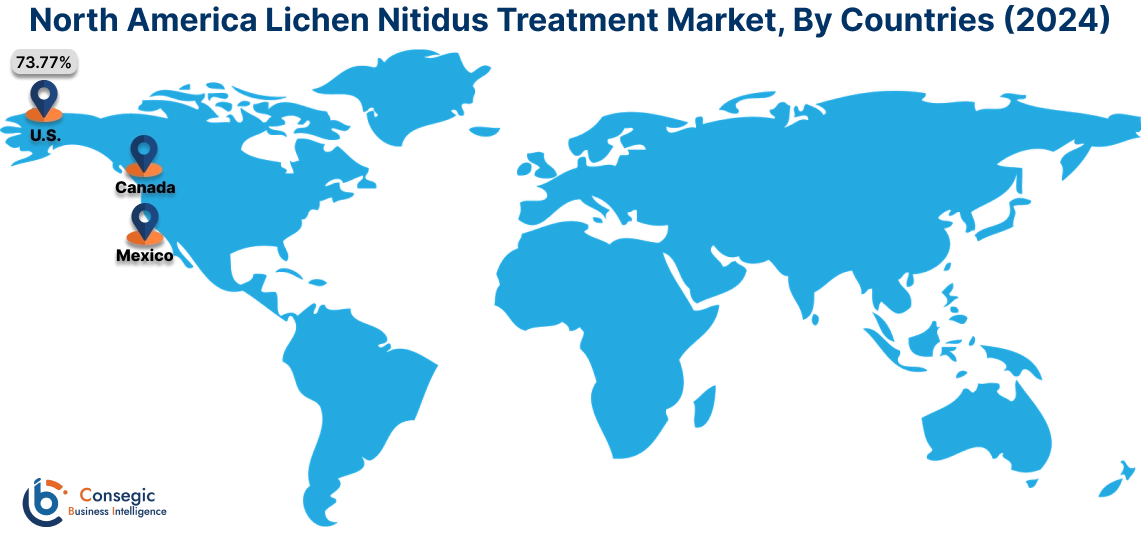
In 2024, North America accounted for the highest lichen nitidus treatment market share at 43.23% and was valued at USD 58.28 Million and is expected to reach USD 94.98 Million in 2032. In North America, U.S. accounted for the highest market share of 73.77% during the base year of 2024. Treatment approaches in North America typically prioritize a stepwise approach, often starting with conservative measures. Topical corticosteroids are frequently used as the first-line treatment, with careful consideration given to potency and potential side effects. If topical corticosteroids prove ineffective or inadequate, other options are explored, such as calcineurin inhibitors, emollients, and in some cases, systemic therapies like oral retinoids or phototherapy. Additionally, the U.S. healthcare system spends a significant amount on prescription drugs and retail drugs. Individuals in the U.S. prefer to receive their drugs from mail order pharmacies, clinics, and homecare settings.
- According to the data published by ASPE, in 2022, states that there is a rise in preference of mail-order pharmacies (35%), clinics (45%) from previous years, which has significant implications for the distribution of medications used to treat lichen nitidus. This shift in drug distribution channels presents opportunities for patients and healthcare providers.
Thus, based on the market analysis, the aforementioned factors are influencing the lichen nitidus treatment market trends.
Asia Pacific is experiencing the fastest growth with a CAGR of 7.7% over the forecast period. In the Asia-Pacific region, the treatment of lichen nitidus typically follows a multi-pronged approach, prioritizing patient comfort and minimizing potential side effects. Topical corticosteroids often constitute the first-line treatment due to their anti-inflammatory properties and ease of application. Other topical options, such as calcineurin inhibitors like tacrolimus and pimecrolimus, are also employed, especially in cases where prolonged corticosteroid use is contraindicated. In instances where topical therapies prove inadequate, systemic approaches are considered, although their use is generally reserved for more severe or widespread cases. These include systemic corticosteroids, oral retinoids, or phototherapy in certain cases. Cultural and socioeconomic factors also influence treatment decisions within the Asia-Pacific region. Access to healthcare, cultural beliefs regarding traditional medicine, and patient preferences all play a role in shaping treatment choices. Thus, based on the market analysis, these aforementioned factors are influencing the growth of the market in this region.
Europe presents a significant contribution to the Lichen Nitidus Treatment market analysis. In Europe, the treatment approaches for lichen nitidus are closely aligned with established dermatological practices. Dermatologists typically begin with a thorough assessment of the patient's skin condition to confirm the diagnosis and understand the extent of the lichen nitidus. Common treatment modalities include topical corticosteroids, which help reduce inflammation and alleviate symptoms like itching. In some cases, more potent topical treatments or intralesional corticosteroid medications are recommended for localized lesions. Patients are also advised on the importance of gentle skin care routines to minimize irritation. Additionally, in chronic or widespread cases, phototherapy or systemic therapies are considered to manage the condition effectively. Overall, based on the market analysis, the focus in European dermatology is on individualized treatment plans that take the patient’s specific needs and health status into account.
The Middle East and Africa (MEA) regions are witnessing notable Lichen Nitidus Treatment market demand characterized by significant potential. In the Middle East and Africa, the treatment of lichen nitidus often reflects the diverse healthcare systems and cultural contexts within these regions. While topical contamination remains a basis of treatment, their use may be influenced by factors such as cultural preferences, availability, and cost. Traditional or complementary therapies, such as herbal remedies or other approaches, are also incorporated into treatment plans, depending on individual patient beliefs and cultural practices. Access to specialized dermatological care varies significantly across the region, with some areas facing challenges in terms of healthcare infrastructure and access to modern medications. Furthermore, socioeconomic factors influence treatment choices, with cost considerations playing a crucial role in determining the availability and accessibility of different therapeutic options.
Latin America is an emerging region in the Lichen Nitidus Treatment market share, with significant potential for innovation. In Latin America, the treatment of lichen nitidus often reflects a multi-faceted approach, considering both clinical presentation and patient preferences. Topical corticosteroids typically constitute the first-line treatment strategy, with careful consideration given to the potency and potential side effects of the chosen corticosteroid. Calcineurin inhibitors, such as tacrolimus and pimecrolimus, are considered as alternative or adjunctive therapies, particularly in cases where prolonged corticosteroid use is contraindicated. Systemic therapies, such as oral retinoids or immunosuppressants, are generally reserved for severe or widespread cases that are unresponsive to topical treatments. Access to healthcare resources and the availability of specialized dermatological care vary across different regions within Latin America, influencing the treatment options available and the overall management of lichen nitidus.
Top Key Players and Market Share Insights:
The Lichen Nitidus Treatment market is highly competitive with major players providing precise products to the national and international markets. Key players are adopting several strategies in research and development (R&D) and product innovation to hold a strong position in the global Lichen Nitidus Treatment market. Key players in the Lichen Nitidus Treatment industry include-
- AdvaCare Pharma (United States)
- EMUAID (United States)
- Glenmark Pharmaceuticals Inc., USA (United States)
- Teva Pharmaceuticals (Israel)
- Biocon (India)
- LLC Binnopharm Group (Russia)
- Cerata Pharmaceuticals LLP (India)
- Lupin (India)
- Astellas Pharma (Japan)
- Synnat Pharma (India)
Lichen Nitidus Treatment Market Report Insights :
| Report Attributes | Report Details |
| Study Timeline | 2019-2032 |
| Market Size in 2032 | USD 227.00 Million |
| CAGR (2025-2032) | 6.8% |
| By Treatment |
|
| By Distribution Channel |
|
| By Region |
|
| Key Players |
|
| North America | U.S. Canada Mexico |
| Europe | U.K. Germany France Spain Italy Russia Benelux Rest of Europe |
| APAC | China South Korea Japan India Australia ASEAN Rest of Asia-Pacific |
| Middle East and Africa | GCC Turkey South Africa Rest of MEA |
| LATAM | Brazil Argentina Chile Rest of LATAM |
| Report Coverage |
|
Key Questions Answered in the Report
How big is the Lichen Nitidus Treatment market? −
In 2024, the Lichen Nitidus Treatment market is USD 134.81 Million.
Which is the fastest-growing region in the Lichen Nitidus Treatment market? +
Asia Pacific is the fastest-growing region in the Lichen Nitidus Treatment market.
What specific segmentation details are covered in the Lichen Nitidus Treatment market? +
Treatment and Distribution Channel segmentation details are covered in the Lichen Nitidus Treatment market.
Who are the major players in the Lichen Nitidus Treatment market? +
Glenmark Pharmaceuticals Inc., USA (United States), Teva Pharmaceuticals (Israel), Biocon (India) are some of the major players in the market.
Overview
Reputation & Certifications


Our Services
- Market Intelligence & Forecasting
- Custom Research Solutions
- Market Entry Strategy
- Competitive Intelligence
- Customer Insights
- Industry Innovation Analysis
- Investment Advisory