Jump to Content
Neuromorphic Computing Market - Size, Share, Industry Trends, and Forecasts (2025-2032)
Neuromorphic Computing Market Size:
Neuromorphic Computing Market is estimated to reach over USD 36,372.75 Million by 2032 from a value of USD 6,119.37 Million in 2024 and is projected to grow by USD 7,540.04 Million in 2025, growing at a CAGR of 29.0% from 2025 to 2032.
Neuromorphic Computing Market Scope & Overview:
Neuromorphic computing is an approach that aims to create hardware and software that mimic the neural structures and functions of our brains to process information in a more efficient and intelligent way. The neuromorphic computing market is experiencing rapid growth, fueled by the rising demand for AI and energy-efficient computing. This brain-inspired technology offers benefits like faster processing, lower power consumption, and real-time learning, driving its adoption across various sectors. Key trends include advancements in neuromorphic chip design, increasing applications in edge computing and autonomous systems, and growing focus on software and development tools. The market is also witnessing collaborations and investments from major tech companies, further accelerating its development and commercialization.
How is AI Transforming the Neuromorphic Computing Market?
AI is transforming the neuromorphic computing market by leveraging AI architecture to enable more efficient, low-power, and adaptable AI applications, especially at the edge. Neuromorphic systems offer superior performance for AI tasks like pattern recognition and real-time decision-making compared to traditional hardware. Hence, this combination drives innovation in neuromorphic hardware, fostering the development of solutions for robotics, IoT devices, and sustainable AI, ultimately accelerating the pursuit of more intelligent and human-like artificial general intelligence.

Neuromorphic Computing Market Dynamics - (DRO) :
Key Drivers:
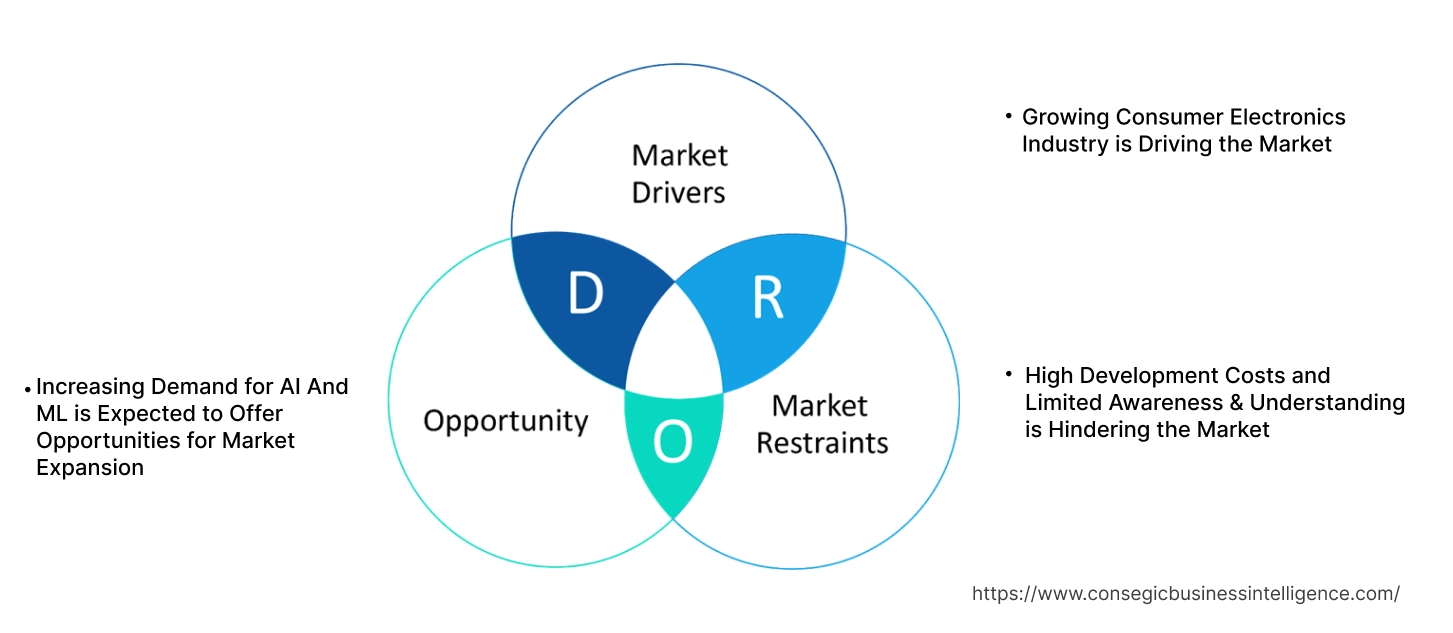
Growing Consumer Electronics Industry is Driving the Market
The growing consumer electronics sector is a significant driver of the neuromorphic computing market. As consumers demand more intelligent and personalized experiences from their devices, manufacturers are turning to neuromorphic computing to deliver these features. Neuromorphic chips can enable smartphones, wearables, and other devices to perform complex tasks like image recognition, natural language processing, and personalized recommendations with greater efficiency and lower power consumption. This leads to longer battery life, improved performance, and new functionalities that enhance the user experience. Furthermore, neuromorphic chips can be used to improve the performance of voice assistants, enhance the quality of photos and videos, and provide more accurate health monitoring. Further, there has been a growing number of smartphones users worldwide due to factors including decreasing device costs, increasing affordability of mobile data plans, and expanding network coverage which in turn drives the market.
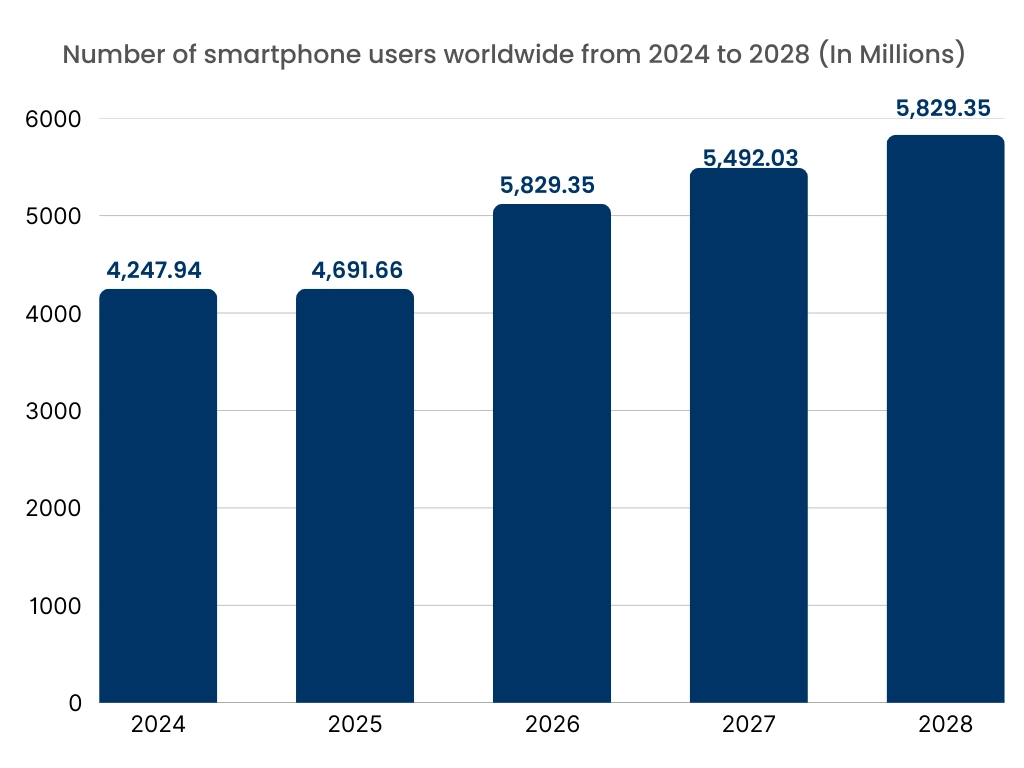
Thus, as consumer electronics industry continues to innovate, technology is expected to play an increasingly important role in shaping the future of our devices.
Key Restraints:
High Development Costs and Limited Awareness & Understanding is Hindering the Market
High development costs and a lack of widespread awareness and understanding are significant hurdles for the neuromorphic computing market. Developing neuromorphic chips requires specialized expertise and significant investment in research, design, and manufacturing, creating a barrier to entry for many companies. This high cost can limit adoption, especially for smaller businesses or research institutions with constrained budgets. Furthermore, the complex nature of technology and its relatively nascent stage mean that many potential users are not fully aware of its capabilities and potential benefits. This lack of understanding can lead to skepticism and a reluctance to invest in technology. Overcoming these challenges through education, standardization efforts, and cost reductions will be crucial for broader market acceptance and growth.
Future Opportunities :
Increasing Demand for AI And ML is Expected to Offer Opportunities for Market Expansion
The increasing demand for Artificial Intelligence (AI) and Machine Learning (ML) is creating significant opportunities for the expansion of the neuromorphic computing market. Traditional computing architectures struggle to efficiently handle the computational need of complex AI algorithms, particularly those requiring real-time processing and low power consumption. Neuromorphic technology, with its brain-inspired architecture, offers a compelling solution. These chips excel at tasks like pattern recognition, image processing, and natural language understanding, making them ideal for a wide range of AI applications. As AI and ML become increasingly integrated into various sectors, from autonomous vehicles and robotics to healthcare and finance, the need for neuromorphic hardware is expected to surge. This growing need for efficient AI processing will drive innovation and investment, in turn fostering neuromorphic computing market growth.
Neuromorphic Computing Market Segmental Analysis :
By Component:
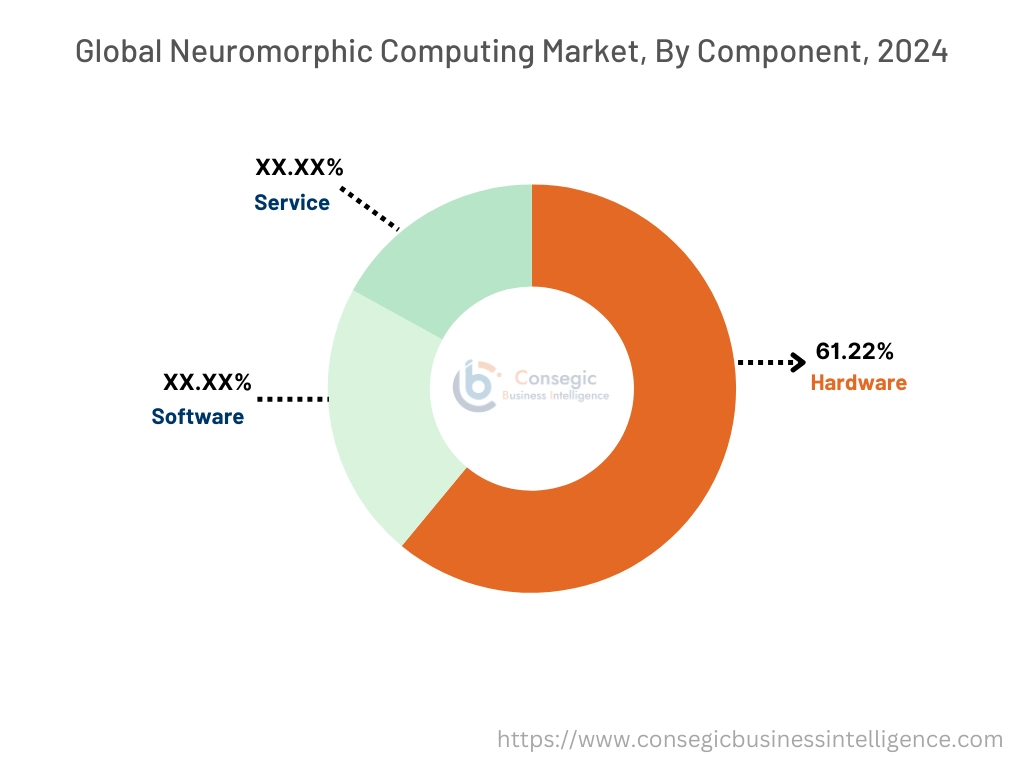
Based on the component, the market is segmented into hardware, software and services.
Trends in the Component:
- Growing emergence of cloud-based platforms for accessing and utilizing neuromorphic hardware and software resources.
- Increasing emphasis on designing energy-efficient neuromorphic hardware to enable deployment in power-constrained environments like edge devices and IoT sensors.
Hardware accounted for the largest revenue share of 61.22% in the year 2024.
- Growing investment in developing specialized neuromorphic chips that can mimic the structure and function of the human brain, enabling efficient parallel processing and low power consumption.
- Further, the development of advanced memory technologies like memristors is crucial for the market.
- Thus, investment in developing specialized neuromorphic chips and development of advanced memory technologies is driving the hardware component of market.
Software is anticipated to register the fastest CAGR during the forecast period.
- Growing focus on development tools of user-friendly software that are essential for the growth of the neuromorphic computing market.
- Further, development of techniques for optimizing AI models and algorithms for efficient execution on neuromorphic hardware, including model compression and quantization is expected to drive the neuromorphic computing market.
- Therefore, the aforementioned factors are expected to boost the growth of the market during the forecast period.
By Deployment:
Based on the deployment, the market is bifurcated into edge computing and cloud computing.
Trends in the Deployment:
- Increasing integration of the technology with IoT devices and sensor networks to enable intelligent edge processing and real-time analytics.
- The trend towards hybrid deployments that combine edge and cloud computing, leveraging the strengths of both approaches for different parts of the application.
Edge computing accounted for the largest revenue share in the year 2024.
- Growing requirement for low-latency applications like autonomous vehicles, robotics, and real-time industrial control drives the neuromorphic computing market.
- Further, increasing need for power-efficient solutions in edge devices and IoT sensors is driving the neuromorphic computing market.
- Thus, low-latency applications and increasing need for power-efficient solutions are driving the edge computing segment.
Cloud computing is anticipated to register the fastest CAGR during the forecast period.
- Growing need for training and deploying large-scale AI models that require significant computational resources, driving the use of cloud-based platforms.
- Further, increasing requirement for centralized data processing and analytics in applications like large-scale simulations, scientific research, and financial modeling drives neuromorphic computing market.
- Furthermore, increasing need for easy access resources and collaboration among researchers and developers, driving the development of cloud-based platforms and services.
- Therefore, scalable AI models, centralized data processing, and accessibility are anticipated to boost the growth of the market during the forecast period.
By Application:
Based on the application, the market is segmented into image recognition and processing, signal processing, data processing & analysis, object detection, and others.
Trends in the Application:
- Growing need for processing and analyzing massive datasets in applications like finance, healthcare, and scientific research is driving the neuromorphic computing market.
- Increasing need for real-time object detection in applications like autonomous vehicles, robotics, and surveillance is driving the market.
Image recognition and processing accounted for the largest revenue share in the year 2024.
- Growing requirement for real-time image analysis in applications like surveillance, autonomous vehicles, and medical imaging.
- Further, increasing need for low-power image processing in mobile devices and IoT cameras is driving the neuromorphic computing market.
- Furthermore, development of neuromorphic algorithms and models for improved image recognition accuracy and robustness, particularly in challenging conditions like low light or noisy environments.
- For instance, in September 2021, Samsung Electronics in collaboration with Harvard researchers, has outlined a new "copy and paste" approach to developing neuromorphic chips that mimic the brain.
- Thus, real-time image analysis, low-power image processing, and enhanced image recognition are driving the market.
Signal processing is anticipated to register the fastest CAGR during the forecast period.
- Growing requirement for real-time signal analysis in applications like audio processing, speech recognition, and sensor data analysis drives the neuromorphic computing market.
- Further, increasing need for low-power signal processing in wearable devices and IoT sensors drives the market.
- Furthermore, rising use of neuromorphic technology for effective noise reduction and signal enhancement in various applications.
- Therefore, noise reduction, low-power signal processing, and real-time signal analysis are anticipated to boost the growth of the market during the forecast period.
By End-User:
Based on the end-user, the market is segmented into manufacturing, automotive, consumer electronics, healthcare, military and defense, and others.
Trends in the end-user:
- Growing utilization of neuromorphic technology for faster and more accurate analysis of medical images, aiding in disease diagnosis and treatment planning.
- Increasing requirement for autonomous systems in military applications, including drones, robots, and unmanned vehicles is driving the market size.
Consumer electronics accounted for the largest revenue share in the year 2024.
- Integrating neuromorphic technology into AI assistants for more personalized and context-aware interactions with users.
- Further, implementing neuromorphic computing in smart devices like smartphones, wearables, and IoT sensors for enhanced performance and energy efficiency is driving the neuromorphic computing market
- Furthermore, increasing utilization of neuromorphic technology for more natural and intuitive user interfaces, including speech recognition, gesture recognition, and brain-computer interfaces.
- For instance, in September 2021, Intel Corporation launched Loihi 2, its second-generation neuromorphic research chip, and Lava, an open-source software framework. Loihi 2 offers up to 10x faster processing, 15x greater resource density (up to 1 million neurons per chip), and improved energy efficiency compared to its predecessor.
- Thus, growing use of personalized AI assistants and smart devices is driving the neuromorphic computing market
Automotive is anticipated to register the fastest CAGR during the forecast period.
- Increasing use for real-time perception, decision-making, and control in autonomous vehicles, enabling safer and more efficient self-driving capabilities.
- Further, implementing neuromorphic computing in ADAS for features like lane departure warning, adaptive cruise control, and pedestrian detection, enhancing driver safety.
- Therefore, autonomous vehicles and adoption of ADAS are anticipated to boost the market during the forecast period.
Regional Analysis:
The regions covered are North America, Europe, Asia Pacific, the Middle East and Africa, and Latin America.
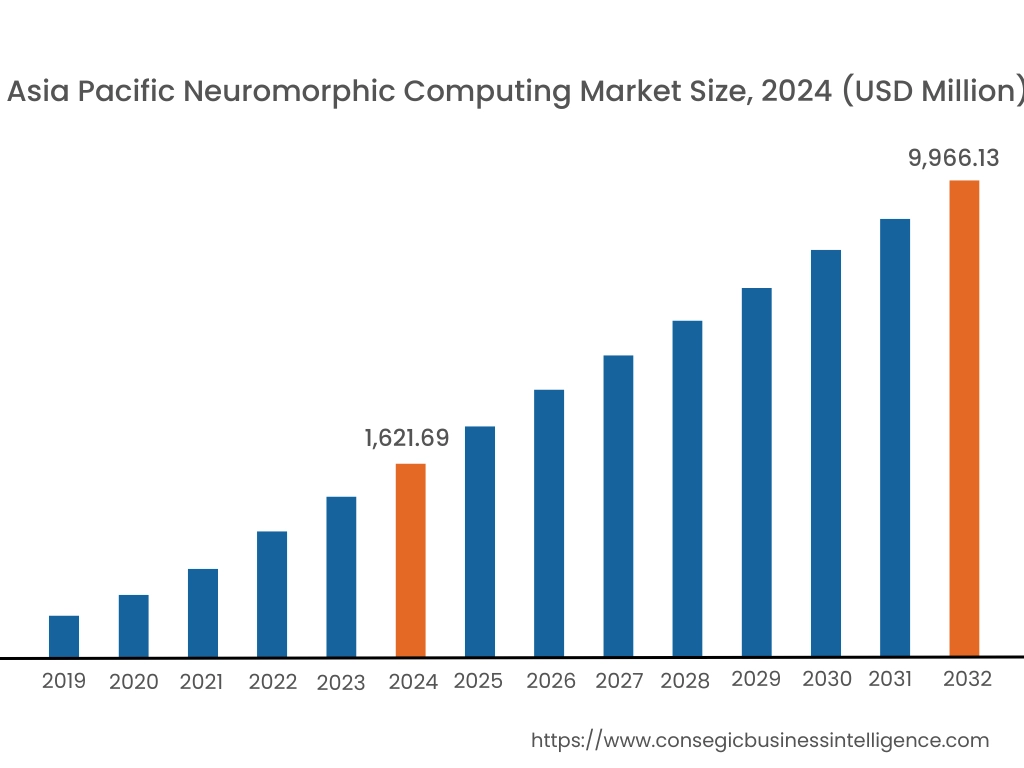
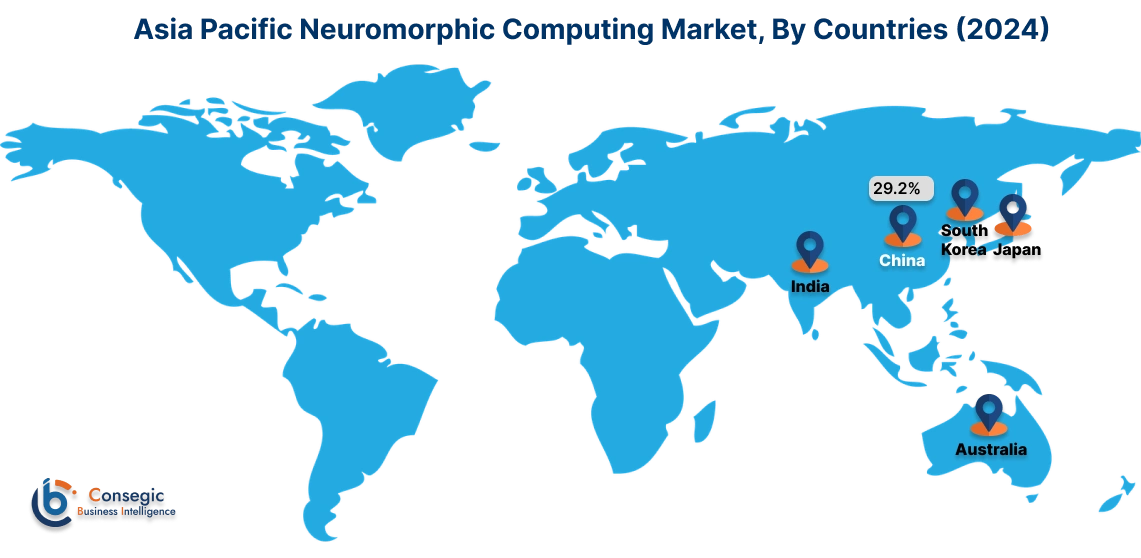
Asia Pacific region was valued at USD 1,621.69 Million in 2024. Moreover, it is projected to grow by USD 2,003.83 Million in 2025 and reach over USD 9,966.13 Million by 2032. Out of this, China accounted for the maximum revenue share of 29.2%. The market for neuromorphic computing is mainly driven by rising demand for AI and machine learning solutions, particularly in edge computing applications. This growth is further fueled by substantial government initiatives and investments in research and development, fostering a thriving ecosystem for neuromorphic technology.
- For instance, in February 2024, SynSense, a leader in ultra-low-power neuromorphic processing acquired iniVation, the leading neuromorphic vision sensing provider. This merger creates the first end-to-end neuromorphic sensing and processing company. The combined entity will target industrial and consumer markets, offering vision sensors, processors, and integrated compute-in-sensor devices for applications in consumer electronics, robotics, aerospace, and automotive.
North America is estimated to reach over USD 13,021.44 Million by 2032 from a value of USD 2,205.65 Million in 2024 and is projected to grow by USD 2,716.18 Million in 2025. The North American region has a strong presence of key industry players and research institutions, fostering innovation and early adoption of the technology. Furthermore, increasing demand for AI-powered solutions across diverse sectors like healthcare, automotive, and defense fuels the market.
- For instance, in December, BrainChip secured a $1.8 million contract from the Air Force Research Laboratory (AFRL) to develop neuromorphic radar signal processing technologies. The contract follows a successful demonstration of radar processing algorithms on BrainChip's Akida neuromorphic hardware.
The regional trends analysis depicts that growing focus on energy-efficient and high-performance computing solutions, coupled with increasing investments in research and development in Europe is driving the market. Additionally, the factors driving the market in the Middle East and African region are increasing investments in smart city projects and digital transformation initiatives and growing awareness of the potential benefits of AI and machine learning across various sectors. Further, increasing adoption of AI and machine learning technologies and growing government support for digital transformation is paving the way for the progress of market trend in Latin America region.
Top Key Players and Market Share Insights:
The global neuromorphic computing market is highly competitive with major players providing solutions to the national and international markets. Key players are adopting several strategies in research and development (R&D), product innovation, and end-user launches to hold a strong position in the Neuromorphic Computing industry. Key players in the neuromorphic computing market include-
- Intel Corporation (US)
- IBM Corporation (US)
- BrainChip Holdings Ltd. (US)
- Qualcomm Technologies, Inc. (US)
- General Vision Inc. (US)
- SAMSUNG (South Korea)
- SK Hynix Inc. (South Korea)
- SynSense AG (Switzerland)
- Innatera Nanosystems (Switzerland)
- HRL Laboratories, LLC (US)
Recent Industry Developments :
Product Launches:
- For instance, in January 2025, BrainChip launched its Akida neural networking processor on the M.2 form factor. This low-power, high-speed, event-based neuromorphic AI chip is now available on a small, gum-sized board that can be plugged into an M.2 slot.
- For instance, in April 2024, Intel Corporation unveiled Hala Point, the world's largest neuromorphic computing system. The system is deployed at Sandia National Laboratories, it uses the Loihi 2 processor and boasts 1.15 billion neurons, a tenfold increase over its predecessor, Pohoiki Springs. Hala Point aims to address the growing computational demands and sustainability concerns of AI by combining deep learning efficiency with brain-inspired learning.
Neuromorphic Computing Market Report Insights :
| Report Attributes | Report Details |
| Study Timeline | 2019-2032 |
| Market Size in 2032 | USD 36,372.75 Million |
| CAGR (2025-2032) | 29.0% |
| By Component |
|
| By Deployment |
|
| By Application |
|
| By End User |
|
| By Region |
|
| Key Players |
|
| North America | U.S. Canada Mexico |
| Europe | U.K. Germany France Spain Italy Russia Benelux Rest of Europe |
| APAC | China South Korea Japan India Australia ASEAN Rest of Asia-Pacific |
| Middle East and Africa | GCC Turkey South Africa Rest of MEA |
| LATAM | Brazil Argentina Chile Rest of LATAM |
| Report Coverage |
|
Key Questions Answered in the Report
How big is the Neuromorphic Computing Market? −
The Neuromorphic Computing Market is estimated to reach over USD 36,372.75 Million by 2032 from a value of USD 6,119.37 Million in 2024 and is projected to grow by USD 7,540.04 Million in 2025, growing at a CAGR of 29.0% from 2025 to 2032.
What specific segmentation details are covered in the Neuromorphic Computing report? +
What specific segmentation details are covered in the Neuromorphic Computing report?
Which is the fastest segment anticipated to impact the market growth? +
In the neuromorphic computing market, cloud computing is the fastest-growing segment during the forecast period due to increasing demand for scalable and accessible AI solutions.
Who are the major players in the Neuromorphic Computing Market? +
The key participants in the neuromorphic computing market are Intel Corporation (US), IBM Corporation (US), BrainChip Holdings Ltd. (US), Qualcomm Technologies, Inc. (US), General Vision Inc. (US), SAMSUNG (South Korea), SK Hynix Inc. (South Korea), SynSense AG (Switzerland), Innatera Nanosystems (Switzerland), HRL Laboratories, LLC (US) and others.
What are the key trends in the Neuromorphic Computing Market? +
The Neuromorphic Computing Market is being shaped by several key trends including the growing demand for edge computing solutions, increasing investments in research and development, the rise of neuromorphic chips and hardware, and the expanding applications of AI and machine learning across various industries.
Overview
Reputation & Certifications


Our Services
- Market Intelligence & Forecasting
- Custom Research Solutions
- Market Entry Strategy
- Competitive Intelligence
- Customer Insights
- Industry Innovation Analysis
- Investment Advisory