Jump to Content
Nitric Oxide Test Market - Size, Share, Industry Trends, and Forecasts (2025 - 2032)
Nitric Oxide Test Market Size:
Nitric Oxide Test Market size is estimated to reach over USD 2,611.45 Million by 2032 from a value of USD 1,850.55 Million in 2024 and is projected to grow by USD 1,899.00 Million in 2025, growing at a CAGR of 4.4% from 2025 to 2032.
Nitric Oxide Test Market Scope & Overview:
The nitric oxide test is a diagnostic tools designed to measure the concentration of nitric oxide (NO) in exhaled breath or biological samples, which serves as a biomarker for inflammatory conditions such as asthma and other respiratory diseases. These tests help in diagnosing, monitoring, and managing airway inflammation and the effectiveness of treatments. Key characteristics of nitric oxide tests include non-invasive sampling, high sensitivity, and rapid results, making them suitable for regular monitoring in clinical and homecare settings. The benefits include improved disease management, early detection of respiratory issues, and enhanced patient compliance due to the simplicity of testing. Applications span asthma diagnosis, chronic obstructive pulmonary disease (COPD) monitoring, and research in respiratory and inflammatory disorders. End-users include hospitals, diagnostic laboratories, clinics, and research institutions, driven by the growing prevalence of respiratory conditions, increasing awareness of personalized treatment approaches, and advancements in diagnostic technologies.
How is AI Transforming the Nitric Oxide Test Market?
AI is transforming the Nitric Oxide (NO) test by enhancing its diagnostic accuracy and efficiency, particularly for asthma and other respiratory diseases. Also, AI algorithms analyze FeNO data with greater sophistication than standard clinical analysis, leading to more precise diagnosis and phenotyping. Additionally, AI-powered software can automate the interpretation of complex respiratory data from sources like FeNO and spirometry tests, freeing up specialists to focus on more complex cases.

Nitric Oxide Test Market Dynamics - (DRO) :
Key Drivers:
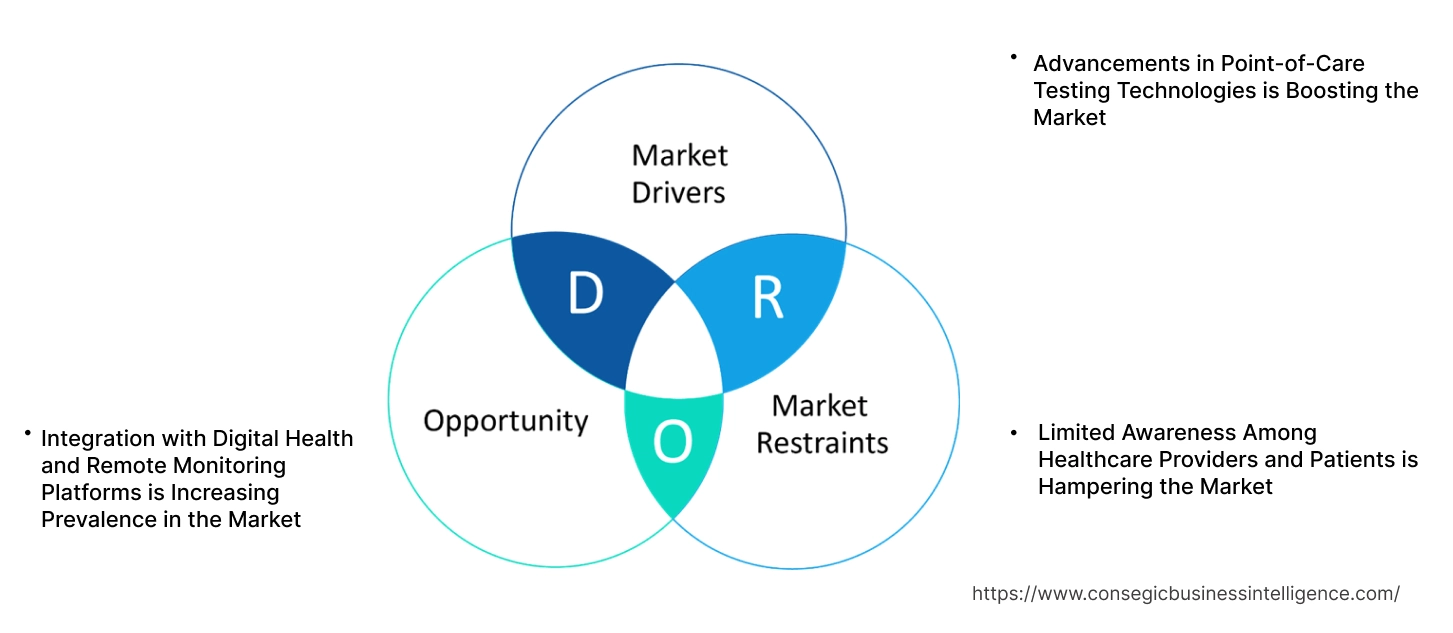
Advancements in Point-of-Care Testing Technologies is Boosting the Market
Recent innovations in point-of-care (POC) testing technologies have revolutionized nitric oxide (NO) testing by making it more accessible, portable, and user-friendly. POC NO tests allow for real-time assessment of airway inflammation, offering rapid results that help healthcare providers make timely and accurate decisions for managing respiratory conditions such as asthma and COPD. These advancements are particularly valuable in outpatient settings and emergency care, where quick diagnostics are critical.
Trends in miniaturization and improved sensor technologies have enhanced the precision and reliability of POC NO devices, ensuring they deliver high-quality results in diverse clinical environments. Analysis highlights the growing role of POC solutions in expanding the reach of NO testing, particularly in regions with limited access to centralized diagnostic laboratories.
Key Restraints:
Limited Awareness Among Healthcare Providers and Patients is Hampering the Market
Despite the significant potential of nitric oxide tests in diagnosing and monitoring respiratory disorders, limited awareness among healthcare providers and patients remains a major challenge. Many providers are unfamiliar with the clinical utility of NO testing or its advantages over traditional diagnostic methods, leading to underutilization. Similarly, patients may not recognize the importance of these tests in managing chronic conditions like asthma, resulting in delayed diagnosis and suboptimal treatment.
Efforts to address these gaps through education, training programs, and awareness campaigns are crucial for increasing nitric oxide test market opportunities in the adoption of NO testing. Trends in knowledge dissemination and collaboration with professional organizations can help build trust in the technology and integrate it into standard clinical practice.
Future Opportunities :
Integration with Digital Health and Remote Monitoring Platforms is Increasing Prevalence in the Market
The integration of nitric oxide testing with digital health platforms and remote monitoring systems is transforming respiratory care by enabling better disease management and patient engagement. Connected devices allow patients to track their airway inflammation levels at home, with results automatically shared with healthcare providers for timely interventions. This seamless flow of data facilitates personalized treatment plans and ensures continuity of care.
Trends in telehealth and the adoption of cloud-based healthcare systems are driving the development of innovative NO testing devices compatible with mobile apps and digital platforms. Analysis underscores the potential of these integrated solutions to expand the utility of NO testing in remote and underserved areas, where access to traditional diagnostic facilities may be limited. This approach not only enhances patient outcomes but also aligns with the broader movement toward connected and patient-centric healthcare.
Nitric Oxide Test Market Segmental Analysis :
By Type:
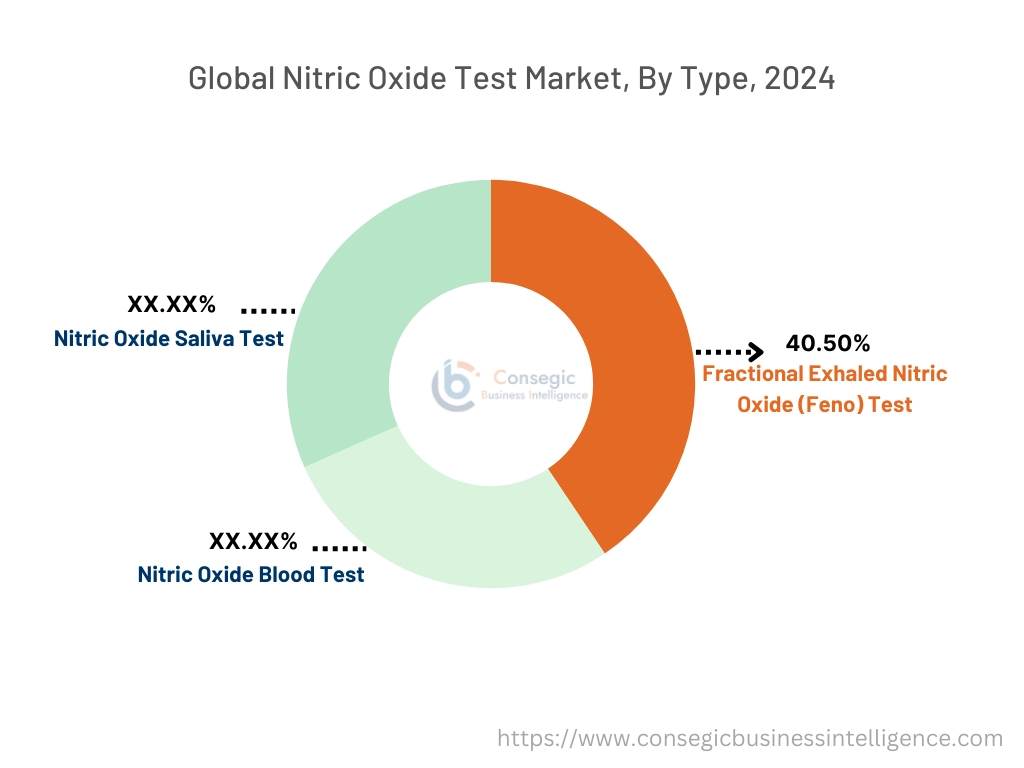
Based on type, the market is segmented into fractional exhaled nitric oxide (FeNO) test, nitric oxide blood test, and nitric oxide saliva test.
The fractional exhaled nitric oxide (FeNO) test segment accounted for the largest revenue in nitric oxide test market share of 40.50% in 2024.
- The FeNO test is widely adopted for diagnosing and monitoring airway inflammation, particularly in asthma patients, due to its non-invasive and quick results.
- It is increasingly used in clinical settings to guide treatment decisions, monitor therapy efficacy, and predict asthma exacerbations.
- Rising adoption of portable FeNO analyzers for point-of-care testing in hospitals and clinics has driven the segment's dominance.
- Advances in FeNO technology, including improved sensitivity and specificity, have further boosted its nitric oxide test market demand in diagnostics.
The nitric oxide saliva test segment is anticipated to register the fastest CAGR during the forecast period.
- Saliva tests are gaining traction due to their convenience, non-invasive nature, and potential for home-based monitoring.
- They are increasingly utilized in cardiovascular and general health assessments, broadening their application scope.
- Growing consumer interest in self-monitoring solutions for overall wellness has spurred the adoption of saliva-based nitric oxide tests.
- Development of cost-effective and easy-to-use saliva test kits is expected to further propel growth in this segment.
By Application:
Based on application, the market is segmented into asthma diagnosis and monitoring, chronic obstructive pulmonary disease (COPD), airway inflammation testing, cardiovascular disorders, and others.
The asthma diagnosis and monitoring segment accounted for the largest revenue share in 2024.
- Nitric oxide tests, particularly FeNO tests, are critical tools for diagnosing and monitoring asthma by measuring airway inflammation levels.
- Increasing global prevalence of asthma and rising awareness about the importance of early and accurate diagnosis are driving nitric oxide test market demand.
- Integration of nitric oxide testing in asthma management guidelines has further reinforced its use in clinical practice.
- Advancements in FeNO testing devices for both clinical and home use have expanded accessibility and adoption.
The cardiovascular disorders segment is anticipated to register the fastest CAGR during the forecast period.
- Nitric oxide plays a vital role in vascular health, making its measurement valuable for diagnosing and monitoring cardiovascular conditions.
- Increasing research on the role of nitric oxide in endothelial function and hypertension management is driving demand for related tests.
- The growing focus on preventive healthcare and early detection of cardiovascular risks has boosted the adoption of nitric oxide tests.
- Development of advanced biomarkers and diagnostic tools for cardiovascular disorders is expected to further propel nitric oxide test market growth in this segment.
By End-User:
Based on end-user, the market is segmented into hospitals, specialty clinics, diagnostic laboratories, and homecare settings.
The hospitals segment accounted for the largest revenue in nitric oxide test market share of in 2024.
- Hospitals are key settings for nitric oxide testing, particularly for complex cases requiring detailed diagnostics and specialist care.
- The availability of advanced testing equipment and trained personnel in hospitals supports their dominance in the nitric oxide test market trends.
- Rising hospital admissions for respiratory and cardiovascular disorders have driven the demand for nitric oxide tests in these settings.
- Increasing investments in hospital infrastructure and point-of-care testing technologies are further boosting growth in this segment.
The homecare settings segment is anticipated to register the fastest CAGR during the forecast period.
- The growing nitric oxide test market trends of self-monitoring and home-based care has increased the trends for portable nitric oxide testing devices.
- Homecare settings offer convenience, cost-effectiveness, and better patient compliance, making them an attractive option for ongoing monitoring.
- Advances in telehealth and remote monitoring technologies have further supported the adoption of home-based nitric oxide testing.
- Rising awareness about proactive health management and availability of user-friendly test kits are expected to propel nitric oxide test market growth in this segment analysis.
Regional Analysis:
The regions covered are North America, Europe, Asia Pacific, the Middle East and Africa, and Latin America.
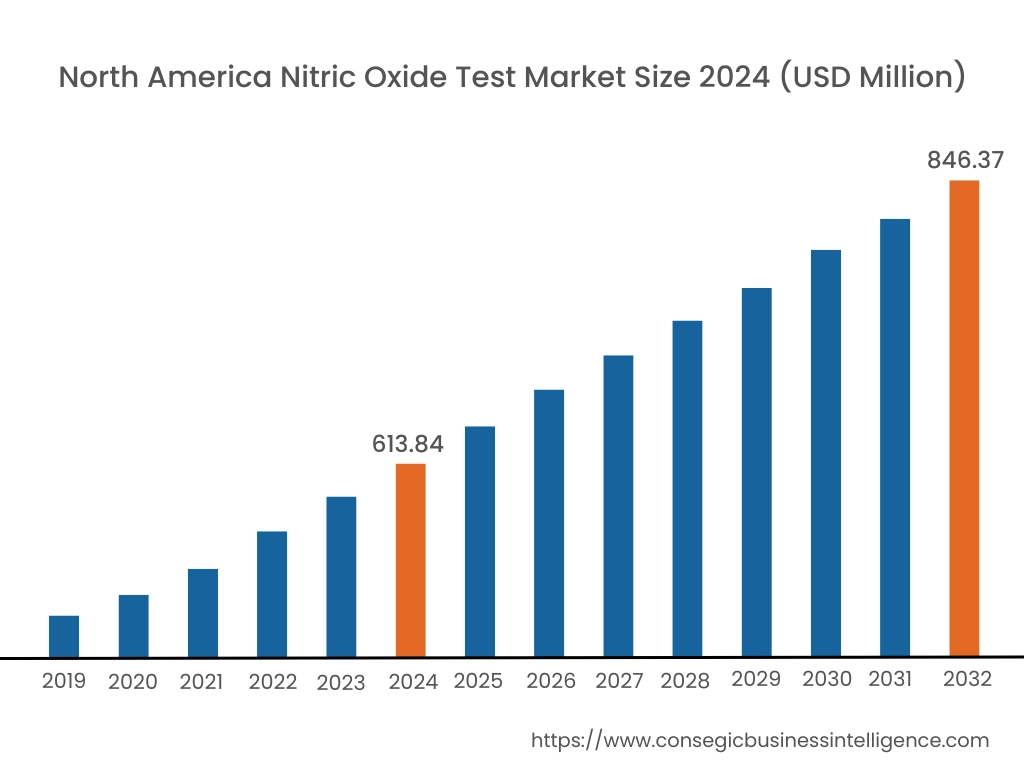
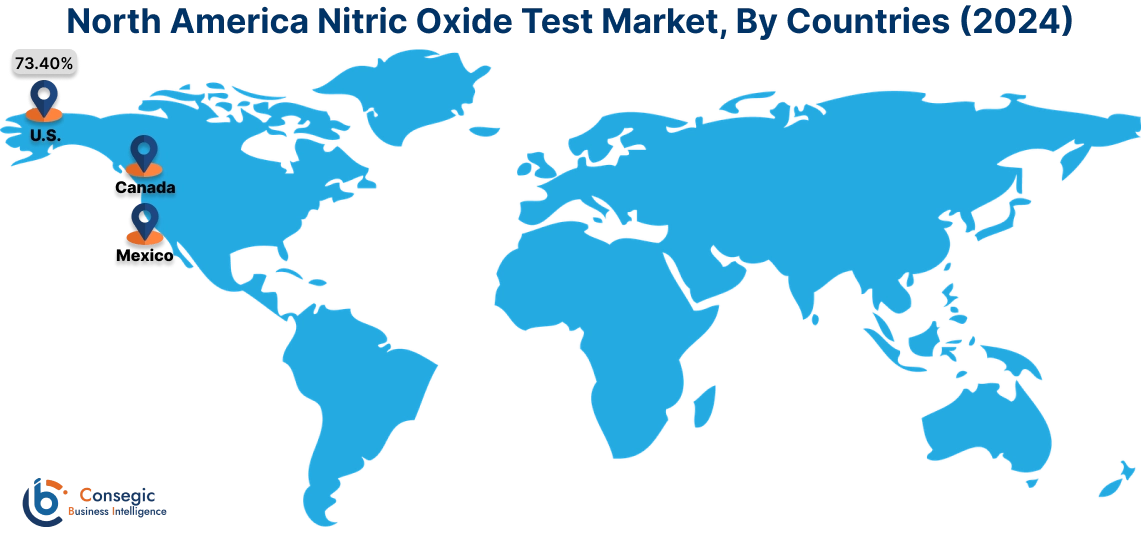
In 2024, North America was valued at USD 613.84 Million and is expected to reach USD 846.37 Million in 2032. In North America, the U.S. accounted for the highest share of 73.40%during the base year of 2024. North America holds a significant share in the global nitric oxide test market, driven by the increasing prevalence of respiratory diseases such as asthma and chronic obstructive pulmonary disease (COPD), coupled with advanced healthcare infrastructure. As per the nitric oxide test market analysis, the U.S. dominates the regional trends due to the high adoption of nitric oxide tests in clinical settings for monitoring airway inflammation and asthma management. Canada contributes through growing awareness about respiratory diagnostics and increasing use of nitric oxide tests in routine healthcare. However, the high cost of advanced testing equipment may limit accessibility in smaller healthcare facilities.
In Asia Pacific, the market is experiencing the fastest growth with a CAGR of 4.8% over the forecast period. The nitric oxide test market analysis portrays, that a rising burden of respiratory diseases fuels it, increasing healthcare investments, and growing awareness about advanced diagnostic tools in China, India, and Japan. China dominates the region with increasing adoption of nitric oxide tests in hospitals and clinics for asthma and COPD management. India’s expanding healthcare infrastructure supports the adoption of cost-effective testing solutions to address respiratory health challenges. Japan emphasizes precision diagnostics and advanced technologies in respiratory care, driving the adoption of nitric oxide tests in specialized clinics. However, affordability issues and limited access to advanced diagnostic facilities in rural areas may hinder nitric oxide test market expansion.
Europe is a prominent market for nitric oxide tests, supported by a growing aging population, increasing prevalence of respiratory disorders, and strong government initiatives for early diagnosis and disease management. Countries like Germany, France, and the UK are key contributors. The analysis portrays, Germany drives demand through its advanced diagnostic facilities and high focus on asthma management. France emphasizes integrating nitric oxide tests in routine healthcare check-ups to enhance early detection of respiratory conditions. The UK focuses on public health initiatives to raise awareness about the benefits of nitric oxide testing. However, budget constraints in public healthcare systems may challenge widespread adoption.
The Middle East & Africa region is witnessing steady growth in the global nitric oxide test market, driven by increasing investments in healthcare infrastructure and a rising prevalence of respiratory diseases. In the Middle East, countries like Saudi Arabia and the UAE are adopting nitric oxide testing in hospitals and specialized clinics to improve asthma and COPD management. In Africa, South Africa is emerging as a key market, focusing on improving access to respiratory diagnostics and addressing growing public health concerns. However, limited healthcare infrastructure and reliance on imports for advanced diagnostic tools may restrict market development in some parts of the region.
Latin America is an emerging market for nitric oxide tests, with Brazil and Mexico leading the region. Brazil’s growing healthcare sector and increasing prevalence of asthma and other respiratory conditions drive trends for nitric oxide testing in diagnostic and routine care. Mexico focuses on integrating these tests into public health programs to improve asthma management and reduce disease-related complications. The region’s emphasis on improving healthcare access and expanding diagnostic capabilities supports market growth. However, economic instability and inconsistent healthcare policies may pose challenges to broader adoption.
Top Key Players and Market Share Insights:
The nitric oxide test market is highly competitive with major players providing products to the national and international markets. Key players are adopting several strategies in research and development (R&D), product innovation, and end-user launches to hold a strong position in the nitric oxide test market. Key players in the nitric oxide test industry include -
- Circassia Pharmaceuticals plc (United Kingdom)
- Bedfont Scientific Ltd. (United Kingdom)
- Eco Physics AG (Switzerland)
- Bosch Healthcare Solutions GmbH (Germany)
- MGC Diagnostics Corporation (United States)
- Spirosure, Inc. (United States)
- Philips Healthcare (Netherlands)
- Vitalograph Ltd. (Ireland)
- NIOX VERO by Circassia (United Kingdom)
- Aerocrine AB (Sweden)
Nitric Oxide Test Market Report Insights :
| Report Attributes | Report Details |
| Study Timeline | 2019-2032 |
| Market Size in 2032 | USD 2,611.45 Million |
| CAGR (2025-2032) | 4.3% |
| By Type |
|
| By Application |
|
| By End-User |
|
| By Region |
|
| Key Players |
|
| North America | U.S. Canada Mexico |
| Europe | U.K. Germany France Spain Italy Russia Benelux Rest of Europe |
| APAC | China South Korea Japan India Australia ASEAN Rest of Asia-Pacific |
| Middle East and Africa | GCC Turkey South Africa Rest of MEA |
| LATAM | Brazil Argentina Chile Rest of LATAM |
| Report Coverage |
|
Key Questions Answered in the Report
What is the projected market size of the Nitric Oxide Test Market by 2032? −
Nitric Oxide Test Market size is estimated to reach over USD 2,611.45 Million by 2032 from a value of USD 1,850.55 Million in 2024 and is projected to grow by USD 1,899.00 Million in 2025, growing at a CAGR of 4.4% from 2025 to 2032.
What factors are driving the Nitric Oxide Test Market? +
Key drivers include advancements in point-of-care testing technologies, increasing prevalence of respiratory conditions such as asthma and COPD, and growing awareness of early diagnosis and personalized treatment approaches.
What challenges does the market face? +
Challenges include limited awareness among healthcare providers and patients about the clinical utility of nitric oxide tests and high costs associated with advanced testing equipment.
Which type segment leads the market? +
The fractional exhaled nitric oxide (FeNO) test segment leads the market due to its widespread use in diagnosing and monitoring airway inflammation, especially in asthma management.
Overview
Reputation & Certifications


Our Services
- Market Intelligence & Forecasting
- Custom Research Solutions
- Market Entry Strategy
- Competitive Intelligence
- Customer Insights
- Industry Innovation Analysis
- Investment Advisory