Jump to Content
Nystagmus Market - Size, Share, Industry Trends, and Forecasts (2025-2032)
Nystagmus Market Size:
Nystagmus Market size is estimated to reach over USD 5,439.06 Million by 2032 from a value of USD 3,027.20 Million in 2024 and is projected to grow by USD 3,203.33 Million in 2025, growing at a CAGR of 7.6% from 2025 to 2032.
Nystagmus Market Scope & Overview:
Nystagmus is a condition characterized by involuntary, repetitive eye movements that disrupt visual stability, coordination, and focus, significantly impairing vision and quality of life. This condition often results in oscillatory eye movements and reduced visual acuity, making it challenging for individuals to perform daily tasks. Nystagmus is commonly linked to underlying neurological or vestibular disorders, including conditions affecting the inner ear, brain, or optic pathways.
The benefits of treatment for nystagmus are substantial, as they aim to improve visual clarity, enhance functional abilities, and elevate overall quality of life. Treatments range from pharmacological interventions and surgical procedures to non-invasive options such as prism lenses and vision therapy. Diagnostic advancements, including electronystagmography (ENG) and videonystagmography (VNG), play a crucial role in identifying the condition and tailoring effective treatment plans.
Applications of nystagmus-related solutions span diagnostic tools, therapeutic interventions, and corrective devices designed to manage symptoms and address root causes. End-use industries include hospitals, clinics, diagnostic centers, and research institutions dedicated to neuro-ophthalmology and visual health management. The growing trend on improving visual outcomes and advancing diagnostic technologies underscores the importance of addressing nystagmus comprehensively in modern healthcare.
How is AI Transforming the Nystagmus Market?
AI is being increasingly used in the Nystagmus market. AI-powered solutions are being used for improving diagnosis through eye-movement analysis, facilitating personalized treatments by predicting patient responses, and accelerating drug discovery by identifying potential therapies. AI-powered solutions also improve telehealth and remote care through at-home diagnostic tools and virtual rehabilitation, increasing accessibility. AI-driven devices can provide more precise and efficient patient monitoring, analyze data for better clinical workflows, and improve patient outcomes. Thus, the above factors are projected to drive the market growth during the forecast period.

Nystagmus Market Dynamics - (DRO) :
Key Drivers:
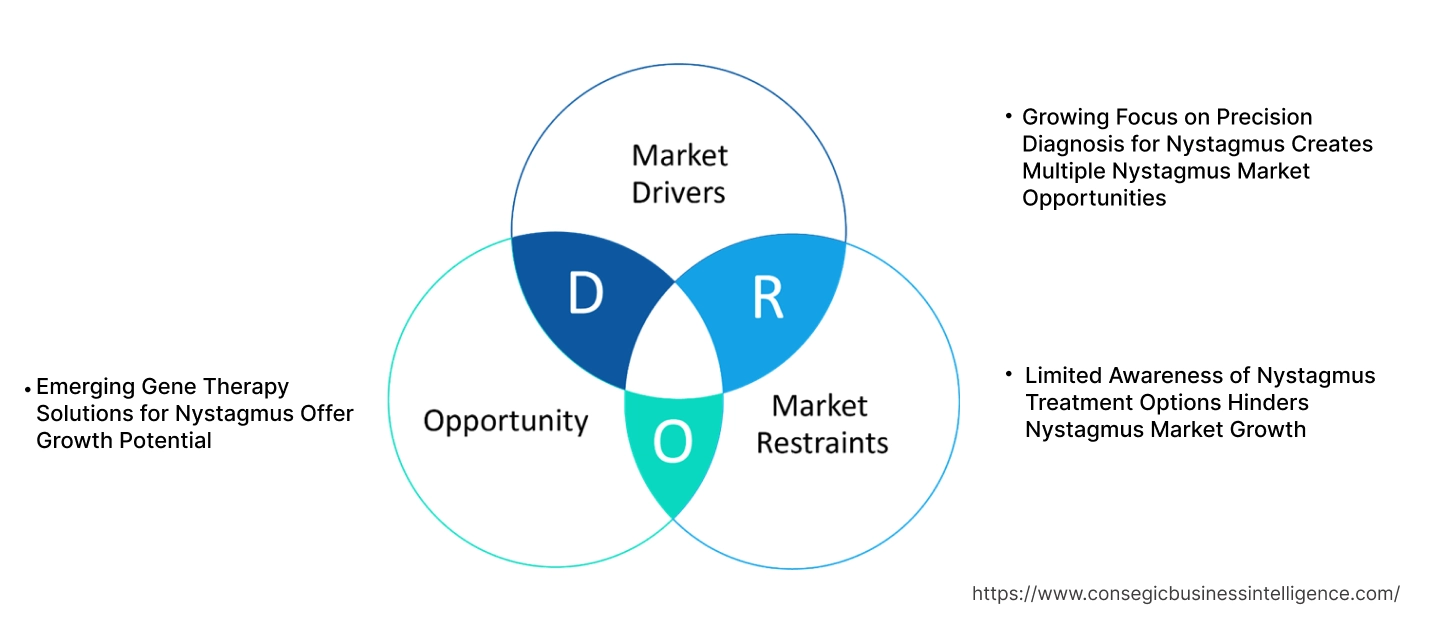
Growing Focus on Precision Diagnosis for Nystagmus Creates Multiple Nystagmus Market Opportunities
Advancements in diagnostic technologies have significantly improved the precision and accuracy of detecting nystagmus, a condition characterized by involuntary eye movements often linked to neurological or vestibular disorders. Cutting-edge devices like electronystagmography (ENG) and videonystagmography (VNG) have become indispensable tools in modern diagnostics, offering unparalleled insights into the condition.
For example, VNG systems are widely used to assess vestibular disorders, providing detailed evaluations of the type, direction, and severity of nystagmus. These systems enable healthcare professionals to pinpoint underlying causes, such as inner ear dysfunctions or neurological abnormalities, facilitating early and accurate diagnosis. This precision is instrumental in developing targeted treatment strategies tailored to individual patient needs, leading to improved outcomes and quality of care.
The growing emphasis on precision diagnostics has significantly driven the Nystagmus Market demand for advanced diagnostic solutions. As technology continues to evolve, innovations such as portable diagnostic devices and enhanced data analytics are expected to further bolster this trend. These advancements not only support better clinical decision-making but also underscore the importance of addressing nystagmus comprehensively. The increasing reliance on precise diagnostic tools highlights their pivotal role in shaping the future of nystagmus management and treatment.
Key Restraints:
Limited Awareness of Nystagmus Treatment Options Hinders Nystagmus Market Growth
A lack of awareness among both patients and healthcare professionals about available treatment options and specialized care for nystagmus is a major challenge that hampers market penetration. Many individuals with nystagmus remain undiagnosed or are misdiagnosed, which leads to delays in receiving appropriate treatment. In some cases, patients may be unaware of the therapies that could significantly improve their condition, resulting in inadequate management of the disorder.
For example, effective treatment options such as prism lenses, surgical interventions, and pharmacological therapies are often underutilized due to insufficient knowledge about their benefits and effectiveness. Prism lenses can help improve visual acuity by compensating for eye movement, while surgical interventions may correct ocular misalignment. Pharmacological treatments can also play a role in managing the condition by addressing underlying causes such as neurological imbalances. However, due to a lack of awareness among both patients and healthcare providers, these therapies are not always explored or prescribed.
This gap in knowledge leads to delayed treatment, further exacerbating the condition and reducing the demand for nystagmus-specific products. Consequently, the limited awareness about available treatments acts as a significant restraint to growth in the Nystagmus Market. Increasing awareness through education and outreach is crucial to overcoming this barrier and improving patient outcomes.
Future Opportunities :
Emerging Gene Therapy Solutions for Nystagmus Offer Nystagmus Market Opportunities for Growth
The development of gene therapies targeting the underlying causes of nystagmus presents a significant opportunity for the Nystagmus Market expansion. Nystagmus can result from genetic mutations affecting ocular motor control, and addressing these root causes through innovative gene-editing technologies could revolutionize treatment options. Traditional treatments often focus on managing symptoms, but gene therapies aim to correct the genetic abnormalities responsible for the condition, potentially offering long-term or permanent solutions.
One example of such a breakthrough is the use of gene-editing technologies like CRISPR, which are being explored in preclinical studies to target specific mutations linked to ocular motor abnormalities. By editing or replacing faulty genes, these therapies could restore normal eye movement, significantly improving the quality of life for patients with congenital or acquired. This approach goes beyond symptomatic treatment and targets the fundamental causes of the condition, offering hope for more effective and lasting solutions.
As research in this area progresses, the potential for gene therapies to transform the treatment landscape for nystagmus becomes increasingly likely. With ongoing advancements in gene delivery techniques and increasing investment in genetic research, these therapies are poised to address the unmet needs of patients who have limited options with current treatments. Therefore, gene therapy advancements present a promising growth avenue for the future of the nystagmus market, opening doors to innovative and personalized treatments.
Nystagmus Market Segmental Analysis :
By Type:
Based on type, the market is segmented into congenital nystagmus and acquired nystagmus.
Congenital nystagmus accounted for the largest revenue of the total Nystagmus Market share in 2024.
- Congenital nystagmus is typically present at birth or develops within the first few months of life.
- It is often linked to genetic factors, neurological conditions, or visual impairments such as albinism.
- Early diagnosis and management are essential to prevent further visual complications.
- Ongoing research into genetic causes and advancements in corrective treatments support its significant market share.
- Therefore, according to Nystagmus Market analysis, congenital nystagmus is in demand for the market growth due to its early onset and long-term management needs.
Acquired nystagmus is anticipated to register the fastest CAGR during the forecast period.
- Acquired nystagmus develops later in life and is often associated with neurological disorders, trauma, or drug side effects.
- The increasing prevalence of conditions like multiple sclerosis and brain injuries drives demand for targeted therapies.
- Advancements in imaging and diagnostic techniques enhance treatment outcomes for this type.
- Thus, according to Nystagmus Market analysis, acquired nystagmus has rapid growth owing to advances in diagnostics and increasing incidence rates causing it to trend in the Market.
By Treatment:
Based on treatment, the market is segmented into medications, therapies, surgical interventions, and others.
The Medications segment accounted for the largest revenue of the total nystagmus market share in 2024.
- Medications like gabapentin and memantine help reduce the symptoms by targeting underlying neurological dysfunctions.
- They are preferred for their ease of use and effectiveness in managing associated conditions like dizziness and visual disturbances.
- Continuous drug development and clinical trials support their dominance in the market.
- Therefore, according to market analysis, medications remain the primary treatment choice due to their effectiveness, leading to the Nystagmus Market trend.
Therapies are anticipated to register the fastest CAGR during the forecast period.
- Therapies, including vision therapy and vestibular rehabilitation, focus on improving visual function and coordination.
- These non-invasive approaches are gaining popularity among patients seeking personalized care.
- Technological advancements, such as virtual reality-based vision therapy, further boost the adoption of these treatments.
- Thus, according to market analysis, therapies grow rapidly in the Nystagmus Market trend due to innovation and increased patient acceptance of non-invasive solutions.
By End-User:
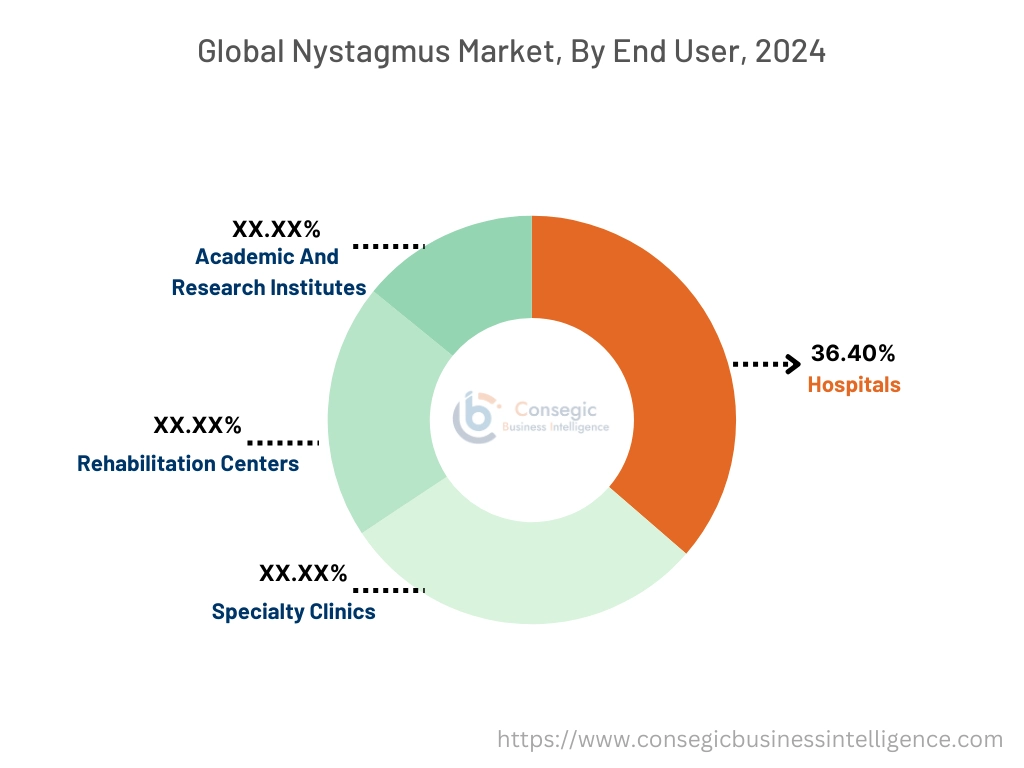
Based on end-user, the market is segmented into hospitals, specialty clinics, rehabilitation centers, and academic and research institutes.
Hospitals accounted for the largest revenue share by 36.40% in 2024.
- Hospitals serve as primary care centers for diagnosing and treating nystagmus, offering comprehensive medical services.
- Their access to advanced diagnostic equipment and multidisciplinary teams ensures high-quality care.
- The rising prevalence of neurological disorders and availability of specialized units reinforce their market leadership.
- Therefore, according to market analysis, hospitals trend in the market due to their comprehensive care capabilities.
Rehabilitation centers are anticipated to register the fastest CAGR during the forecast period.
- Rehabilitation centers focus on therapies and post-treatment care, helping patients improve visual and motor coordination.
- They provide customized treatment plans, emphasizing patient-centric approaches.
- The growing emphasis on long-term management of neurological conditions drives demand for these facilities.
- Thus, according to market analysis, rehabilitation centers are trending, driven by specialized and patient-focused services.
Regional Analysis:
The regions covered are North America, Europe, Asia Pacific, the Middle East and Africa, and Latin America.
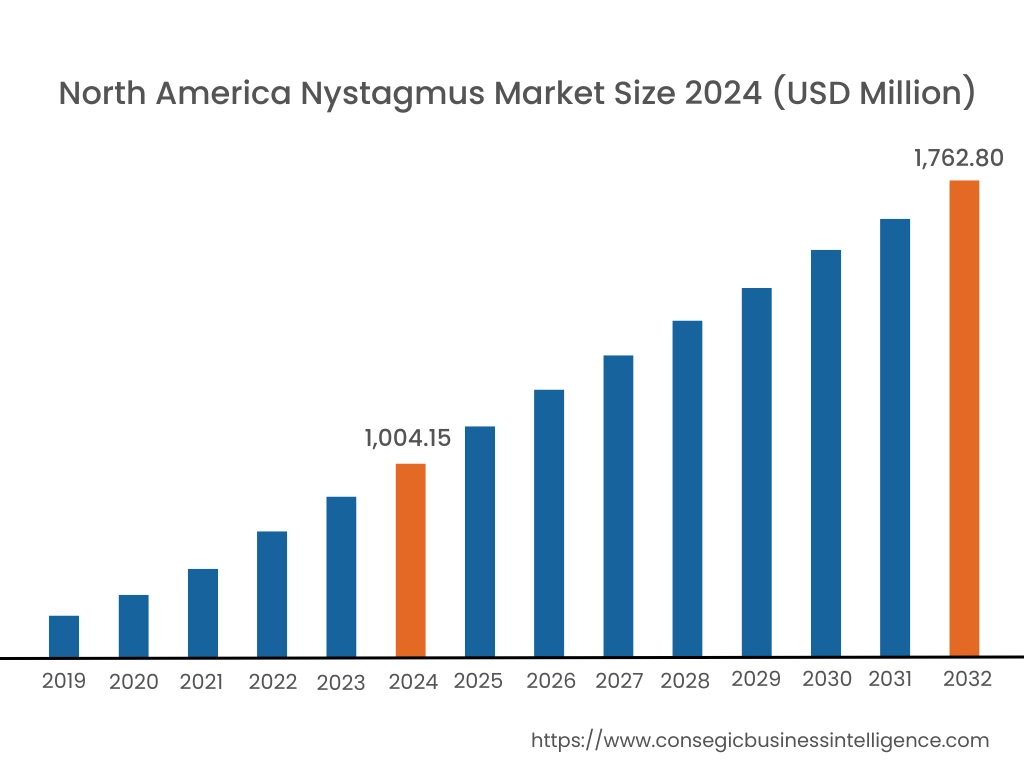
In 2024, North America was valued at USD 1,004.15 Million and is expected to reach USD 1,762.80 Million in 2032. In North America, the U.S. accounted for the highest share of 71.60% during the base year of 2024. North America dominates the nystagmus industry due to the availability of advanced diagnostic tools and therapies. High healthcare expenditure and increasing awareness of rare ocular conditions drive market performance. The presence of leading research institutions and collaborations for innovative treatments also support market growth.

In Asia Pacific, the market is experiencing the fastest growth with a CAGR of 8.0% over the forecast period. Asia-Pacific exhibits significant potential in the nystagmus industry, with increasing access to healthcare services and diagnostic facilities in countries like India, China, and Japan. Awareness campaigns for rare diseases and government initiatives to improve ophthalmology infrastructure play a vital role. Rising healthcare investments enhance accessibility to specialized treatments.
Europe remains a key market for nystagmus treatment. The industry is supported by robust healthcare infrastructure and extensive research on rare eye disorders. Countries like Germany, France, and the UK prioritize patient access to novel therapies. Regulatory frameworks and funding for rare disease research further encourage Nystagmus Market expansion.
The Middle East and Africa show gradual advancements in the market, with increasing efforts to address underdiagnosed conditions. Countries like Saudi Arabia and South Africa invest in upgrading healthcare facilities. Limited awareness and infrastructure in certain areas restrict broader adoption of treatments.
Latin America demonstrates steady development in the nystagmus market, particularly in Brazil and Mexico. Government healthcare programs and improving diagnostic capabilities influence the region’s market dynamics. Economic challenges and uneven healthcare access remain barriers to widespread adoption of specialized treatments.
Top Key Players & Market Share Insights:
The Global Nystagmus Market is highly competitive with major players providing products to the national and international markets. Key players are adopting several strategies in research and development (R&D), product innovation, and end-user launches to hold a strong position in the Global Nystagmus Market. Key players in the Nystagmus Market industry include-
- Novartis AG (Switzerland)
- Pfizer Inc. (United States)
- Johnson & Johnson Vision Care, Inc. (United States)
- F. Hoffmann-La Roche Ltd. (Switzerland)
- Sun Pharmaceutical Industries Ltd. (India)
- Allergan (AbbVie Inc.) (United States)
- Teva Pharmaceutical Industries Ltd. (Israel)
- Sanofi S.A. (France)
- Bausch + Lomb (Bausch Health Companies Inc.) (Canada)
- GlaxoSmithKline plc (United Kingdom)
Recent Industry Developments :
Product launches:
- In March 2024, Super Vision introduced the i-NYS implantable device designed to treat congenital nystagmus. This device stimulates the extraocular rectus muscle to inhibit abnormal eye movements. Clinical trials involved 71 implants across 45 adult and 26 pediatric patients. The company has submitted an application for approval to the National Medical Products Administration (NMPA) in China.
Nystagmus Market Report Insights:
| Report Attributes | Report Details |
| Study Timeline | 2019-2032 |
| Market Size in 2032 | USD 5,439.06 Million |
| CAGR (2025-2032) | 7.6% |
| By Type |
|
| By Treatment |
|
| By End-User |
|
| By Region |
|
| Key Players |
|
| North America | U.S. Canada Mexico |
| Europe | U.K. Germany France Spain Italy Russia Benelux Rest of Europe |
| APAC | China South Korea Japan India Australia ASEAN Rest of Asia-Pacific |
| Middle East and Africa | GCC Turkey South Africa Rest of MEA |
| LATAM | Brazil Argentina Chile Rest of LATAM |
| Report Coverage |
|
Key Questions Answered in the Report
How big is the Nystagmus Market? −
In 2024, the Nystagmus Market was USD 3,027.20 million.
What will be the potential market valuation for the Nystagmus Market by 2032? +
In 2032, the market size of Nystagmus Market is expected to reach USD 5,439.06 million.
What are the segments covered in the Nystagmus Market report? +
The type, treatment, and end-user are the segments covered in this report.
Who are the major players in the Nystagmus Market? +
Novartis AG (Switzerland), Pfizer Inc. (United States), Allergan (AbbVie Inc.) (United States), Teva Pharmaceutical Industries Ltd. (Israel), Sanofi S.A. (France), Bausch + Lomb (Bausch Health Companies Inc.) (Canada), GlaxoSmithKline plc (United Kingdom), Johnson & Johnson Vision Care, Inc. (United States), F. Hoffmann-La Roche Ltd. (Switzerland), Sun Pharmaceutical Industries Ltd. (India) are the major players in the Nystagmus market.
Overview
Reputation & Certifications


Our Services
- Market Intelligence & Forecasting
- Custom Research Solutions
- Market Entry Strategy
- Competitive Intelligence
- Customer Insights
- Industry Innovation Analysis
- Investment Advisory