Jump to Content
Pea Starch Market - Size, Share, Industry Trends, and Forecasts (2025 - 2035)
Pea Starch Market 2025 - 2035:
- The Global Pea Starch Market reached USD 293.52 million in 2025.
- The market is projected to expand at a CAGR of 10.91% during 2025–2035.
- The market value is estimated to reach USD 826.33 million by 2035.
- Asia Pacific is projected to record the fastest growth during the 2025–2035 forecast period.
Market Scope & Overview:
Pea starch is a plant-based carbohydrate ingredient derived from yellow peas that provides functional benefits such as thickening, binding, gelling, and improved texture in food and industrial applications. The production of pea starch takes place using modern processing technologies such as wet milling, starch separation, and advanced purification techniques. The entire process of production includes the extraction of starch, quality testing, and compliance with regulations. This ensures the consistency of the product in terms of performance.
In addition, the major factors driving the pea starch market are the increasing demand for the product in the food processing and plant-based product markets. Moreover, the need for clean-label and plant-based ingredients that provide texture and stability in processed foods and beverages is also affecting the market. Furthermore, pea starch offers several benefits, such as improved product texture, enhanced formulation stability, and better consumer acceptance. The pea starch market is experiencing growth as a result of the aforementioned factors.
Market Size & Forecast
- 2024 Market Size : USD 264.66 Million
- 2025 Market Size : USD 293.52 Million
- 2035 projected Market Size : USD 826.33 Million
- CAGR (2025-2035) : 10.91%
- Largest Market in 2025 : North America
- Fastest growing country : Asia Pacific

Market Dynamics - (DRO):
Key Drivers:
Increasing Demand for Plant-Based Healthy Food Products Drives Market Growth
The rising demand for plant-based healthy food products is considered to be one of the major drivers that is contributing to the adoption of pea starch. Food manufacturers are increasingly choosing pea starch for enhancing texture, binding properties, and stability in foods. It helps to improve thickening, texture, mouthfeel, and consumer acceptability of various plant-based, bakery, snack, and processed food products.
- As per the International Food Information Council report 2023, about 52% of consumers are following a particular diet or consumption pattern that focuses on health and wellness. This rising consumer interest in health-oriented foods drives the demand for pea starch market.
Therefore, the pea starch market is experiencing growth as a result of the increasing demand for plant-based healthy food products.
Key Restraints:
Fluctuating Raw Material Supply Limits Market Expansion
The fluctuations in raw material availability associated with pea cultivation, such as agricultural yield variations and supply chain constraints, are slowing down adoption among certain food manufacturers. Additionally, the concerns related to inconsistent supply contribute to cautious procurement strategies. Manufacturers are also facing challenges that include raw material sourcing and supply chain disruptions, which are hindering expansion of the pea starch market.
Therefore, the pea starch market is impacted by raw material supply fluctuations.
Future Opportunities:
Rising Demand for Clean-Label Plant-Based Ingredients to Create Growth Opportunities for the Market
The rising global focus on plant-based ingredients and transparency in food products is anticipated to generate significant growth opportunities for the pea starch market. There are increasing consumer demands for food products that include natural, minimally processed, and identifiable ingredients with enhanced texture and functional characteristics. Moreover, the increasing trend of plant-based ingredients that are known to improve texture and stability is also presenting new opportunities for innovative pea starch ingredients.
- For example, in 2023, the US Department of Agriculture stated that natural foods labeled accounted for about 16.3% of total US retail food expenditures, reflecting strong consumer demand for clean-label and minimally processed food products.
Hence, the increasing consumer preference for clean-label plant-based ingredients is anticipated to create significant future opportunities for the pea starch market during the forecast period.
Market Segmental Analysis:
By Source:
On the basis of source, the pea starch market is segmented into yellow peas and green peas.
Trends in source:
- The growing demand for plant-based and sustainable starch ingredients is fueling the adoption of pea-derived starch sources.
- The increasing use of pea starch in food processing and industrial applications is driving demand across different pea varieties.
The yellow peas segment held the highest revenue share in 2024.
- Yellow peas are widely used for starch extraction due to their high starch content, which is increasing their adoption.
- Also, the growing use of yellow pea starch in food processing applications is driving segment dominance.
- Moreover, their easy availability and large-scale cultivation are supporting widespread use.
- Furthermore, the increasing demand for plant-based starch ingredients is contributing to higher consumption.
- Therefore, the dominance of the yellow peas segment is being fueled by its extensive use in starch extraction and food processing applications.
It is anticipated that the green peas segment will exhibit the highest compound annual growth rate (CAGR) during the forecast period.
- Green peas help in providing functional starch properties suitable for specialty food applications, which is increasing their adoption.
- Also, the rising demand for diversified plant-based ingredients is fueling segment growth.
- Moreover, their use in specialty food formulations and niche applications is supporting adoption.
- Therefore, the increasing demand for alternative plant-based starch sources is accelerating the growth of the green peas segment during the forecast period.
By type:
Trends in type:
- The growing demand for functional starch ingredients in food processing is fueling the adoption of different starch types.
- The increasing need for improved product texture, stability, and processing efficiency is driving demand across various starch categories.
The native segment held the highest revenue share in 2024.
- Native pea starch provides natural thickening and binding properties, which is increasing its adoption in food applications.
- Also, the growing consumer preference for clean-label ingredients is driving segment dominance.
- Moreover, its compatibility with different food formulations is supporting widespread use.
- Furthermore, the increasing demand for minimally processed ingredients is contributing to higher consumption.
- Therefore, the dominance of the native segment is being fueled by its extensive use in clean-label and natural food formulations.
It is anticipated that the modified segment will exhibit the highest compound annual growth rate (CAGR) during the forecast period.
- Modified pea starch helps in providing enhanced stability and functional performance in processed food products, which is increasing its adoption.
- Also, the rising demand from processed and convenience food manufacturers is fueling segment growth.
- Moreover, its role in improving product texture and shelf stability is supporting adoption.
- Therefore, the increasing demand for high-performance starch ingredients is accelerating the growth of the modified segment during the forecast period.
By Grade:
On the basis of grade, the pea starch market is segmented into food, feed, and industrial.
Trends in grade:
- The growing demand for plant-based starch ingredients across food and industrial sectors is increasing the adoption of pea starch.
- The increasing focus on sustainable and functional ingredients is fueling the demand across different grade categories.
The food segment held the highest revenue share of 36.5% in 2024.
- Food-grade pea starch is used in various processed foods, baked goods, and snacks is a major contributor to the demand for the product.
- Also, there is an increasing demand for plant-based and gluten-free ingredients is a major contributor to segment dominance.
- Moreover, pea starch is used to enhance the texture of various foods is a major contributor to the demand for the product.
- Furthermore, the growing demand for clean-label food ingredients is contributing to higher consumption.
- Therefore, the dominance of the food segment is being fueled by the extensive use of pea starch in food processing applications.
It is anticipated that the industrial segment will exhibit the highest compound annual growth rate (CAGR) during the forecast period.
- Industrial-grade pea starch helps in providing functional properties such as binding and film-forming, which is increasing its adoption in industrial applications.
- Also, the rising demand for bio-based materials is fueling segment growth.
- Moreover, its role in paper, textile, and biodegradable product manufacturing is supporting adoption.
- Therefore, the increasing focus on sustainable industrial materials is accelerating the growth of the industrial segment during the forecast period.

By Function:
On the basis of function, the pea starch market is segmented into gelling, thickeners, texturizing, and film forming.
Trends in function:
- The growing demand for functional starch ingredients in food processing is increasing their adoption across different functional applications.
- The increasing need to improve product texture, stability, and processing efficiency is fueling the demand across various functional uses.
The thickeners segment held the highest revenue share in 2024.
- Pea starch is widely used as a thickening agent in soups, sauces, and processed foods, which is driving its demand.
- Also, the increasing use of starch-based thickeners in food formulations is fueling segment dominance.
- Moreover, its ability to improve product consistency and stability is supporting widespread adoption.
- Furthermore, the rising demand for plant-based functional ingredients is contributing to increased consumption.
- Therefore, the dominance of the thickeners segment is being fueled by the extensive use of pea starch in food processing applications.
It is anticipated that the texturizing segment will exhibit the highest compound annual growth rate (CAGR) during the forecast period.
- Pea starch helps in providing improved texture and mouthfeel in food products, which is increasing its adoption.
- Also, the rising demand for plant-based and meat alternative products is fueling segment growth.
- Moreover, its role in enhancing product structure and consumer acceptance is supporting adoption.
- Therefore, the increasing focus on improving product texture in food formulations is accelerating the growth of the texturizing segment during the forecast period.
By Application:
On the basis of application, the market is divided into food & beverages, and animal feed.
Trends in application:
- The growing demand for plant-based starch ingredients is increasing their adoption across major application segments.
- The increasing focus on improving product texture, stability, and nutritional value is fueling the demand across various industries.
The food & beverages segment held the highest revenue share in 2024.
- Pea starch is used in various processed foods, baked goods, and beverages, thus contributing to the demand for the product.
- Further, increasing demand for plant-based clean label foods is a major contributor to the demand for pea starch.
- Moreover, the rising innovation in food product formulations is contributing to increased starch consumption.
- Hence, the dominance of the food & beverages segment is being fueled by the extensive use of pea starch in food processing applications.
It is anticipated that the animal feed segment will exhibit the highest compound annual growth rate (CAGR) during the forecast period.
- Pea starch is increasingly used in animal feed formulations to provide energy and improve feed quality, which is increasing its adoption.
- Also, the rising demand for plant-based feed ingredients is driving segment growth.
- Furthermore, the growing focus on improving livestock nutrition is supporting the use of pea starch in feed products.
- Therefore, the increasing demand for high-quality animal nutrition products is accelerating the growth of the animal feed segment.
Regional Analysis:
North America, Europe, Asia Pacific, the Middle East and Africa, and Latin America are the regions of coverage.

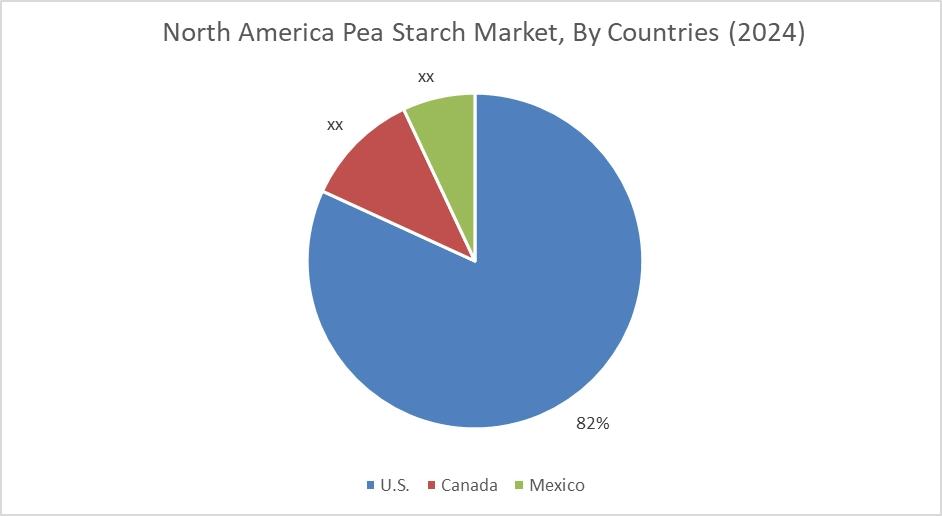
In 2024, North America accounted for the highest market share at 49.5% and was valued at USD 131.01 Million, and is expected to reach USD 409.03 Million by 2035. In North America, the US accounted for the highest market share of 82% in 2024. The main factor that contributes to the growth of the market is the increasing demand for plant-based and clean label food ingredients, which helps to attain regional dominance. Moreover, the strong presence of advanced food processing industries in the US significantly contributes to the rising demand for pea starch in processed food products, thereby supporting market growth. Although other regions are expected to fuel market demand, North America is anticipated to remain the dominant revenue contributor during the forecast period.
- For instance, in January 2025, the US Department of Health and Human Services stated that total sales of plant-based foods in the US market have grown to USD 8.1 billion by 2023, compared to USD 5.5 billion in 2019. This growing demand for plant-based foods in a major economy such as the US further drives the growth of pea starch market.
In the Asia Pacific region, the pea starch market is expected to register the fastest growth during the forecast period. The growth in the market is attributed to the rise in demand for plant-based food products and the growth in the food processing sector. Additionally, the food processing sector is increasingly using pea starch in food products and snacks, thereby boosting the growth in the market.
- For instance, in October 2024, USDA announced that China had imported 2.6 million tons of peas in 2023. This figure showed a rise of 64% compared to the previous year. This rise in the importation of peas in China is attributed to the increased demand for plant-based foods, including pea starch.
Europe pea starch market is the second largest market after North America, owing to the increasing demand from plant-based foods, and processed food products. The expansion of clean-label and plant-based food product innovation is fueling the demand for pea starch, hence driving the growth of the pea starch market.
Market growth in the Middle East & Africa is expanding due to the rising investments in food processing and packaged food production activities. Moreover, the increasing demand for plant-based and sustainable food ingredients is driving demand in this region, supported by ongoing expansion of the food and beverage industry.
Latin America pea starch market is driven by rising demand from processed food and animal feed sectors. Additionally, the growing adoption of pea starch in bakery products, snacks, and processed food applications is driving demand in this region, thereby supporting growth of the market.
Top Key Players & Market Share Insights:
The pea starch market is competitive at the global level, with major starch manufacturers and plant-based ingredient companies providing products for developed and emerging markets. The companies operating in the market are offering a wide range of products for food processing, animal feed, and industrial applications. In addition, companies are adopting strategies such as capacity expansion, product innovation, and geographic expansion to gain a competitive advantage. The key players operating in the pea starch market include:
- Organicway Food Ingredients Inc. – China
- Yosin Biotechnology Co., Ltd. – China
- American Key Food Products – US
- Roquette – France
- AM Nutrition – Norway
- Ebro Foods S.A. – Spain
- Axiom Foods Inc. – US
- The Scoular Company – US
- P&H Milling Inc. – Canada
- Aminola – Netherlands
Recent Industry Developments:
- In October 2025, Roquette launched AMYSTA L 123, a thermally soluble pea starch developed through a patented, enzyme and chemical-free process. This offers transparent labelling and consistent texturizing performance to meet growing demand for simple, and recognizable ingredients.
- In September 2024, P&H Milling Group announced the construction of its new flour milling capacity in Red Deer County, Alta with an investment of USD 241 million, with a capacity of 750 metric tons of wheat per day.
Pea Starch Market Report Insights:
| Report Attributes | Report Details |
|---|---|
| Study Timeline | 2024-2035 |
| Market Size in 2035 (USD Trillion) | USD 826.33 Million |
| CAGR (2025-2035) | 10.91% |
| By Source |
|
| By Type |
|
| By Grade |
|
| By Function |
|
| By Application |
|
| By Region |
|
| Key Players |
|
| Report Coverage |
|
Key Questions Answered in the Report
How big is the pea starch market? −
Pea starch market size is estimated to reach over USD 826.33 Million by 2035 from a value of USD 264.66 Million in 2024 and is projected to grow by USD 293.52 Million in 2025, growing at a CAGR of 10.91% from 2025 to 2035.
Which segmentation details are covered in the pea starch report? +
The pea starch report includes specific segmentation details for source, type, grade, function, application, and region.
Which is the fastest segment anticipated to impact the market growth? +
In the pea starch market, the industrial segment is the fastest-growing segment during the forecast period, driven by the rising demand for bio-based materials.
Who are the major players in the pea starch market? +
The key participants in the pea starch market are Organicway Food Ingredients Inc. (China), Yosin Biotechnology Co., Ltd. (China), American Key Food Products (US), Roquette (France), AM Nutrition (Norway), Ebro Foods S.A. (Spain), Axiom Foods Inc. (US), The Scoular Company (US), P&H Milling Inc. (Canada), Aminola (Netherlands), and others.Top of Form
What are the key trends in the pea starch market? +
The pea starch market is shaped by key trends including increasing demand for plant-based food products.
Overview
Reputation & Certifications


Our Services
- Market Intelligence & Forecasting
- Custom Research Solutions
- Market Entry Strategy
- Competitive Intelligence
- Customer Insights
- Industry Innovation Analysis
- Investment Advisory