Jump to Content
Rigid Bulk Packaging Market - Size, Share, Industry Trends, and Forecasts (2026-2034)
Rigid Bulk Packaging Market Size:
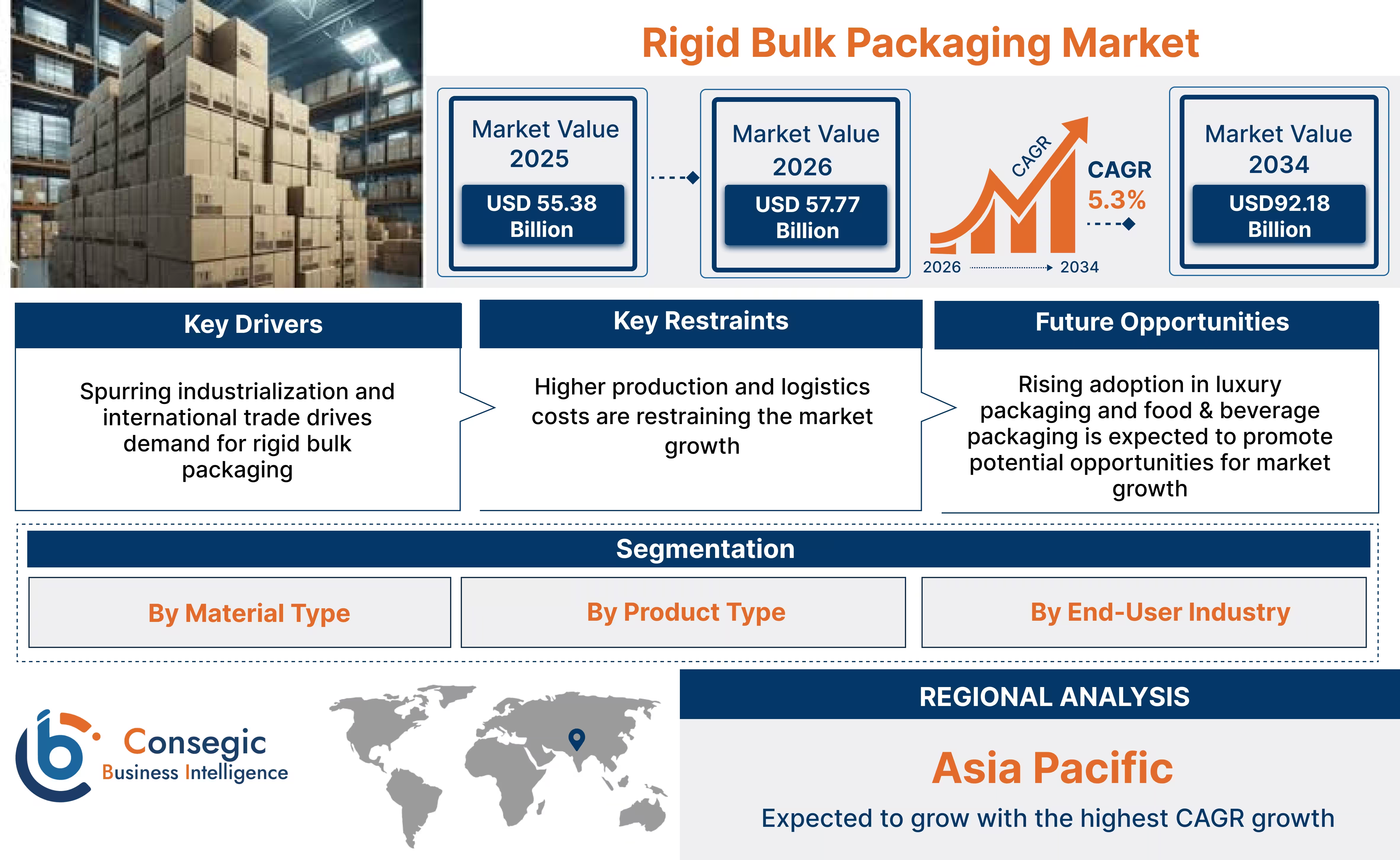
Rigid Bulk Packaging Market size is estimated to reach over USD 92.18 Billion by 2034 from a value of USD 55.38 Billion in 2025 and is projected to grow by USD 57.77 Billion in 2026, growing at a CAGR of 5.3% from 2026 to 2034
Rigid Bulk Packaging Market Key Takeaways
Key Growth Drivers
- Rapid industrialization and growing international trade are increasing demand for durable and secure rigid bulk packaging solutions.
- Expanding global supply chains for chemicals, pharmaceuticals, and agricultural products are driving the adoption of bulk packaging systems.
- Rising cross-border trade and logistics activities are boosting the need for reliable packaging that ensures product safety during transit.
Market Limitations & Challenges
- High raw material costs for petroleum-based plastics and metals are increasing overall production expenses.
- Growing preference for lightweight and cost-effective flexible packaging alternatives is restraining market growth.
Strategic Opportunities
- Rising demand for luxury goods and premium product packaging is creating new market growth opportunities.
- Expansion of e-commerce, cosmetics, and food industries is driving the adoption of advanced rigid packaging solutions.
Key Players
- Market Leader: SCHÜTZ GmbH & Co. KGaA held a significant share of the global Rigid Bulk Packaging Market in 2025, supported by its strong portfolio of intermediate bulk containers (IBCs), global manufacturing footprint, and growing demand for safe and efficient industrial packaging solutions across chemical, food, and pharmaceutical industries.
Rigid Bulk Packaging Market Scope & Overview:
The rigid bulk packaging is a hard, non-flexible packaging solution, such as intermediate bulk containers (IBCs), metal and plastic drums, and large crates or boxes. They are designed to store and transport large amounts of solids, liquids, or semi-liquids. Additionally, it primarily utilizes industrial-grade plastics, metals, and wood, among others, for packaging. Moreover, the packaging is designed to offer impact resistance, secure loading, and superior product protection for industrial and commercial applications. Further, the expanding global trade and manufacturing output are boosting the rigid bulk packaging market demand. Furthermore, the market growth is driven by rising adoption in industries such as food & beverage, e-commerce, pharmaceuticals, and others.
Rigid Bulk Packaging Market Dynamics - (DRO) :
Market Drivers:
Spurring industrialization and international trade drives demand for rigid bulk packaging
The proliferation of global supply chains to transport agricultural goods, chemicals, and pharmaceuticals, among others, across borders. Also, these sectors rely on durable and heavy-duty packaging materials to prevent contamination and resist transit conditions. Additionally, the hazardous and temperature-sensitive materials require highly regulated, leak-proof, and safe packaging solutions, which in turn is fueling the rigid bulk packaging market demand.
- For instance, according to World Trade Organization, the world's annual total merchandise export growth changed to 6.7% in 2025, with Africa being the highest with 9.7%, followed by Asia (8.2%), Europe (6.7%), the Middle East (5.6%), and others.
Therefore, the rapid pace of industrialization and international trade is driving the market growth.
Market Restraints:
Higher production and logistics costs are restraining the market growth
The rigid containers rely on petroleum-derived plastics and metals, whose prices are linked to global price spikes in crude oil and steel, directly impacting the rigid bulk packaging market expansion. Also, the rigid packaging is heavy and occupies significant volume during transit, which increases fuel and freight costs, making shipment highly expensive. Further, the cost pressures are fundamentally shifting consumer interest towards flexible packaging alternatives, which in turn is hindering the market expansion.
Therefore, the high costs of raw materials and transportation are restraining the market progress.
Future Opportunities:
Rising adoption in luxury packaging and food & beverage packaging is expected to promote potential opportunities for market growth
The rising demand for convenient, ready-to-eat foods, beverages, and premium consumer goods is creating a rigid bulk packaging market opportunity. Also, brands are relying on rigid format packaging solutions due to superior product protection, extended shelf life, and elevated unboxing experiences that drive market progress. Additionally, the rising urbanization and busy lifestyles are driving the consumption of packaged, ready-to-eat meals and on-the-go beverages, which is driving the market need to ensure product integrity during transit.
- For instance, in October 2025, Yiruixing Packaging expanded the custom and bulk packaging solutions in Germany and France. The expansion aims to cater to the rising demand for packaging solutions for luxury goods, cosmetics, food and beverage, and e-commerce, among others.
Hence, the rising adoption of rigid packaging solutions for food & beverage and luxury item packaging is anticipated to increase the utilization, in turn promoting prospects for the market opportunity during the forecast period.
Rigid Bulk Packaging Market Segmental Analysis :
By Material Type:
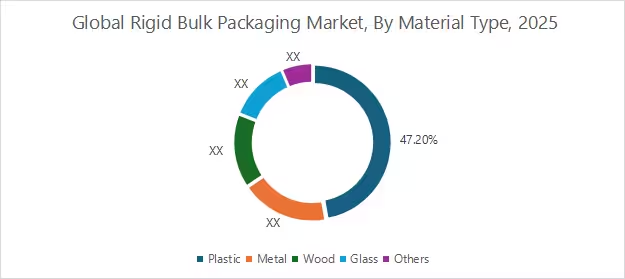
Based on the material type, the market is segmented into plastic, metal, wood, glass, and others.
Trends in the Material Type:
- The rapidly changing food safety parameters are accelerating the adoption of BPA-free material is driving the adoption of metal materials, which in turn is fueling the rigid bulk packaging market trends.
- The industry-wide push towards reusable, returnable, and repairable wood packaging is boosting the trends.
The plastic material accounted for the largest revenue share of 47.20% in the year 2025.
- The manufacturers of bulk packaging solutions utilize specific plastic polymers that offer impact resistance, durability, and resistance to chemicals. The plastic material provides maximum structural strength, superior product protection, and chemical resistance for industrial, agricultural, and commercial supply chains.
- The features are driving its applications in the manufacturing of large barrels, jerry cans, and shipping containers. Additionally, the key advantages offered by high strength-to-weight ratio, excellent barrier protection, chemical & corrosion resistance, which in turn fuels the rigid bulk packaging market share.
- Further, the superior product protection during long-haul transit offered by plastic materials is driving the market size.
- Furthermore, the ability to withstand multiple returnable refill cycles is boosting the adoption of plastic materials.
- Thus, as per the market analysis, the superior product protection and the ability to withstand multiple refill cycles are driving the market progress.
The glass material is anticipated to register the fastest CAGR during the forecast period.
- The glass material is a 100% recyclable material, and it offers unparalleled barrier protection, chemical inertness, and aesthetic appeal.
- The key features are driving the adoption of glass material for applications in premium food, beverages, and sensitive pharmaceutical products to preserve freshness and ensure zero chemical leaking, which in turn is driving the rigid bulk packaging market size.
- Further, the ability to align directly with global ESG goals due to its infinite recyclability and superior barrier protection against moisture, gas, and odor is boosting the adoption of glass material, which in turn is driving the market share.
- Further, the increasing bans on single-use plastics and circular economy frameworks are propelling manufacturers to adopt returnable and fully recyclable glass materials.
- Therefore, as per the market analysis, the bans on single-use plastics and the ability to align with ESG goals are anticipated to boost the market during the forecast period.
By Product Type:
Based on the product type, the market is segmented into boxes, trays, containers & cans, bottles & jars, pallets, and others.
Trends in the Product Type:
- The trend towards the adoption of post-consumer recycled (PCR) plastics and recycled PET (rPET) bottles & jars due to strict government regulations is driving the market progress.
- The trend towards the adoption of fiber trays instead of plastic trays due to resistance against grease, moisture, and heat is driving the market progress.
The containers & cans product accounted for the largest revenue share in the year 2025.
- The rigid containers & cans utilize strong, stiff materials such as glass, metal, hard plastics, and thick cardboard to ensure maximum durability, prevent leaks or contamination, and extend the shelf life of food, chemicals, and the pharmaceutical sector.
- Also, the containers & cans offer superior product protection, extended shelf life, stackability, and sustainability, which is driving the rigid bulk packaging industry.
- The containers and cans segment includes intermediate bulk containers (IBCs), metal and plastic drums, and large pails, among others, and is heavily utilized for transporting hazardous and non-hazardous bulk liquids, granular substances, and industrial raw materials across industries.
- Further, the expanding global trade flows and Rapid industrialization are the primary factors boosting the need for containers & cans.
- Thus, as per the rigid bulk packaging market analysis, the aforementioned factors are driving the market progress.
The pallet product is anticipated to register the fastest CAGR during the forecast period.
- The pallets are essential for safely lifting, moving, and stacking materials by forklifts or pallet jacks. Also, pallets serve as the fundamental base of the modern logistics unit.
- Additionally, the key advantages offered by pallet products include heavy-duty strength, superior protection, enhanced logistics, and sustainability, among others.
- Further, the proliferation of automated storage and retrieval systems requires highly standardized, uniform, and durable pallets to prevent jamming and ensure system compatibility.
- Furthermore, the surging production and export demands for bulk commodities like vegetable oils, chemicals, and pharmaceuticals are boosting the need for pallets.
- Therefore, as per the market analysis, the aforementioned factors are anticipated to boost the growth of the market during the forecast period.
By End-User Industry:
Based on the end-user industry, the rigid bulk packaging market is segmented into food & beverage, chemicals, electronics, e-commerce, pharmaceuticals, agriculture, and others.
Trends in the End-User Industry:
- The trend towards stringent government regulations regarding plastic waste and recycling is driving a rapid shift toward reusable packaging and biodegradable solutions.
- The trend towards rising adoption of packaging solutions made of high-density polyethylene and corrosion-resistant stainless steel in pharmaceuticals sector to prevent chemical leaching, moisture ingress, and product degradation is fueling the market progress.
The food & beverage segment accounted for the largest revenue share in the year 2025.
- The rigid packaging solution is the essential component of the food & beverages sector as it helps to safely transit large-volume liquid ingredients, powders, and wholesale goods from production floors to retail processing lines.
- The key advantages include product safety & hygiene, supply chain efficiency, enhanced sustainability, and others.
- The rise of online grocery retail and widespread logistics networks is driving the need for reliable protective packaging formats.
- Further, the shifting consumer interest towards nutritious, organic, and functional foods such as plant-based proteins is driving the need for rigid packaging solutions.
- Furthermore, the proliferation of digital ordering platforms is driving the progress of the food & beverages sector, which in turn is fueling the need for various rigid packaging solutions.
- Thus, as per the market analysis, the shifting consumer interest and the rise of online grocery are driving the market development.
The e-commerce segment is anticipated to register the fastest CAGR during the forecast period.
- The rapid development of the e-commerce sector across the globe is propelling the need for robust protective solutions to handle longer transit times and rougher handling.
- Also, the rigid packaging solutions encompass heavy-duty corrugated cartons, pallets, and high-density set-up boxes, which are essential for the e-commerce sector.
- Additionally, the key advantages offered by rigid packaging solutions to the e-commerce sector include superior product protection, optimized logistics & storage, enhanced sustainability, and others.
- Further, e-commerce involves numerous individuals, last-mile deliveries, which require packaging solutions that absorb mechanical shocks and external forces, significantly reducing product returns and financial losses.
- Furthermore, the rapid development of direct-to-consumer online sales from warehouses to micro-fulfillment centers requires heavy-duty boxes, which in turn is boosting the market progress.
- Therefore, as per the market analysis, the aforementioned factors are anticipated to boost the market during the forecast period.
Regional Analysis:
The regions covered are North America, Europe, Asia Pacific, Middle East and Africa, and Latin America.
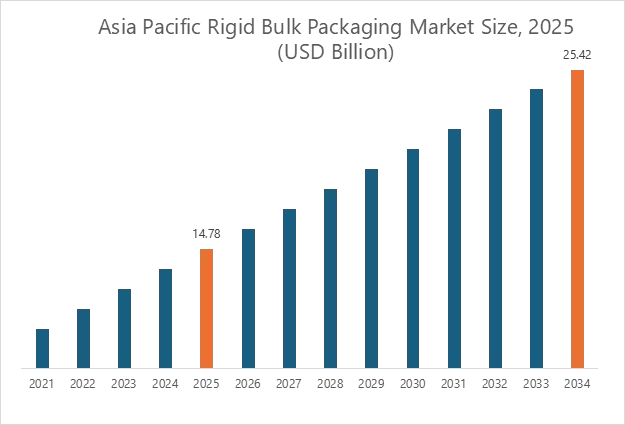
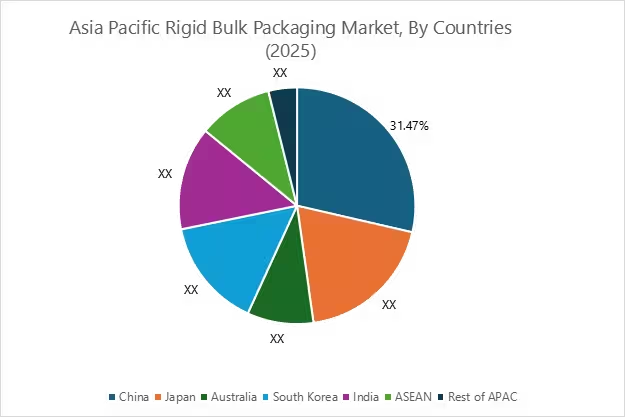
Asia Pacific region was valued at USD 14.78 Billion in 2025. Moreover, it is projected to grow by USD 15.48 Billion in 2026 and reach over USD 25.42 Billion by 2034. Out of this, China accounted for the maximum revenue share of 31.47%. The market progress is mainly driven by stringent safety regulations for transporting hazardous and sensitive materials. Furthermore, factors including the rapid growth of the e-commerce sector and massive export-oriented manufacturing are projected to drive the market progress in the Asia Pacific region during the forecast period.
- For instance, according to Indian Brand Equity Foundation, India’s e-commerce sector attracted USD 3.1 billion, which accounted for 31% of total start-up funding. The progress is showcasing a strong need for rigid packaging solutions in the e-commerce sector.
North America is estimated to reach over USD 30.01 Billion by 2034 from a value of USD 17.88 Billion in 2025 and is projected to grow by USD 18.67 Billion in 2026. The North American region's constant progress in online retail and a robust manufacturing base offer lucrative growth prospect for the market. Additionally, the strict sustainability and recycling mandates are driving the market progress.
- For instance, in January 2025, Veritiv operating company sold its Veritiv Containers business division to TricorBraun. The sale aims to optimize the Veritiv portfolio and sharpen focus on core specialty packaging segments.
The regional analysis depicts that the European Union's packaging and packaging waste regulations (PPWR) are driving the adoption of reusable and easily recyclable packaging solutions in Europe. Additionally, the key factor driving the market is the rapid development of industrial and manufacturing activities, as well as the need for safe, secure transport of goods across the pharmaceutical, chemical, and food and beverage sectors, which is propelling the market adoption in the Middle East and African region. Further, the growing chemical, pharmaceutical, and agricultural industries are paving the way for the progress of the market in Latin America region.
Top Key Players & Market Share Insights:
The global rigid bulk packaging market is highly competitive, with major players providing rigid bulk packaging to the national and international markets. Key players are adopting several strategies in research and development (R&D), product innovation, and end user launches to hold a strong position in the rigid bulk packaging industry. Key players in the market include-
- Chemco Group (India)
- Pyramid Technoplast Ltd (India)
- Core Plastech International Inc. (Canada)
- PlastiPak (United States)
- SCHÜTZ GmbH & Co. KGaA (Germany)
- Berry Global Inc. (United States)
- Packaging Corporation of America (United States)
- Hoover Ferguson Group, Inc. (United States)
- Amcor (Australia)
- Schoeller Allibert (Netherlands)
Rigid Bulk Packaging Market Ecosystem:
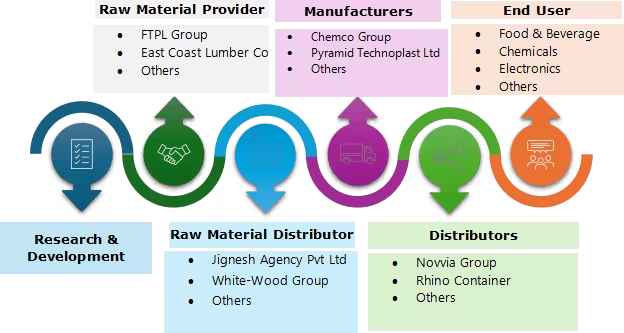
Recent Industry Developments:
Product launches
- In December 2025, WeighPack Systems Inc. launched a rigid container weigh filling system, which features high speed, accuracy, and line integration capability. The system has the capability of up to 150 rigid containers per minute.
Mergers & Acquisitions
- In June 2026, Berlin Packaging acquired O.Berk Company with the aim of strengthening its capabilities in growing sectors such as beauty, personal care, pharmaceutical, and nutraceutical.
Rigid Bulk Packaging Market Report Insights:
| Report Attributes | Report Details |
| Study Timeline | 2021-2034 |
| Market Size in 2034 | USD 92.18 Billion |
| CAGR (2026-2034) | 5.3% |
| By Material Type |
|
| By Product Type |
|
| By End-User Industry |
|
| By Region |
|
| Key Players |
|
| Report Coverage |
|
Key Questions Answered in the Report
How big is the rigid bulk packaging market? −
The rigid bulk packaging market size is estimated to reach over USD 92.18 Billion by 2034 from a value of USD 55.38 Billion in 2025 and is projected to grow by USD 57.77 Billion in 2026, growing at a CAGR of 5.3% from 2026 to 2034.
Which segmentation details are covered in the rigid bulk packaging report? +
The rigid bulk packaging report includes specific segmentation details for material type, product type, end-user industry, and regions.
Which is the fastest segment anticipated to impact the market growth? +
In the rigid bulk packaging market, the glass material is the fastest-growing segment during the forecast period due to bans on single-use plastics and their ability to align with ESG goals.
Who are the major players in the rigid bulk packaging market? +
The key participants in the rigid bulk packaging market are Chemco Group (India), Pyramid Technoplast Ltd (India), Core Plastech International Inc. (Canada), PlastiPak (United States), SCHÜTZ GmbH & Co. KGaA (Germany), Berry Global Inc. (United States), Packaging Corporation of America (United States), Hoover Ferguson Group, Inc. (United States), Amcor (Australia), Schoeller Allibert (Netherlands), and others.
What are the key trends in the rigid bulk packaging market? +
The rigid bulk packaging market is being shaped by several key trends including stringent government regulations regarding plastic waste and recycling along with the rapidly changing food safety parameters that accelerate the adoption of BPA-free material are the key trends driving the market.
Overview
Reputation & Certifications

Our Services
- Market Intelligence & Forecasting
- Custom Research Solutions
- Market Entry Strategy
- Competitive Intelligence
- Customer Insights
- Industry Innovation Analysis
- Investment Advisory