Jump to Content
Smart Personal Protective Equipment Market - Size, Industry Share, Growth Trends and Forecasts (2026 - 2034)
Smart Personal Protective Equipment Market Size:
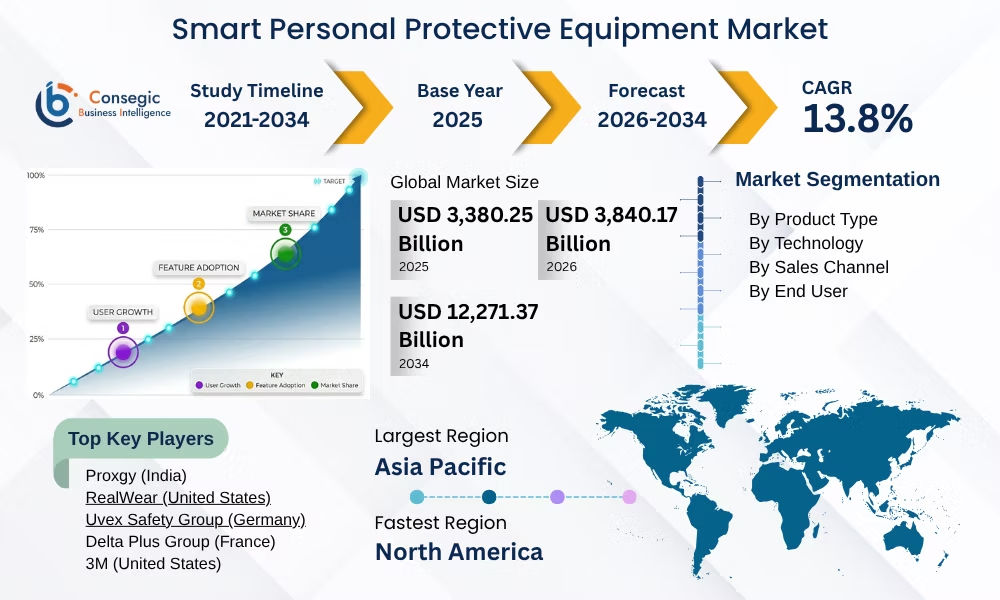
Smart Personal Protective Equipment Market size is estimated to reach over USD 12,271.37 Million by 2034 from a value of USD 3,380.25 Million in 2025 and is projected to grow by USD 3,840.17 Million in 2026, growing at a CAGR of 13.8% from 2026 to 2034.
Smart Personal Protective Equipment Market Key Takeways
Key Growth Drivers
- Stringent workplace safety regulations are increasing the adoption of smart personal protective equipment across industries.
- Rapid industrialization and infrastructure development are driving demand for advanced worker safety solutions.
- Growing integration of IoT-enabled sensors and real-time monitoring technologies is supporting market growth.
Market Limitations & Challenges
- High acquisition and maintenance costs of smart PPE are limiting adoption, particularly among small and medium-sized enterprises.
- Additional investments in connectivity, data management, and workforce training increase the overall cost of deployment.
Strategic Opportunities
- Rising adoption of AI and IoT technologies is creating new opportunities for intelligent and connected safety equipment.
- Growing demand for real-time hazard detection, worker health monitoring, and predictive safety solutions is expected to drive future market growth.
Key Players
- Market Leader: Honeywell International Inc. held a significant share of the global Smart Personal Protective Equipment Market in 2025, supported by its broad portfolio of connected safety solutions, advanced worker protection technologies, and strong presence across industrial, construction, energy, and healthcare sectors worldwide.
Smart Personal Protective Equipment Market Scope & Overview:
Smart personal protective equipment (PPE) integrates IoT sensors, AI analytics, and wireless communication into safety gear for actively monitoring worker vitals, detecting environmental hazards, and tracing equipment compliance. It offers several benefits, including real-time hazard detection, instant emergency alerts like fall detection, and proactive injury prevention by tracking biometrics such as heart rate, posture, and fatigue. Additionally, the market is primarily driven by factors such as the presence of stringent, evolving occupational safety regulations, IoT/AI integration for real-time hazard monitoring, and increasing awareness of workplace safety across high-risk industries such as manufacturing, construction, oil & gas, and healthcare, among others.
Smart Personal Protective Equipment Market Dynamics - (DRO):
Market Drivers:
Stringent safety regulations, rapid industrialization, and infrastructure development are driving the smart PPE market growth
The smart personal protective equipment market is experiencing robust growth, primarily driven by several factors including stringent safety regulations, rapid industrialization, and increasing infrastructure development, among others. Governments and regulatory bodies are enforcing rigorous safety standards, mandating the use of protective gear to reduce high-risk workplace accidents, which compels companies to invest in certified, high-performance smart personal protective equipment. Similarly, rapid industrialization has expanded labor-intensive sectors such as manufacturing, oil & gas, and mining, increasing worker exposure to mechanical, thermal, and chemical hazards.
Additionally, the ongoing large-scale infrastructure and construction projects are driving demand for specialized, durable equipment such as smart helmets, clothing, and respiratory protection to ensure operational continuity and employee well-being. Smart personal protective equipment integrates internet of things (IoT), wearable sensors, and real-time monitoring to continuously track worker biometrics like heart rate and body temperature and environmental conditions such as toxic gas or hazardous noise levels. By facilitating instant safety alerts and automating compliance reporting, smart PPE ensures that companies meet regulatory demands in demanding, fast-paced work settings. The above factors are further driving the adoption of smart PPE.
- For instance, according to the S. Census Bureau, the total construction spending in the United States was valued at approximately USD 2,207.10 billion in April 2026.
Hence, the aforementioned factors are further driving the smart personal protective equipment market size.
Market Restraints:
High initial investment and maintenance costs are restraining the smart personal protective equipment market growth
The adoption of smart personal protective equipment is often associated with high initial costs and maintenance costs, which are among the prime factors restricting the market. Unlike traditional safety gear, smart PPE integrates complex sensors, IoT connectivity, and data analytics capabilities into everyday protective clothing and gear. Acquiring these advanced, connected devices requires a substantial initial investment, which may act as a barrier to market entry, particularly for cost-sensitive industries and small-to-medium enterprises (SMEs).
In addition to the initial purchase, smart PPE usually require constant, specialized maintenance to ensure sensors remain calibrated, firmware is updated, and damaged components are repaired. Further, businesses must often invest in supporting infrastructure, such as cloud data management, cybersecurity protocols, and employee training programs, which in turn drives up the total cost of ownership. Hence, the high initial investment and maintenance costs associated with the use of smart PPE are hindering the smart personal protective equipment market expansion.
Future Opportunities:
Rising technological advancements, including IoT and AI, are expected to drive the smart personal protective equipment market opportunities
The integration of the internet of things (IoT) and artificial intelligence (AI) into personal protective equipment (PPE) offers lucrative growth aspects for the market by converting standard, passive gear into intelligent, interconnected nodes that can monitor worker health, environmental conditions, and adherence to safety protocols in real time. The use of embedded biometric sensors, AI-powered predictive analytics, and IoT connectivity can assist industries in continuously tracking vital signs like heart rate and fatigue, along with detecting localized hazards such as toxic gases or extreme noise. This in turn, enables businesses to perform instant emergency alerts and predictive maintenance, which in turn helps significantly decrease workplace accidents and associated operational downtime. Moreover, driven by stringent occupational health and safety mandates across labor-intensive sectors like manufacturing, healthcare, and construction, AI-enhanced protective solutions are expected to capture a lucrative share of the rapidly growing smart personal protective equipment industry.
- For instance, Maharashtra's Industry Minister (India) inaugurated an innovative line of AI-powered Personal Protective Equipment (PPE) developed by Extremus Safety Pvt. Ltd in 2025. This cutting-edge gear is designed for elevating industrial worker safety across the state. The PPE incorporates advanced artificial intelligence for providing critical safety features, including smart monitoring, real-time hazard detection, and predictive safety measures, among others.
Hence, as per the analysis, the rising technological advancements associated with smart PPE are further projected to boost the market opportunities during the forecast period.
Smart Personal Protective Equipment Market Segmental Analysis:
By Product Type:
Based on the product type, the market is segmented into smart hand protection, smart protective clothing, smart respiratory protection, smart head protection, smart eye and face protection, smart fall protection, and others.
Trends in the product type:
- Factors such as rising integration of IoT and AI, strict occupational safety mandates, and increasing need for continuous physiological and environmental hazard tracking in industrial sectors like manufacturing, oil & gas, and others, are key trends driving the market.
- There is a rising trend towards utilization of smart head protection solutions, driven by the prevalence of stringent occupational safety regulations, expanding construction activities, and increasing demand for real-time, data-driven worker monitoring systems, among others.
The smart protective clothing segment accounted for a substantial revenue in the market in 2025, and it is anticipated to register a significant CAGR during the forecast period.
- Smart protective clothing involves embedding conductive fibers, electronic textiles, or micro-sensors directly into wearable fabrics to act as a responsive barrier.
- The primary benefits of smart protective clothing include continuous, real-time tracking of physiological metrics like heart rate, core temperature, and fatigue, immediate warnings for environmental hazards such as gas leaks or extreme heat, along with automated emergency alerts.
- Moreover, smart protective clothing helps in significantly reducing the risk of workplace injuries, optimizing recovery times, and improving overall worker situational awareness.
- In addition, the market is primarily driven by factors such as rising integration of IoT and AI, strict occupational safety mandates, and the growing need for continuous physiological and environmental hazard tracking in sectors like manufacturing and oil & gas, among others.
- According to the smart personal protective equipment market analysis, the above factors are further propelling the market growth.
By Technology
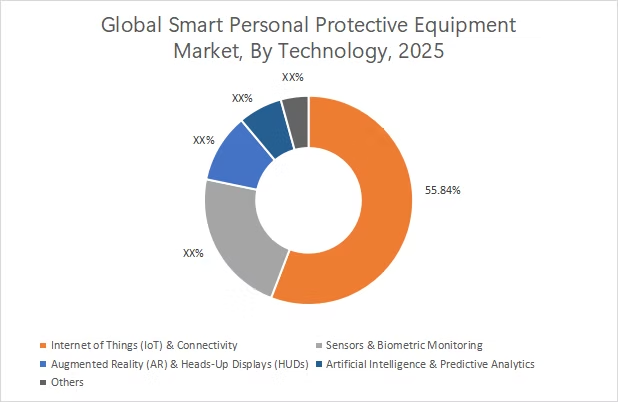
Based on technology, the market is segmented into internet of things (IoT) & connectivity, sensors & biometric monitoring, augmented reality (AR) & heads-up displays (HUDs), artificial intelligence & predictive analytics, and others.
Trends in the technology:
- Factors including rising integration of IoT and connectivity technologies like Bluetooth Low Energy and cellular networks, primarily driven by the presence of stringent workplace safety regulations, rising industrial automation, and growing need for real-time hazard monitoring in high-risk environments, are driving the market.
- The smart personal protective equipment market is also driven by the strong emphasis on workplace safety and connected worker solutions, combined with rising integration of AI and predictive analytics for facilitating continuous worker health assessment, early anomaly detection, and proactive accident prevention.
The internet of things (IoT) & connectivity segment accounted for the largest revenue share of 55.84% in the market in 2025.
- The internet of things (IoT) refers to a vast network of physical objects embedded with sensors, software, and connectivity technologies that allow them to collect, exchange, and act on data without constant human intervention. The internet of things (IoT) and connectivity techniques are among the key technologies driving smart personal protective equipment.
- Embedded sensors in gear, such as gas detectors, heart rate monitors, or GPS tags, collect vast amounts of physiological and environmental data in real time. Through connectivity protocols like Wi-Fi, Bluetooth Low Energy (BLE), or LoRa, this data is transmitted to centralized cloud networks and safety dashboards.
- This seamless exchange enables managers to remotely track worker location, detect fatigue, or identify toxic gas exposure, while simultaneously triggering immediate, localized alerts to the wearer in case of danger.
- Also, factors including integration of IoT and connectivity technologies like Bluetooth Low Energy and cellular networks, primarily driven by stringent workplace safety regulations, rising industrial automation, and growing need for real-time hazard monitoring in high-risk environments, are propelling the segment growth.
- Consequently, the aforementioned factors are further driving the market.
The artificial intelligence & predictive analytics segment is anticipated to register the fastest CAGR during the forecast period.
- Artificial intelligence and predictive analytics are emerging technologies used in smart personal protective equipment. Artificial Intelligence and predictive analytics are capable of processing the live biometric and environmental data collected by smart PPE to recognize patterns and forecast potential safety risks.
- Moreover, the incorporation of machine learning algorithms can enable continuous analysis of historical and real-time information for triggering automated alerts, predicting accidents, as well as recommending preventive measures before incidents can occur, thereby enhancing workers’ safety.
- In addition, the segment is also driven by the strong emphasis on workplace safety and connected worker solutions, combined with rising integration of AI and predictive analytics for facilitating continuous worker health assessment, early anomaly detection, and proactive accident prevention.
- Hence, the rising advancements associated with the use of artificial intelligence & predictive analytics in smart PPE are anticipated to boost the market during the forecast period.
By Sales Channel:
Based on sales channel, the market is segmented into direct sales and distributor sales.
By Sales Channel:
Based on sales channel, the market is segmented into direct sales and distributor sales.
Trends in the sales channel:
- Factors including higher product quality, availability of excellent support and warranty, along with reliable shipping and return policies, are primary aspects driving the direct sales channel segment.
- Factors including improved flexibility, higher accessibility to a variety of products, and expanded reach are key prospects for boosting the distributor sales channel segment.
The direct sales channel segment accounted for significant revenue in the smart personal protective equipment market share in 2025.
- In direct sales channel, smart PPE is sold directly to customers through numerous physical outlets, including company outlets, among others.
- Moreover, the direct sales channel also consists of an online mode, wherein the manufacturers sell smart PPE through their own company websites.
- Also, purchasing smart PPE from a direct sales channel offers various benefits, including higher return on investment, higher product quality, competitive pricing, faster response time, and others, which are primary determinants for increasing the purchase of smart PPE from the direct sales channel.
- Therefore, the increasing availability of smart PPE in direct sales channels is driving the market growth.
The distributor sales segment is anticipated to register a substantial CAGR during the forecast period.
- The distributor sales channel involves an indirect distribution of smart PPE, wherein the smart PPE is purchased from several regional distributors operating in multiple regions worldwide.
- Moreover, distributor sales channels offer various benefits, including lower capital expenditure, expanded market reach, increased cost efficiency, and others. The aforementioned benefits of distributor sales channels are further increasing its utilization for sales of smart PPE.
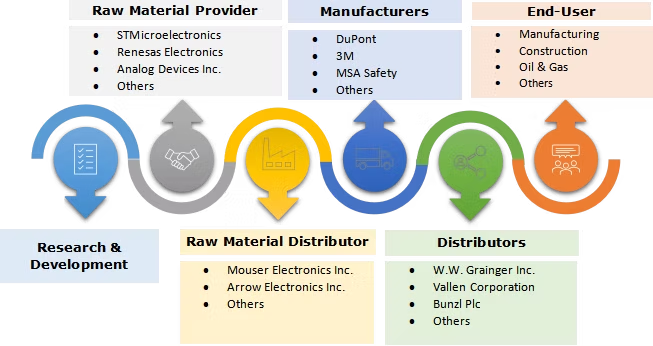
- For instance, W.W. Grainger Inc., Vallen Corporation, Bunzl Plc, and others are few of the distributors of smart PPE.
- Hence, the increasing availability of smart PPE in distributor sales channels is anticipated to boost the market during the forecast period.
By End User:
Based on end user, the market is segmented into manufacturing, construction, oil and gas, healthcare and pharmaceutical, mining, firefighting & emergency services, and others.
Trends in the end user:
- The manufacturing segment is primarily driven by factors such as the presence of stringent workplace safety regulations, combined with the rapid integration of IoT and wearable sensors to monitor worker health and prevent accidents.
- Factors including increasing construction and infrastructure development activities, combined with the rising adoption of smart gear like connected helmets and biometric sensors to offer real-time hazard detection and predictive safety analytics, are further driving the construction segment.
The manufacturing segment accounted for the largest revenue share in the market in 2025.
- In the manufacturing sector, smart PPE is mainly used for protecting workers from dynamic hazards such as moving machinery, confined spaces, and toxic fumes.
- Connected wearables, such as smart helmets and proximity-sensing vests, are used for tracking personnel locations to avoid vehicle collisions, monitoring physiological signs to prevent heat stress, and detecting hazardous gases in real time.
- By using smart PPE, manufacturers can proactively avoid incidents, locate personnel rapidly during emergencies, and enforce strict safety standards.
- Furthermore, factors including stringent workplace safety regulations, combined with the rapid integration of IoT and wearable sensorsto monitor worker health and prevent accidents, are key prospects driving the manufacturing segment.
- According to the analysis, the aforementioned factors are driving the smart personal protective equipment market trends.
The construction segment is anticipated to register a substantial CAGR during the forecast period.
- In the construction sector, smart PPE is utilized to protect workers from immediate and long-term hazards.
- Smart helmets and connected safety vests are often used for monitoring environmental factors like toxic gas levels and extreme heat.
- They are also used for tracking vital signs to prevent fatigue or heat stress and include built-in fall detection that automatically alerts supervisors during an emergency.
- Smart PPE offers real-time analytics and instant feedback, which in turn helps construction companies in preventing accidents before they occur and improving overall site efficiency.
- Moreover, factors including rising construction and infrastructure development activities, combined with the increasing adoption of smart gear like connected helmets and biometric sensors to offer real-time hazard detection and predictive safety analytics, are further driving the segment.
- Consequently, theabove factors are projected to drive the market during the forecast period.
Smart Personal Protective Equipment Market Regional Analysis:
The regions covered are North America, Europe, Asia Pacific, Middle East and Africa, and Latin America.
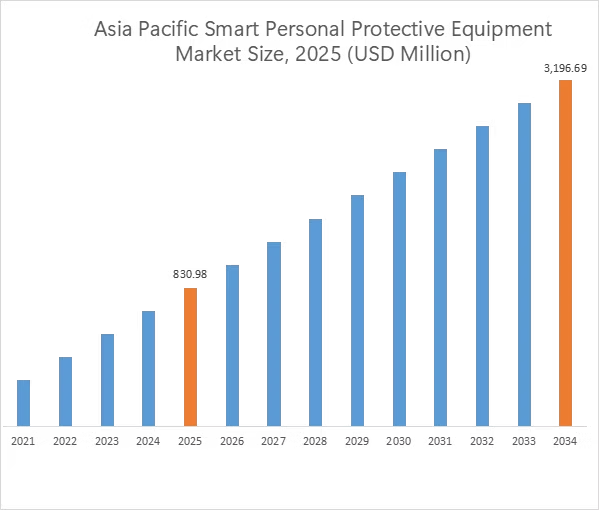
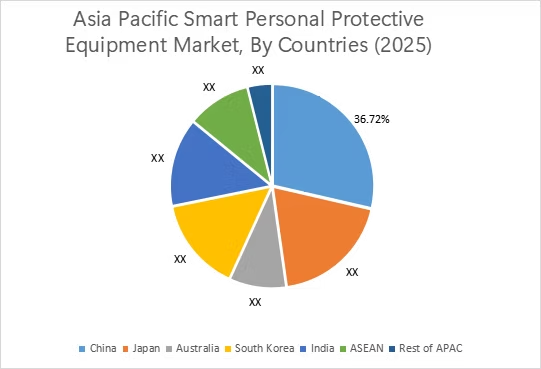
Asia Pacific region was valued at USD 830.98 Million in 2025. Moreover, it is projected to grow by USD 950.30 Million in 2026 and reach over USD 3,196.69 Million by 2034. Out of this, China accounted for the maximum revenue share of 36.72%. As per the market analysis, the adoption of smart PPE in the Asia-Pacific region is primarily driven by rapid industrialization, rising construction and infrastructure development activities, and strict safety regulations, among others. Additionally, rising workplace fatalities in hazardous sectors are increasing the adoption of connected, sensor-equipped gear, such as smart helmets and vital-sign monitors, to ensure compliance and enhance worker safety, which is further accelerating the market expansion.
- For instance, according to the Building and Construction Authority of Singapore, the total construction demand, including residential and commercial construction in Singapore, was valued at USD 39.3 billion in 2025, witnessing an increase from USD 32.5 billion in 2024. The above factors are further driving the adoption of smart PPE in construction sector, thereby driving the market in the Asia-Pacific region.
North America is estimated to reach over USD 4,534.27 Million by 2034 from a value of USD 1,257.72 Million in 2025 and is projected to grow by USD 1,427.74 Million in 2026. In North America, the smart personal protective equipment industry is mostly driven by the stringent occupational safety regulations, rising industrial risk exposure, and a strong corporate focus on worker compliance. Furthermore, the rising adoption of IoT and connected safety solutions across high-risk sectors, such as manufacturing, oil & gas, and construction, are further contributing to the smart personal protective equipment market demand.
- For instance, according to the U.S. Census Bureau, the construction sector in the United States demonstrated strong progress in 2024, with total construction spending, involving private and public construction, reaching approximately USD 2.15 trillion, representing an increase of 6.5% increase in comparison to 2023. The above factors are expected to propel the market trends in North America during the forecast period.
Meanwhile, according to the regional analysis, factors including the high-risk industry demands for real-time worker monitoring, widespread industrial automation, and the integration of IoT and AI technologies into protective gear for improving worker safety are driving the market in Europe. Furthermore, according to the market analysis, the market in Latin America, Middle East, and African regions is expected to grow at a considerable rate due to factors such as rising industrialization, strict occupational safety mandates, along with significant investments in IoT-based monitoring and connected protective gear to proactively reduce worker accidents and improve operational productivity.
Top Key Players & Market Share Insights:
The global smart personal protective equipment market is highly competitive with major players providing solutions to the national and international markets. Key players are adopting several strategies in research and development (R&D), product innovation, and end-user launches to hold a strong position in the smart personal protective equipment market. Key players in the market include-
- DuPont(United States)
- 3M(United States)
- MSA Safety Incorporated(United States)
- Ansell Limited (Australia)
- Honeywell International Inc. (United States)
- Drägerwerk AG & Co. KGaA (Germany)
- Uvex Safety Group (Germany)
- Delta Plus Group (France)
- Proxgy (India)
- RealWear (United States)
Smart Personal Protective Equipment Market Ecosystem:
Recent Industry Developments:
Partnership & Collaboration:
- In May 2025, a strategic partnership was formed between Epicore Biosystems and DuPont Personal Protection aimed at elevating industrial health and safety standards. By combining DuPont's knowledge in protective garments and Epicore's wearable hydration management technology, the partnership aims at driving new data analytics and quantitative insights for personal protective clothing and advanced biometrics.
Smart Personal Protective Equipment Market Report Insights:
| Report Attributes | Report Details |
| Study Timeline | 2021-2034 |
| Market Size in 2034 | USD 12,271.37 Million |
| CAGR (2026-2034) | 13.8% |
| By Product Type |
|
| By Technology |
|
| By Sales Channel |
|
| By End User |
|
| By Region |
|
| Key Players |
|
| Report Coverage |
|
Key Questions Answered in the Report
How big is the smart personal protective equipment market? −
The smart personal protective equipment market was valued at USD 3,380.25 Million in 2025 and is projected to grow to USD 12,271.37 Million by 2034.
Which is the fastest-growing region in the market? +
Asia-Pacific is the region experiencing the most rapid growth in the market.
What specific segmentation details are covered in the smart personal protective equipment report? +
The smart personal protective equipment report includes specific segmentation details for product type, technology, sales channel, end user, and region.
Who are the major players in the market? +
The key participants in the market are DuPont (United States), 3M (United States), MSA Safety Incorporated (United States), Ansell Limited (Australia), Honeywell International Inc. (United States), Drägerwerk AG & Co. KGaA (Germany), Uvex Safety Group (Germany), Delta Plus Group (France), Proxgy (India), RealWear (United States), and others.
Overview
Reputation & Certifications


Our Services
- Market Intelligence & Forecasting
- Custom Research Solutions
- Market Entry Strategy
- Competitive Intelligence
- Customer Insights
- Industry Innovation Analysis
- Investment Advisory