Jump to Content
Apoptosis Assays Market - Size, Share, Industry Trends, and Forecasts (2025-2032)
Apoptosis Assays Market Size:
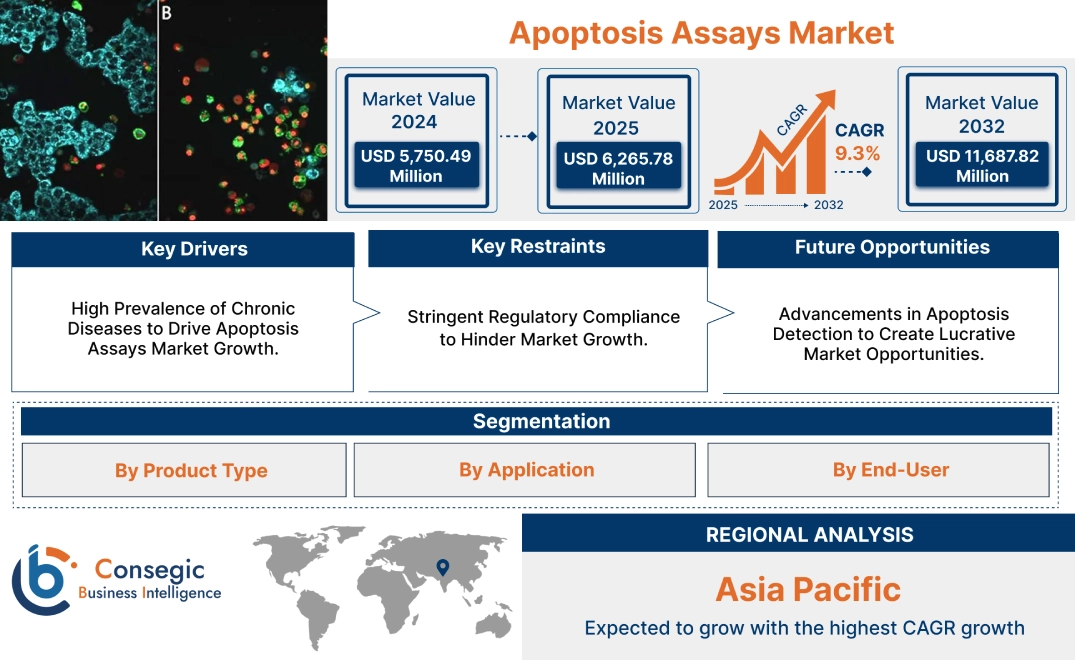
The Apoptosis Assays Market size is growing with a CAGR of 9.3% during the forecast period (2025-2032), and the market is projected to be valued at USD 11,687.82 Million by 2032 from USD 5,750.49 Million in 2024. Additionally, the market value for 2025 attributed to USD 6,265.78 Million.
Apoptosis Assays Market Scope & Overview:
Apoptosis is a type of cell death in which a series of molecular steps in a cell lead to its death. An apoptosis assay is a scientific method that detects and quantifies programmed cell death. Assays are designed to detect multiple cellular events indicatives of activation of the apoptotic pathway. It detects and quantifies the cellular events associated with programmed cell death, including caspase activation, cell surface exposure of phosphatidylserine, and DNA fragmentation. In includes use of several devices and consumables such as assay kits, cell cultures, flow cytometers, plate readers, and more. This assay serves as essential tool in various fields drug discovery & development, clinical research & diagnostics, toxicology studies, and more.
Apoptosis Assays Market Dynamics - (DRO) :
Key Drivers:
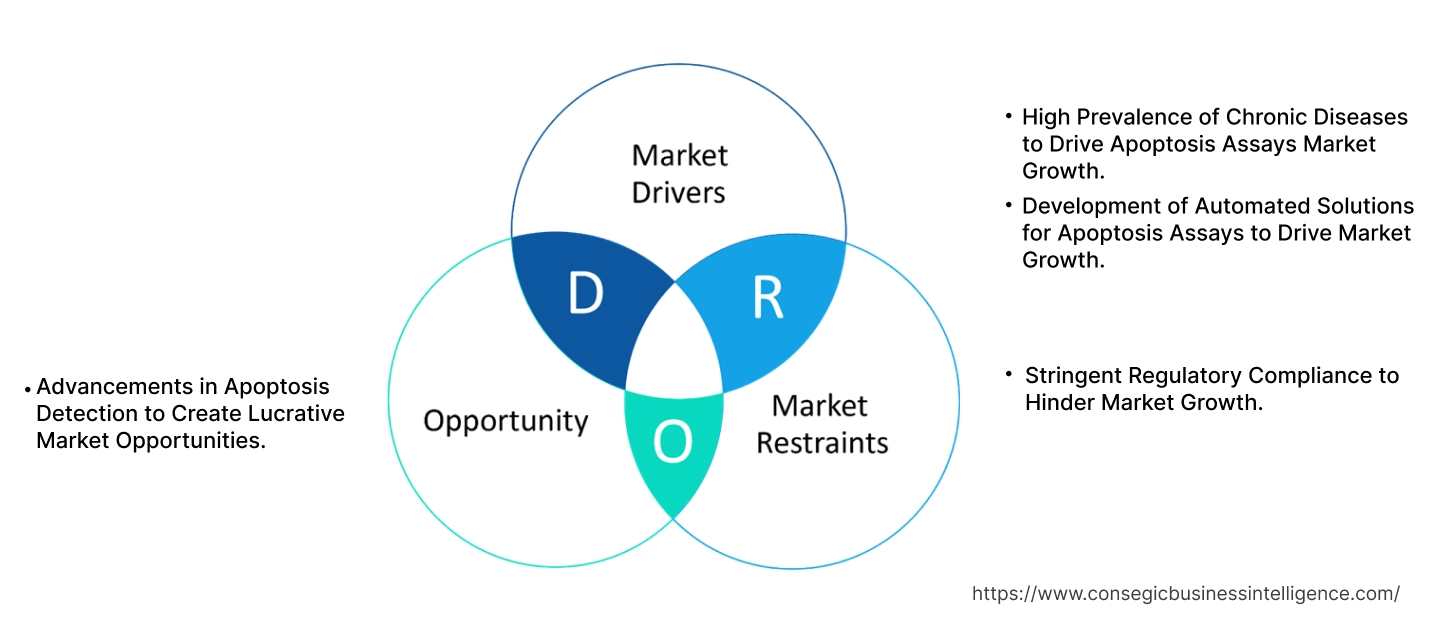
High Prevalence of Chronic Diseases to Drive Apoptosis Assays Market Growth.
Apoptosis is a fundamental biological process. Dysregulation of apoptosis is implicated in a wide range of chronic diseases. Dysregulation of apoptosis is implicated in various conditions, making it a target for diagnostics and therapeutics. In cancer, these assays are vital for understanding disease progression, identifying drug targets, developing therapies, and monitoring treatment. Neurodegenerative diseases and autoimmune disorders also rely on apoptosis assays to investigate disease mechanisms and develop targeted therapies. This link between apoptosis and chronic diseases creates a robust market for assays that detect abnormal apoptosis levels. Thus, high prevalence of chronic diseases such as cancer, neurological conditions, and autoimmune disorder is driving market growth.
- For instance, according to the 2022 data from Parkinson's Foundation, it is stated 90,000 people are diagnosed with Parkinson’s disease in the U.S. each year. More than 10 million people worldwide are living with this condition.
This prevalence directly impacts on the demand for effective apoptosis assay solutions further propelling market growth.
Development of Automated Solutions for Apoptosis Assays to Drive Market Growth.
Automation is supporting the apoptosis assays by making these assays more efficient, reliable, and scalable. Automated platforms significantly increase efficiency and throughput by processing numerous samples simultaneously. Automation also reduces variability and improves the accuracy and reproducibility of results, leading to more reliable data. Additionally, integrated software in many automated systems enhances data analysis and interpretation. Owing to these advantages, automated solutions are being developed for apoptosis assays.
- For instance, in 2022, Nanolive introduced the LIVE Cell Death Assay, an automated solution designed for profiling cell apoptosis. This assay offers a novel approach to cytotoxicity analysis, utilizing dynamic, label-free live cell data.
Thus, due to the above-mentioned factors, the development of automated platforms is contributing to apoptosis assays market expansion.
Key Restraints:
Stringent Regulatory Compliance to Hinder Market Growth.
Stringent regulatory standards imposed by government agencies and international organizations worldwide cause barriers in the market. Regulatory bodies impose long process for approvals of devices. This involves lengthy documentation, product safety assessment, and rigorous quality control procedures. It leads to increase production costs and slow down product development. Additionally, regulatory authorities and regulatory standards differ by country and region. This creates limitations for researchers and companies operating in multiple jurisdictions. Overall, the regulations delay product approvals, increase costs, and limit profitability, especially for smaller companies further hampering the apoptosis assays market growth.
Future Opportunities :
Advancements in Apoptosis Detection to Create Lucrative Market Opportunities.
Innovations in assay technologies are creating market growth over the forecast period. Advancements such as novel fluorescent dyes, enhanced enzyme substrates, and optimized protocols, lead to more sensitive and specific apoptosis assays. This allows accurate detection of changes in apoptosis levels, improving the accuracy and reliability of their results. Additionally, there is increasing focus on the apoptosis detection in multicolor immunophenotyping panels in both conventional and full spectrum flow cytometry. As a result, the key players are introducing novel solutions for apoptosis assays.
- For instance, in September 2024, Bio-Rad Laboratories launched annexin V conjugated to eight new StarBright Dyes: SBUV400, SBUV795, SBV440, SBV515, SBV790, SBB675, SBB765, and SBY800. These Annexin V StarBright conjugates facilitate the detection of early apoptotic cells via flow cytometry, providing researchers with a wider selection of fluorophore options.
Thus, advancements in apoptosis detection are creating upward market trajectory over the upcoming period.
Apoptosis Assays Market Segmental Analysis :
By Product Type:
Trends in the Product Type:
- There is a trend towards development of smaller and compact flow cytometers for smaller labs.
- Trend for ready-to-use, pre-optimized kits is increasing due to their convenience and standardization.
The consumables segment accounted for the largest market share in 2024 and is also expected to grow at the fastest CAGR over the forecast period.
- Consumables hold the dominant position in the market for apoptosis assays.
- Assay kits is a key category for these assays. These pre-packaged kits provide all necessary reagents and protocols for specific assays. They offer high convenience, standardization, and optimized performance for assay of apoptosis.
- Individual reagents for assays include Annexin V for phosphatidylserine detection, caspase substrates for enzyme activity measurement, TUNEL reagents for DNA fragmentation detection, antibodies for apoptosis-related protein detection, and various dyes and stains for visualizing apoptotic cells.
- Maintaining high-quality cell cultures, including appropriate media, supplements, and flasks is crucial reliable assay results. Other consumables include pipette tips, tubes, well plates, and general lab supplies necessary for conducting these assays.
- Innovation in assay technologies, such as improved sensitivity, specificity, and ease of use, drives the development of new and improved consumables.
- For instance, in 2024, Revvity developed an image-based method using the Cellaca PLX Image Cytometer to quickly to assess apoptotic cell health. Image cytometry-based multiplex assays provide rapid measurements for the apoptosis.
- Collectively, aforementioned factors support upward segment trajectory in the overall market.
By Application:
Based on application, the market is categorized into drug discovery & development, clinical research & diagnostics, toxicology studies, and others.
Trends in the Application
- There's a growing focus on using apoptosis assays to develop combination therapies.
- There is growing trend of using apoptosis assays in liquid biopsies for disease diagnosis, prognosis, and monitoring treatment response in cancer.
The drug discovery & development segment accounted for the largest apoptosis assays market share in 2024.
- Drug discovery & development is dominating application in the market as apoptosis assays play a crucial role throughout the drug discovery and development process.
- These assays are utilized in target identification and validation to determine the involvement of potential drug target in apoptosis pathways.
- Researchers use these assays for lead compound screening. Assays for detection of apoptosis are used in mechanism of action studies, investigating how a drug induces apoptosis at the cellular and molecular level.
- In addition to this, these assays are used for safety assessment, determining the potential of drug candidates to induce apoptosis in healthy cells.
- Moreover, the growing focus on the development of innovative drug candidates create the demand for these assays.
- For instance, in October 2024, researchers from the Broad Institute of MIT and Harvard created a compound called BRD-810 with potential as a cancer therapeutic in collaboration with industry partners Bayer and Trueline Therapeutics. This small molecule has demonstrated the ability to reactivate the apoptosis cascade in tumor cells, while leaving healthy cells unaffected in animal models. Apoptosis assays support evaluation of BRD-810's effects and its potential for clinical use.
- Owing to the above-mentioned factors, the traumatic drug discovery & development dominates the overall apoptosis assays market demand.
The clinical research & diagnostics segment is expected to grow at the fastest CAGR over the forecast period.
- In clinical research and diagnostics, apoptosis assays have diverse applications.
- In clinical research these assays support analysis of disease mechanisms in conditions such as cancer, neurodegenerative disorders, and autoimmune diseases.
- They also focus on identifying biomarkers related to apoptosis that are used for disease diagnosis, prognosis, or monitoring treatment response.
- In diagnostic settings, these assays support disease diagnosis by detecting apoptotic cells in tissue or fluid samples.
- They also contribute to prognosis by assessing the extent of apoptosis in tumors to predict disease progression and patient outcomes.
- Thus, due to the above-mentioned factors, the clinical research & diagnostics segment is expected to register the fastest CAGR over the forecast period in the overall apoptosis assays market demand.
By End-User:
Based on end user, the market is categorized into pharmaceutical & biotechnology companies, diagnostic laboratories, academic & research institutions, and others.
Trends in the End User:
- Development of rapid, point-of-care assays for faster diagnosis and treatment decisions.
- Increased use of advanced imaging techniques, such as confocal microscopy and multiphoton microscopy, to visualize apoptosis in cells and tissues.
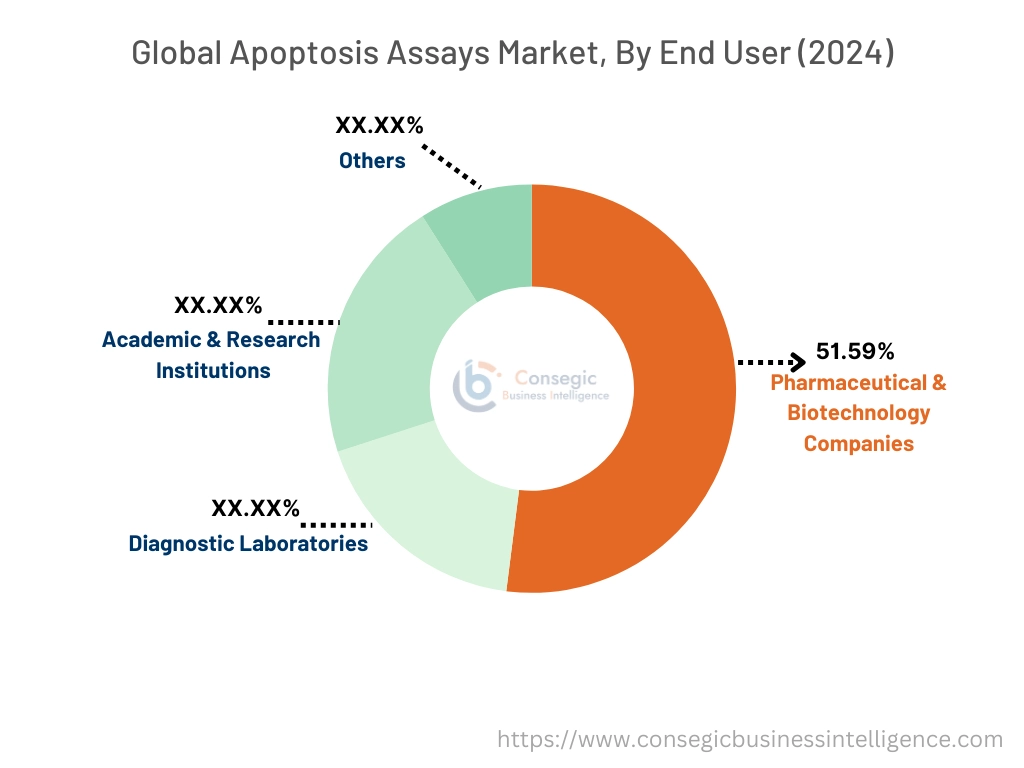
The pharmaceutical & biotechnology companies segment accounted for the largest market share of 51.59% in 2024.
- Pharmaceutical & biotechnology companies widely perform apoptosis assays for the drug discovery & development, development of biologics, and quality control procedures.
- In these companies, assays are essential tools in drug discovery and development. They serve a crucial role in screening potential drug candidates, evaluating their efficacy and safety, and analyzing their mechanisms of action.
- Furthermore, apoptosis assays are used to biopharmaceutical development, including the creation of antibodies and protein therapeutics.
- In addition to this, these assays are also employed in quality control processes to assess the quality and stability of biopharmaceuticals.
- The development of novel drugs create the demand for apoptosis assays in pharmaceutical & biotechnology companies.
- For instance, in November 2021, BAKX Therapeutics secured USD 25 million in Series A funding. This investment fuels clinical trials for their BAKX Activator Program, targeting hematologic malignancies and solid tumors, and support research into additional solid tumor targets and resistance prevention. Since BAKX is focused on activating apoptosis, various apoptosis assays are crucial to their research and development
- These factors position the pharmaceutical & biotechnology companies as a key end user segment within the dynamic apoptosis assays market opportunities.
The academic & research institutions segment is expected to grow at the fastest CAGR in forecast years.
- The academic & research institutions are expected to experience growing contribution to the market.
- Academic institutions conduct extensive basic research on apoptosis, exploring its fundamental mechanisms, its role in various biological processes such development and aging, and its involvement in disease.
- Research institutions are also engaged in translational research, applying basic discoveries to clinical settings. Apoptosis assays are essential to this translational work, supporting in identifying drug targets, developing new diagnostic assays based on apoptotic markers, and exploring novel therapeutic strategies.
- Thus, based on the apoptosis assays market analysis, the aforementioned factors contribute to academic & research institutions as prominent end-users.
Regional Analysis:
The regional segment includes North America, Europe, Asia Pacific, the Middle East and Africa, and Latin America.
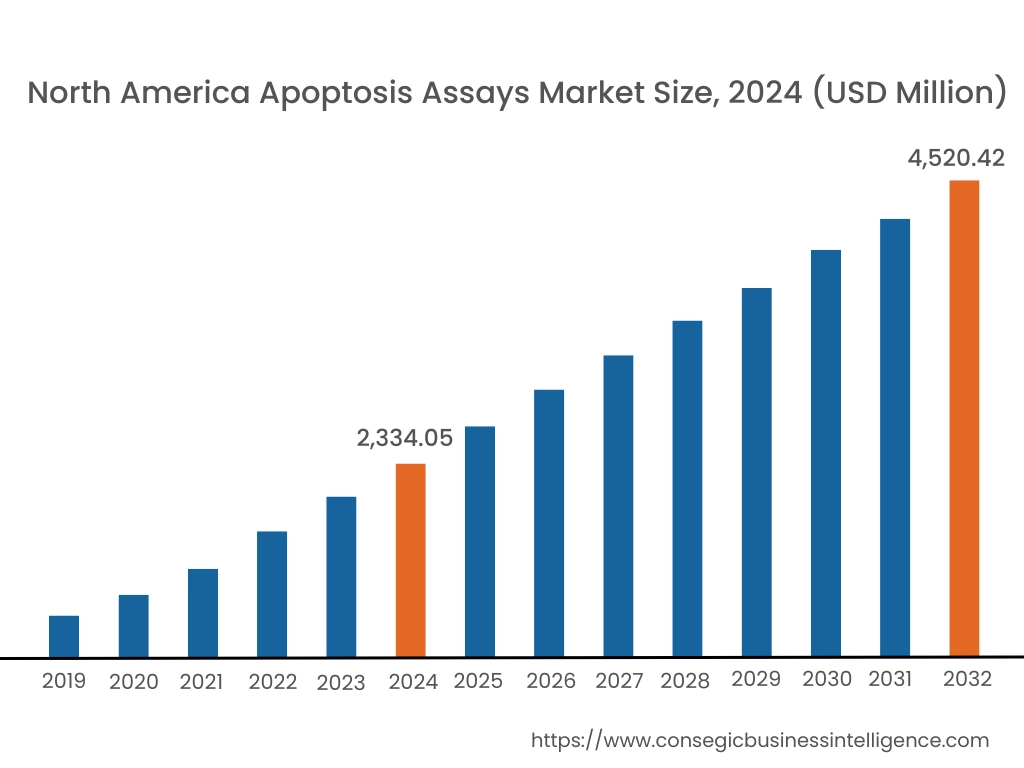
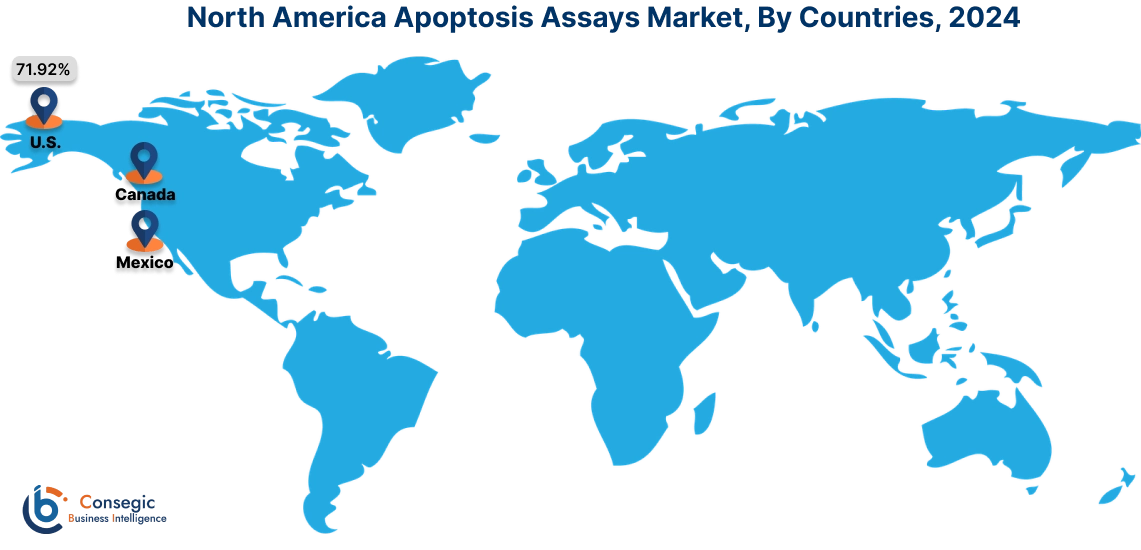
In 2024, North America accounted for the highest market share at 40.59% and was valued at USD 2,334.05 Million and is expected to reach USD 4,520.42 Million in 2032. In North America, the U.S. accounted for the largest share of 71.92% during the base year of 2024.
North America dominates the global apoptosis assays market expansion, primarily due to the large pharmaceutical and biotechnology industry. The region presents various pharmaceutical and biotechnology giants. This well-established pharmaceutical and biotechnology sector creates the adoption of immortalized cells lines for several applications. Additionally, advanced research infrastructure and research funding supports upward trajectory of the market.
- For instance, in September 2022, the White House announced the federal funding of more than USD 2 billion for biotechnology and biomanufacturing. The funding aims at reducing U.S. reliance on foreign materials and bioproduction, while directing federal agencies to identify priority R&D needs to translate bioscience and biotech discoveries into medical breakthroughs and to strengthen domestic supply chains.
Additionally, High prevalence of chronic diseases, such as cancer and neurodegenerative disorders across the region supports upward trajectory of market. Henceforth, the combination of the aforementioned factors is driving a substantial trajectory in the North America apoptosis assays market trend.
In Asia Pacific the apoptosis assays market is experiencing the fastest growth with a CAGR of 10.6% over the forecast period. Key factors driving the Asia Pacific market include increasing rising prevalence of chronic diseases such as cancer, increasing healthcare research and development activities, and rapidly expanding pharmaceutical and biotechnology industry. Increasing cancer, diabetes, and cardiovascular diseases research and drug development investments in emerging economies create high demand for these assays. Additionally, the government bodies across the region are supporting research and development through various programs, funding, and policies supporting market in Asia Pacific region.
Europe presents a significant contribution to the apoptosis assays market analysis. The European pharmaceutical and biotechnology sector is mature, creating constant requirements for these assays. Additionally, a well-established network of renowned research institutions are driving the market across the region. These institutions actively utilize these assays for a wide range of research activities. Additionally, the well-developed healthcare systems in many European countries facilitate the adoption of advanced diagnostic and therapeutic technologies, including apoptosis assays, contributing to the market's upward trajectory.
The Middle East and Africa (MEA) region is witnessing notable apoptosis assays market trend characterized by significant potential. The region is increasingly focusing on research and development activities for various diseases such as cancer. The region is witnessing increasing healthcare infrastructure development. This creates the requirement of these assays for range of diagnostic applications. Government initiatives and funding programs in the MEA support research and development activities, supporting the apoptosis assays market share.
Latin America is an emerging region in the apoptosis assays market, with significant potential for innovation. There is a growing focus on improving healthcare infrastructure and research capabilities across many Latin American countries. This increasing emphasis on healthcare is expected to drive demand for research tools. Thus, as per analysis, the growing focus on healthcare, the emergence of a biotechnology sector, and increasing collaborations with international partners are expected to create apoptosis assays market opportunities in this region.
Top Key Players and Market Share Insights:
The global Apoptosis Assays Market is highly competitive with major players providing services to the national and international markets. Key players are adopting several strategies in research and development (R&D), product innovation, and end-user launches to hold a strong position in the Apoptosis Assays Market. Key players in the aircraft jack industry include-
- Thermo Fisher Scientific Inc. (U.S.)
- Promega Corporation (U.S.)
- Merck KGaA (Germany)
- Biotium (U.S.)
- Canvax (Spain)
- Bio-Rad Laboratories, Inc (U.S.)
- Takara Bio Inc. (Japan)
- Revvity (U.S.)
- GeneCopoeia, Inc. (U.S.)
- Sartorius AG (Germany)
Recent Industry Developments :
Partnerships & Collaborations:
- In September 2024, Bio-Rad Laboratories launched annexin V conjugated to eight new StarBright Dyes: SBUV400, SBUV795, SBV440, SBV515, SBV790, SBB675, SBB765, and SBY800. These Annexin V StarBright conjugates facilitate the detection of early apoptotic cells via flow cytometry, providing researchers with a wider selection of fluorophore options.
Apoptosis Assays Market Report Insights :
| Report Attributes | Report Details |
| Study Timeline | 2019-2032 |
| Market Size in 2032 | USD 11,687.82 Million |
| CAGR (2025-2032) | 9.3% |
| By Product Type |
|
| By Application |
|
| By End-User |
|
| By Region |
|
| Key Players |
|
| North America | U.S. Canada Mexico |
| Europe | U.K. Germany France Spain Italy Russia Benelux Rest of Europe |
| APAC | China South Korea Japan India Australia ASEAN Rest of Asia-Pacific |
| Middle East and Africa | GCC Turkey South Africa Rest of MEA |
| LATAM | Brazil Argentina Chile Rest of LATAM |
| Report Coverage |
|
Key Questions Answered in the Report
How big is the Apoptosis Assays market? −
In 2024, the Apoptosis Assays market is USD 5,750.49 Million.
Which is the fastest-growing region in the Apoptosis Assays market? +
Asia Pacific is the fastest-growing region in the Apoptosis Assays market.
What specific segmentation details are covered in the Apoptosis Assays market? +
By Product Type, Application, and End User segmentation details are covered in the Apoptosis Assays market.
Who are the major players in the Apoptosis Assays market? +
Thermo Fisher Scientific Inc. (U.S.), Promega Corporation (U.S.), Merck KGaA (Germany), Biotium (U.S.) are some of the major players in the market.
Overview
Reputation & Certifications


Our Services
- Market Intelligence & Forecasting
- Custom Research Solutions
- Market Entry Strategy
- Competitive Intelligence
- Customer Insights
- Industry Innovation Analysis
- Investment Advisory