Jump to Content
Fuel Cards Market - Size, Industry Share, Growth Trends and Forecasts (2026-2034)
Fuel Cards Market Size :
Fuel Cards Market size is estimated to reach over USD 3,482.53 Billion by 2034 from a value of USD 1,017.86 Billion in 2025 and is projected to grow by USD 1,151.52 Billion in 2026, growing at a CAGR of 13.1% from 2026 to 2034
Fuel Cards Market Key Takeaways
- Fleet digitization and cashless fuel payments are driving market demand.
- Asia Pacific held a significant share, supported by expanding logistics networks.
- Universal fuel cards dominated due to wide acceptance and operational flexibility.
- Transportation and logistics remained key end users for fuel cards.
- Telematics and mobile payment integration is creating new growth opportunities.
- WEX, Shell, BP, IOCL, and TotalEnergies were among the leading players.
Fuel Cards Market Scope & Overview:
Fuel cards are specialized payment cards designed for individuals and businesses to purchase gasoline, diesel, vehicle maintenance, and other applications. Also, these cards are issued to companies, fleet operators, and individuals for various applications. Additionally, the cards offer targeted savings, detailed transaction tracking, and spending controls, which is fueling the fuel cards market demand. The key advantages driving the fuel cards market growth include fraud reduction, simplified accounting & tax compliance, actionable fleet intelligence, and others. Further, the rising adoption of digital payment modes along with the need to prevent fuel fraud is boosting the market adoption.

Fuel Cards Market Dynamics - (DRO) :
Market Drivers:
Spurring digital payments is boosting market growth for fuel cards
The rapid digitalization across the globe has transformed fuel cards into intelligent mobility payment platforms. The digital and contactless payment mode helps in eliminating cash handling, mitigating fraud, and streamlining expense reconciliation, which in turn is boosting the market growth. Additionally, the digital cards directly integrate with fleet telematics and expense management software to track fuel consumption, odometer readings, and driver analytics in real time, which in turn fuels the market demand. Furthermore, the increasing popularity of cashless payments is propelling digital fuel payments to offer convenience and security to the operators and businesses.
- For instance, according to the National Payments Corporation of India (NPCI), the RuPay card usage at point of sale (POS) reached USD 1,644.70 billion in FY24-25, which in turn is showcasing a strong adoption of digital and contactless payment modes across India.
Therefore, the growing adoption of digital and contactless payment modes is driving the need for fuel cards, in turn proliferating the market growth.
Market Restraints:
Availability of alternatives is restraining the market growth
The growing availability and adoption of alternative fuels, hybrid/electric vehicles, and cashless payment technologies is creating challenges for fuel cards market expansion. Also, the shift from single-network fuel cards towards fleet solutions that support both fossil fuels and EV charging is hindering the market progress. Further, the growing adoption of multi-purpose cashback credit cards or digital fuel apps, which offer higher yield as well as high rates of fraud, card skimming, and data breaches, is hindering the market adoption.
Therefore, the availability of alternative solutions is restraining the market expansion.
Future Market Opportunities :
AI-powered fleet management platforms and telematics are expected to promote potential opportunities for market growth
he fleet operators are shifting from reactive expense tracking to proactive, predictive efficiency, which in turn is driving the adoption of AI-powered fleet management platforms and telematics. Also, the integration of AI-powered platforms with cards is creating fuel cards market opportunities. Further, the AI algorithms monitor fueling transactions against vehicle location and tank capacity in real-time, ultimately eliminating the risk of fraud or skimming at the pump.
- For instance, in June 2026, WEX, which is one of the leading providers of fuel cards, launched a field service management business with a series of new products for secure mobile payment acceptance, workflow automation, and advanced reporting. The product features AI-Powered Assist IQ, which generates custom reports, visualizes KPIs, and others.
Hence, the rising adoption of AI-powered fleet management platforms is anticipated to increase the utilization of card payments, in turn promoting prospects for market opportunities during the forecast period.
Fuel Cards Market Segmental Analysis:
By Card Type:
Based on the type, the market is segmented into fleet card, universal card, branded card, prepaid card, cardlock card, and others.
Trends in the Card Type:
- The rising demand for biometric authentication, end-to-end encryption, and tokenization to prevent fraud in card payments is fueling the adoption of prepaid cards, which in turn is boosting the fuel cards market trends.
- The trend towards the adoption of branded cards due to guaranteed fuel quality, localized volume-based discounts, and centralized billing is driving the market share.
The fleet card accounted for the largest revenue share in the year 2025.
- The fleet cards are increasingly being utilized by businesses to purchase petrol and diesel for company vehicles.
- The key advantages of adopting fleet cards include volume-based rebates, reduced unauthorized spending via strict product-level controls, streamlined tax reporting, and others.
- Additionally, the rapid development of last-mile delivery services and global transportation requires scalable, cashless tools, which in turn is fueling the fleet fuel cards market share.
- Further, the card has the ability to log the odometer reading, fuel grade, exact location, date, time, and other details, which makes it a preferable choice for businesses and fleet operators across the globe.
- Thus, as per the fuel cards market analysis, the development of last-mile delivery services is driving the market progress.
The universal card is anticipated to register the fastest CAGR during the forecast period.
- The universal cards are brand-operated payment solutions that allow drivers to purchase fuel and related services at a wide network of varying gas stations, rather than being restricted to a single branded outlet.
- The key advantages of adopting universal cards include flexibility, enhanced security, fraud protection, and detailed reporting, which in turn is boosting the universal fuel cards market size.
- Additionally, the massive surge in delivery, freight, and intercity transportation is driving the demand for universal cards for last-mile delivery.
- Further, the ability of universal cards to provide real-time analytics, embedded telematics, and automated expense tracking, which help reduce fuel fraud and streamline administrative costs, is boosting the market adoption.
- Therefore, as per the market analysis, the proliferation of the logistics and e-commerce industry along with integration of cards with advanced management platforms are anticipated to boost the market during the forecast period.
By Vehicle Type:
Based on the vehicle type, the market is segmented into heavy commercial vehicles, corporate and passenger cars, and individual/two-wheeler commuters.
Trends in the Vehicle Type:
- The trend towards the proliferation of co-branded partnerships between banks and fuel companies to offer hybrid cards that also reward groceries and utility bills is driving the market adoption by individual/two-wheeler commuters.
- The trend towards rising petrol prices is shifting consumer adoption towards electric vehicles, which in turn is propelling brands to support EV charging payments for individual/two-wheeler commuters.
The heavy commercial vehicles accounted for the largest revenue share in the year 2025.
- The heavy commercial vehicles are dependent on specialized cards to manage massive operating expenses and are mainly supported by branded fleet partnerships and telematics integrations.
- The key advantages driving the market adoption by heavy commercial vehicles include cost control, fraud protection, accounting efficiency, discounts, and others.
- Additionally, the rising fuel price volatility is propelling operators to adopt cards for strict spending limits and volume monitoring.
- Further, the heavy commercial vehicles operators are increasingly integrating Telematics to monitor mileage, gallons filled and required vehicle maintenance for boosting overall efficiency and productivity.
- Furthermore, the government initiative promoting a cashless economy is propelling the adoption of cards by heavy commercial vehicles operators across the globe.
- Thus, as per the market analysis, the aforementioned factors are driving the market progress.
The corporate and passenger cars are anticipated to register the fastest CAGR during the forecast period.
- The cards are designed to allow businesses to authorize, track, and manage fuel expenses for corporate and passenger cars. The card eliminates the dependency on cash or manual expense reimbursements.
- Additionally, companies and businesses are leveraging cards to control spending, eliminate paper receipts, and streamline accounting through centralized digital invoicing, which is driving the market progress.
- Further, the need for cashless transactions, detailed tax and odometer reporting, and the ability to prevent fraud and misuse across field teams is boosting the adoption of cards by corporate and passenger cars.
- Furthermore, the card providers are offering access to public electric vehicle (EV) charging network payments through the same card issued by the company to the employees.
- Therefore, as per the market analysis, the need for cashless transactions and streamlined accounting is anticipated to boost the market during the forecast period.
By Application:
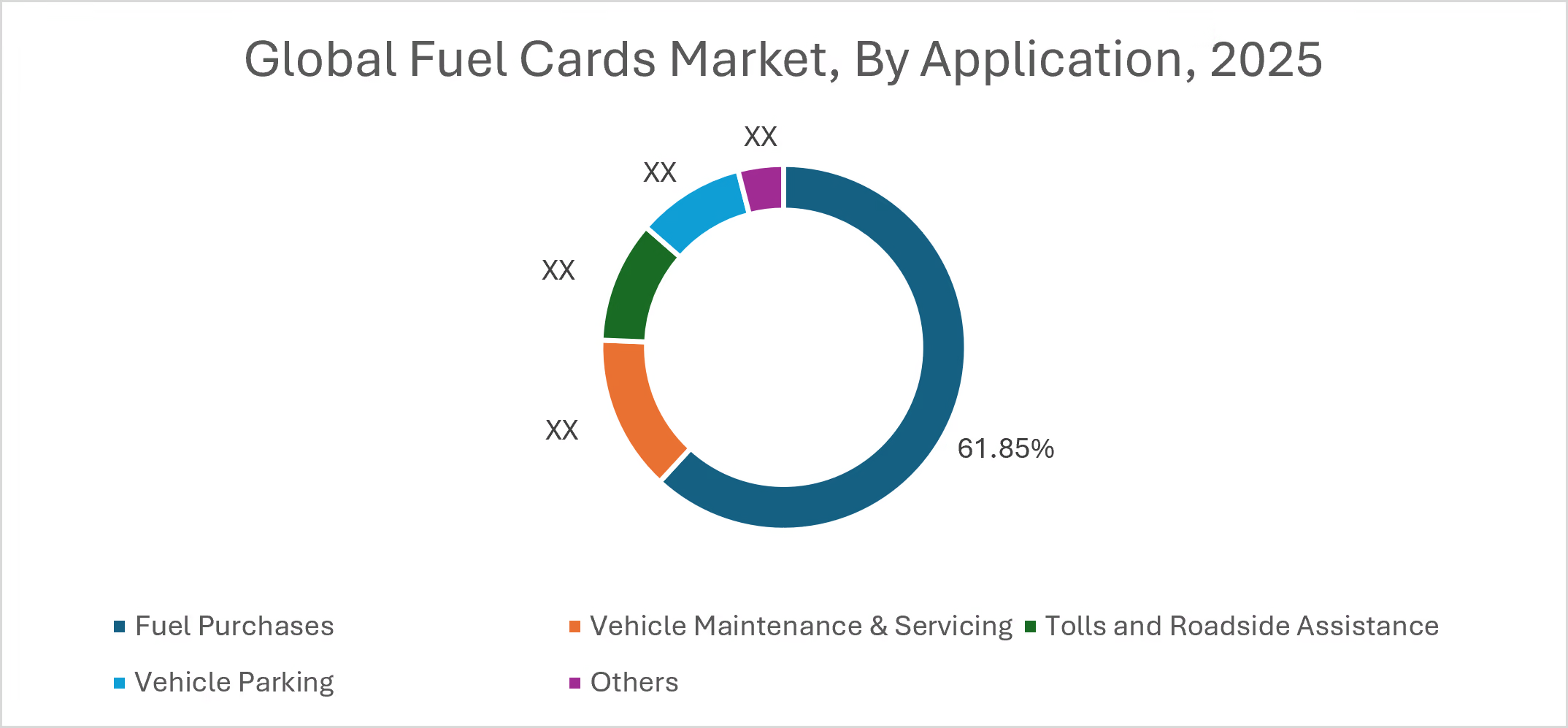
Based on the application, the market is segmented into fuel purchases, vehicle maintenance & servicing, tolls and roadside assistance, vehicle parking, and others.
Trends in the Application:
- Fleet operators require frictionless, multi-purpose payment solutions from a single card for toll charges, vehicle maintenance, parking fees, and others.
- The trend towards the integration of telematics and mobile app-based expense tracking for fuel purchases and vehicle maintenance & servicing applications is boosting the market progress.
Fuel purchases accounted for the largest revenue share of 61.85% in the year 2025.
- The modern cards act like credit cards specifically tailored for vehicle-related transactions and allowing monthly spending limits and viewing transaction history through a mobile application.
- The key advantages of market adoption for fuel purchases include seamless expense tracking, rewards & redemption, enhanced security, and cost savings, among others.
- Further, the massive growing popularity of last-mile delivery and logistics services, due to global e-commerce activity, is driving the need for automated commercial fleet payment solutions, which is fueling the market progress.
- Furthermore, the rising demand to bypass cash-based payments, reduce manual auditing, and others in fuel purchases applications is boosting the market development.
- Thus, as per the market analysis, the rising e-commerce activity and ability to monitor expenses are driving the market adoption for fuel purchases applications.
Vehicle maintenance & servicing is anticipated to register the fastest CAGR during the forecast period.
- The rising adoption of cards for vehicle maintenance & servicing applications has led to a significant reduction in downtime and the elimination of unauthorized spending.
- Additionally, the key features driving the market adoption for vehicle maintenance & servicing applications include automated expense tracking, preventing fuel theft, and proactively scheduling vehicle maintenance, among others.
- Further, the shift away from paper receipts and cash towards digital payment systems for reducing fraud in vehicle maintenance & servicing applications is driving the market progress.
- Furthermore, the rapidly growing commercial fleets and last-mile delivery services require frequent maintenance & service, which in turn fuels the market demand.
- Therefore, as per the market analysis, the shifting consumer interest towards digital payment systems and growing commercial fleets and last-mile delivery services are anticipated to boost the market during the forecast period.
Fuel Cards Market Regional Analysis:
The regions covered are North America, Europe, Asia Pacific, Middle East and Africa, and Latin America.
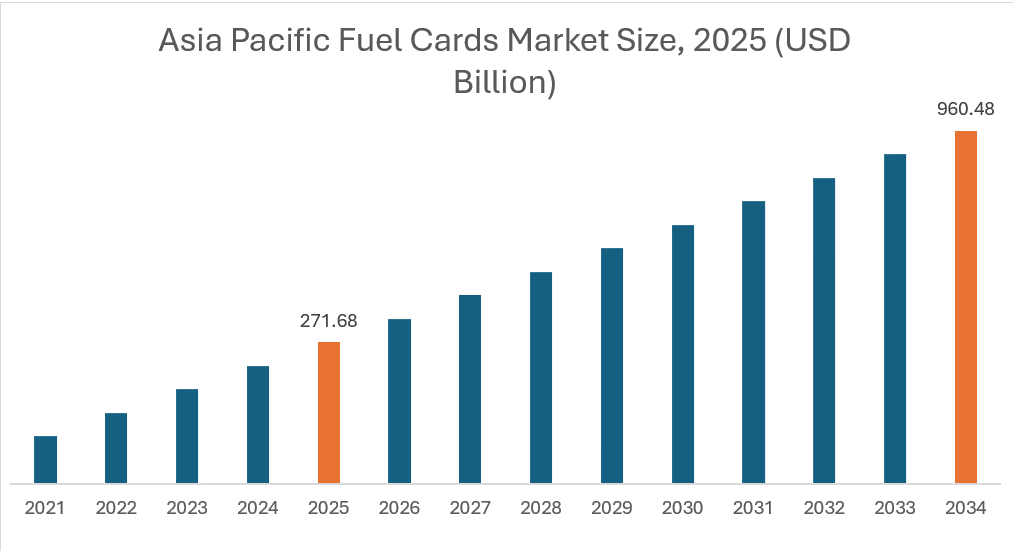
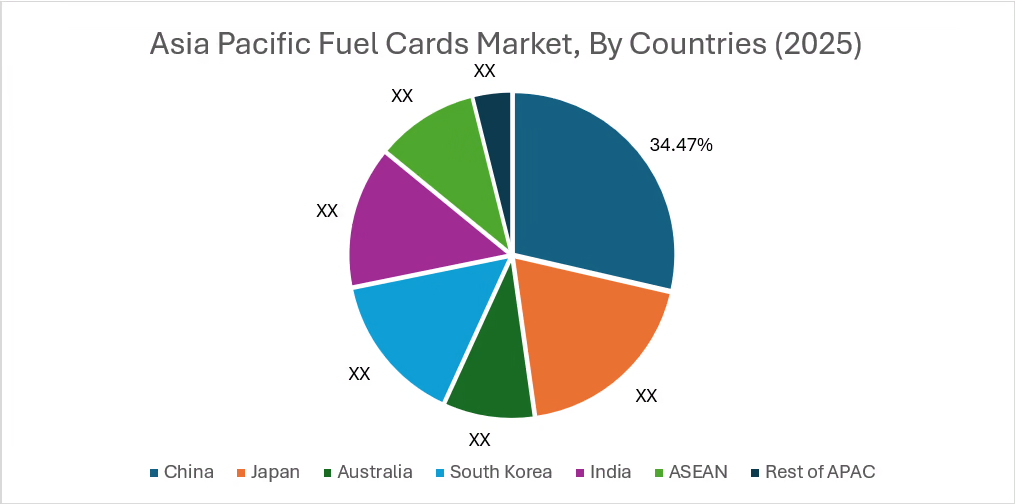
Asia Pacific region was valued at USD 271.68 Billion in 2025. Moreover, it is projected to grow by USD 308.49 Billion in 2026 and reach over USD 960.48 Billion by 2034. Out of this, China accounted for the maximum revenue share of 34.47%. The market progress is mainly driven by growing e-commerce logistics and increasing commercial vehicle ownership. Furthermore, factors including the shifting consumer adoption towards alternative fuels such as LNG, CNG, and biofuels are projected to drive the market growth in Asia Pacific region during the forecast period to support modern fuels.
- For instance, in March 2023, HPCL collaborated with IDFC FIRST Bank for the launch of FIRST Power and FIRST Power+ cards, which are co-branded fuel credit cards on the RuPay platform. The card offers up to 6.5% savings on fuel spending and 1.5% cashback by HPCL.
North America is estimated to reach over USD 1,133.91 Billion by 2034 from a value of USD 328.61 Billion in 2025 and is projected to grow by USD 372.11 Billion in 2026. The North American region's growing need for expense management along with fraud detection offers lucrative growth prospects for the market. Additionally, the integration of cards with advanced telematics, GPS, and AI-based fleet platforms is driving the market's progress.
- For instance, in June 2026, Fillip Fleet expanded its digital fuel cards platform into the US. The company offers real-time, data-enabled authorization to businesses and reduces physical card fraud.
The regional analysis depicts that the increasing cross-border logistics & tolls are driving the market in Europe. Additionally, the key factor driving the market is the rapidly expanding urban logistics networks, and corporate efforts to curb fuel fraud, as well as the shift toward unified digital payment systems across the region, are propelling market adoption in the Middle East and African region. Further, the expanding logistics industry, shift towards a cashless economy, and the need for digitized expense controls are paving the way for the progress of the market in the Latin America region.
Top Key Players & Market Share Insights:
The global fuel cards market is highly competitive with major players providing fuel cards to the national and international markets. Key players are adopting several strategies in research and development (R&D), product innovation, and end user launches to hold a strong position in the fuel cards industry. Key players in the fuel cards market include-
- WEX (USA)
- CElegans Labs, Inc (USA)
- BP (UK)
- European Diesel Card Ltd (UK)
- IOCL (India)
- TotalEnergies (France)
- BPCL (India)
- Shell plc (UK)
- Exxon Mobil Corporation (USA)
- Chevron Corporation (USA)
Recent Industry Developments :
Product Launches
- In June 2026, Super Dispatch launched SuperCard, which offers exclusive fuel discounts, the ability to manage expenses, and build a credit line for simplifying administrative tasks.
- In January 2026, WEX launched a fleet card for payment of fuel and public EV charging with one card. The launch aims to reduce administrative burden and provide a more seamless and unified experience for both drivers and operators.
Fuel Cards Market Report Insights :
| Report Attributes | Report Details |
|---|---|
| Study Timeline | 2021-2034 |
| Market Size in 2034 | USD 3,482.53 Billion |
| CAGR (2026-2034) | 13.1% |
| By Card Type |
|
| By Vehicle Type |
|
| By Application |
|
| By Region |
|
| Key Players |
|
Key Questions Answered in the Report
How big is the fuel cards market? −
The fuel cards market size is estimated to reach over USD 3,482.53 Billion by 2034 from a value of USD 1,017.86 Billion in 2025 and is projected to grow by USD 1,151.52 Billion in 2026, growing at a CAGR of 13.1% from 2026 to 2034.
Which segmentation details are covered in the report? +
The report includes specific segmentation details for card type, vehicle type, application, and regions.
Which is the fastest segment anticipated to impact the market growth? +
In the market, the universal card is the fastest-growing segment during the forecast period due to the proliferation of the logistics and e-commerce sector along with integration of the card with advanced management platforms.
Who are the major players in the market? +
The key participants in the market are WEX (USA), CElegans Labs, Inc (USA), BP (UK), European Diesel Card Ltd (UK), IOCL (India), TotalEnergies (France), BPCL (India), Shell plc (UK), Exxon Mobil Corporation (USA), Chevron Corporation (USA) and others.
What are the key trends in the market? +
The market is being shaped by several key trends including the proliferation of co-branded partnerships between banks and fuel companies to offer hybrid cards and the rising need for biometric authentication, end-to-end encryption, and tokenization to prevent fraud in card payments are the key trends driving the market.
Overview
Reputation & Certifications


Our Services
- Market Intelligence & Forecasting
- Custom Research Solutions
- Market Entry Strategy
- Competitive Intelligence
- Customer Insights
- Industry Innovation Analysis
- Investment Advisory