Jump to Content
Asphalt Mixing Plants Market - Size, Share, Industry Trends, and Forecasts (2026 - 2034)
Asphalt Mixing Plants Market Size:
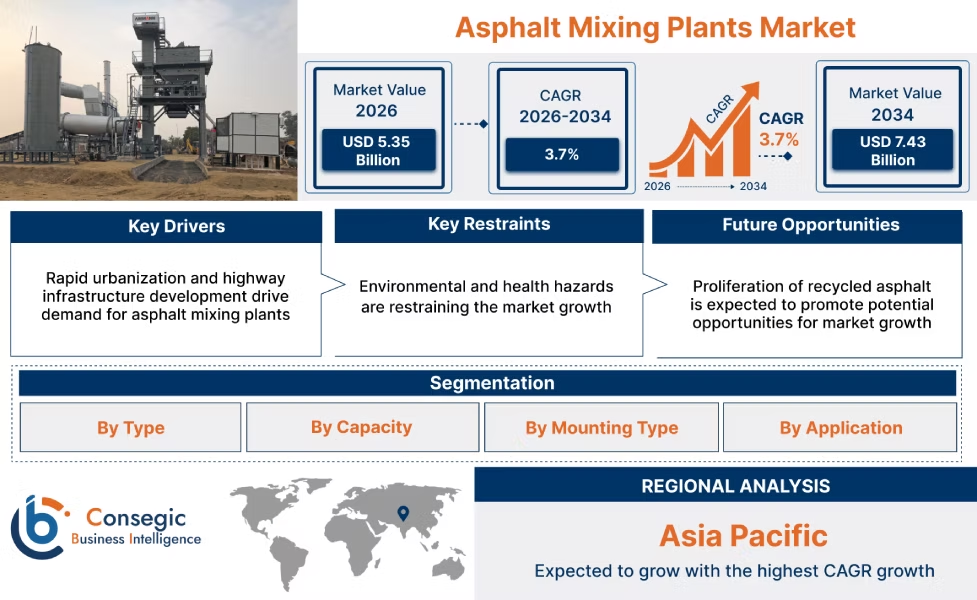
Asphalt Mixing Plants Market size is estimated to reach over USD 7.43 Billion by 2034 from a value of USD 5.22 Billion in 2025 and is projected to grow by USD 5.35 Billion in 2026, growing at a CAGR of 3.7% from 2026 to 2034
Asphalt Mixing Plants Market Key Takeaways
Key Growth Drivers
- Rapid urbanization, smart city projects, and expanding highway networks are significantly increasing demand for asphalt mixing plants to support large-scale road construction, resurfacing, and infrastructure development activities.
- Growing investments in transportation infrastructure, including expressways, bridges, municipal roads, and residential paving projects, are driving the need for high-capacity and efficient asphalt production facilities.
- Rising maintenance and rehabilitation requirements for existing road networks are creating sustained demand for asphalt mixing plants, ensuring continuous production of high-quality asphalt materials.
Market Limitations & Challenges
- Environmental concerns related to emissions, particulate matter, and greenhouse gases from asphalt plants are limiting market growth and increasing compliance requirements for manufacturers and operators.
- Stringent environmental regulations and zoning restrictions are making it challenging to establish or expand asphalt mixing plants, particularly in densely populated and environmentally sensitive regions.
Strategic Opportunities
- Rising adoption of recycled asphalt pavement (RAP) is creating significant growth opportunities by encouraging the modernization and retrofitting of existing asphalt mixing plants with advanced recycling technologies.
- Government sustainability initiatives and stricter environmental mandates are accelerating demand for energy-efficient asphalt plants capable of processing higher volumes of recycled materials.
Key Players
- Market Leader: AMMANN Group held a significant share of the global Asphalt Mixing Plants Market in 2025, driven by its advanced asphalt production technologies, extensive global presence, and strong portfolio of high-performance mixing plants serving road construction and infrastructure development projects worldwide.
Asphalt Mixing Plants Market Scope & Overview:
An asphalt mixing plant is an industrial facility that combines aggregates such as sand, gravel, and crushed stone with bitumen and fillers at high temperatures to produce hot mix asphalt. The plant is essentially for road construction, airport construction, building construction, and other uses. Also, the key advantages include superior quality & consistency, high production capacity, energy efficiency & eco-compliance, among others is boosting the asphalt mixing plants market growth. Further, the rising government investment in large-scale transportation projects directly fuels the demand for high-capacity asphalt production, which in turn is driving the asphalt mixing plants market demand.
Asphalt Mixing Plants Market Dynamics - (DRO) :
Market Drivers:
Rapid urbanization and highway infrastructure development drive demand for asphalt mixing plants
The rapid growth of smart cities, the need for new municipal roads, parking facilities, and residential paving spikes, is driving the need for localized, high-capacity asphalt production. Also, the national and regional highway corridors demand continuous, high-quality asphalt, which in turn necessitates continuous and batch needs of asphalt, driving the asphalt mixing plants market growth. Further, the existing roads require constant resurfacing and rehabilitation to prevent structural failure, ensuring a steady, long-term asphalt mixing plants market demand. Furthermore, the plant is required for building durable roads, bridges, and expressways capable of handling increased traffic loads.
- For instance, in December 2025, according to the Ministry of Road Transport & Highways, India has the world’s second-largest road network spanning 1,46,560 kmacross the country. Also, there is a 61% increase in the national highway network from 2014 to 2025.
Therefore, the rise of new municipal roads, parking facilities, and residential paving spikes is driving the need for asphalt plants, in turn, proliferating the growth of the market.
Market Restraints:
Environmental and health hazards are restraining the market growth
The asphalt plants are vital industrial facilities, but they cause environmental pollution and human health hazards by releasing toxic emissions, particulate matter, and greenhouse gases. The emissions are affecting the surrounding atmosphere and triggering strict regulatory restrictions, which delay or restrict new plant developments, which in turn are hindering the asphalt mixing plants market expansion. The drying and heating of aggregates used in asphalt plants releases harmful particulate matter (PM), nitrogen oxides (NOx), and carbon monoxide, which are linked to respiratory issues, liver/kidney damage, and increased cancer risks. Further, the increasing health awareness among people has resulted in stricter zoning laws, making it difficult to install or expand plants in populated regions.
Therefore, the environmental pollution and human health hazards due to asphalt plants are restraining the asphalt mixing plants market expansion.
Future Opportunities:
Proliferation of recycled asphalt is expected to promote potential opportunities for market growth
The mixing plant industry has shifted toward reclaimed asphalt pavement (RAP) due to environmental mandates and cost-saving incentives that drive this shift, which in turn is paving the way for the asphalt mixing plants market opportunities. The need for retrofitting older plants with high-recycle technology and meeting strict air quality limits is propelling the market progress. Stricter government regulations and sustainable construction targets are the major factors propelling contractors to use recycled asphalt pavement. Further, consistent public spending on highway rehabilitation, urban renewal, and smart city logistics hubs drives a continuous need for recycled asphalt pavement.
- For instance, Colas, which is based in Denmark, offers Horsens asphalt plant , which is designed for high utilization of recycled asphalt. The use of recycled asphalt helps in optimizing overall performance in energy consumption, safety, materials logistics, and production capacity.
Hence, the rising adoption of recycled asphalt pavement is anticipated to increase the retrofitting of old asphalt plants, in turn promoting prospects for the asphalt mixing plants market opportunities during the forecast period.
Asphalt Mixing Plants Market Segmental Analysis :
By Type:
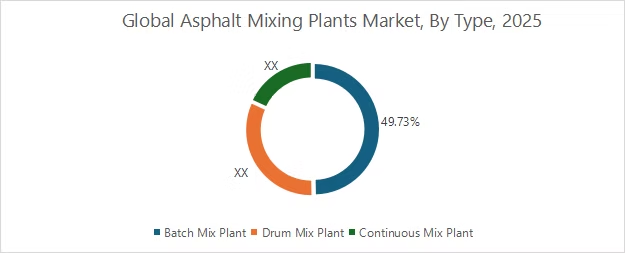
Based on the type, the asphalt mixing plants market is segmented into batch mix plant, drum mix plant, and continuous mix plant.
Trends in the Type:
- The continuous mix plant is increasingly incorporating technologies such as automated industrial control systems and IoT integration to process RAP, reducing both material costs and environmental impacts, which is fueling the asphalt mixing plants market trends.
- The adoption of fuel-efficient burners and advanced pollution control units to meet stringent emission norms in drum mix plants is driving the asphalt mixing plants market trends.
The batch mix plant accounted for the largest revenue share of 49.73% in the year 2025.
- The batch mix plant is a specialized facility that produces high-quality, pre-measured hot mix asphalt. It operates in cycles such as graded material feeding, heating, precise weighing, and forced mixing, which in turn allows for strict quality control and easy changes tailored to specific road construction requirements.
- The batch mix plant is highly favored for highways, airports, and projects where specifications frequently change, which in turn is fueling the asphalt mixing plants market share.
- Further, the aging road infrastructure in developed countries and the need for durable resurfacing are consistently boosting the deployment of batch mix plants, which in turn fuels the asphalt mixing plants market size.
- Furthermore, stringent environmental and air quality norms restrict the use of uncontrolled, high-emission plants, pushing contractors toward advanced, eco-friendly batch mix plants.
- Thus, as per theasphalt mixing plants market analysis, the aging road infrastructure and stringent environmental and air quality norms are driving the market progress.
The continuous mix plant is anticipated to register the fastest CAGR during the forecast period.
- The continuous mix plants operate uninterruptedly by drying, heating, and mixing materials in a single rotating drum to yield a steady, high-volume output.
- Also, these plants are generally more economical to build and operate due to high reliability, superior energy efficiency, high-quality mixes, thermally efficient, and other factors, fueling the asphalt mixing plants market size.
- The continuous mix plants are highly suitable for large-scale, time-sensitive projects which require a steady, uninterrupted supply of standard hot mix asphalt.
- Further, the initial equipment setup and ongoing maintenance costs are significantly reduced with continuous mix plants, which in turn is driving the asphalt mixing plants market share.
- Therefore, as per the market analysis, the lower maintenance and setup costs are anticipated to boost the market during the forecast period.
By Capacity:
Based on the capacity, the market is segmented into Below 80 TPH, 80-240 TPH, and Above 240 TPH.
Trends in the Capacity:
- The trend towards the integration of low emissions & green technology at above 240 TPH asphalt plants is boosting the market progress.
- The trend towards rural road network upgradation across the developing nations is boosting the need for capacity of below 80 TPH asphalt plants.
The 80-240 TPH accounted for the largest revenue share in the year 2025.
- The 80-240 TPH plant is a heavy-duty, high-capacity batch system ideal for large-scale infrastructure such as national highways and airport runways.
- Also, the plant capacity of 80-240 TPH ensures precise, consistent, and uniform blending of aggregates, bitumen, and fillers to strictly meet government standards.
- The plant capacity guarantees uniform blending, precise quality control, and high fuel efficiency, which in turn boosts the market progress.
- Additionally, the key advantages of 80-240 TPH plant include superior mix consistency, high fuel efficiency, automated operations, and others is driving the asphalt mixing plants industry.
- Further, the modern 80-240 TPH plants are fully automated with computerized systems that offer real-time monitoring, exact batching, and diagnostics to minimize waste and maximize ROI.
- Thus, as per theasphalt mixing plants market analysis, the aforementioned factors are driving the market progress.
The Above 240 TPH is anticipated to register the fastest CAGR during the forecast period.
- The asphalt plant exceeding a 240 TPH capacity is a heavy-duty, stationary facility engineered for massive infrastructure projects, such as national expressways, airports, and major urban road networks.
- The key advantages, such as maximum output, superior mix consistency, high rap capacity, advanced automation, and reduced downtime, among others, are boosting the need for a plant with above 240 TPH.
- Further, the increasing number of long-distance expressways, industrial corridors, ports, and airport runways requires continuous, large-volume asphalt delivery, which is driving the need for an asphalt plant with above 240 TPH.
- Furthermore, these high-capacity plants are equipped with smart SCADA or PLC control systems that provide precise weighing, real-time monitoring, and lower operational costs.
- Therefore, as per the market analysis, the increasing number of long-distance expressways, industrial corridors, ports, and airport runways is anticipated to boost the market during the forecast period.
By Mounting Type:
Based on the mounting type, the market is segmented into stationary, mobile, and portable.
Trends in the Mounting Type:
- The trend towards the adoption of carbon-reduction and low-emission burner technologies to comply with stricter regional emission regulations in mobile asphalt plants is driving the market progress.
- The trend towards lowering transportation and logistics costs, along with the integration of digital IoT controls for asphalt production, is driving the need for a portable asphalt plant.
The stationary segment accounted for the largest revenue share in the year 2025.
- The stationary asphalt plants are the standard for large-scale, long-term road construction projects such as highways and airports.
- The governments are heavily funding highway expansions, airport runways, and bridge developments, requiring a massive supply of asphalt, which in turn is driving the adoption of stationary asphalt plants.
- Also, the stationary plants allow for superior, permanent pollution control devices and integrated systems for mixing recycled asphalt pavement.
- Further, the stationary asphalt plants offer efficiency for expanding city road networks and non-residential urban development.
- Thus, as per the market analysis, the rising government initiatives are driving the need for stationary asphalt plants.
The mobile segment is anticipated to register the fastest CAGR during the forecast period.
- Mobile asphalt plants are highly efficient, trailer-mounted facilities designed for rapid relocation between construction sites. These plants reduce transport times while maintaining quality control.
- Also, the mobile setup is highly favored due to its simplicity, high output, and reliability in standard paving projects.
- The key advantages driving the adoption of mobile asphalt plants include ultimate flexibility, superior quality control, rapid relocation, cost-effectiveness, and others.
- Further, the shortened transit routes between the mixing plant and the paving site help in significantly reducing truck fleet fuel consumption and lowering the carbon footprint of the project, which in turn is fueling the adoption of mobile asphalt plants.
- Furthermore, the increasing demand for rapid infrastructure development, particularly for remote highway projects, is driving the need for mobile asphalt plants, which in turn is fueling the market progress.
- Therefore, as per the market analysis, the need to shorten transit routes between production sites and construction sites, along with rapid infrastructure development, is anticipated to boost the market during the forecast period.
By Application:
Based on the application, the market is segmented into road construction, airport construction, building construction, and others.
Trends in the Application:
- There is a rapid rise in mobile asphalt plants that offer quick setup times and easy transportation between building construction sites due to the need for site flexibility in remote areas.
- The airports are adopting eco-friendly building materials to achieve eco-friendly and carbon-neutral goals, which in turn is driving the adoption of mixing plants for airport construction applications.
The road construction accounted for the largest revenue share in the year 2025.
- The asphalt mixing plants are the key component in modern road engineering. The mixing plant provides precise temperature control and uniform material blending, which in turn directly drives durability, safety, and longevity of the world's transportation networks.
- The key advantages driving the adoption of mixing plants for road construction applications include superior consistency, high production capacity, cost efficiency, and sustainability, among others.
- Further, the highway & expressway construction requires heavy-duty, high-performance mixtures capable of withstanding severe, high-speed traffic.
- Furthermore, the proliferation of massive governmental funding and global development programs is driving the construction of new highways and intelligent transportation systems, which is driving the demand for mixing plants.
- Thus, as per the market analysis, the massive governmental funding for road construction is driving the market progress.
The airport construction is anticipated to register the fastest CAGR during the forecast period.
- The airport pavement requires extremely durable design specifications due to the massive weight of aircraft, along with the shear stresses during landing, takeoff, and taxiing.
- Additionally, the airport construction application requires rapid laying and curing to minimize disruptions of active airport operations, which is driving the need for mixing plants near the project.
- Further, the airport construction requires advanced mixing plants equipped with PLC automation and SCADA systems due to the Federal Aviation Administration and ASTM standards.
- Furthermore, the rising air traffic and modernization of regional airports require structural reinforcements and developments, boosting the need for mixing plants.
- Therefore, the rapid modernization and construction of new airport facilities across the globe are anticipated to boost the market during the forecast period.
Asphalt Mixing Plants Market Regional Analysis:
The regions covered are North America, Europe, Asia Pacific, Middle East and Africa, and Latin America.
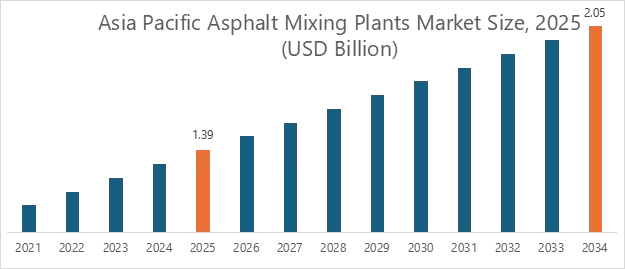
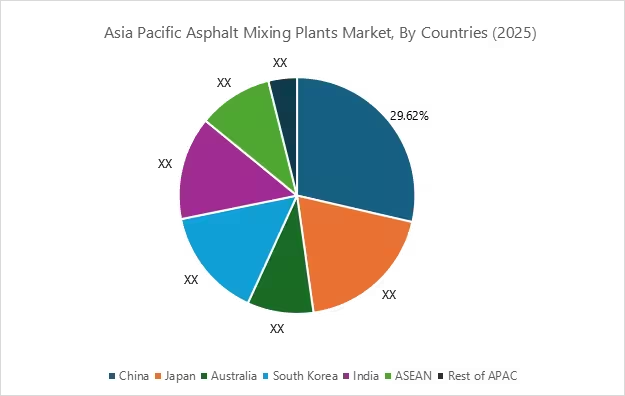
Asia Pacific region was valued at USD 1.39 Billion in 2025. Moreover, it is projected to grow by USD 1.43 Billion in 2026 and reach over USD 2.05 Billion by 2034. Out of this, China accounted for the maximum revenue share of 29.62%. The market progress is mainly driven by the rising number of massive highway and rural road developments. Furthermore, factors including the rapid urbanization and strict government investments in emerging economies are projected to drive the market progress in Asia Pacific region during the forecast period.
- For instance, according to the India Brand Equity Foundation (IBEF), the completed total length of highways in the country was 146,204 km, which includes 5,614 km of national highways as of August 2025.
North America is estimated to reach over USD 2.42 Billion by 2034 from a value of USD 1.69 Billion in 2025 and is projected to grow by USD 1.73 Billion in 2026. The North American region's growing focus on highway reconstruction and road repair projects offers lucrative growth prospects for the market. Additionally, the stringent environmental regulations and shift towards mobile asphalt plants are driving the market progress.
- For instance, in February 2025, Construction Partners, Inc. acquired Mobile Asphalt Company LLC with an aim to accelerate geographic development and build local market density across the high-growth Sunbelt region.
The regional analysis depicts that the stringent environmental regulations and the integration of sustainable technologies are driving the market in Europe. Additionally, the key factor driving the market is the mega-infrastructure investments and extreme climate conditions necessitating specialized pavements is propelling the market adoption in the Middle East and African region. Further, the modernization of aging transport networks and government-backed urban mobility programs is paving the way for the progress of the market in Latin America region.
Top Key Players & Market Share Insights:
The global asphalt mixing plants market is highly competitive, with major players providing asphalt mixing plants to the national and international markets. Key players are adopting several strategies in research and development (R&D), product innovation, and end user launches to hold a strong position in the asphalt mixing plants industry. Key players in the asphalt mixing plants market include-
- Atlas Industries (India)
- Speedcrafts (India)
- AMMANN Group (Switzerland)
- Nikko Co., Ltd. (Japan)
- Benninghoven GmbH & Co. KG (Germany)
- LUTON Group (China)
- Parker Plant Ltd. (United Kingdom)
- Marini (Italy)
- Astec Industries, Inc. (USA)
- Lintec & Linnhoff (Singapore)
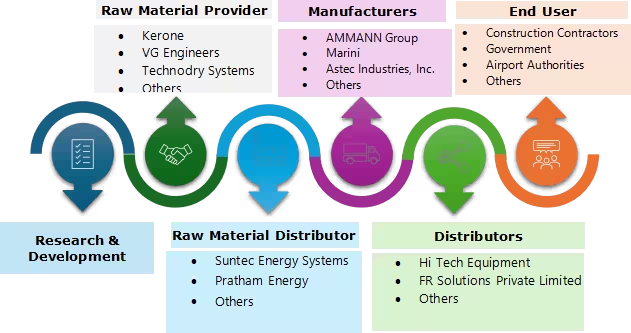
Asphalt Mixing Plants Market Ecosystem:
Recent Industry Developments:
Product launches
- In October 2025, Lintec & Linnhoff delivered Lintec CSM3000 containerized asphalt mixing plants setup at China in just 15 days. The plant aims to help in government-backed infrastructure projects, rural road construction, and municipal works across the country.
- In March 2024, Aggregate Industries launchednew asphalt plant to serve Staffordshire and the surrounding areas, and the plant setup helps to reduce lorry movements and carbon emissions.
Asphalt Mixing Plants Market Report Insights :
| Report Attributes | Report Details |
| Study Timeline | 2021-2034 |
| Market Size in 2034 | USD 7.43 Billion |
| CAGR (2026-2034) | 3.7% |
| By Type |
|
| By Capacity |
|
| By Mounting Type |
|
| By Application |
|
| By Region |
|
| Key Players |
|
| Report Coverage |
|
Key Questions Answered in the Report
How big is the asphalt mixing plants market? −
The asphalt mixing plants market size is estimated to reach over USD 7.43 Billion by 2034 from a value of USD 5.22 Billion in 2025 and is projected to grow by USD 5.35 Billion in 2026, growing at a CAGR of 3.7% from 2026 to 2034.
Which segmentation details are covered in the asphalt mixing plants report? +
The asphalt mixing plants report includes specific segmentation details for type, capacity, mounting type, application and regions.
Which is the fastest segment anticipated to impact the market growth? +
In the asphalt mixing plants market, the continuous mix plant is the fastest-growing segment during the forecast period due to lower maintenance and setup cost.
What are the key trends in the asphalt mixing plants market? +
The asphalt mixing plants market is being shaped by several key trends including the rising adoption of carbon-reduction and low-emission burner technologies to comply with stricter regional emission regulations along with incorporating technologies such as automated control systems and IoT integration and other into the plant are the key trends driving the market.
Who are the major players in the asphalt mixing plants market? +
The key participants in the asphalt mixing plants market are Atlas Industries (India), Speedcrafts (India), AMMANN Group (Switzerland), Nikko Co., Ltd. (Japan), Benninghoven GmbH & Co. KG (Germany), LUTON Group (China), Parker Plant Ltd. (United Kingdom), Marini (Italy), Astec Industries, Inc. (USA), Lintec & Linnhoff (Singapore) and others.
Overview
Reputation & Certifications


Our Services
- Market Intelligence & Forecasting
- Custom Research Solutions
- Market Entry Strategy
- Competitive Intelligence
- Customer Insights
- Industry Innovation Analysis
- Investment Advisory