Introduction: The Growing Need for Smarter Crop Protection
Modern commercial farming is rapidly advancing through the use of innovative technology aimed at increasing the level of production, decreasing costs of inputs used, and securing crops against pest damage, disease, and environmental stresses. There are various types of technology that have proven to be useful in enhancing the efficiency of modern agricultural practice. Among such technologies, there are agricultural drones that are currently being adopted in protecting agricultural crops. In general, traditional crop protection technologies involve field inspections done manually together with the use of pesticides. This involves lots of effort and time, not to mention the chemicals used.
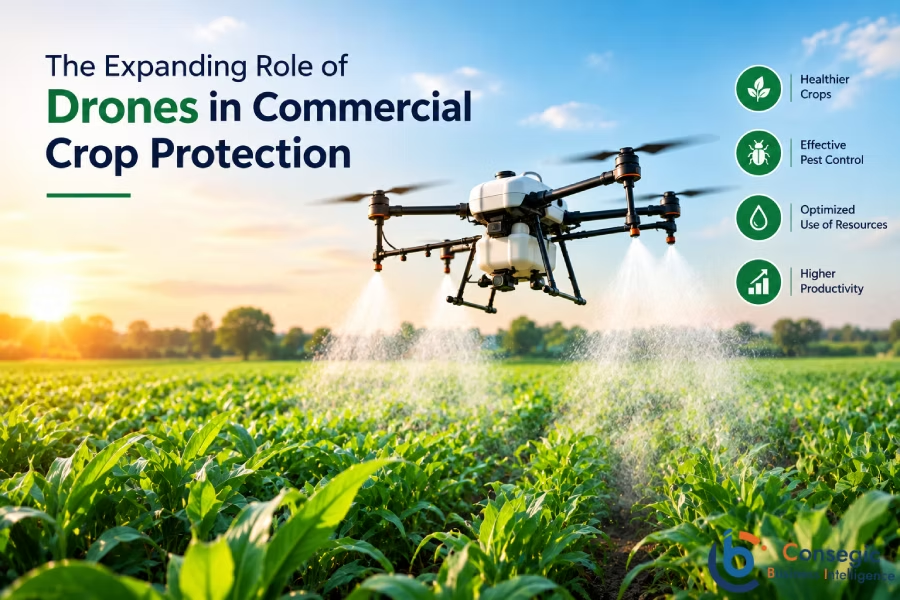
Agricultural drones are equipped with high-resolution cameras and multispectral sensors, GPS and other imaging technologies that help in acquiring data concerning the condition of the crops in a certain area. Drones help in identifying any issues related to pest infestations, nutrient deficiency and water stress, among others. They can be used in precision spraying where crop protection products are applied only to certain parts of the crops. This is becoming even more useful as agricultural companies grow bigger and as such, become more interested in sustainable agricultural practices.
How Drones Are Transforming Crop Monitoring and Field Surveillance
Monitoring the crops' condition is another very useful way of using drones in commercial agriculture. Previously, farmers had to visually examine their fields in search of pests attacking plants, disease, weed presence, and other environmental conditions. Checking all areas manually could take a lot of time and often lead to delayed detection of a problem because farmers usually discover a problem when it already affected many plants.
Today there are special drones that can be equipped with RGB, multispectral and thermal cameras that will be able to see much more than a human eye can see. While multispectral imagery will help distinguish the plants in different health conditions, thermal imagery will help recognize temperature differences of crops which could be an indicator of water stress and other issues. With the help of GPS, drones are able to fly following pre-defined paths.
All this information can help agricultural professionals create field maps that will show the parts of fields where there are problems. Instead of checking the condition of each individual plant, people will be able to use their knowledge to monitor a specific area that was determined by the analysis done with the help of drones.
Precision Spraying: Improving the Efficiency of Crop Protection
The use of agricultural drones for precise spraying will emerge as one of the major uses of unmanned aerial technology in agriculture for crop protection. Standard equipment in crop spraying usually sprays whole fields, even though pests, weeds, and diseases are located in some particular spots. This process results in higher consumption of chemicals, cost of operation, and risks of additional exposure to crop protection materials. Precision spraying with the help of drones will allow targeting particular places where treatments are necessary.
Agricultural drones used in the process of spraying are usually equipped with tanks, pumps, nozzles, GPS, and flight control technologies that can help apply the treatment precisely. The fact that spraying drones can fly at quite a low altitude makes it possible to treat plants without any need for large machinery to move within fields.
The use of spraying drones in combination with crop monitoring information allows for the achievement of site-specific application. First, farmers will be able to detect areas in need of treatment through aerial photography and then employ drones to treat only those areas. In this way, farmers can achieve efficient application of fertilizers and pesticides and minimize waste. Moreover, spraying drones can be more flexible when spraying hard-to-reach areas, wet ground or closely planted crops. The development of precision agriculture technologies also enables the automation and optimisation of flight and spraying systems.
How agricultural drones use AI, sensors and data analytics
Agricultural drones are being upgraded with AI and other technologies such as sensors, GPS and data analytics. Whereas conventional drones capture images in the air, drones equipped with AI can analyze data and look for patterns related to agricultural data and crop protection. All these factors are contributing towards turning agricultural drones into data-driven machines.
Multispectral and hyperspectral sensors capture information about the crops under different wavelengths, and this information is used to detect changes in the crops before any signs of illness are evident. Thermal sensors allow detecting the temperature of the crops and moisture-related stress, whereas high-resolution cameras are useful in detecting weeds, crop damage, and pest-related areas.
AI and machine-learning algorithms can analyze all these images and classify the fields on the basis of these images. For instance, AI is capable of distinguishing between healthy vegetation and plants under stress and the parts of the fields that need further observation.
The combination of such technologies will allow farmers to be more proactive in terms of protecting their crops, rather than only being reactive when problems arise. The identification of new problems and provision of location-based data by intelligent drones will enable better resource efficiency. The future enhancements of sensors, AI algorithms, and autonomy technologies in drone operation will enhance the importance of drones in farming.
Future Outlook: Expanding Applications of Drones in Commercial Agriculture
The future of drones in crop protection operations commercially is likely to include increased automation, enhanced intelligence, and incorporation of the drones into precision agriculture technologies. With advanced drone technology, agriculturalists will start utilizing fully autonomous drones in carrying out various functions like field inspections, crop scouting, spraying and gathering data. Instead of using drones only for carrying out periodic field inspections, agriculturalists will use autonomous drones on pre-planned routes in order to monitor any changes in the crops being cultivated.
Through the incorporation of artificial intelligence, the drones can become adept at identifying any probable outbreak of pests or diseases as well as weed infestation in the crop and any other kind of crop stress that crops may be suffering from. Data gathered by the drones can then be integrated with farm management software for making prompt decisions by the farmers.
Drones might be able to help create a more sustainable future for crop protection due to their capacity for targeted application of chemicals where necessary. However, issues such as regulations, proper training for operators, costs of equipment, batteries, and data storage could have an impact on their usage. Nevertheless, the rise in demand for data-intensive farming is creating new opportunities for the use of drones. Commercial farming being data-intensive, drones have the potential to become an integral part of crop protection in the future.
Conclusion
Drones are revolutionizing the field of crop protection through aerial surveying, precise spraying, smart sensors, and analytics of data. The drones' capability to detect signs of crop stress, pest infestations, disease, weed infestations, and water problems may lead to faster reaction from the farmers and efficient use of agricultural inputs. With the incorporation of artificial intelligence and automation technologies, the capabilities of drones have been extended, making crop management easier and more data-based. Despite the difficulties that exist like the regulatory aspect, costs of equipment, battery power limitations, and training of operators, future developments are expected to facilitate further utilization of drones in the future.