Introduction: The Shift Toward Electrified Military Mobility
The concept of military mobility is now at a turning point as armed forces seek to employ technologies of electrification in order to become more efficient, less logistically intensive, and powerful in operational capabilities. Usually, the military mobility is based on the technologies of internal combustion engines and traditional electricity. However, with the development of energy storage and power electronics, the possibility of electrified vehicles arises. Solid-state batteries and silicon carbide (SiC) semiconductors are two examples of the technology that is used in this process. Solid-state batteries may offer greater energy density, better safety performance, and longer operation in comparison with the traditional lithium-ion batteries. SiC-based power electronics may be used in improving the efficiency of the management of electrical energy. Such technologies may help to implement hybrid electric and purely electric vehicles, as well as other sensors and systems. The transition is not limited to just replacing traditional engines by electric ones. The change concerns the implementation of military platforms that will be efficient in their energy use and conduct power-intensive operations in difficult conditions.
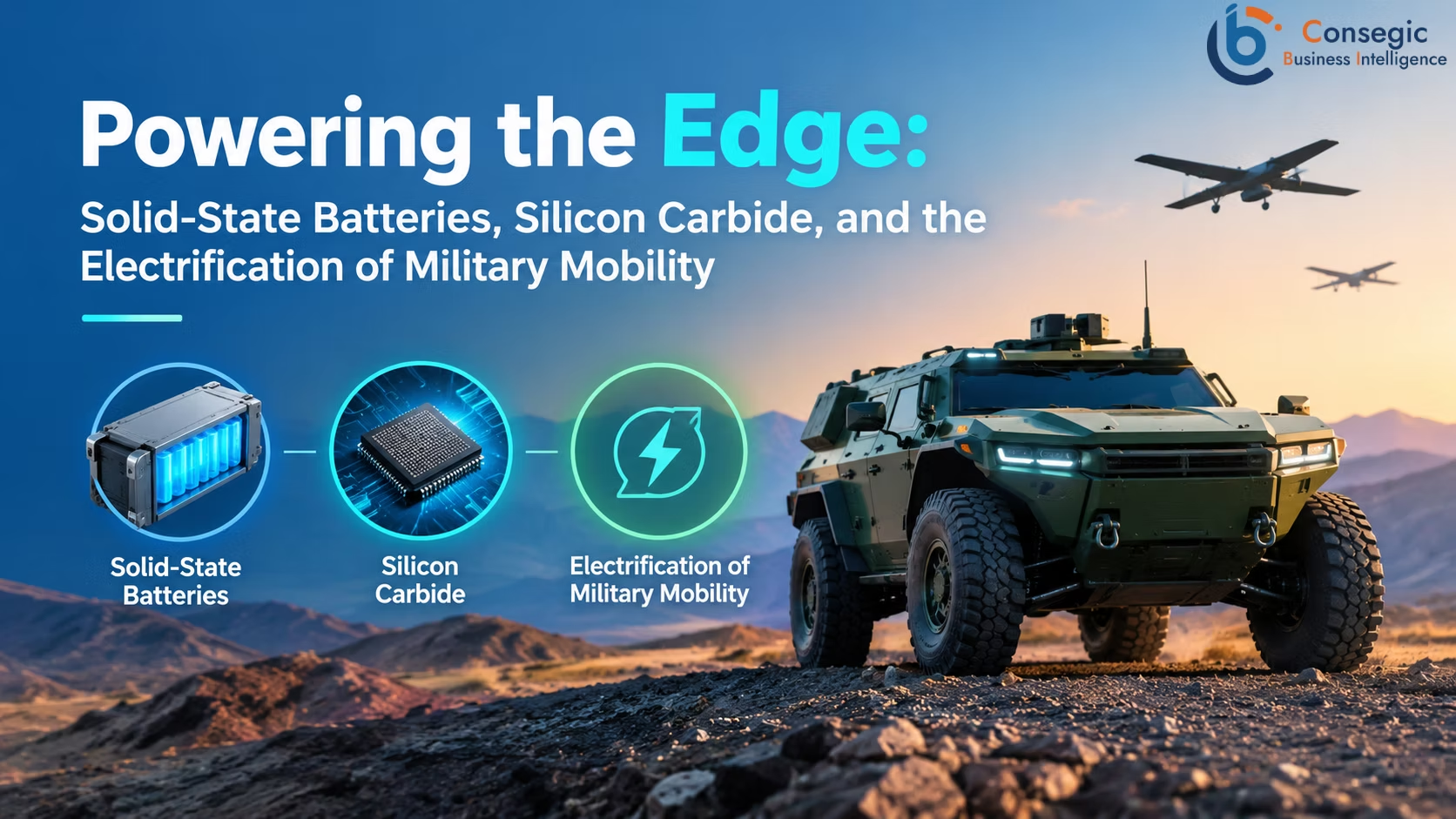
Solid-State Batteries: Increasing Energy Density and Operational Range
Solid-state batteries have received some recent interest due to the fact that they use a solid electrolyte in place of the fluid or gel electrolyte that is commonly used in many lithium-ion batteries. This approach could lead to greater energy density while at the same time reducing some of the safety issues related to flammable liquid electrolytes. Higher energy density, in turn, could result in increased operational ranges with no need for oversized batteries. This could be especially important for vehicles that operate away from the logistic infrastructure and are thus faced with limited fuel/energy sources. Another benefit of solid-state batteries would be the development of more compact energy storage devices that would free up some space for other equipment/personnel/protection equipment or mission cargo. Moreover, advanced batteries could be capable of providing quieter electric movement for some types of missions, thus lowering the acoustic and thermal signature of such missions. However, at present, solid-state batteries face a number of obstacles related to manufacturing, costs, durability, performance, and extreme temperature operation. The military application requires very high reliability and resistance to vibration, shocks, and severe environments.
Silicon Carbide: Improving Power Electronics for Defense Platforms
As batteries hold electrical energy, it is power electronics that defines how effectively electrical energy is converted, controlled and transmitted. The usage of silicon carbide semiconductors is increasingly becoming relevant in this respect because they can perform effectively at higher temperatures, voltages, and frequencies as compared to many silicon-based elements. Military electric and hybrid vehicles can use SiC components in their inverters, on-board chargers, DC-DC converters and other power management units. Efficiency of the power conversion process would save some energy for the vehicles and make cooling easier. It is especially relevant in view of the fact that military platforms start using more energy-intensive technologies, such as advanced communication and electronic systems, sensors, active protection systems, and autonomy. Compact and lightweight power conversion equipment will help to improve packaging and design of military vehicles. Reliability of the electrical system is extremely important for the military equipment as it must function in conditions of vibration, extreme temperatures and electromagnetic stress. Thus, in terms of growing electrification of the military equipment, SiC technology can be highly valuable.
Electrification on the Battlefield: Applications, Benefits, and Challenges
Electrification in military transportation goes well beyond just replacing current forms of propulsion. The hybrid-electric architecture could allow electrical power generation for internal systems, while conventional engines would handle long-range transportation and heavy loads. The electric drive system could improve the precision of torque control and increase maneuverability at lower speeds. Yet another use case for military electrification is providing electricity to support equipment. Contemporary military vehicles become increasingly reliant on sensors, communication devices, computing resources, unmanned systems, and other forms of electronics that need a reliable power source. Electrical systems could be used to ensure the availability of sufficient power onboard. However, some difficulties have to be addressed. Battery weight, the lack of charging stations, the issue of managing heat generation, damage in battle, extreme temperatures, and unreliable energy sources are all factors that should be considered. Military logistics and maintenance plans have to be adapted to include electrified vehicles. Hybrid-electric vehicles could represent a realistic step in this direction. Nonetheless, success would require the creation of energy systems based on mission requirements rather than on new technology itself.
The Future of Military Mobility: Building a More Efficient Electric Force
The development of military mobility will possibly involve the use of electric propulsion, batteries with enhanced performance and efficiency, power electronics, and energy management systems rather than the use of one specific technology to replace traditional technology. The use of solid-state batteries can help in achieving high energy density and enhanced safety whereas the use of silicon carbide power electronics can assist military platforms to effectively distribute electricity. Such a combination can enable military platforms to operate at minimal energy losses and higher levels of electrical power in terms of onboard energy capacity. Electrification may have a significant impact on the future military bases and logistics systems. It may create a higher level of need for mobile charging stations, renewable power generation, energy storage, and microgrids. The rise in the use of unmanned and autonomous vehicles can contribute towards making this process quicker due to the fact that most autonomous and unmanned platforms are electrically-powered. Nonetheless, the military organization will need to find a balance between the benefits of technology and factors such as costs, reliability, maintainability, and combat situations. The investment in testing, secure supply chain, training and energy infrastructure will be equally important.
Final Thought
Military mobility through electrification is but part of a bigger move to achieve efficiency, versatility, and increased power potential. The solid-state batteries could offer more energy density, higher levels of safety, and greater ranges of operation, whereas the silicon carbide power electronics could improve the efficiency of the electric systems. The combination of these could enable the deployment of hybrid and all-electric vehicles along with more complex onboard equipment. Yet, this would require addressing the issues associated with cost, longevity, charging stations, thermal management, and battlefield resilience. The development of the advanced energy storage solutions, power systems, infrastructures, and testing facilities will prove vital for the future military mobility.