The Growing Challenge of Waste in FMCG Supply Chains
The companies that operate in fast-moving consumer goods (FMCG) produce the goods that have limited time on the shelf, unpredictable demand, and large volume of distribution. It includes food products, beverages, and personal care items. A little mistake in forecasting leads to losses because the goods may be out-of-date or damaged when they are overproduced or not available at all when they are underproduced. In case of conventional systems for supply chain operations, it is based mostly on historical sales data and periodical inventory control, which makes it impossible to react instantly to consumer habits change, weather changes, transport delay or anything else. The term of a “predictive pantry” becomes relevant here. With the use of Internet of Things (IoT) sensors and generative technologies like artificial intelligence (AI), the company will be able to go from being reactive in managing the inventory to being proactive. The former will gather data on the inventory itself, its temperature, location, condition and so forth, and the latter will find the patterns and suggest something useful based on the data gathered.
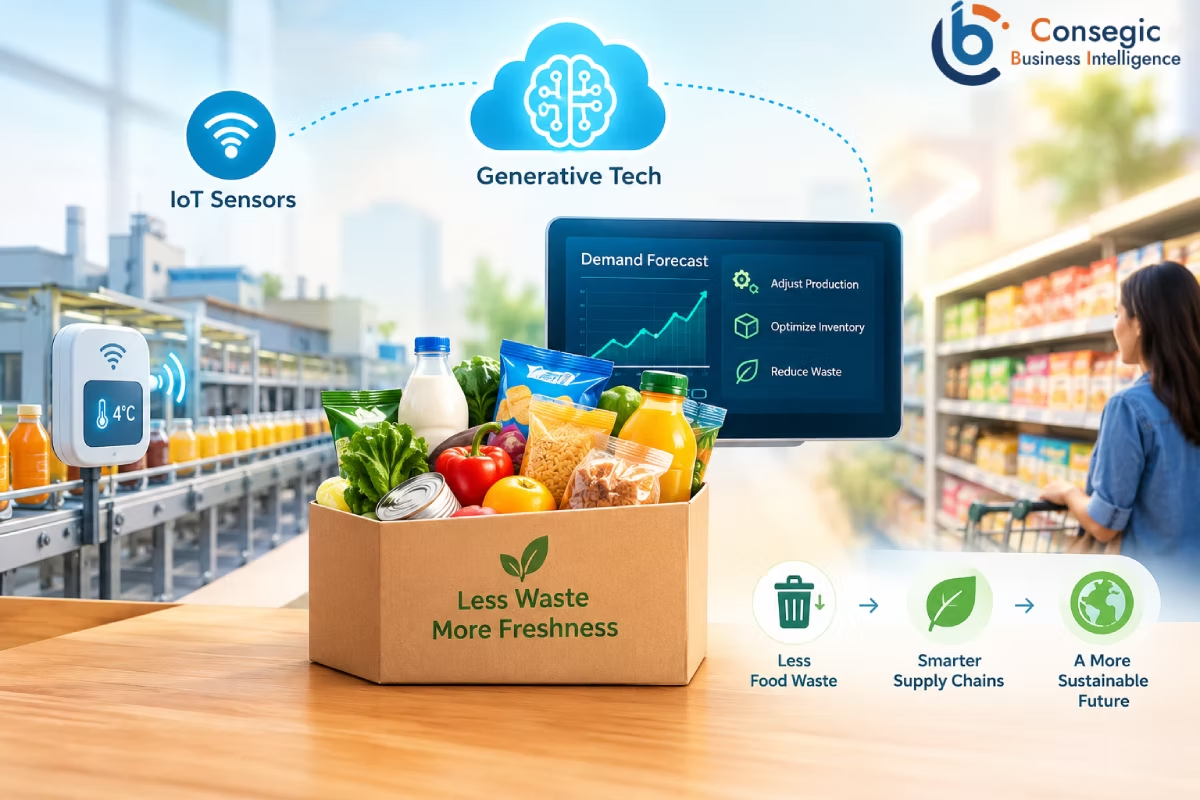
How IoT Enables Real-Time Visibility Across the Predictive Pantry?
IoT is rapidly becoming an essential technology in making sure there is increased visibility within the FMCG supply chain. Sensors, RFID tags, smart shelves, GPS sensors, and temperature sensing equipment can gather real-time data about the products during the journey from warehouses, distribution centers, stores, and transport vehicles. For instance, sensors that measure temperature will keep track of the state of refrigerated products to ensure they do not face any situations that may alter their quality. In addition, smart inventory systems will keep track of the number of items in the shelves without the need to do manual counts on a regular basis. The data collected will make sure businesses have a better idea of what is going on with their products and how they are performing throughout the supply chain. IoT will enable firms to know when products have experienced some problems along the way, whether in terms of transportation, storage, or movements. The information gathered by IoT can become very helpful when used together with analytics and AI platforms. Not only does this data inform businesses of what is going on, but it can also explain why something is happening and what needs to be done about it.
Generative AI: Turning Supply Chain Data Into Smarter Decisions
Generative AI can help enhance the level of intelligence associated with the huge volumes of information generated within the contemporary FMCG supply chains by IoT solutions. While all kinds of information can be continuously collected about the stock of items, their sales, transportation, conditions, customer demand, etc., the mere presence of this information does not always guarantee better decision-making processes. The use of a generative AI will make it possible to analyze all those types of data, find relationships between them, summarize certain trends, and generate a variety of potential responses. Thus, an AI algorithm can review past sales results, current stock, ongoing marketing campaigns, seasonality factors, and incoming data from sensors to help make better demand planning decisions. Furthermore, the use of AI will be able to explain unexpected changes in the stock and suggest some modifications to replenishment schedules. Another potential way to use AI in a business setting is scenario planning. Generative AI can thus change supply chain management from a predominantly observational process to a process that helps forecast, plan, communicate, and make decisions. But human intervention is necessary, especially when the recommendations of artificial intelligence impact decisions related to purchase, production and distribution.
Predictive Inventory Management: Reducing Overstocking, Spoilage, and Stockouts
Predictive inventory management deals with forecasting upcoming demands as opposed to responding to existing stocks. With FMCGs, this type of inventory management can come in handy as the products might have limited shelf-life and demand can be dynamic. The data provided by IoT can be real-time, and artificial intelligence models can analyze that data alongside historic demand, seasonal changes, promotions, buying behavior in a certain area and other related data. The company would be able to make decisions regarding when to replenish the product and how much stock would be needed. With regard to perishable products, the predictive system could help with prioritization of the products according to their shelf-life and storage. This practice can include fast movement of the products that are getting close to their expiration date via the right distribution channels. Good forecasting can also help avoid unnecessary production and transportation of goods that are not going to be sold. On the other hand, accurate predictions can help to identify shortages ahead of time and reduce stockouts. Therefore, with the help of better inventory management, companies would achieve balance between stockouts and excess inventories and have the products available to the customers at all times.
The Future of FMCG Supply Chains: Building Leaner and More Sustainable Operations
The fusion of IoT and generative technologies may greatly change the approach of FMCG firms to the management of their supply chains. Instead of depending on infrequent reports and historical assumptions, organizations will be able to implement always connected and always data-driven systems. Data on products and equipment will be available in real time through sensors, while the analysis will be provided by AI. In the future, these two functions may become integral to manufacturing units, warehouses, transportation systems, retail stores, and other elements of the network including consumer-oriented components. Automated notifications will detect product spoilage risks, while predictions will enable coordination of production and replenishments based on the current demand levels. Moreover, generative AI may help to make supply chain information understandable for people by creating summaries, explanations, and scenarios. The successful implementation of the technologies is possible only when there is reliable data, robust cybersecurity measures, adequate digital infrastructure, and proper supervision. However, it will be crucial for companies to monitor and validate AI-generated recommendations before using them in decision making. When used responsibly, the technologies will allow FMCG companies to build supply chains that are more flexible and effective and consume fewer resources.
Conclusion
The adoption of IoT and generative AI will change FMCG supply chain operations through better predictability, connectivity, and efficiency of inventory management. Sensor data can be used to enhance the visibility of products, their condition, quantity, and transport, whereas AI can generate meaningful insights based on the available information. Both IoT and AI technologies can be applied in order to decrease overstocking, spoilage, out-of-stock situations, and wasted resources. Nevertheless, technology is not the only component required for the successful implementation. The data quality, cybersecurity, IT infrastructure, and human involvement are still crucial.