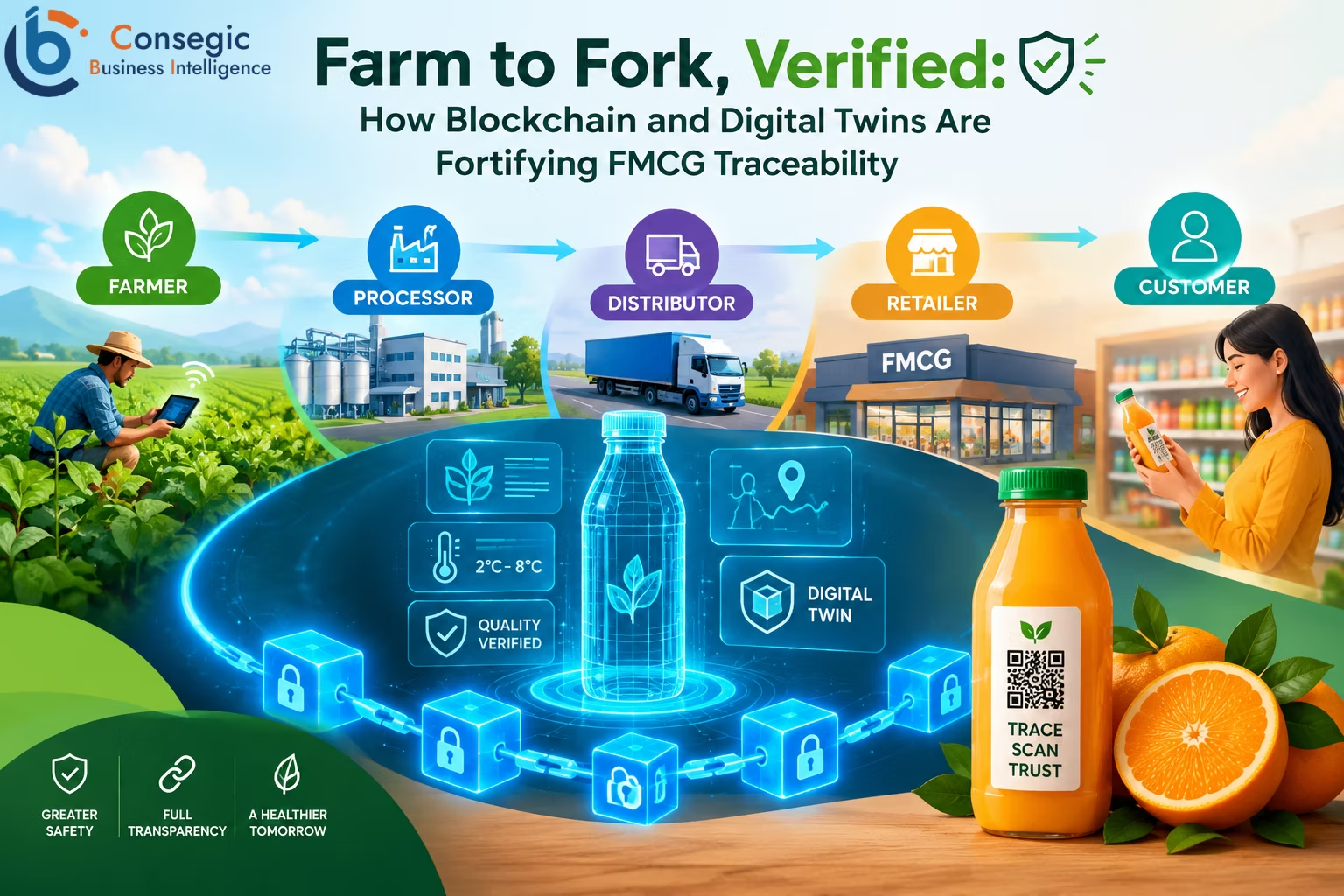
Products from fast-moving consumer goods are subject to the complicated process of supply chain management from farmer to manufacturer, processor, distributor, retailer, and customer. Throughout all the stages, products may be subject to different risks related to contamination, wrong storage conditions, counterfeit, delays, or any other factors affecting the quality of the goods or its information provided by suppliers. Traceability becomes the integral part of the process of managing product quality and creating a certain level of trust towards products. Traditionally, tracking systems work through the usage of different databases or written materials. It makes obtaining the whole history of the product quite challenging and unreliable. Blockchain technology and digital twins become the possible solutions to such a problem. Blockchain will be used to create an undisturbed record of transactions and supply chain events. Digital twins will represent the digital version of physical products, batch, equipment, or logistics process.
Blockchain Technology: Creating a Trusted and Immutable Product Trail
The implementation of blockchain can increase the traceability of FMCG products due to creation of a common record of significant supply chain actions in a digital environment. The information like the source of raw materials, dates of processing, batch numbers, details of transportation, and quality checks can be registered on a blockchain network. The information being validated and added to the register is hard to change. Thus, companies will become less dependent on various papers and will have an ability to check product-related information more easily. For instance, the food manufacturer can register when the ingredients have been received, processed, packed, and delivered. The retailers and other participants of the supply chain will have access to this information without full dependency on separate information systems. The implementation of blockchain can also facilitate the process of identifying the products to recall since the company can track the history of its product based on supply chain events. Nonetheless, the blockchain itself cannot ensure the accuracy of the initial data. The companies will still need good data gathering, proper access control, and data validation.
Digital Twins: Building Real-Time Digital Replicas of FMCG Products
Through digital twins, the FMCG companies will have the capability of creating dynamic digital models of their physical products, batches, packaging, equipment, or processes in the supply chain. The digital models can then be linked to the data that is collected using the sensors, enterprise software, logistics software, and other technologies. For instance, the digital twin of a temperature-sensitive food shipment may consist of data regarding temperature, location, transport duration, and handling process. Using digital twins, the companies will be able to track the movement of their physical goods and ensure that they maintain the desired conditions. Contrary to a mere static record in a database, digital twins will keep on evolving depending on the current changes in the supply chain. With digital twins, the companies will be able to predict when there may be any issue that can affect the product quality. In addition, digital twins can facilitate predictive analysis through historical and real-time information to predict supply chain disruptions. Through integration of blockchain technology, important events in the lifecycle of the digital twin can be recorded.
From Farm to Fork: Combining Blockchain and Digital Twins for End-to-End Traceability
Blockchain and digital twins together can create a more integrated end-to-end traceability solution for FMCG companies. Here blockchain technology can be a trustable record of key events and digital twins can provide the latest information on physical products and the environment in which they operate. Let us take an example of a packaged food item which is made of agricultural raw materials. The source data for this product can be linked to its digital identity, and processing, packaging, transportation, and delivery events can be documented along its journey. The sensors can document temperature, humidity, location, or any other handling event, while blockchain can store verified records of key events. In case of any quality issues, firms can use such integrated solutions to determine which batches have been affected, as well as trace the source of the issue. Such an approach would allow firms to manage recalls better and minimize any impact on undamaged products. For the customers, the selected traceability information can also be provided via QR codes or digital product records.
The Road Ahead: Overcoming Challenges and Strengthening FMCG Supply Chain Trust
At the same time, there is a range of issues associated with the use of these technologies by FMCG companies. These technologies are related to the necessity of investments into software development, hardware, sensors, cloud storage solutions, cybersecurity measures, training of the employees and integration of different data sources. In addition, there are lots of independent participants in supply chains; thus, successful traceability will be based on collaboration of all of the participants and standardization of the data. Data accuracy is another challenge that is worth mentioning. Even though the blockchain can be used to ensure the security of the data, any false data can be still stored even after being recorded in the blockchain. Thus, it should be noted that digital twins rely on timely and accurate data provided by connected systems and devices. Companies need to develop strict data governance policies including the procedures of data validation, access, privacy and system maintenance. Interoperability should be considered since different organizations can use different technology platforms. As a result, blockchain and digital twins can become helpful components of modern traceability strategy.
Conclusion
With blockchain and digital twins technologies changing the way FMCG companies can trace their supply chain, there is more visibility offered to the companies from farms all the way to the consumer. Blockchain can be used to record information securely and without any tampering while the digital twins technology can be used to give real-time data about products, batches, and even the supply chain itself. With both of these technologies combined, there can be easier identification of quality problems, faster recalls, improved monitoring and transparency to consumers. However, the successful adoption will depend on many factors including accuracy of data, interoperability, cybersecurity, investment and cooperation between supply chain members.