The construction industry has traditionally been dependent on manual labor, complex project management, and lengthy processes. While it is one of the most vital industries in the world, it was slow to embrace digital technologies compared to many others. It is now, however, experiencing rapid change as Artificial Intelligence (AI) and automation are increasingly implemented into its operations and are changing the way buildings, roads, bridges, and infrastructure are designed, managed and constructed. The industry, that has always been challenged by labor shortages, escalating costs, and complex projects, is now turning to AI based solutions and automation technologies to improve efficiency, safety and productivity. Starting from the first phase of planning and design, continuing through construction implementation to long term maintenance, these innovations are helping the construction companies to achieve better results with reduced project delays and costs.
Digital transformation of construction
Construction projects result in enormous volumes of daily data, covering all aspects such as site condition, equipment performance, labor productivity and material consumption. All of this data, which can provide a valuable insight, used to be very hard to analyse. With AI the construction companies can turn the collected data into an information intelligence. Complex algorithms can be used to analyse massive sets of data and identify patterns, forecast future events and offer recommendations leading to smart decision making. By implementing automation technologies, the new era of efficient and data-driven construction management is being created, taking construction industry from reactive to pro-active problem-solving approach.
Smarter project planning and design
One of the largest improvements AI is bringing to the construction industry can be seen in the phase of planning and design. Traditional design process usually requires many iterations and coordination between stakeholders such as architects, engineers and contractors. AI design tools are able to analyze thousands of design alternatives in a couple of minutes and help the team to find out the most efficient and cost-effective solutions by optimizing elements such as building performance, materials use, energy efficiency and cost. The integration of AI into Building Information Modeling (BIM) platforms helps create highly detailed digital representations of construction projects and prevent design errors that would be costly in later phases of the construction.
Automation on the construction sites
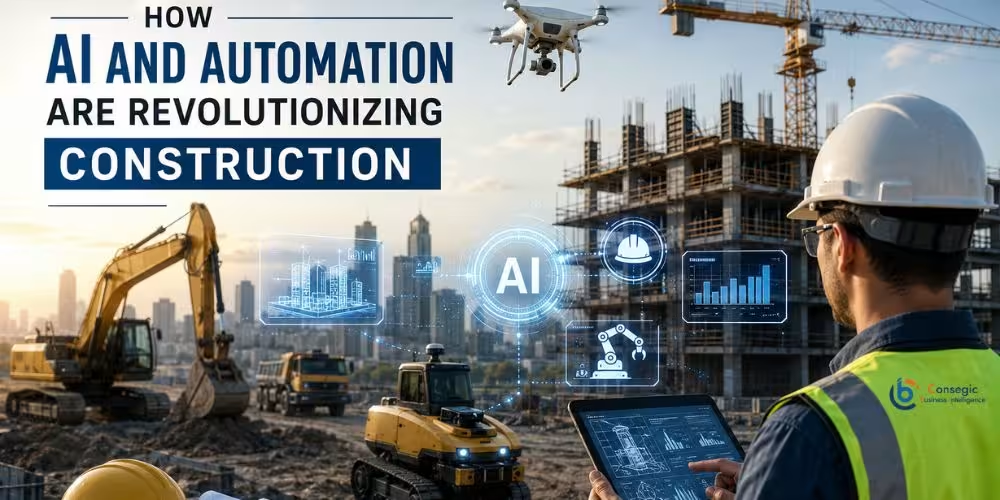
The adoption of the most advanced machinery, robots and autonomous vehicles are automating processes at construction sites. Manual tasks that usually required physical labor, are now being performed more precisely and consistently by automated machines. Autonomous machines, that are utilizing GPS sensors and machine learning, are assisting in excavations, levelling the land, transporting materials and preparing construction sites. The emerging construction robots are an optimal solution for repetitive tasks such as laying bricks, concrete pouring or welding, while reducing the burden of physical hard work on the construction workers and helping the industry to overcome its shortage of workforce.
Improve safety through AI
The safety of construction sites is the biggest priority due to the high risks of this sector. Continuous monitoring, coupled with advanced data analysis and prediction tools are making AI an invaluable asset for the improving construction site safety. Smart cameras, wearable sensors and network monitoring systems are observing working activities and site conditions and immediately warning of any hazard or unsafe procedures. Prediction of safety risk allows the management to prevent any accidents by implementing precautionary steps.
Better project management and scheduling
Delays are very common issues on construction projects, caused by many different factors like weather, material delivery, labor shortage or unforeseen site conditions. AI is used by advanced project management software, able to foresee the upcoming risks based on schedule, material supply and resource management, generating more accurate forecasting. This enables the project manager to optimize the allocation of resources, adjust schedule in real time and prevent potential delays. The automation of administrative tasks like reporting also frees up valuable time of project managers, allowing them to focus on strategic decision-making.
The role of drones and smart monitoring
Today's construction industry extensively uses drones fitted with cameras and sensors to collect vital site information quickly and receive rapid updates on a project. Images from aerial cameras can be analysed by AI for construction monitoring and measurement of site characteristics, or the detection of mistakes, eliminating many time-consuming manual checks. Smart monitoring tools are able to manage equipment and material tracking and usage in construction projects.
Sustainability and resource efficiency
Sustainability has become a very important issue for construction sector. AI can contribute to a greener construction by optimizing material use, minimizing wastage through precise resource planning and prediction and reducing overall resource consumption. Automated systems can also provide monitoring of energy usage and advice on improvements. Due to stringent environmental regulations, AI and automation is becoming indispensable to the construction industry in order to achieve sustainable development of the sector.
Adoption challenges
Although the benefits of AI and automation in construction are significant, there are also certain limitations. The high initial cost of investment can sometimes be a hurdle, particularly for smaller enterprises. Furthermore, implementing new technologies with existing structures and processes, as well as up-skilling employees, may be a difficult endeavour. Data security and privacy have also become essential aspects that should be carefully considered as construction companies are integrating more technology into their workflow.
Future of construction technology
Construction industry is heading toward a highly automated, interconnected and data-driven future. AI, robots, drones, digital twins and big data will become integral parts of the work. The use of these advanced technologies will lead to shorter completion times of projects, improved safety, higher sustainability and increased cost-efficiency. The companies that embrace innovation now will position themselves as future market leaders, able to meet the increasing demands for the construction of quality and highly functional infrastructures.
Conclusion
AI and automation are revolutionizing the construction industry at a foundational level. These new technologies aid construction companies in overcoming long standing issues of efficiency, safety and project management by optimizing planning, automation, and real-time project management. These solutions do have an upfront investment, and require an organizational cultural change, but the benefits have proven to be apparent. Further developments in these technologies will only lead to further advancements in how we build our future.