Every online shopper has experienced the same frustration at some point. You order something that looks perfect on the screen, wait for it to eagerly arrive and then realise that the colour looks different, the fit isn’t quite right or it simply doesn’t work with the rest of your wardrobe. This disconnect between browsing online and experiencing a product in real life has been one of the biggest weaknesses of e-commerce. Now, a generation of technology is working to bridge that gap.
What’s happening in online retail today goes far beyond a simple technological improvement. It represents a complete shift in how shopping feels and functions, with artificial intelligence beginning to act as a stylist, advisor and digital storefront all at once.
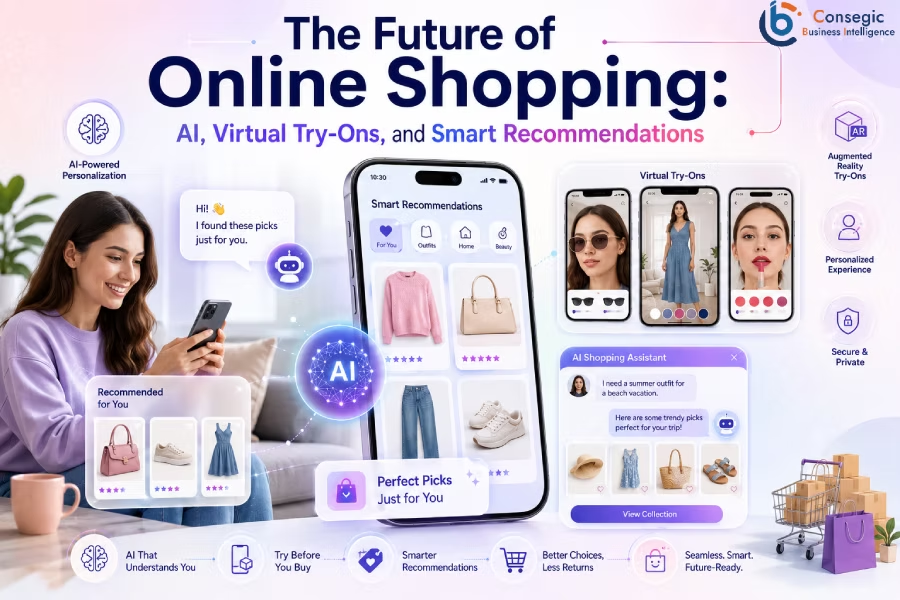
AI as the Core of Modern E-Commerce
Artificial intelligence has supported online retail behind the scenes for years. It has helped business organise search results, detect fraudulent activity and manage inventory systems more efficiently. What has changed recently is how personal and visible this technology has become.
AI is no longer limited to backend operations. It now shapes the customer experience from the moment a shopper lands on the website. By analysing clicks, searches, browsing habits and purchase patterns, these systems gradually develop a deeper understanding of individual preferences.
Companies such as Amazon, Zalando and thousands of Shopify sellers are increasingly using large language models and recommendation engines that look beyond simple buying behaviour. Instead of asking what customer purchased, the system attempts to understand why they bought it, when they needed it and what they might want in the future.
This move from reactive selling to productive shopping is defining the modern e-commerce landscape. Rather than presenting shoppers with whatever is currently trending, AI focuses on products that feel personally relevant.
Virtual Try-Ons and the End of Guesswork
If personalised recommendations represent the intelligence behind modern shopping, virtual try on tools represents the experience itself. These technologies are becoming one of the most influential developments in retail since the rise of product photography.
Using augmented reality and computer vision, virtual try ons allows customers to preview products in real world settings before making a purchase. Shoppers can see how lipstick appears on their own skin tone, how a sofa might look in their living room or how a jacket fits their body shape without visiting a physical store. Features introduced through google shopping AR, snapchat collaborations with fashion companies and apples ARKit ecosystem have transformed these tools from gimmicks into increasingly standard shopping features.
The impact on retailers is significant. Fashion brands have historically struggled with high return rates, often exceeding 30% because customers could not accurately judge products online. Virtual try on technology helps in minimising those returns by improving buyer confidence. Customers feel more certain about their purchases, checkout completion rates improve and fewer items are sent back.
What makes these systems especially impressive in 2026 is their realism. Early augmented reality experiences often looked artificial and inaccurate. Modern systems now consider lighting conditions, skin undertones, body proportions, movements and even fabric behaviour.
Hyper-Personalised Recommendations: Smarter Than Ever
Recommendation systems have become one of the most financially valuable tools in digital commerce. Netflix once revealed that its recommendation engine saves the company billions through improved customer retention and online retailers are seeing similar benefits.
Earlier recommendation systems were basic and often repetitive. They relied heavily on suggestions like “customers who brought this also brought that”. While useful to a degree, those recommendations lacked personality and context. Modern systems are far more advanced. They combine data from browsing history, purchase behaviour, social media trends, local preferences, seasonal patterns and even real time factors such as weather or upcoming events.
More importantly, today’s AI systems are beginning to understand style and preference at a deeper level. Instead of simply recognising that someone brought a navy blazer, the technology can identify broader preferences such as tailored fits, minimalist colours or premium contemporary brands within a particular budget range. This understanding influences almost every aspect of the shopping journey, including homepage suggestions, search rankings, advertisements, emails and app notifications.
Some retailers are pushing this concept even further with conversational AI shopping assistants. The customers now have an AI personal stylist they can converse with. A user could ask the AI to recommend outfit options for a Tuscany wedding at a specific price point. The AI would then not only provide product recommendations but also explain how they are suitable for the wedding. This form of shopping is turning away from traditional search results and is now evolving into personalized conversations.
The Growing Debate Around Privacy
The rise of highly personalised shopping experiences also raises important concerns about privacy. Every search, click, purchase and virtual try on contributes to a growing profile of customer behaviour and preferences.
As a result, consumers have become more cautious about how their data is collected and used. Regulations such as the Europe’s GDPR, India’s Digital Personal Data Protection Act and evolving privacy standards in the United States are forcing retailers to be more transparent. Now companies have to disclose what information is collected, how it is stored and for what purposes it is used.
For brands the real challenge in the long term isn't to accumulate more data, but to generate a sense of trust and top brands are not only framing AI personalization as helpful, but they are making it feel that way so that consumers accept the new ways.
The Next Phase: Agentic Shopping
The next major step in e-commerce goes beyond recommendation system and enters the world of autonomous shopping assistance. Instead of waiting for customers to make decisions, AI may soon begin handling parts of the shopping process independently.
Agentic AI systems are already being tested in several forms. Some can automatically reorder household’s essentials before supplies run out. The usage of clothes can also be monitored by the consumer and help the consumer when the clothing becomes too old and not suitable for the coming journey.
The system also promotes the shopping from proactive shopping instead of reactive shopping, which helps the consumers if they get overloaded with the choices and suffer from decision fatigue while shopping online.
Why the Human Touch Still Matters?
Even with all this progress, technology will never fully substitute for the human experience of shopping. AI can be very effective at predicting desires and simplifying the decision-making process, but it can never wholly replicate the joy of finding a random piece of treasure in a physical store. Nor can it replicate the intuition of a good salesperson who instinctively knows when a particular product will be the perfect fit for the consumer.
Technology will never fully remove people from the shopping arena, instead it will create richer experiences online from start to finish and the most successful brands will be the ones who empower the customer and integrate technology seamlessly, not overpower it.