One of the most impactful shifts in workplaces within the current times is remote work, which has drastically changed the urban landscape and the way of living in many cities around the world. While remote working practices were already known prior to 2020, the coronavirus pandemic prompted the adoption of remote work as an effective practice for digital interaction and cloud computing at enterprises. Nowadays, many companies choose to adopt either a remote or a hybrid organizational structure as a consequence of increased flexibility, cost savings, and higher worker satisfaction levels. Such changes have transformed the relationship between workers and urban environments, modes of transportation, and real estate.
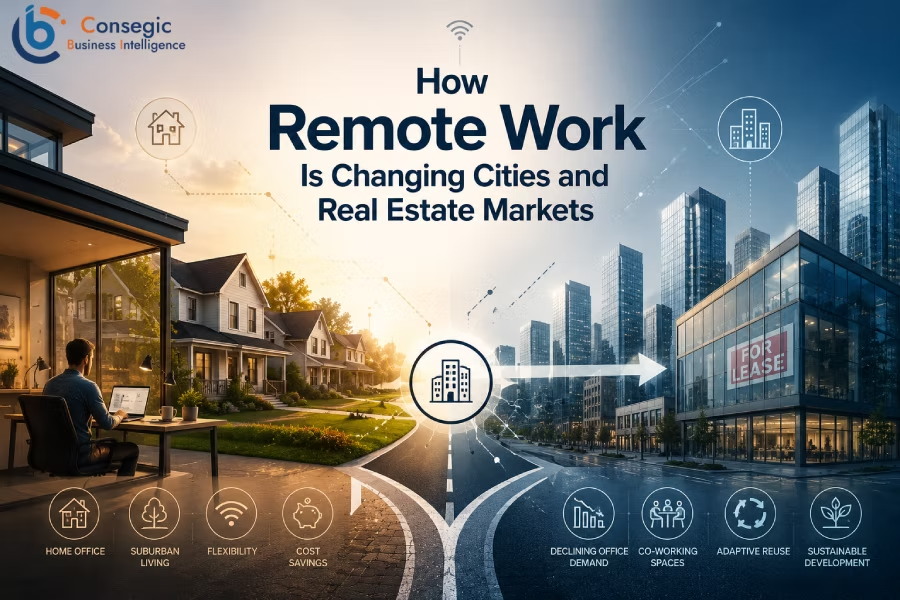
Moreover, workers do not have to reside nearby business offices anymore, leading to new trends in migration from overcrowded metropolises to suburban or small cities. In addition, there is a shift in urban planning to make investments in IT technology and sustainable urban development. Furthermore, telecommuting has proven to be effective in reducing urban traffic, pollution, and harmful effects on local ecosystems. It may be stated with certainty that these tendencies will remain valid in the coming years as well.
Impact of Remote Work on Housing Demand and Property Prices
The advent of remote working practices has transformed the preferences in housing and affected the real estate market greatly over the last couple of years. Since workers can now work without having to be physically present at their offices, there is a considerable increase in migration from densely populated urban centres, where people find themselves paying high rents and taxes, toward suburban and less developed regions, which tend to provide better living standards at a lower cost. Consequently, there is more demand for large homes complete with a dedicated office space, as well as gardens, among other amenities, thus leading to a fast appreciation of home values in these suburban and semi-urban areas, coupled with declining rental demand in major cities.
Additionally, people are choosing locations not based on convenience in terms of getting to the workplace but rather on how comfortable they will live in those places. Moreover, the pandemic and historically low interest rates spurred investments in housing in many countries. Developers, in turn, are building houses tailored for remote workers. Nevertheless, this trend has also led to unaffordable housing in some markets due to increasing demand.
Changing Office Spaces and the Decline of Traditional Business Districts
The increase in remote and hybrid working trends has greatly impacted the commercial real estate industry, thus making the concept of business districts less relevant than before. Organizations are choosing to operate from small offices or work flexibly, which will enable them to cut costs on office rentals and maintenance. Consequently, there is a significant decrease in the demand for big office space in the core areas of major cities. It leads to higher vacancy rates of commercial office buildings in finance and tech centres previously dominated by daily office workers. More often, companies choose shared office space or co-working options due to their affordability and flexibility. Besides, there is a lesser number of people commuting to work, which has a negative impact on businesses such as restaurants, transport providers, and others depending on the presence of office staff. Moreover, real estate developers started looking for new uses of abandoned offices, turning them into apartment buildings, hotels, and mixed-use buildings. Nonetheless, many companies still maintain their office spaces in order to foster teamwork and company culture. However, remote working has irrevocably changed the commercial real estate market and its economic structure.
How Remote Work Is Reshaping Commercial and Residential Real Estate
Remote working is one of the major trends shaping both commercial and residential real estate markets all around the world. With businesses adopting more flexible and remote-based working conditions, there have been changes in the requirements in terms of real estate, be it for residential or commercial purposes. For instance, people looking to purchase houses have become increasingly interested in buying spacious homes, equipped with home offices, high-speed internet connections, and smart-home technology that would facilitate remote working. In order to meet such requirements, real estate developers have started building modern residential complexes for remote workers.
In the commercial real estate sector, demand for office spaces is on the decline owing to the efforts of many businesses to cut down costs. Corporate offices are being replaced by co-working spaces that come with the advantage of scalability and flexibility. With office vacancy rates increasing in some urban centres, the development of commercial real estate is shifting towards turning vacant buildings into residential projects or hotels.
Remote working has also impacted property investment trends in such a way that property developers are increasingly focusing on suburban homes, logistic centres, and infrastructure developments linked by digital means. In addition, sustainability has been a critical factor in contemporary property developments because remote working requires that there be sustainable ways of utilizing property resources through the creation of energy-saving homes and sustainable living environments.
Rise of Suburban and Smaller City Living Trends
The growth of remote work has resulted in a trend of moving professionals and their families to the suburbs and tier-2 and tier-3 cities. Remote work creates significant demographic shifts as well as economic changes. More and more people choose suburban life because they seek a place where the cost of housing and other expenses is lower compared to big metropolitan areas. Because commuting has become unnecessary for many employees, they have an opportunity to move into bigger houses and enjoy a more relaxed environment conducive to remote work. As a result, tier-2 and tier-3 cities witness an influx of people and growth of real estate market. Moreover, governments and private enterprises invest in developing telecommunication network, providing residents with reliable internet access, creating healthcare and transport infrastructure. With the rise in number of remote workers, local businesses, retail, and service sector experience significant economic growth and generate more employment opportunities. Additionally, suburban communities evolve into self-sufficient clusters offering all the amenities necessary for remote work such as co-working spaces.
Conclusion
Remote work has been a driving factor behind changes occurring in cities, lifestyles, and the global real estate market. The adoption of this mode of operation has affected how individuals choose their homes and have led to reduced reliance on office spaces while encouraging relocation to suburbs and smaller cities. While businesses adopt more flexible and hybrid ways of doing things, urban design and real estate development are being influenced by the emerging needs of society and the economy. Moreover, real estate developers are increasingly paying attention to the digital aspect and sustainable living. Despite facing problems such as rising house prices and commercial vacancy rates, remote working continues to shape cities.