How Smart Technology Is Reshaping the Construction Industry?
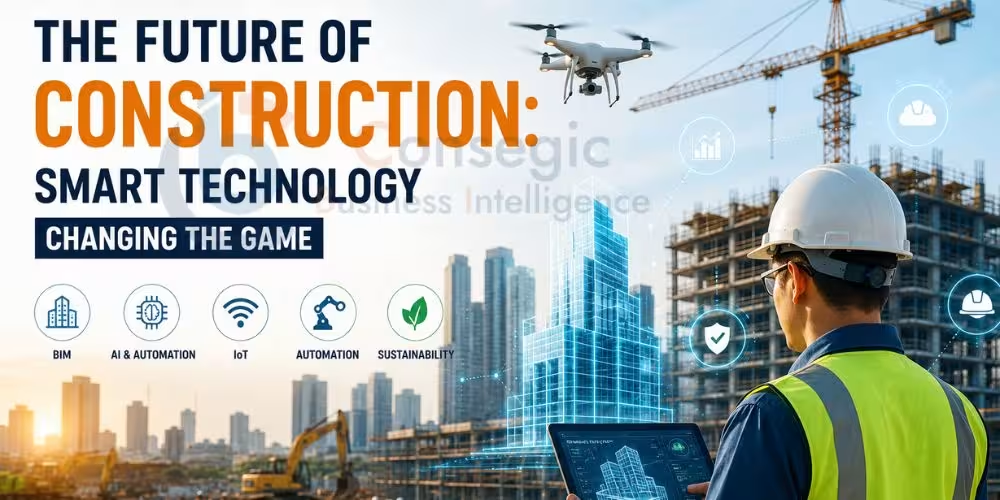
In this ever-evolving era the construction industry is undergoing changes driven by technological advances. Traditionally, construction projects were heavily dependent on manual processes and paperwork, which causes delays and inefficiency. But technology is slowly changing the face of construction projects with firms using digital tools to meet their objectives. Moreover, with the need for more infrastructural development due to urbanization, there is the need for more efficient construction practices. For instance, the use of smart technologies such as AI, BIM, IoT, and automation has enabled construction firms to streamline various activities and achieve better results.
Furthermore, technology enables the construction firm to conduct predictive analysis and plan projects accordingly. Besides, smart technology allows for better resource management, resulting in the minimization of wastages. Additionally, through technology, construction companies can ensure better health and safety conditions in their workplace. This is because smart technology is capable of identifying potential risks in time, which prevents accidents. In addition to that, construction companies also contribute to sustainability through the use of technologies such as IoT and BIM as it cut down on waste and save energy.
Building Information Modeling (BIM): Creating Smarter Project Plans
The development of Building Information Modeling (BIM) technology has made an impact in the modern construction industry. The technology involves creating a digital image of a building that allows for collaboration among architects, engineers, contractors, and project managers. Contrary to blueprints, the Building Information Modeling technology creates an all-inclusive three-dimensional picture that incorporates all the information regarding the structure's design, mechanics, electrics, and plumbing. This makes it easy for design flaws to be identified before the actual construction process begins. Moreover, the creation of BIM has made construction companies capable of making accurate estimates of the required material, labour, and timelines. Therefore, the use of the technology makes it easier for the management to budget and allocate the resources efficiently. Through better communication, reduction of reworks, and improved decision making, BIM is supporting the construction industry in delivering more sustainable projects.
AI and Automation: Boosting Productivity on Construction Sites
Artificial Intelligence and automation technology have the potential to transform construction projects through increasing their efficiency and productivity. The use of computerized AI and machine learning systems helps increase efficiency and productivity by analysing huge amounts of project-related information and identifying patterns and trends. Such analysis allows project managers to make proper decisions based on potential problems. Moreover, automation also allows for the identification of equipment maintenance requirements to eliminate any potential failure before it happens, hence reducing downtime.
Furthermore, automation technology is also changing traditional construction work by allowing for the use of robots that are able to carry out repetitive tasks such as brick laying and concrete pouring. Additionally, autonomous machines and drones are increasingly being used in construction sites for carrying out surveying operations and transporting material to the worksite. With the shortage of labour force in construction sites becoming a common problem, the use of automation technology is providing a solution to help manage the challenges.
IoT and Connected Construction: Real-Time Monitoring and Decision-Making
Through the Internet of Things (IoT), construction sites are becoming ecosystems characterized by communication between devices, systems, and equipment. The implementation of sensors in IoT on machinery, tools, and constructions is essential since it collects data about performance, position, and other aspects of operation. Moreover, data collection makes it possible for construction managers to have real-time information that they can use in order to understand whether construction works are on schedule and what needs to be done in case of problems. Through IoT, smart sensors are able to track any equipment malfunctioning that could cause machine breakdown. In turn, wearables enable workers to keep track of their location, health status, and exposure to adverse conditions. Additionally, IoT sensors also enable fleet and asset management because of GPS capability of some devices. The collection of data through IoT leads to greater transparency and fast decision-making which helps solve potential issues before they worsen and affect projects. Furthermore, IoT helps in the implementation of remote construction management and allows construction managers to control the process at distance.
The Rise of Smart Buildings and Sustainable Construction
Smart buildings have emerged as a trend in the construction sector due to the increasing demands of society. The construction industry has adopted smart technology that uses sensors, automated systems, and IoT technologies to improve the monitoring and management of building operations. These technologies will automate lighting, heating, ventilation, air conditioning, security systems and energy consumption thus increasing efficiency and comfort.
Moreover, sustainability is an aspect that has received attention in the construction sector in recent years. Construction companies are embracing sustainable construction through the adoption of green construction technologies. In this regard, green materials are being used to improve efficiency while ensuring energy is obtained from renewable sources, such as solar panels. This practice will ensure a reduction of carbon emissions into the environment, minimizing adverse environmental impacts.
There are several benefits when integrating sustainable practices and smart technology in construction. For example, property owners benefit from reduced costs of maintaining their buildings and using energy. Additionally, there are more comfortable and secure conditions for those who reside in such buildings. Moreover, green buildings are now strongly promoted by governments and organizations.
Conclusion
The future of construction is being influenced by technologies that will make construction projects more efficient, safer, and sustainable. Construction processes have transformed because of the integration of various technologies, such as Building Information Modelling (BIM), Artificial Intelligence (AI), automation, and Internet of Things (IoT). Such technologies ensure that there is an improvement in efficiency, cost reduction, decision making, and reduction of the environmental footprint. Moreover, the emergence of smart building technologies and the concept of green construction ensures the construction of sustainable infrastructures that conserve energy and the environment.