Introduction: The Rising Cost of Energy and Its Impact on Home Appliances
Growing energy costs are emerging as a significant determinant of consumer buying behaviour when it comes to purchasing and using home appliances. The higher cost of electricity has made households aware of the energy consumption associated with such items like refrigerators, washing machines, air conditioners, ovens and other electric appliances. Changing consumer attitudes have led the appliance manufacturers to reconsider the existing designs and pay greater attention to energy efficiency. In addition to price, aesthetic appeal and functionality, the low energy consumption has become an important feature that manufacturers emphasize more often. The increasing operating expenses have been putting pressure on manufacturers to produce appliances with higher performance levels at lower energy consumption levels. This has raised interest in the development of new solutions like inverter compressors, efficient motors, advanced sensors and integrated energy management systems. However, manufacturers must still consider the compromise between energy efficiency and cost-effectiveness. In light of increasing energy prices, decreasing energy usage has become an important factor in appliance design and manufacture.
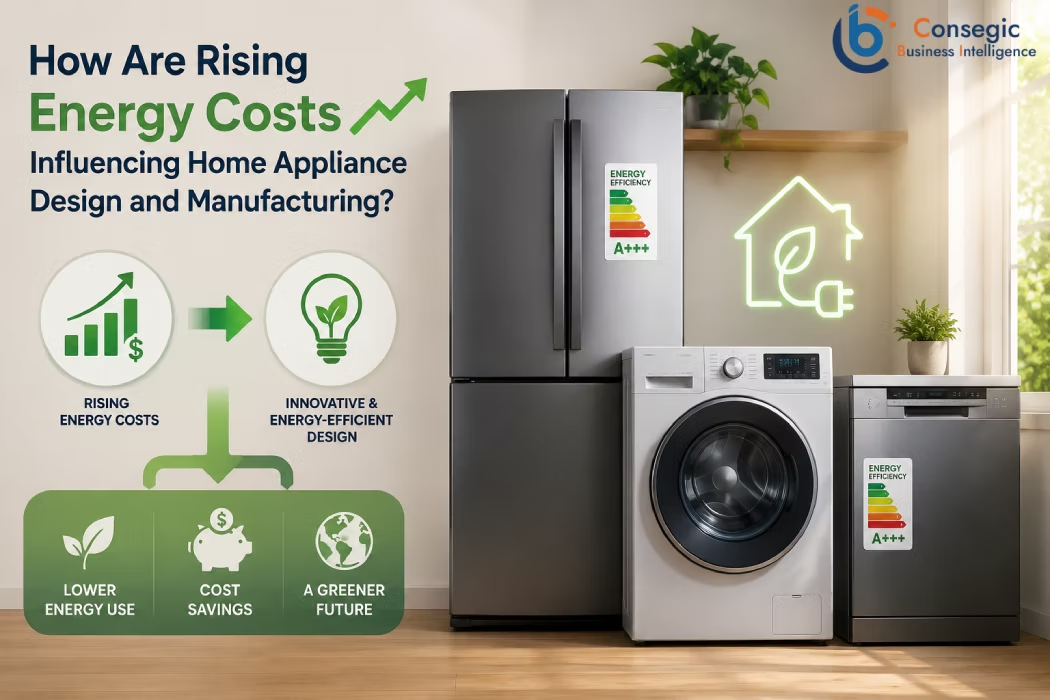
How Higher Energy Costs Are Changing Appliance Design
The increasing cost of energy is already having a profound impact on how home appliances are designed in the modern world. Designers are now more inclined to ensure energy saving while making sure that the performance and convenience of the appliance remain at optimal levels. For instance, refrigerators are currently being made to be more energy efficient by improving the insulation system and compressors. On their part, washing machines are currently being designed with more efficient motors and washing cycles. Air conditioners are increasingly using inverters which adjust the compressor speed according to the cooling needs rather than running all the time. This also applies to other components such as heating elements, motors, and electronic components. There is also a trend of including monitoring of the energy usage of the appliance in its design. This is done through sensors which tell the user how much electricity it consumes during use. These trends are making it necessary for the manufacturers to factor in energy efficiency right from the beginning of designing the appliance.
The Shift Toward Energy-Efficient Technologies
The increasing need for lowering the cost of electricity leads to the implementation of energy-saving technologies in home appliance manufacturing. In addition, manufacturers have started working on new components and systems that would provide an equivalent or higher level of performance while using a smaller amount of energy. The implementation of the inverter technology is one of them, especially in such devices as air conditioners and refrigerators due to the possibility of changing the compressor's speed according to the demands of users. Another technology that increases the effectiveness is the implementation of high-efficiency motors in such home appliances as washing machines, dishwashers, etc. Moreover, sensors are very important because they help detect the level of temperature, load, moisture, and activities of users automatically. Therefore, the device changes its performance to avoid wasting energy on unnecessary work. In addition, the use of LED lighting, energy-saving materials of insulation, effective heating systems, power management circuitry contributes to decreasing energy consumption. Furthermore, the possibility of the use of renewable energy sources and energy storage is studied in some home appliances.
Impact of Rising Energy Prices on Appliance Manufacturing
Higher energy costs influence not only the design of appliances but also manufacturing processes involved in creating them. The manufacturing of home appliances involves high electricity consumption by the machinery and equipment involved. Therefore, when there is an increase in energy costs, manufacturing companies have increased production costs, which could lead to problems regarding profitability and pricing of the product. In order to cope with such challenges, manufacturers are seeking solutions that will help them enhance the efficiency of energy use at their plants. Energy efficient machinery, automation of manufacturing process, advanced lighting and energy management software are some of the possible solutions in the quest for saving energy. Companies are also evaluating production processes in search for possibilities to save energy without lowering output or the quality of the product. Increased costs of energy could also stimulate the interest in renewable energy resources, like solar, in order to supply energy for production of appliances. Such solutions would cost much at first, but in the end lower the cost of operation. Thus, the price of energy influences the products and processes of manufacturing companies.
Smart Appliances and Energy Management Solutions
Smart technologies play a progressively growing role in assisting households in monitoring electricity consumption. Smart household devices have an ability to analyze the information about the pattern of energy consumption, allowing users to make more reasonable decisions concerning the consumption of electricity. The intelligent functioning of such devices as fridges, washing machines, air conditioners, and heaters is possible via adjusting the appliance's functioning depending on the household's needs. Some of the systems are able to offer the information about energy consumption in real time using smartphone apps or connected household management solutions. Smart scheduling will also assist in the proper work of appliances during periods of reduced electricity demand or low electricity prices, where time-based pricing is practiced. Artificial intelligence and machine learning will allow improving the efficiency of operation through detection of patterns and optimization of performance of appliances. For producers, there is a chance to make their product more attractive in the competitive market. The downside of smart appliances is that more sophisticated electronic parts, software and connectivity, as well as cybersecurity, are required in order to produce them.
The Future of Sustainable and Cost-Efficient Home Appliances
In the future, there are chances that development of home appliances will be driven by combination of energy efficiency, affordability, sustainability and technological advancement. Since energy cost is among the concerns of many households, the development of appliances that use energy effectively and provide satisfactory performance will continue. Artificial intelligence, new sensors, quality material and automation in the process of energy management might be used in developing future appliances. These appliances might be capable of communicating with each other within a smart home environment and therefore make energy management efficient. Manufacturing of sustainable appliances will also be influenced in the future since the manufacturers will search for recyclable materials, durable parts, energy-efficient manufacturing processes and renewable sources of energy. In addition to this, it will be important for the manufacturers to ensure that their energy efficient appliances are affordable to the consumers. The future will see changes in the manufacturing of appliances since the high cost of energy will not only result in increased expenses but also bring about changes in the manufacturing of the appliances.
Conclusion
Higher energy prices are reshaping the home appliances industry through the drive for energy efficiency and sustainability in the design and production of home appliances. The current design trends in home appliances are geared towards creating products that use less electricity without sacrificing performance. Manufacturers are also using energy efficient machinery and automation and renewable energy sources to keep production costs down. Although producing highly efficient appliances may cost more, there are advantages associated with such an approach. Higher energy prices mean that consumers are becoming increasingly conscious about buying energy-efficient appliances, and higher demands for cost-efficient appliances are anticipated. Manufacturers that succeed in creating affordable, efficient, innovative appliances that work well would have more to gain from such a market shift.