The automobile service business is undergoing an immense transformation as a result of connected, electric, and smart cars. New age vehicles incorporate up to date electronics, driver-assistance technologies, vehicle self-diagnosis capabilities, electric powertrains and all of these require an approach to repair that is outside the norm of standard garage practices.
In 2026, smart automotive equipment will be crucial to the success of modern garages. These smart tools can span from AI-powered diagnostic systems, connected car lifts and automated vehicle inspection tools to cloud based management platforms. These devices will make service operations more effective, accurate, and client-centric. Apart from that, they are also redefining the entire garage experience.
Since vehicle technology continues to progress at a fast pace, smart auto equipment will play a more vital role for garages in terms of stay on top of new vehicle technology and staying competitive.
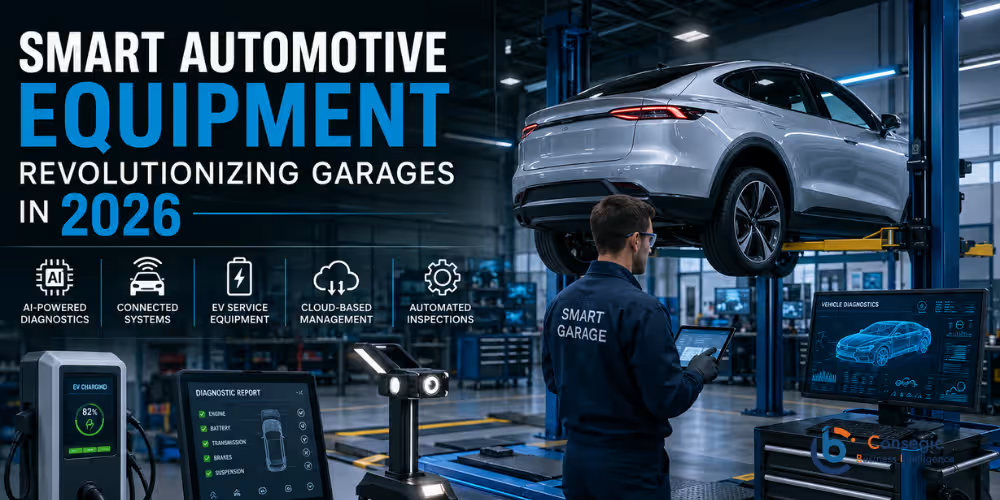
Shifting Towards Smarter Garage Operations
Vehicle maintenance operations relied on manual diagnostics, expertise of mechanics, and traditional repair techniques for several decades. Although such skills remain important, contemporary vehicles generate large volumes of data that provide more accurate readings of the condition of a car.
Smart automotive equipment helps workshops in getting access and using this information better. Connected tools that communicate directly with the car system can identify faults, and provide mechanics with specific diagnostic info.
This transition from manual car service to data-driven repair procedures assist in optimizing garage productivity while increasing both the accuracy and the speed of car repair.
As the expectations of the customer rise, smart garage operations are transforming from a convenience to a necessity.
Advanced Diagnostic Systems Changing How Repairs are Made
One of the key improvements to the auto workshop is the development of smart diagnostics systems.
Modern cars are filled with electronic control modules that monitor vehicle parts such as the powertrain, the electric and hybrid system's battery management and even advanced driver assistance systems. A manual diagnosis can take time and be complex.
The modern diagnostic equipment can scan the car system quickly to find out fault codes, and suggest viable solutions. Some platforms even utilize artificial intelligence in their systems to analyse patterns and increase accuracy of diagnosis.
The diagnostic time as well as the level of precision are both reduced using these tools, thus helping mechanics repair cars much quicker and minimizing car downtime.
Smart lifting devices improving efficiency and safety
Vehicle lifting equipment are one of the most essential devices in any garage. By 2026, they have become smarter and more automated.
These systems contain sensors that can check for even distribution of the load, height of lifting, the working condition of the device itself and various safety measures, all at once. Automatic safety systems make sure that the equipment complies with all the workplace safety rules to prevent any sort of accidents from happening.
Some are even capable of being linked to a garage management platform for tasks such as scheduling maintenance checks and monitoring device efficiency.
The importance of electric vehicle service equipment in 2026
The quick rise of the EV has created new challenges for auto service providers as well as new opportunities.
EVs are a far cry from internal combustion engine cars, and demand for specialized diagnostic equipment for batteries, charging and electric motor systems, and heat management inspections. If your workshop intends to perform services on an EV, it must invest in tools made for these vehicles.
Some important tools for EV servicing in 2026 include smart battery diagnostics and analysers, insulated diagnostics for high voltage systems and advanced chargers.
As EV adoption continues to grow, shops that have up-to-date equipment for servicing EVs will flourish.
Automated inspection technologies
Modern vehicles can now be inspected using automation in order to ensure better efficiency and greater precision.
Modern inspection devices use camera sensors, high-tech sensors and AI to assess a car's condition in real time. It is able to check for wear in tires, wheel alignment issues, damage to car body, worn out brakes and other maintenance needed with amazing precision.
Automated inspection tests, in contrast to manual inspections, have consistent precision values and also remove the need for human error. This device also makes possible to quickly compile and forward repair and maintenance reports directly to the client.
This advanced technology ensures higher levels of transparency in garages and can improve the level of client confidence as there is concrete evidence to back up each repair needed.
Smart garage equipment connected via cloud management platform
The smart automotive equipment is increasingly interconnected with cloud-based platforms that will help in integrating many parts of the auto service station operation.
These platforms help garages in scheduling appointments, keeping track of vehicle repairs, monitoring performance of devices, and managing the service records and customer contact information from a single accessible place.
Through the cloud, each and every location of a garage can easily access information related to it, which enables better planning and increased visibility.
Technicians can access manufacturer updates, repair databases, and technical information at high speed to ensure that they are well aware of new automotive technologies.
Predictive Maintenance of Car Components and Shop Equipment
Predictive maintenance of auto parts and shop tools is arguably the most useful technology in the smart automotive industry today.
The utilization of sensors and advanced analysis techniques allows for a pre-emptive prediction of failures of garage equipment and components of client's vehicles. Instead of anticipating malfunctions of equipment to fix them, the mechanics can now tackle and resolve issues before they turn into significant problems.
Preventive repair can reduce equipment breakdown and prolong equipment lifespan, thereby increasing the overall productivity. Furthermore, predictive maintenance allows the mechanic to forecast issues in vehicles, recommend preventive actions to boost the car reliability, and save costlier repairs in the long run for both the owner of the car and the garage service station.
Enhancing customer service experience through the use of modern technology
Not only have these devices boosted efficiency in garages, they have also improved the entire experience that a customer receives when they come into a repair shop.
Nowadays, most garages will supply the customer with digital vehicle reports, automated service reminders, the capability to book appointments online and progress reports of repairs in real time. The customer may also get full detailed diagnostics for each vehicle part supported by data, images, and videos.
This transparency would increase the confidence of the customer when they are required to make a decision concerning a car part to be repaired or replaced.
With increasing levels of rivalry in the service sector of the auto industry, service stations are turning toward using excellent customer service as a means of differentiation in 2026.
Difficulties associated with implementation of smart automotive devices
Though these devices provide many benefits, there are some issues with their implementation.
Modern smart tools demand high initial costs, and can also require considerable training and continuous software updates for all staff members. Small repair shops might find it hard to cope with the new and developing vehicle technologies.
With smart garage tools, the aspect of cybersecurity becomes increasingly important; customer information must be protected with a system that has robust safeguards in place.
The benefits of these devices can sometimes outweigh the costs of implementation, despite some issues.
The future of smart auto workshops
Future auto workshops will depend on an increased number of automated diagnostics and repairs; further advancement in artificial intelligence and connection technology; and an electric powertrain technology that will further boost the growth of the auto service sector. New technological advances such as Augmented reality diagnostics and robotic service could bring about drastic changes in how auto service stations operate in the future.
It will be very important for the auto repair workshops to stay on top of the latest technologies to adapt to the emerging service requirements and to continue meeting the needs of modern vehicles.
Conclusion
Smart automotive equipment is bringing a revolution to garages in 2026 by offering superior levels of diagnostic accuracy, serviceability for EVs, automated operations and increased efficiency. Connected garage devices using new technology and data decision making capabilities allow workshops to do a much better job than ever before.
It is essential for garages to continue to evolve, especially as car technology is progressing at such a rapid pace, so that they can meet service demands and also maintain high levels of customer satisfaction. The garages of the future are smart, automated, fast and always connected.