The media industry is changing significantly at a rapid pace. The expansion of technology, modern trends in consumer behaviour and the increasing dominance of online content consumption are all having a dramatic impact on audience interaction through various devices, services and media formats.
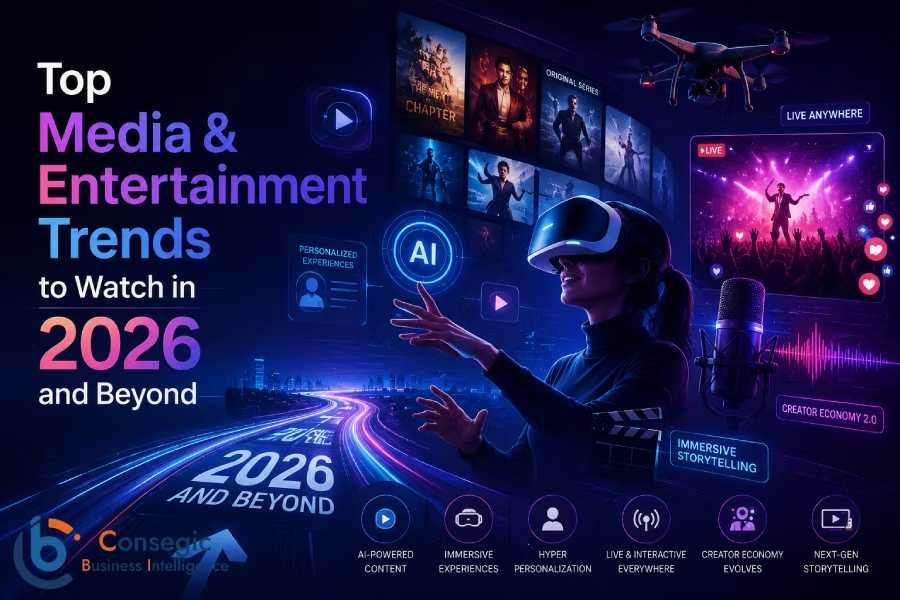
In 2026 and henceforth we will see the industry move on from traditional broadcasting to become more connected, interactive, and data driven. Streaming, artificial intelligence, gaming, immersive experiences, and creator led content are beginning to shape the entertainment of the future. It's valuable to grasp these trends for business leaders, creators, and consumers as the industry evolves around the world.
Rise of AI Generated and Personalized Content
AI is quickly turning into a dominant power in media and entertainment. We are now seeing AI applications for video editing, suggesting scripts, recommending content, localization, and understanding the audiences.
Streaming services utilize artificial intelligence technologies to recommend content to viewers, based on the watch history and behaviors. This high level of personalization enhances user satisfaction and retention.
Furthermore, AI is allowing content creators to produce media faster. Human insight is still needed, but AI is becoming an invaluable support in media production and content management.
Growth of Streaming Platforms
The entertainment industry is still being ruled by streaming. As a result of the flexibility and comfort it provides, an increasing number of consumers are favouring on demand content instead of on TV.
Platforms are heading towards feature live sports, podcasts, gaming video, documentaries and interactivity in addition to movies and TV series.
Meanwhile, the rivalry among streaming services is intensifying. Providers are placing a greater emphasis on unique content, local shows, and the ability for users to customize their subscriptions to win and keep customers.
Consumers are becoming more discerning and are being catered through policies such as HBO's highest quality guarantee.
Expansion of Short Form Content
Short form videos continue to be popular on all digital media. People are always looking for a quick burst of entertainment while relaxing, on a break during the work day, or doing the mindless browsing in between.
Makers and Brands have started a trend of making shorter videos in which they can grab your attention in just a few seconds but still provide with good information and successfully entertain you.
This trend is also affecting established media companies; many of whom producing content for mobile consumption and social media engagement.
Somehow, short form content is no longer solely a secondary entertainment. It is gaining its role as the main format of communication and marketing.
Gaming Becoming Mainstream Entertainment
Gaming has grown to be one of the largest entertainment sectors in the world today. Modern games are becoming more engaging, social and interactive than ever.
Today, new ways of engaging with games, such as cloud gaming, the advent of virtual reality, the rise of multiplayer online gaming and esports are drawing a wide spectrum of audiences. People are devoting as much time to playing games as they are to watching TV or movies.
Gaming sites are also functioning as social sites in which users were communicating, attending virtual events and engaging to digital communities. The gap between gaming and entertainment is slowly diminishing.
Immersive Experiences Through AR and VR
Augmented reality (AR) and virtual reality (VR) are providing a more immersive entertainment experience. Using AR and VR, users can interact with digital content in more innovative and exciting ways.
Concerts, live-sports, games, virtually attending events are all using the exciting features of AR and VR to bring the audience into the experience.
Its implementation is still predominantly in the developmental stage but the technology is becoming more affordable and usable for artists and consumers.
Virtually immersive media could become a much bigger part of mainstream entertainment in the next few years.
Creator Economy Continues to Grow
Independent creators are becoming increasingly influential in the media industry. Social media platforms and digital tools allow individuals to build audiences without relying entirely on traditional media companies.
Nowadays, many creators are doing the same work that a lot of professional companies would on the internet, but are able to deliver higher quality content and have whole communities know and love them. To be successful on the internet, people appreciate sincerity and live interaction.
Another growing reason that brands are partnering more and more with creators is that they allow the brands to speak to us directly. The creator economy is revolutionising the way in which entertainment content is generated and accessed.
Importance of Regional and Local Content
Global streaming services big and small are pouring a lot of money into localised programming. This is because consumers are more and more interested in content that resonates with local cultures, dialects and ways of life.
Content originating from Asia, Latin America, the Middle East and elsewhere is more effectively making its way to the rest of the world.
This change opens up new possibilities for local filmmakers and production companies and results in a more diverse entertainment landscape worldwide.
Encouraged by more e-mail suggestions, viewers are apparently more willing to cross over to foreign programmes in general.
Data and Audience Analytics
Data analytics is taking on a more critical role in entertainment. Studios, advertising firms, even content recommendation algorithms for TV shows and movies, are now utilizing data to inform their decisions.
Real time analysis of viewing habits enables platforms to identify content that the audience prefers, as well as monitor the amount of time spent watching and the popularity of each format.
With this information, media companies are able to make business decisions swiftly and accurately.
However, managing a balance between offering personalized experiences and respecting users' privacy will continue to be a significant challenge as we move forward.
Future Outlook
Technology, personalization and interactivity will no doubt continue to impact media and entertainment. We imagine that further advancements in artificial intelligence, virtual/augmented reality, digital entrepreneurs and intelligent distribution mechanisms will ensure their continued influence.
Consumers will expect more fluid, interactive, and personalized entertainment experiences across devices and platforms. Companies who are able to adapt quickly will be able to remain more competitive in this rapidly changing market.
Conclusion
Step into the new world of media and entertainment where digital transformation is changing everything. With advances such as AI enabled personalization, rising streaming services, immersive experiences, and platforms led by content creators, it is clear that we are in a new age of media.
In 2026 and beyond, entertainment will not just focus on delivering content. But on delivering more immersive, smarter and interactive audience experiences across the world.