From financial dealings to day-to-day communication, the use of digital and online services is on the rise. People today are willing to share their sensitive and personal information for the sake of convenience and ease of access. With the increased use of services leveraging artificial intelligence, many times a person is also concerned about their privacy and miscommunication, which may be either intentional or unintentionally done.
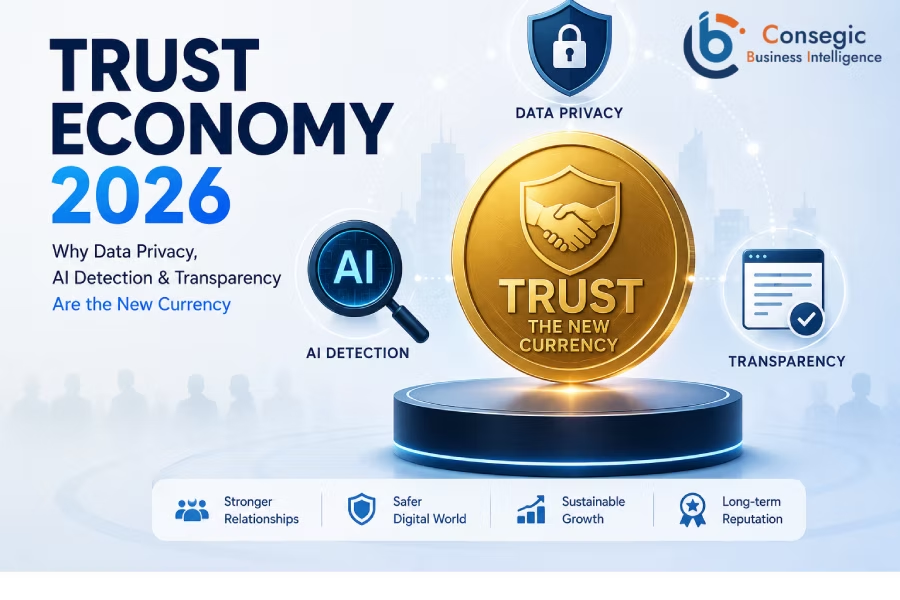
With these concerns on the rise in the digital era of 2026, the value of trust has skyrocketed! The companies that have proven their ability to build a sense of trust with its customers are the ones who are likely to gain in terms of customer base, reputation and the sales volume. And with the growing popularity of AI-powered services; in terms of responsible use, data privacy and transparency of the business, companies are the best bet to acquire greater consumer trust. Many of the digital experts and marketers have even started referring this scenario to the “Trust Economy”!
What do you mean by the Trust Economy?
The Trust Economy refers to a system where a business, agency, or any other entity attains its importance by establishing and sustaining a relationship of trust with not only its customers, but also its partners, employees and all the regulatory and government bodies. In this globalised economy and with an open access to plethora of information, the consumers of today are much well-informed and have too many choices to choose from. Thus, they become highly critical in choosing the business to associate with or transact.
The core elements of an organisation to acquire trust include: data safety, transparency of business deals, honest dealings with stakeholders, and responsible usage of technological and AI-driven services. Today, every consumer expects that their personal information and data is kept confidential and businesses serve the best interests in handling it. On the other hand, failure to maintain trust among its customers could lead to the downfall of a business in terms of brand value and market shares and a constant face-off with the regulatory bodies. Conversely, organizations built on trust and integrity lead to stronger client relations and a more sustained business.
Why Data Privacy Has Become a Business Priority
As technology advanced, the data gained importance like that of crude oil. Organizations of today collect, compile, process and analyse an enormous amount of data to offer better service and enhanced customer experiences. However, in due to lack of transparency regarding the usage and security of the accumulated data, data privacy has taken precedence as a serious concern for most consumers. People are aware of their rights and wish to have control over their digital footprint.
It is common these days that an individual wants detailed information about their data collection methods, its usage and the extent to which it has been shared with other individuals or businesses. In order to keep their image clean and satisfy the user-base, many companies have come to invest highly in improving their data protection and security systems such as encryption and other high security and encryption standards. All and all, the business world has begun considering the compliance with data regulations as an integral part of corporate governance. Such practices have proven instrumental in earning consumer faith and strengthening customer loyalty for long term.
The Growing Need for AI Detection
As technology and automation grew at an unprecedented rate, artificial intelligence and the AI-driven systems brought immense and unparalleled improvements to various business industries. However, at the same time, this led to the generation of sophisticated AI-generated content such as synthetic media, which has now created difficulties in distinguishing human made content and artificial content. It has also given rise to deepfakes, fake news campaigns that spread misinformation at an astonishing pace and so forth.
To mitigate the risks associated with false or fabricated digital content and data, AI detection techniques have become critically important and businesses now are investing considerably in AI detection tools. The government, educational institutes, and media organisations are now relying more heavily on AI detection systems to ensure authenticity and originality of digital data. The role that this will play in maintaining trust within digital channels is tremendous.
Transparency Is Becoming a Competitive Advantage
The era where businesses hide and hoard their operations and decisions in dark rooms and in sealed envelopes is long over. Today, individuals expect openness and transparency. Be it in terms of pricing strategies, data practices, technological usage or general business practices, openness and accountability are crucial. This greatly boosts customer relationships and significantly reduce uncertainties and foster a sense of reliability. As most of the businesses utilise artificial intelligence and AI-driven systems for their operations and client interactions, transparency needs to become a primary area of focus.
Users want to be acknowledged of how decisions are made by the AI tools and how this directly impacts them. Hence, the organisations that lead on the Transparency Index also enjoy better customer loyalty and brand reputation.
Evolving Consumer Trends
The factor of 'Trust' now play's an extremely important role in purchase decisions made by customers today. The current generation of consumer not only checks the products and services, but also looks upon the values and moral standing of the company behind it.
Consumers tend to support those companies that conduct their business with full transparency and have strong data management protocols. A negative reputation that stems from a data privacy breach or a deceptive practice can quickly be viral across the internet. To prevent this and ensure they don't fall out of favour with the consumers, companies are putting trust at the heart of their strategy.
Regulation to Build Trust
The authorities have started framing policies for protecting data and safeguarding online information and to also regulate the use of advanced technologies like Artificial Intelligence. Regulations provide standards that the businesses are required to meet with regarding the data protection and usage, privacy and security aspects of advanced technologies.
Compliance with these laws has become essential in building a reliable online environment, though it does warrant substantial financial investments. The use of technologies such as blockchain technology to manage transparent and tamper-proof digital records, sophisticated cyber security platforms and encrypted online channels will contribute towards stronger user trust.
Future Trends
Considering the pace of ongoing digital transformation, it is an established fact that trust will continue to evolve and play a significantly important role in future. Going forward, customers will prefer brands that maintain high standards regarding data privacy, ensure transparency in all of their dealings and utilise advanced technologies responsibly and transparently. Also, the use of Artificial Intelligence detection services is going to increase to prevent any fake or inappropriate content, ultimately strengthening user confidence. We have to brace ourselves for a future where trust could possibly be one of the most valuable assets of a business.