Jump to Content
Digital Remittance Market - Size, Share, Industry Trends, and Forecasts (2025-2032)
Digital Remittance Market Size:
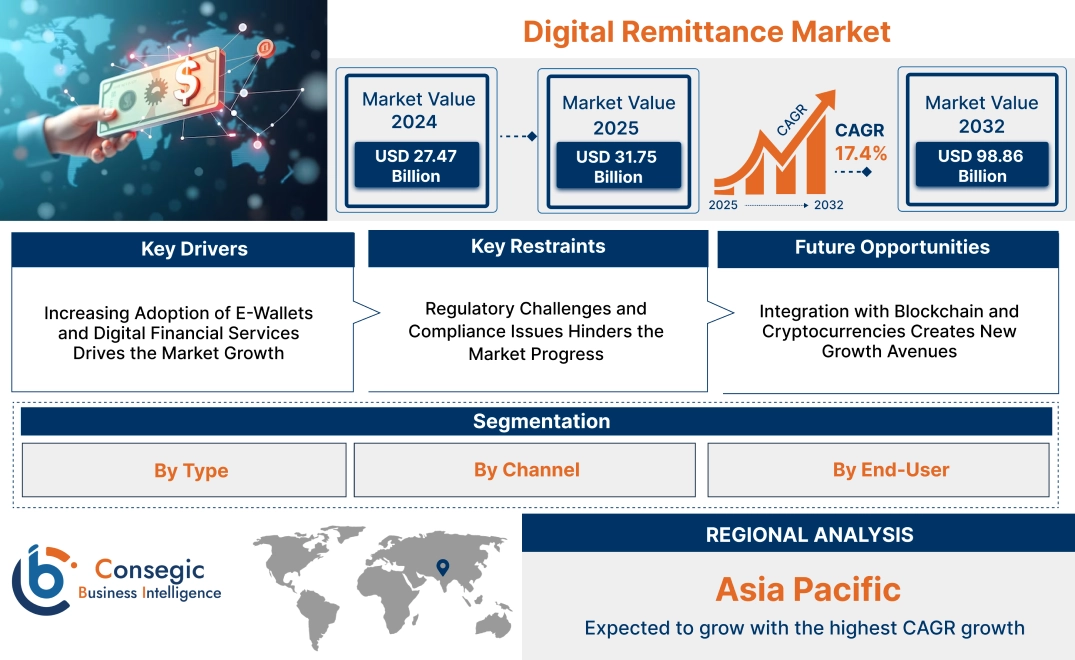
Digital Remittance Market size is estimated to reach over USD 98.86 Billion by 2032 from a value of USD 27.47 Billion in 2024 and is projected to grow by USD 31.75 Billion in 2025, growing at a CAGR of 17.4% from 2025 to 2032.
Digital Remittance Market Scope & Overview:
Digital remittance refers to the electronic transfer of money by individuals working abroad to recipients in their home countries. This process utilizes online platforms, mobile applications, and electronic payment gateways to facilitate fast, secure, and cost-effective cross-border money transfers. It is widely used by migrant workers, businesses, and individuals to send remittances globally.
These platforms are equipped with advanced features such as multi-currency support, real-time tracking, and low transaction fees to enhance user convenience. These remittance services integrate with banking networks and mobile wallets, ensuring seamless and secure transactions. They are designed to cater to diverse user needs, including one-time transfers, recurring payments, and business transactions.
End-users include individuals, small businesses, and enterprises seeking efficient and reliable solutions for international money transfers. Digital remittance systems play a crucial role in modernizing financial transactions and improving accessibility for users worldwide.
Digital Remittance Market Dynamics - (DRO) :
Key Drivers:
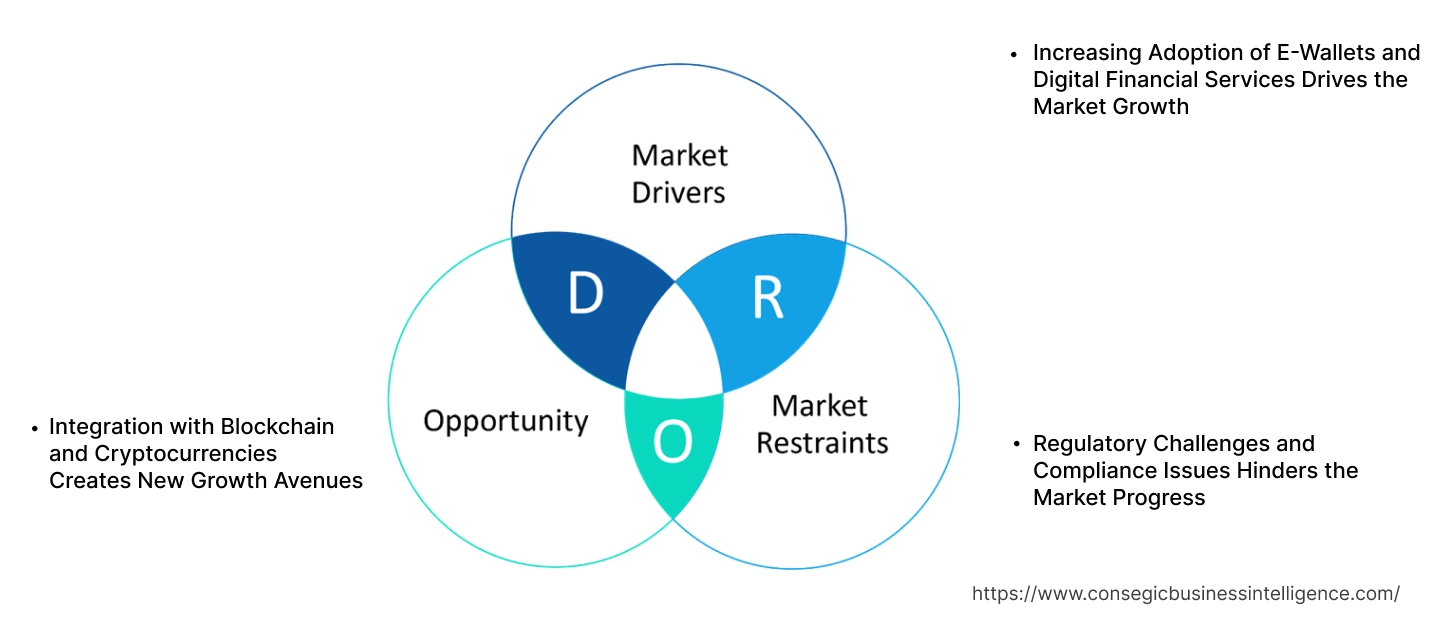
Increasing Adoption of E-Wallets and Digital Financial Services Drives the Market Growth
As consumers worldwide increasingly prefer cashless transactions and use digital wallets for day-to-day payments, integrating remittance services into these platforms allows for seamless fund transfers. E-wallets enable users to send and receive money quickly, without the need for traditional banking infrastructure, making them especially valuable in regions with a mobile-first user base or limited access to physical banks. This integration makes remittance services more accessible, reducing barriers to financial inclusion in developing economies. Moreover, digital wallets provide convenience, security, and real-time transaction tracking, enhancing the overall remittance experience. With the growth in number of consumers opting for mobile and digital financial solutions, the demand for digital remittance services is expected to continue rising, reaching broader markets and increasing the global adoption of cashless money transfers. Thus, the above factors are driving the digital remittance market growth.
Key Restraints:
Regulatory Challenges and Compliance Issues Hinders the Market Progress
Different countries have varying financial regulations, including strict anti-money laundering (AML) measures, know your customer (KYC) requirements, and reporting standards. Digital remittance services must adhere to these diverse regulations, which increases operational complexities and compliance costs. The need to implement region-specific procedures to prevent fraud, money laundering, and financial crimes delays service deployment and expansion, especially in regions with rigorous regulatory frameworks. These constraints also limit markets accessibility in emerging markets where regulatory environments are less developed but still require compliance with international standards. The complexity of maintaining compliance across multiple jurisdictions slows the adoption and scalability of these remittance services, restricting their ability to rapidly expand into new markets and increasing operational overhead for service providers. Therefore, the aforementioned factors hampers the digital remittance market demand.
Future Opportunities :
Integration with Blockchain and Cryptocurrencies Creates New Growth Avenues
The integration of blockchain technology and cryptocurrencies into the remittance services presents a transformative opportunity to enhance transaction efficiency. Blockchain allows for faster cross-border money transfers by eliminating intermediaries, reducing transaction processing times, and ensuring secure transactions. This results in significantly lower fees compared to traditional remittance methods, making it a more cost-effective option for consumers and businesses. Additionally, blockchain’s decentralized nature ensures greater transparency, as transactions are recorded on an immutable ledger, providing verifiable proof of transfer and reducing the risk of fraud. Cryptocurrencies, such as Bitcoin and Ethereum, enable remittances to bypass currency exchange processes, facilitating direct transfers across borders. As demand for faster, cheaper, and more secure money transfer options rises, blockchain-based solutions have the potential to revolutionize the digital remittance market expansion, offering consumers an efficient and reliable alternative to conventional remittance services.
Digital Remittance Market Segmental Analysis :
By Microbe Type:
Based on type, the market is segmented into inward digital remittance and outward digital remittance.
The inward digital remittance segment accounted for the largest revenue of the total digital remittance market share in 2024.
- Inward remittance services are widely utilized by developing countries, where individuals depend on funds sent by relatives or workers abroad.
- The segment benefits from the increasing adoption of digital channels, which offer faster and more secure money transfers compared to traditional methods.
- The convenience of real-time updates and seamless integration with mobile banking services supports the adoption of inward remittance platforms.
- As per digital remittance market analysis, the reliance on these remittance services is driven by trends toward enhancing financial inclusion and reducing transaction costs in emerging economies.
The outward digital remittance segment is projected to grow at the fastest CAGR during the forecast period.
- Outward remittance is primarily used by individuals and corporates for purposes such as education, business payments, and international investments.
- The increasing use of online and mobile platforms for outward remittance reflects a shift toward digitalization in global financial transactions.
- The segment benefits from competitive exchange rates and low service fees offered by digital remittance platforms, making them preferable to traditional banking channels.
- Thus, cross-border collaborations and partnerships between remittance providers and financial institutions enhance the efficiency and transparency of outward remittance processes, contributing to the digital remittance market growth.
By Channel:
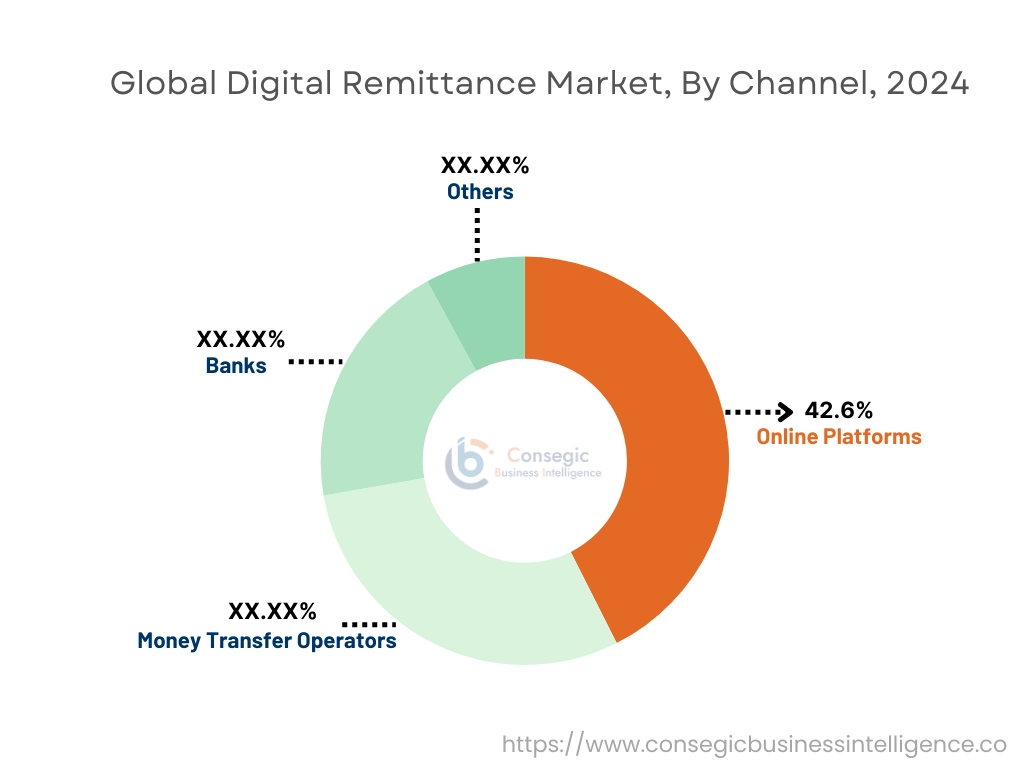
Based on channel, the market is segmented into banks, money transfer operators, online platforms, and others.
The online platforms segment accounted for the largest revenue of 42.6% of the total digital remittance market share in 2024.
- Online platforms provide users with the convenience of transferring funds through digital interfaces, ensuring faster processing and reduced manual intervention.
- These platforms are integrated with advanced features such as real-time tracking, automated notifications, and multi-currency support, enhancing user experience.
- The segment benefits from the rising penetration of smartphones and the internet, particularly in developing regions, where access to traditional banking services is limited.
- As per digital remittance market trends, the adoption of AI-powered tools in online platforms has improved security measures and fraud detection capabilities, further boosting their popularity.
The money transfer operators segment is projected to grow at the fastest CAGR during the forecast period.
- Money transfer operators, such as Western Union and MoneyGram, play a significant role in enabling cross-border payments for unbanked and underbanked populations.
- These operators have expanded their digital capabilities to include mobile apps and online portals, allowing users to initiate transactions remotely.
- The ability to facilitate transfers in both digital and cash formats makes them a preferred choice for diverse customer groups.
- Their strategic partnerships with banks and retail outlets ensure wide accessibility and reliable service delivery across multiple regions, creating substantial digital remittance market opportunities.
By End-User:
Based on end-user, the market is segmented into individual, small businesses, and corporates.
The individual segment accounted for the largest revenue share in 2024.
- Individual users extensively rely on digital remittance services for sending money to family members, covering education expenses, or supporting personal investments abroad.
- The segment benefits from competitive pricing, real-time tracking, and simplified processes offered by digital platforms, making them an attractive alternative to traditional methods.
- The increasing focus on financial inclusion has led to the development of user-friendly mobile applications designed to cater to individual remittance needs.
- As per digital remittance market analysis, individuals seeking cost-effective and transparent remittance solutions contribute significantly to the market's expansion.
The small businesses segment is projected to grow at the fastest CAGR during the forecast period.
- Small businesses utilize digital remittance platforms for international payments, supplier transactions, and employee payroll management in cross-border operations.
- These platforms offer SMEs the advantage of lower transaction fees, faster settlement times, and multi-currency support, enhancing their operational efficiency.
- The integration of these remittance solutions with accounting and financial management tools enables small businesses to streamline payment processes and maintain accurate records.
- As digitalization trends accelerate, small businesses are increasingly adopting these remittance platforms to expand their international operations and improve cost management, fueling the digital remittance market demand.
Regional Analysis:
The regions covered are North America, Europe, Asia Pacific, the Middle East and Africa, and Latin America.
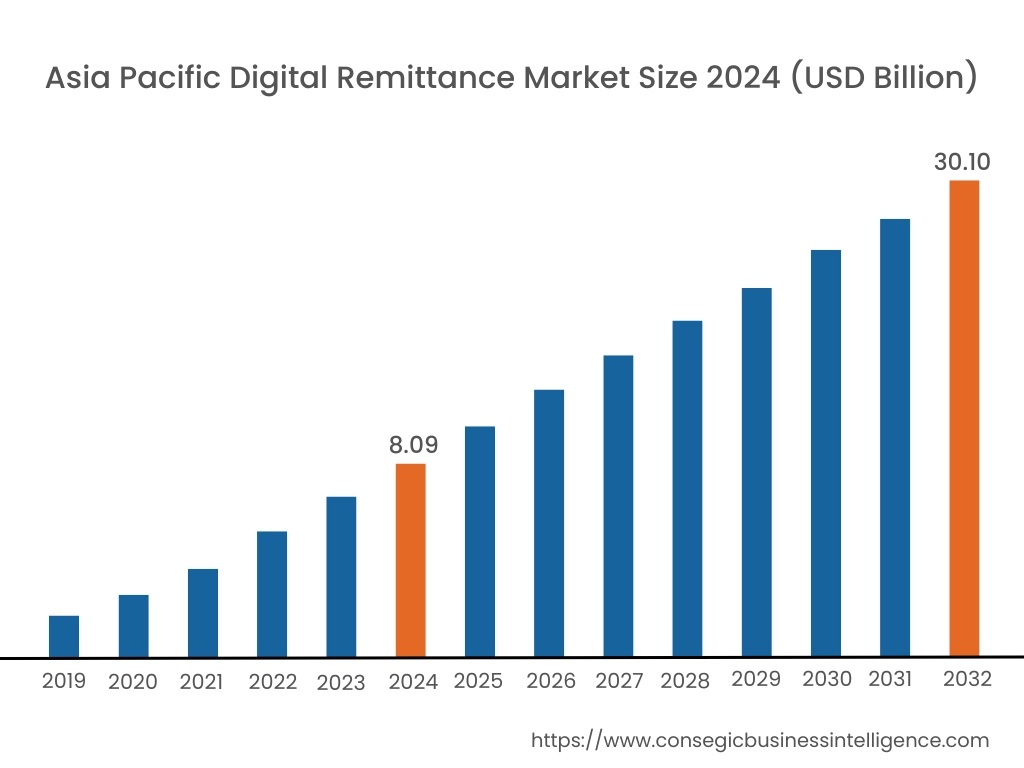
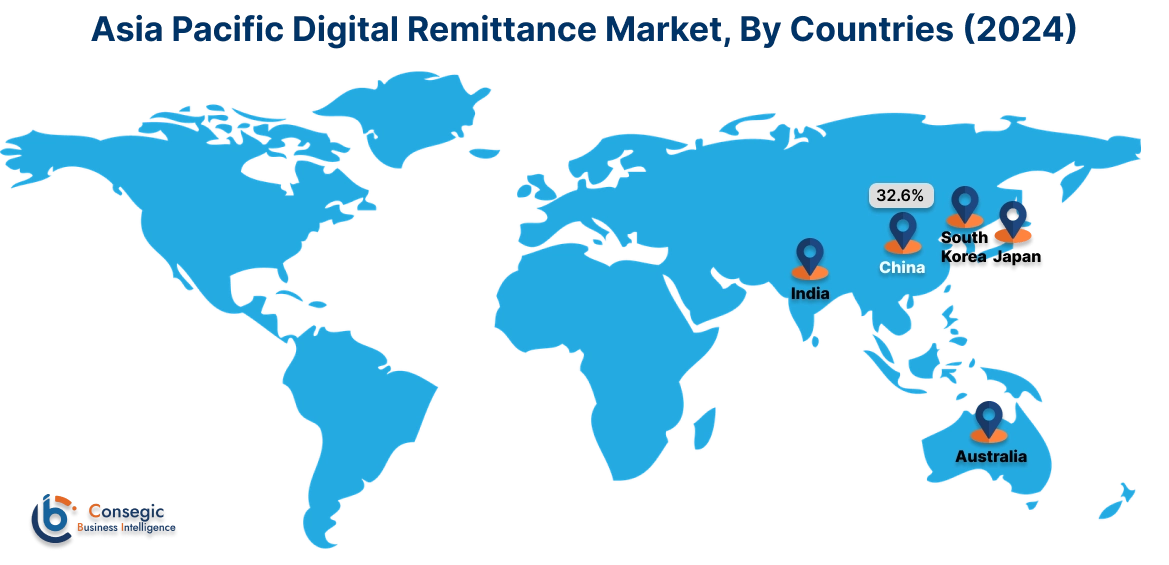
Asia Pacific region was valued at USD 8.09 Billion in 2024. Moreover, it is projected to grow by USD 9.38 Billion in 2025 and reach over USD 30.10 Billion by 2032. Out of this, China accounted for the maximum revenue share of 32.6%. The Asia-Pacific region is witnessing rapid advancements in the digital remittance market, attributed to a large expatriate population and growth in smartphone penetration. A prominent trend is the collaboration between remittance providers and local financial institutions to facilitate seamless fund transfers. Analysis indicates that government support for digital financial services and the rising demand for cost-effective remittance options are contributing to digital remittance market expansion in this region.
North America is estimated to reach over USD 32.04 Billion by 2032 from a value of USD 9.11 Billion in 2024 and is projected to grow by USD 10.51 Billion in 2025. This region holds a prominent share in the digital remittance industry, driven by a substantial migrant population and the growth in adoption of digital financial services. A notable trend is the increasing preference for mobile-based remittance platforms, offering convenience and real-time transaction capabilities. The digital remittance market trends indicate that the presence of established financial institutions and fintech startups contributes to a competitive market landscape in North America.
European countries are pivotal in the digital remittance market, emphasizing regulatory compliance and financial transparency. A significant trend is the integration of digital remittance services with traditional banking systems, enhancing user trust and expanding service accessibility. Analysis suggests that initiatives promoting financial inclusion and cross-border payment efficiency are driving the adoption of these remittance solutions in this region.
In the Middle East and Africa, the digital remittance market is influenced by the need to provide secure and efficient money transfer services to a diverse migrant workforce. The focus is on leveraging mobile money platforms to reach unbanked populations and enhance financial inclusion. Analysis suggests that partnerships with telecom operators and the expansion of agent networks are pivotal strategies in these regions.
Latin American countries are increasingly recognizing the benefits of digital remittance services in reducing transaction costs and improving transfer speeds. A notable trend is the adoption of blockchain technology to enhance transparency and security in remittance transactions. Analysis indicates that economic factors and the pursuit of innovative financial solutions are key drivers influencing the digital remittance market opportunities in this region.
Top Key Players and Market Share Insights:
The Digital Remittance market is highly competitive with major players providing products and services to the national and international markets. Key players are adopting several strategies in research and development (R&D), product innovation, and end-user launches to hold a strong position in the global Digital Remittance market. Key players in the Digital Remittance industry include -
- InstaReM (Singapore)
- Flywire (USA)
- MoneyGram International, Inc. (USA)
- PayPal Holdings, Inc. (USA)
- Digital Wallet Corporation (Japan)
- Western Union (USA)
- SingX Pte Ltd. (Singapore)
- WorldRemit Ltd. (UK)
- Remitly, Inc. (USA)
- Wise (formerly TransferWise) Ltd. (UK)
Recent Industry Developments :
Partnerships & Collaborations:
- In December 2024, Ria Money Transfer partnered with Tenpay Global, enabling digital remittances to Weixin Pay wallets and linked bank accounts in China. This collaboration expands cross-border payment options, offering secure and convenient money transfers. With China receiving $50B in remittances in 2023, this partnership enhances Ria’s global reach to 3.1B mobile wallets. Recipients can spend flexibly via transfers, top-ups, and shopping, backed by Ria’s 595,000+ physical locations in nearly 200 countries.
- In October 2024, Peru’s Yape Super App teamed up with TerraPay to streamline digital remittances for 16 Billion users, promoting financial inclusion. This collaboration allows international transfers directly into Yape wallets, benefiting Peru’s large unbanked population.
- In April 2024, MoneyGram and Tencent Financial Technology partnered to enable direct digital remittances to Weixin Pay wallets in China. This collaboration enhances cross-border money transfers, catering to China’s $51 billion remittance market. With over 150 Billion users served globally, MoneyGram strengthens its digital presence in 150+ countries. Tencent’s Tenpay Global supports remittances via 40+ partners in 60+ countries, ensuring a fast, easy, and reliable transfer experience.
Acquisitions & Mergers:
In December 2024, International Money Express, Inc. (Intermex) acquired Amigo Paisano’s assets and operations, strengthening its digital remittance services across the U.S., Europe, and Latin America. This move enhances Intermex’s presence in Central America and reinforces its long-term partnership with Amigo Paisano.
Digital Remittance Market Report Insights :
| Report Attributes | Report Details |
| Study Timeline | 2019-2032 |
| Market Size in 2032 | USD 98.86 Billion |
| CAGR (2025-2032) | 17.4% |
| By Type |
|
| By Channel |
|
| By End-User |
|
| By Region |
|
| Key Players |
|
| North America | U.S. Canada Mexico |
| Europe | U.K. Germany France Spain Italy Russia Benelux Rest of Europe |
| APAC | China South Korea Japan India Australia ASEAN Rest of Asia-Pacific |
| Middle East and Africa | GCC Turkey South Africa Rest of MEA |
| LATAM | Brazil Argentina Chile Rest of LATAM |
| Report Coverage |
|
Key Questions Answered in the Report
What is the size of the Digital Remittance Market? −
The Digital Remittance Market size is estimated to reach over USD 98.86 Billion by 2032 from a value of USD 27.47 Billion in 2024 and is projected to grow by USD 31.75 Billion in 2025, growing at a CAGR of 17.4% from 2025 to 2032.
What are the key segments in the Digital Remittance Market? +
The market is segmented by type (inward digital remittance, outward digital remittance), channel (banks, money transfer operators, online platforms, others), and end-user (individual, small businesses, corporates).
Which segment is expected to grow the fastest in the Digital Remittance Market? +
The outward digital remittance segment is projected to grow at the fastest CAGR during the forecast period, driven by increasing use of online and mobile platforms for global payments.
Who are the major players in the Digital Remittance Market? +
Key players in the Digital Remittance Market include InstaReM (Singapore), Flywire (USA), Western Union (USA), SingX Pte Ltd. (Singapore), WorldRemit Ltd. (UK), Remitly, Inc. (USA), Wise (formerly TransferWise) Ltd. (UK), MoneyGram International, Inc. (USA), PayPal Holdings, Inc. (USA), Digital Wallet Corporation (Japan).
Overview
Reputation & Certifications


Our Services
- Market Intelligence & Forecasting
- Custom Research Solutions
- Market Entry Strategy
- Competitive Intelligence
- Customer Insights
- Industry Innovation Analysis
- Investment Advisory