Jump to Content
Fixed Series Compensation Market - Size, Share, Industry Trends, and Forecasts (2025-2032)
Fixed Series Compensation Market Size:
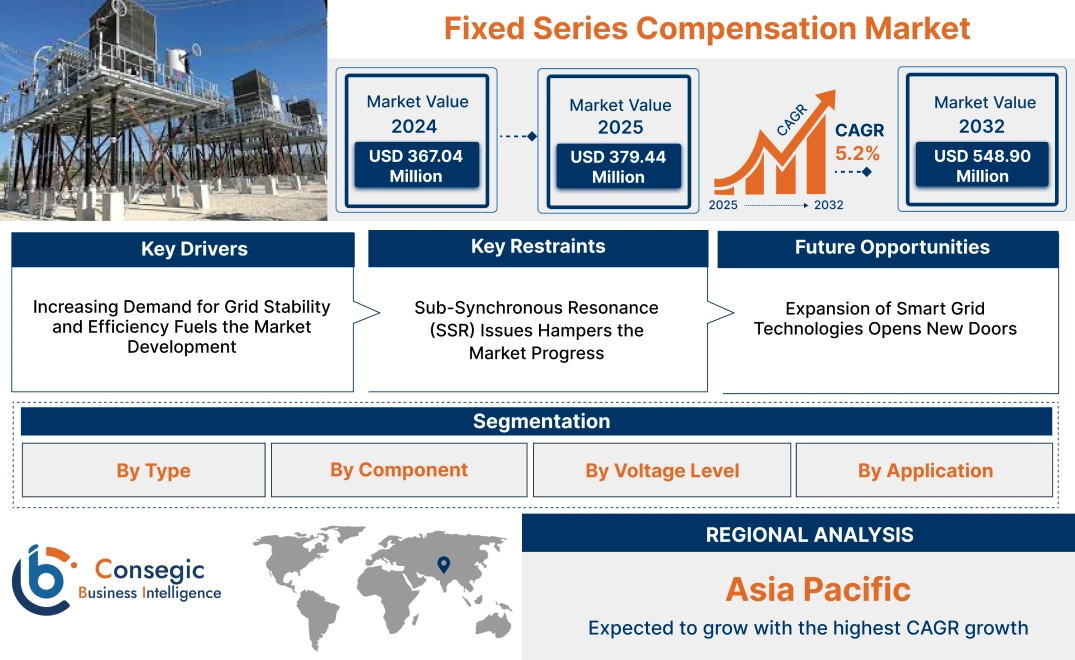
Fixed Series Compensation Market size is estimated to reach over USD 548.90 Million by 2032 from a value of USD 367.04 Million in 2024 and is projected to grow by USD 379.44 Million in 2025, growing at a CAGR of 5.2% from 2025 to 2032.
Fixed Series Compensation Market Scope & Overview:
Fixed series compensation is a power system solution implemented in high-voltage transmission networks to enhance power transfer efficiency and grid stability. By inserting series capacitors into transmission lines, this technology reduces line impedance, allowing for increased power flow and improved voltage regulation across the network. It is widely used in long-distance and high-capacity power transmission systems to optimize performance and minimize energy losses.
The system consists of key components such as capacitors, bypass switches, and protection mechanisms designed to ensure safe and continuous operation. These components are engineered for high reliability and durability, enabling effective management of reactive power and improving overall grid performance. Advanced monitoring and control systems are often integrated to ensure precise functionality under various load conditions.
End-users include utility providers and transmission system operators that require efficient grid management solutions for stable and secure power delivery. This technology plays a crucial role in enhancing the operational reliability of power transmission infrastructure.
Fixed Series Compensation Market Dynamics - (DRO) :
Key Drivers:
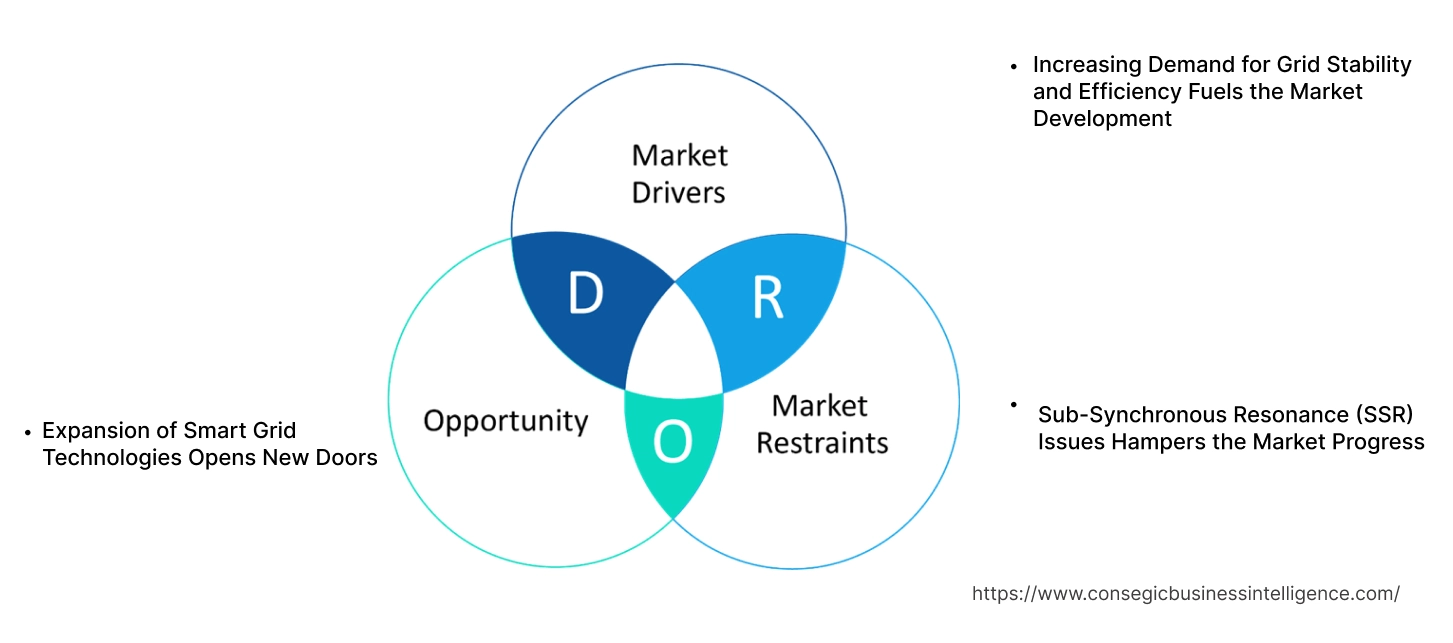
Increasing Demand for Grid Stability and Efficiency Fuels the Market Development
The increasing demand for grid stability and efficiency is a significant driver for the adoption of series compensation solutions in power transmission networks. As the global need for electricity rises, maintaining stable and efficient power flow becomes crucial, particularly in long-distance and high-voltage transmission systems. Series compensation helps improve voltage regulation by adjusting the reactive power flow, which enhances the overall stability of the grid. It also reduces line losses by minimizing the impedance of transmission lines, thereby improving the efficiency of power delivery over extended distances. These benefits are especially important in regions with vast transmission networks or those integrating renewable energy sources, which often face challenges like voltage fluctuations and power intermittency. By ensuring more reliable and efficient power distribution, series compensation solutions play a vital role in modernizing power infrastructure and meeting growing energy needs while minimizing losses and improving operational performance. Thus, the aforementioned factors are driving the fixed series compensation market growth.
Key Restraints:
Sub-Synchronous Resonance (SSR) Issues Hampers the Market Progress
Sub-synchronous resonance (SSR) is a significant restraint in the use of series compensation systems in power transmission. SSR occurs when a series-compensated line produces resonance at frequencies lower than the typical power frequencies, which leads to undesirable vibrations. This resonance causes mechanical stress on components, particularly high torsional stress on the rotor shaft of turbines or generators. Over time, this stress results in damage or failure of critical machinery, leading to costly repairs, system downtime, and potential safety hazards. Managing SSR requires the careful design and implementation of protection mechanisms, such as damping systems or specialized controllers, which adds complexity and cost to the deployment of series compensation solutions. As a result, the risk of SSR limit the adoption and efficiency of these systems in certain industry applications, particularly in high-stakes power generation and transmission environments, hindering the fixed series compensation market demand.
Future Opportunities :
Expansion of Smart Grid Technologies Opens New Doors
The enlargement of smart grid technologies presents a significant opportunity for series compensation systems, as these grids require advanced mechanisms for real-time control, monitoring, and optimization of power distribution. Series compensation systems play a vital role in enhancing the efficiency of power transmission by improving voltage stability, reducing transmission losses, and ensuring better load management. In smart grids, which rely on digital technologies to manage energy flow and respond to fluctuating demand, series compensation optimize power delivery, prevent overloads, and maintain system stability. These systems help smart grids accommodate the integration of renewable energy sources by stabilizing voltage and controlling reactive power. With the increasing adoption of smart grid technologies, the requirement for solutions like series compensation to improve grid reliability, efficiency, and sustainability is expected to grow, driving wider deployment in modern energy networks. This integration fosters smarter, more efficient, and resilient power distribution systems, creating significant fixed series compensation market opportunities.
Fixed Series Compensation Market Segmental Analysis :
By Type:
Based on type, the market is segmented into conventional series compensation and thyristor-controlled series compensation.
The conventional series compensation segment accounted for the largest revenue of the total fixed series compensation market share in 2024.
- Conventional series compensation systems are widely used due to their simplicity, cost-effectiveness, and established infrastructure.
- These systems enhance the power transfer capacity and stabilize long-distance transmission lines, making them ideal for utility applications.
- The lower installation and maintenance costs associated with conventional systems drive their adoption across developing regions.
- As per the fixed series compensation market analysis, increased need for reliable and efficient power transmission in industrial and commercial sectors further supports this segment's growth.
The thyristor-controlled series compensation segment is expected to register the fastest CAGR during the forecast period.
- The rising need for flexible and dynamic power flow control in transmission networks fuels the need for thyristor-controlled systems.
- These systems offer enhanced voltage stability and fault tolerance, making them suitable for high-voltage and complex grid operations.
- Integration with smart grid technologies and renewable energy systems contributes to the growing adoption of this segment.
- As per the fixed series compensation market trends, the ability to improve grid performance and prevent overloads under varying demand conditions drives market expansion.
By Component:
Based on component, the market is segmented into capacitors, reactors, protection & control systems, metal oxide varistors, and others.
The capacitors segment held the largest revenue of the total fixed series compensation market share in 2024.
- Capacitors are essential components in fixed series compensation systems for voltage regulation and reactive power compensation.
- Their capability to improve the stability and efficiency of transmission lines makes them widely adopted across power grids.
- Advancements in capacitor technology have led to higher durability and performance, supporting their dominant market position.
- As per the market trends, growing investments in grid modernization and expansion projects globally drive the need for capacitors in compensation systems, contributing to the fixed series compensation market expansion.
The protection & control systems segment is projected to grow at the fastest CAGR during the forecast period.
- The increasing need for grid reliability and safety measures enhances the requirement for advanced protection and control solutions.
- These systems provide real-time monitoring and fault detection, ensuring stable operation and quick response to disruptions.
- Integration with digital technologies and automation further accelerates the growth of this segment.
- Thus, utilities and industrial sectors are adopting these systems to prevent outages and minimize operational risks, fueling fixed series compensation market growth.
By Application:
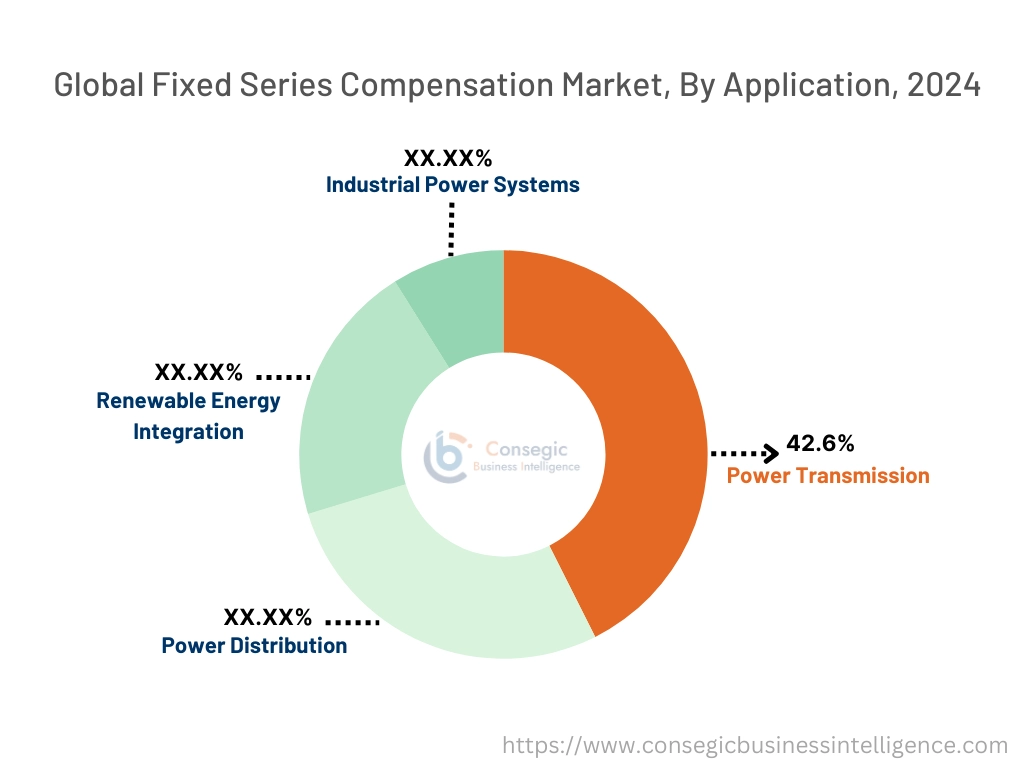
Based on application, the market is segmented into power transmission, power distribution, renewable energy integration, and industrial power systems.
The power transmission segment accounted for the largest revenue of 42.6% share in 2024.
- Fixed series compensation systems play a critical role in enhancing the capacity and stability of power transmission lines.
- Increasing need for efficient electricity transmission over long distances drives the adoption of compensation systems in transmission networks.
- Investments in upgrading aging transmission infrastructure in developed economies contribute to the segment's dominance.
- Growing industrialization and urbanization in emerging markets increase the need for robust transmission systems, supporting the fixed series compensation market demand.
The renewable energy integration segment is projected to grow at the fastest CAGR during the forecast period.
- The global shift towards sustainable energy sources accelerates the deployment of compensation systems for renewable grid integration.
- Compensation systems stabilize voltage fluctuations and manage intermittent power supply from renewable sources.
- Government policies promoting renewable energy adoption and grid modernization further drive the segment’s growth.
- As per the market trends, technological innovations in grid systems and increased investment in clean energy projects enhance the adoption of compensation solutions, boosting fixed series compensation market opportunities.
Regional Analysis:
The regions covered are North America, Europe, Asia Pacific, the Middle East and Africa, and Latin America.
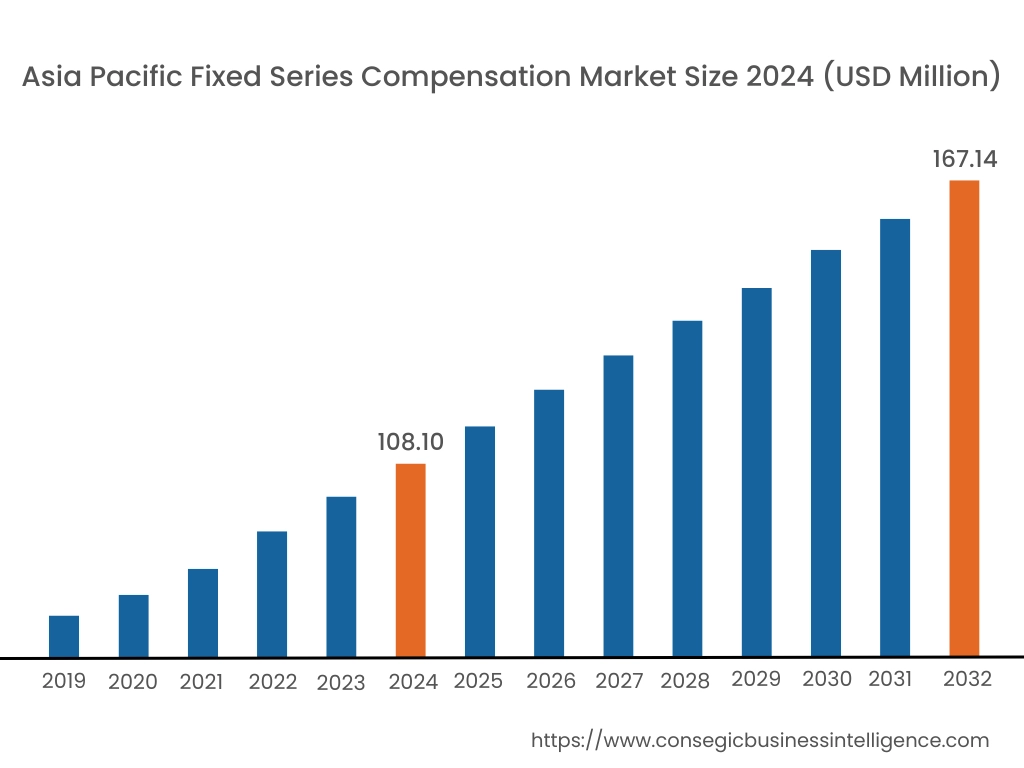
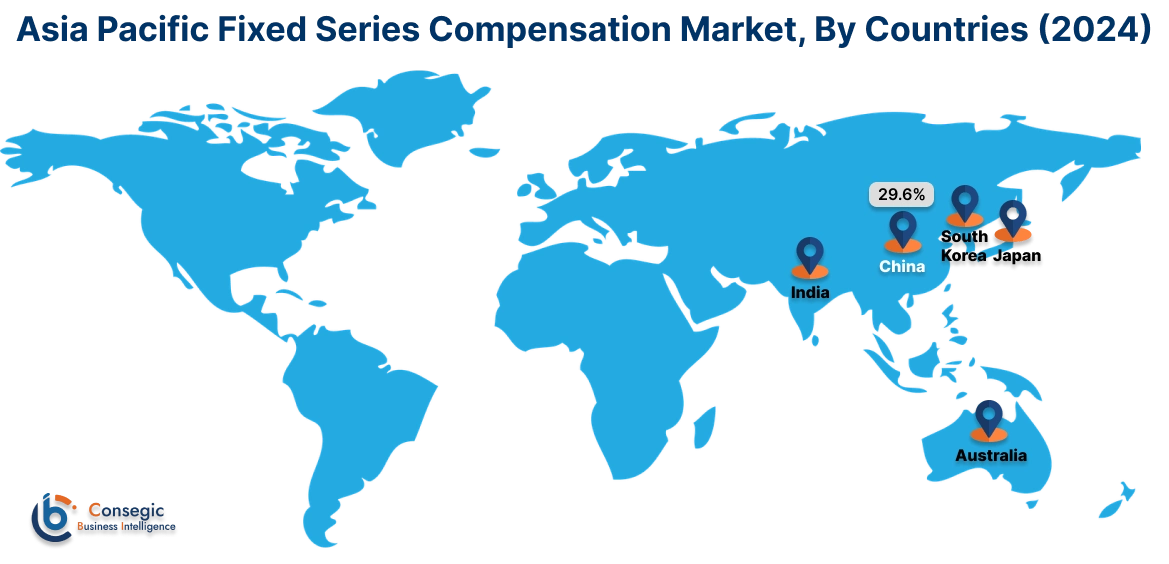
Asia Pacific region was valued at USD 108.10 Million in 2024. Moreover, it is projected to grow by USD 112.06 Million in 2025 and reach over USD 167.14 Million by 2032. Out of this, China accounted for the maximum revenue share of 29.6%. The Asia-Pacific region is witnessing rapid advancements in the FSC market, attributed to the enlargement of power infrastructure to meet the growing energy needs of industrial and residential sectors. A prominent trend is the deployment of FSC systems to improve the capacity and stability of long-distance high-voltage transmission lines. Analysis indicates that government initiatives focusing on rural electrification and the development of smart grid networks are contributing to the fixed series compensation market expansion in this region.
North America is estimated to reach over USD 177.90 Million by 2032 from a value of USD 121.75 Million in 2024 and is projected to grow by USD 125.62 Million in 2025. This region holds a significant portion of the FSC market, driven by the increasing electricity requirement and the presence of prominent market players. A notable trend is the modernization of aging power infrastructure to enhance grid reliability and efficiency. Analysis indicates that the focus on integrating renewable energy sources and the need for efficient power transmission are propelling the adoption of fixed series compensation solutions in North America.
European countries are key players in the FSC market, with a strong emphasis on sustainable energy practices and grid optimization. A significant trend is the implementation of advanced compensation technologies to support the integration of renewable energy into the grid. Analysis suggests that regulatory policies promoting energy efficiency and the transition towards a low-carbon economy are driving the need for FSC systems in this region.
In the Middle East and Africa, the FSC market is influenced by efforts to enhance power transmission efficiency and support economic development. The focus is on implementing FSC solutions to address challenges related to long-distance power transmission and to facilitate the integration of diverse energy sources. Analysis suggests that investments in infrastructure projects and the need to improve grid reliability are pivotal in shaping the market landscape in these regions.
Latin American countries are increasingly recognizing the importance of FSC systems in improving the efficiency and reliability of their power grids. A notable trend is the adoption of compensation technologies to support the integration of renewable energy projects and to enhance the performance of existing transmission networks. Analysis indicates that economic development and the extension of industrial activities are key factors influencing the need for FSC solutions in this region.
Top Key Players and Market Share Insights:
The fixed series compensation market is highly competitive with major players providing products and services to the national and international markets. Key players are adopting several strategies in research and development (R&D), product innovation, and end-user launches to hold a strong position in the global fixed series compensation market. Key players in the fixed series compensation industry include -
- General Electric Grid Solutions (USA)
- Hitachi Energy Ltd (Switzerland)
- Hyosung Corporation (South Korea)
- ABB Ability™ (Switzerland)
- NR Electric Co., Ltd. (China)
- Rongxin Power Electronic Co. (China)
- Siemens Energy (Germany)
- Mitsubishi Electric Power Products, Inc. (USA)
- Infineon Technologies AG (Germany)
- L&T Electrical & Automation (India)
Fixed Series Compensation Market Report Insights :
| Report Attributes | Report Details |
| Study Timeline | 2019-2032 |
| Market Size in 2032 | USD 548.90 Million |
| CAGR (2025-2032) | 5.2% |
| By Type |
|
| By Component |
|
| By Voltage Level |
|
| By Application |
|
| By Region |
|
| Key Players |
|
| North America | U.S. Canada Mexico |
| Europe | U.K. Germany France Spain Italy Russia Benelux Rest of Europe |
| APAC | China South Korea Japan India Australia ASEAN Rest of Asia-Pacific |
| Middle East and Africa | GCC Turkey South Africa Rest of MEA |
| LATAM | Brazil Argentina Chile Rest of LATAM |
| Report Coverage |
|
Key Questions Answered in the Report
What is the size of the Fixed Series Compensation Market? −
The Fixed Series Compensation Market size is estimated to reach over USD 548.90 Million by 2032 from a value of USD 367.04 Million in 2024 and is projected to grow by USD 379.44 Million in 2025, growing at a CAGR of 5.2% from 2025 to 2032.
What are the key segments in the Fixed Series Compensation Market? +
The market is segmented by type (conventional series compensation, thyristor-controlled series compensation), component (capacitors, reactors, protection & control systems, metal oxide varistors, others), voltage level (low voltage, medium voltage, high voltage), and application (power transmission, power distribution, renewable energy integration, industrial power systems).
Which segment is expected to grow the fastest in the Fixed Series Compensation Market? +
The thyristor-controlled series compensation segment is expected to grow at the fastest CAGR during the forecast period due to the increasing need for flexible and dynamic power flow control in complex grid operations.
Who are the major players in the Fixed Series Compensation Market? +
Key players in the Fixed Series Compensation market include General Electric Grid Solutions (USA), Hitachi Energy Ltd (Switzerland), Rongxin Power Electronic Co. (China), Siemens Energy (Germany), Mitsubishi Electric Power Products, Inc. (USA), Infineon Technologies AG (Germany), L&T Electrical & Automation (India), Hyosung Corporation (South Korea), ABB Ability™ (Switzerland), NR Electric Co., Ltd. (China).
Overview
Reputation & Certifications


Our Services
- Market Intelligence & Forecasting
- Custom Research Solutions
- Market Entry Strategy
- Competitive Intelligence
- Customer Insights
- Industry Innovation Analysis
- Investment Advisory