Jump to Content
Intent-Based Networking Market Size & Industry Share - Growth Trends & Forecasts (2026 - 2034)
Intent-based Networking Market Size:
The Intent-based Networking Market is expected to expand from 3,085.66 (US$M) in 2025 to 3,758.33 (US$M) in 2026, and is forecast to surpass 18,204.28 (US$M) by 2034, growing at a CAGR of 21.8% between 2026 and 2034, according to a recent report from Consegic Business Intelligence.
Intent-based Networking Market Scope & Overview:
Intent-Based Networking (IBN) is a network management approach that focuses on the desired outcomes or intentions of network administrators rather than the specific configurations or commands. This approach allows network administrators to establish high-level policies that outline desired performance, security, and compliance objectives. IBN systems then automatically translate these policies into actionable network configurations. This automation minimizes manual intervention, reduces the potential for human error, and ensures that the network continuously aligns with the defined goals. Additionally, IBN integrates real-time analytics to monitor network performance and adapt to changing conditions, thereby enhancing operational efficiency and effectiveness. By abstracting the complexity of network management, IBN simplifies the process and supports more strategic network oversight. The aforementioned features of intent-based networking are major determinants for increasing their deployment in BFSI, defense, healthcare, and other industries.
Intent-based Networking Market Insights:

Intent-based Networking Market Dynamics - (DRO) :
Key Drivers:
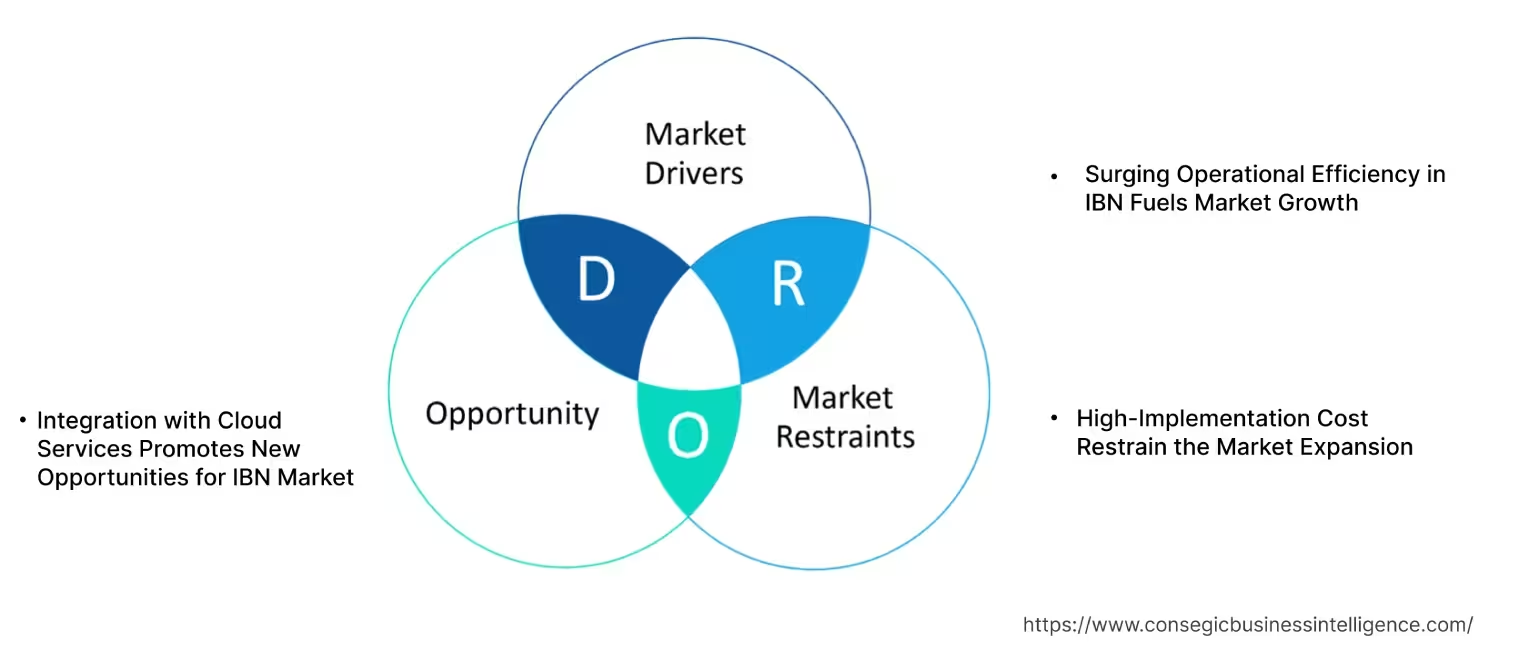
Surging Operational Efficiency in IBN Fuels Market Growth
Operational efficiency refers to the ability of a business to deliver products or services in the most improved manner while maintaining high quality. It involves optimizing resources, streamlining processes, and reducing waste to maximize productivity and profitability. In IBN operational efficiency is achieved by automating network management tasks, improving network reliability, and reducing the time and effort required for network maintenance and troubleshooting. Additionally, IBN automates the process of translating high-level policies into specific network configurations. This eliminates the need for manual, detailed configuration of each network component inconsistencies.
- In May 2021, Juniper Networks introduced the Juniper Apstra 4.0, an intent-based networking platform for data center automation. It automates the setup of the data center network, identifies the needs of the customer, and optimizes the operations catering to the need.
Therefore, by streamlining network management and improving the network, operational efficiency is boosting the global intent-based networking market growth.
Key Restraints :
High-Implementation Cost Restrain the Market Expansion
Implementing intent-based networking involves substantial initial costs, including purchasing new hardware, and software licenses, and potentially investing in new infrastructure. This can be a major hurdle for organizations, especially small to medium-sized enterprises with limited budgets. Additionally, beyond the technology itself, there are additional costs associated with training staff to manage and operate IBN systems effectively. Moreover, many organizations operate under tight budget constraints, making it difficult to justify the significant investment required for IBN implementation, especially when immediate benefits may not be apparent.
- In November 2021, Arista Networks highlighted that the cost of deploying its EOS (Extensible Operating System) with advanced intent-based networking features can be a challenge for organizations, particularly those with existing legacy systems that require costly integration.
Hence, the high implementation cost is hindering the intent-based networking market demand.
Future Opportunities :
Integration with Cloud Services Promotes New Opportunities for IBN Market
Cloud adoption continues to rise, and integrating IBN with cloud platforms presents prospects for enhanced scalability and flexibility. IBN solutions that seamlessly work with multi-cloud environments can offer more dynamic and cost-efficient network management. Integrating IBN with cloud platforms enables dynamic scaling of network resources in response to changing demands. Cloud environments offer the flexibility to scale resources up or down based on real-time needs, which can be seamlessly managed through IBN systems. Additionally, they enable efficient use of resources through virtualization and automation. Integrating IBN with cloud services helps optimize network resource allocation, leading to cost savings on both hardware and operational expenses.
- In September 2023, Dell Technologies released the APEX Cloud Platform for Microsoft Azure with enhanced intent-based networking. This integration supports dynamic network provisioning and management, offering cost-efficient solutions for hybrid cloud environments.
Consequently, cloud services provide enhanced network scalability, flexibility, and cost-efficiency, propelling the intent-based networking market opportunities.
Intent-based Networking Market Segmental Analysis :
By Component:
Based on component the market is trifurcated into hardware, software, and service.
Trends in the component:
- IBN software solutions are increasingly integrating with Software-Defined Networking (SDN) frameworks to provide more flexible and programmable network management. This integration enables dynamic policy enforcement and network configuration based on intent-driven directives.
- There is a growing need for managed services that include IBN solutions. Managed service providers (MSPs) are offering comprehensive IBN services, including network design, implementation, and ongoing management, to help organizations streamline their network operations.
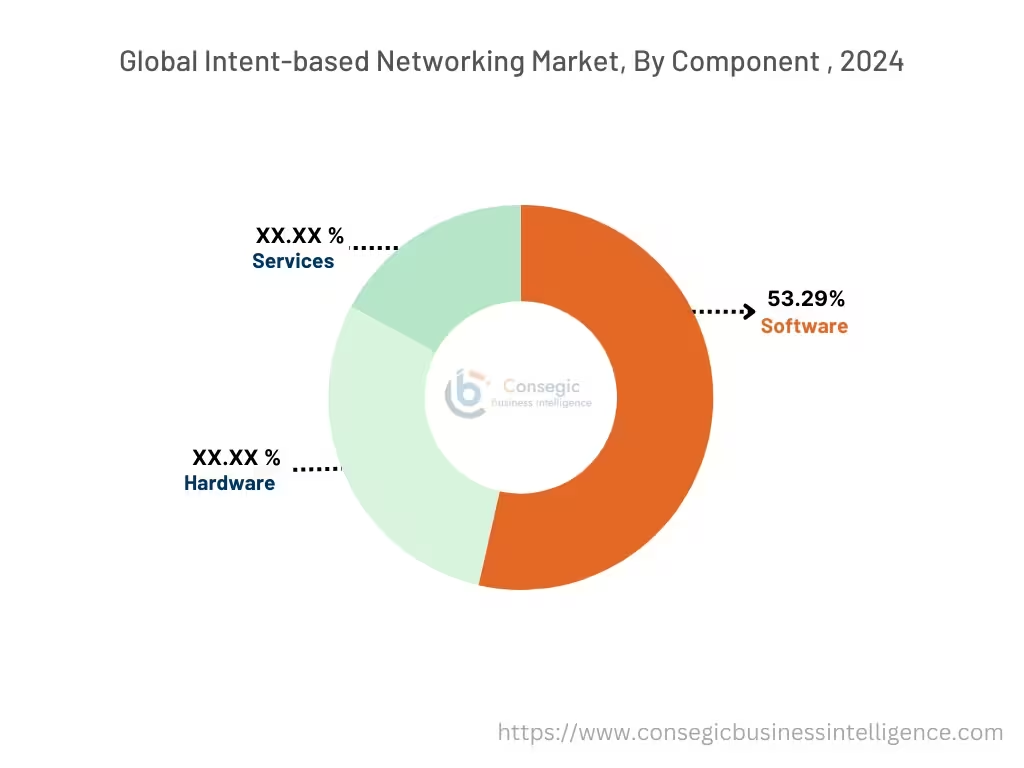
The software component segment accounted for the largest revenue share of 53.29% in the year 2024 and is anticipated to register the fastest CAGR during the forecast period.
- Software-based solutions offer a high degree of flexibility and advanced features, enabling dynamic and automated network management, which is central to the concept of intent-based networking.
- Software solutions are better positioned to integrate with emerging technologies such as artificial intelligence (AI) and machine learning.
- These integrations enhance the capabilities of IBN systems by providing real-time analytics, automated decision-making, and advanced network insights.
- In February 2024, VMware unveiled VMware NSX-T Data Center 3.2.3.2, which includes enhanced intent-based networking capabilities. The update features improved network automation, security, and multi-cloud management.
- Hence, as per the analysis, the increasing demand for network automation is driving the software-based intent-based networking market growth.
By Type:
Based on deployment type the market is trifurcated into on-premises, cloud-based, and hybrid.
Trends in the Type:
- Cloud-based deployments are gaining traction due to their scalability and flexibility. Organizations can easily scale their network resources up or down based on demand, without the need for substantial hardware investments.
- Hybrid solutions enable seamless integration between on-premises infrastructure and cloud services, allowing for a more adaptable and responsive network environment.
The cloud-based deployment type accounted for the largest revenue share in the year 2024 and is anticipated to register the fastest CAGR during the forecast period.
- Cloud-based deployments offer the ability to scale network resources up or down based on demand, providing a flexible and dynamic approach to network management.
- The increasing need for network automation and orchestration is driving the growth of software-based IBN solutions.
- Moreover, Organizations are seeking ways to automate network management tasks, optimize performance, and reduce operational complexities, which software solutions are well-suited to address.
- In October 2022, Cisco launched its Cisco DNA Center 2.3.3.0 with Cloud Networking, which integrates with major cloud platforms. This integration allows for seamless multi-cloud management, enhancing scalability and operational efficiency by automating network policy enforcement across cloud environments.
- Thus, analysis shows that the emphasis on software-driven solutions for network automation is proliferating the intent-based networking market trend.
By Enterprise:
Based on enterprise the market is bifurcated into large enterprises and small and medium enterprises.
Trends in the Enterprise:
- Large enterprises are increasingly adopting intent-based networking solutions to manage their complex and expensive network infrastructure. These enterprises require robust IBN platforms that can handle large volumes of data, provide comprehensive security, and ensure seamless integration with existing IT systems.
- There is a growing trend among SMEs to adopt software-as-a-service IBN solutions. These platforms provide SMEs with the benefits of advanced networking capabilities without complexity and maintenance.
The large enterprises segment accounted for the largest revenue share in the year 2024.
- Large enterprises manage extensive and complex networks requiring IBN solutions for effective management and automation.
- These enterprises need highly customizable and scalable IBN solutions to meet specific industrial needs.
- Additionally, it demands robust security features in IBN solutions including network security, protection of data, and prevention from fraudulent activities.
- In May 2023, IBM launched IBM Watsonx, an intent-based networking solution that provides network security mechanisms to protect infrastructure, data, and applications from potential threats and unauthorized access. This solution integrates AI with network management to automate and optimize network operations across enterprises.
- Thus, as per the analysis, large enterprises are driving the global intent-based networking market due to its robust security.
Small and medium enterprises are anticipated to register the fastest CAGR during the forecast period.
- The small and medium enterprises are turning to cloud-based IBN solutions for their flexibility, scalability, and lower upfront costs.
- They prefer IBN solutions that are easy to deploy, allowing them to manage their network efficiently without requiring extensive IT resources.
- In May 2023, Juniper Networks introduced Juniper Mist Access Assurance service, an AI-driven enterprise portfolio. It offers AI-driven automation and simplified management features, catering to the needs of businesses looking to enhance their network operations without large IT infrastructure.
- Consequently, small and medium enterprises are increasingly adopting IBN solutions for network management without major IT infrastructure, fueling the intent-based networking market share.
By Application:
Based on application the market is segmented into data center automation, remote office management, network security, network optimization, and others.
Trends in the Application:
- The shift towards hybrid work models, where employees work both on-site and remotely, is driving the need for more robust remote office management solutions. These solutions ensure seamless connectivity, secure access, and efficient network management for remote offices.
- The IBN is gaining traction towards network optimization, enabling networks to dynamically adjust and optimize performance based on business objectives.
The network security application segment accounted for the largest revenue share in the year 2024.
- The increasing emphasis on cybersecurity due to the rise of cyber threats and data breaches, organizations prioritize network security.
- It comprises multiple layers of defenses at the edge and in the network. Each network security layer implements policies and controls.
- In March 2021, Cisco unveiled the expansion of Secure Access Service Edge (SASE). It simplifies security and networking which helps network operations and security operations securely connect. This solution can cope with emerging threats by providing comprehensive security management for organizations.
- Thus, the increasing need to protect data from malicious activities is driving the global intent-based networking market trend.
The data center automation is anticipated to register the fastest CAGR during the forecast period.
- Data Centers handle large data, and automation is crucial to manage these data efficiently by helping optimize resources, reduce manual intervention, and improve operational efficiency.
- Additionally, big data processing pushes for more advanced automation solutions to handle complex data workloads and ensure efficient processing.
- In March 2022, NVIDIA launched NVIDIA Spectrum-4 designed to enhance data center automation by providing high-performance networking capabilities. It supports 400 Gbps speed and integrates advanced network visibility features. It aims to support the automation of data center operations, helping streamline management and optimize performance.
- Hence, the analysis shows that data center automation promotes potential intent-based networking market opportunities.
By End-User:
Based on end-user the market is segmented into healthcare, government, industrial, education, telecommunication, government, defense, BFSI, aerospace, and others.
Trends in the End-User:
- Educational institutes are deploying high-speed, reliable networks to support digital learning tools, online classes, and campus-wide connectivity.
- Deployment of 5G networks necessitates advanced network management and automation to handle increased data traffic and provide consistent service quality.
The BFSI application accounted for the largest revenue share in 2024.
- The BFSI sector requires robust network security solutions to protect sensitive financial data and transactions.
- IBN helps in maintaining high-security standards through automated threat detection and response.
- Additionally, intent-based networking solutions offer advanced AI analytics and automation to identify and mitigate fraudulent activities, which is crucial for the financial sector.
- In October 2023, Juniper Networks expanded its Connected Security Portfolio with products and features that enable organizations to efficiently extend security services and Zero Trust policies across distributed data center environments. It also features AI-predictive Threat prevention to mitigate fraudulent activities for operational simplicity and scale to data center security.
- Hence, securing sensitive data needed for the BFSI segment is boosting the intent-based networking market.
The healthcare application is anticipated to register the fastest CAGR during the forecast period.
- The healthcare sector handles vast amounts of sensitive patient data and is subject to stringent regulations like HIPAA (Health Insurance Portability and Accountability Act).
- IBN solutions help ensure data security, compliance, and privacy through automated policy enforcement and advanced threat detection.
- For instance, Cisco offers networking solutions tailored for the healthcare industry, focusing on secure, high-performance networks to support electronic health records and telemedicine applications.
- Therefore, according to analysis, the healthcare segment is anticipated to drive the prospects for the intent-based networking market.
Regional Analysis:
The regions covered are North America, Europe, Asia Pacific, the Middle East and Africa, and Latin America.
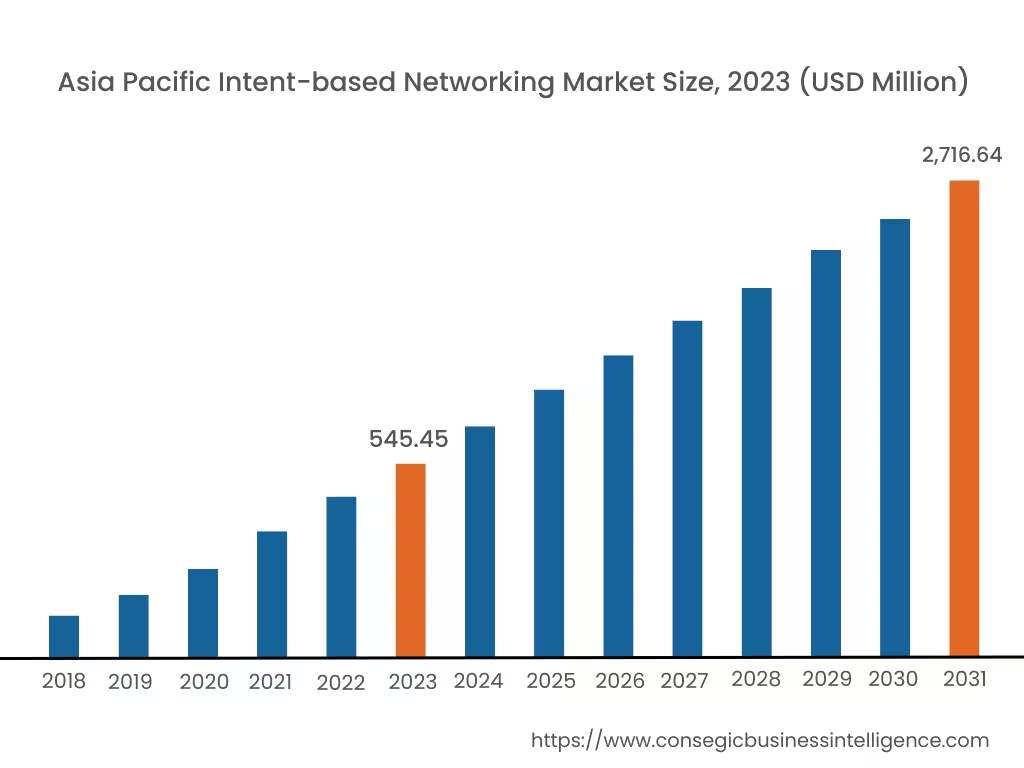
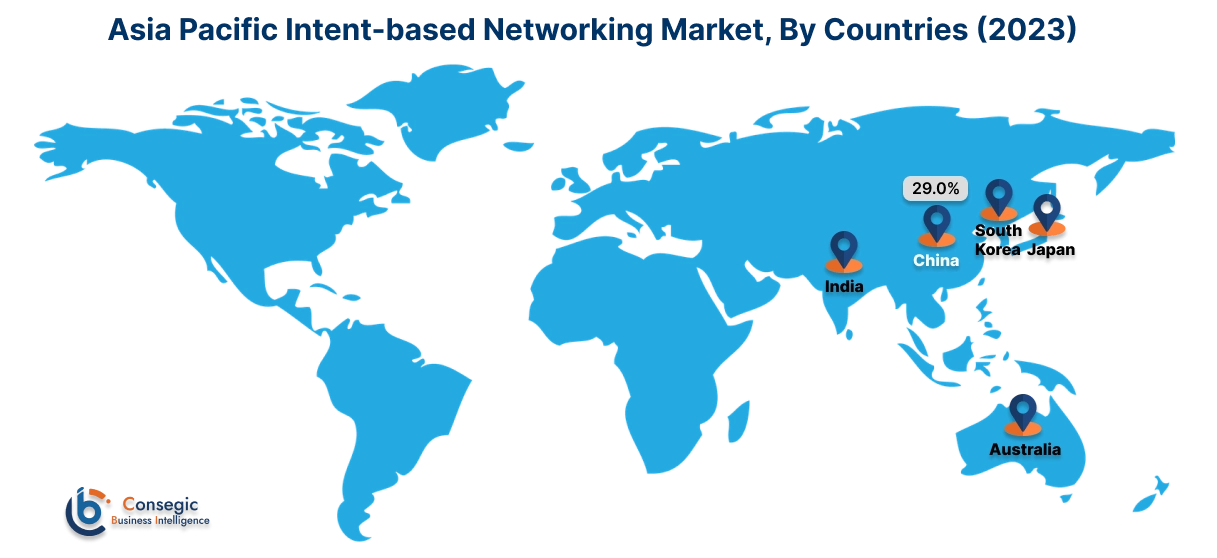
Asia Pacific region was valued at USD 748.05 Million in 2024. Moreover, it is projected to grow by USD 900.04 Million in 2025 and reach over USD 3,736.51 Million by 2032. Out of this, China accounted for the maximum revenue share of 29%. According to intent-based networking market analysis, the region is experiencing rapid growth fueled by its advanced technology infrastructure and strong focus on digital transformation. China, Japan, and South Korea lead the intent-based networking market, due to IT infrastructure and a robust demand for automation and efficiency.
In March 2022, Huawei (China) launched the iMaster NCE Open Programmable Platform, which includes intent-based networking functionalities aimed at automating network management, helping operators to adapt to the network in the wave of network transformation, and improving operational efficiency.
North America is estimated to reach over USD 3,977.02 Million by 2032 from a value of USD 842.54 Million in 2024 and is projected to grow by USD 1,008.93 Million in 2025. North America stands at the forefront of Intent-Based Networking adoption, driven by increasing IT investments, digital transformation initiatives, and the growth of cloud services. Additionally, the integration of IBN with hybrid and multi-cloud environments, along with advancements in artificial intelligence and machine learning, is expected to further enhance network scalability and flexibility.
- In April 2023, Palo Alto Networks and Accenture (US) collaborated to deliver joint secure access service edge (SASE) solutions powered by Palo Alto Networks AI-powered Prisma SASE It enhances network security operations and management across multi-cloud environments enabling organizations to improve cyber resilience and accelerate business transformation efforts.
In Europe, the intent-based networking market is witnessing a notable increase in adoption, propelled by a push towards digital transformation and the modernization of network infrastructures. The region's growing emphasis on data privacy regulations, such as the General Data Protection Regulation (GDPR), coupled with substantial investments in smart technologies, fuels this growth.
In Latin America, the intent-based networking market is in its nascent stages, with growing interest boosted by digital transformation and modernization efforts. The region is witnessing increased investments in IT infrastructure and a burgeoning focus on improving network management efficiency.
The Middle East and Africa region is at an early stage of intent-based networking adoption, with a focus on modernizing network infrastructure and integrating advanced technologies. Investments in smart infrastructure, the growing need for efficient network management, and digital transformation initiatives are driving interest in IBN solutions.
Top Key Players & Market Share Insights:
The intent-based networking market is highly competitive with major players providing optimized network management to the national and international markets. Key players are adopting several strategies in research and development (R&D), product innovation, and end-user launches to hold a strong position in the Intent-based networking industry. Key players in the intent-based networking industry include-
- Cisco Systems, Inc. (US)
- Juniper Networks, Inc. (US)
- Hewlett Packard Enterprise (US)
- Nokia Corporation (Finland)
- Huawei Technologies Co., Ltd. (China)
- Extreme Networks, Inc. (US)
- Dell Technologies, Inc. (US)
- Brocade Communications Systems, Inc. (US)
- Alcatel-Lucent Enterprise (France)
- IBM Corporation (US)
- Netgear, Inc. (US)
- VMware, Inc. (US)
- Fortinet, Inc. (US)
- Palo Alto Networks, Inc. (US)
- Cumulus Networks, Inc. (US)
- Mellanox Technologies (US)
- ZTE Corporation (China)
- A10 Networks, Inc. (US)
- Riverbed Technology, Inc. (US)
Recent Industry Developments :
Product Launches:
- In June 2024, VMware unveiled its VMware Cloud Foundation 5.2 with integrated IBN capabilities. This platform supports seamless management across private cloud environments, enhancing scalability and flexibility through unified network policies and automation.
- In June 2024, Nokia launched AI-Powered Enterprise Networks, for network automation. It allows for AI-driven advanced automation and network management across hybrid and multi-cloud environments, improving flexibility.
Product Enhancements:
- In August 2024,HPE introduced new features for its on-premises networking solutions under the Aruba Networking brand. The updates include advanced network automation and management tools with an AI-powered networking portfolio designed for on-premises deployment, focusing on optimizing in-house network performance and security.
- In April 2024, HPE upgraded its Aruba Central platform with Wi-Fi 7 access points to integrate with cloud services. It enhances network security and improves connectivity for enterprises IoT, locations, and security applications.
- This integration enables organizations to automate network management tasks and optimize performance across multi-cloud environments.
Collaborations:
- In May 2024, Palo Alto and IBM announced a strategic collaboration to enhance AI-powered security solutions. It integrates Palo Alto Networks with the advanced security capabilities of IBM. This collaboration aims to deliver a unified security solution that leverages AI to improve threat detection, automate responses and actions, and provide deeper insights into network security.
Intent-based Networking Market Report Insights :
| Report Attributes | Report Details |
| Study Timeline | 2021-2034 |
| Market Size in 2034 | USD 18,204.28 Million |
| CAGR (2026-2034) | 21.80% |
| Base Year | 2025 |
| By Component |
|
| By Deployment Type |
|
| By Enterprise |
|
| By Application |
|
| By End-User |
|
| By Region |
|
| Key Players |
|
| North America | U.S. Canada Mexico |
| Europe | U.K. Germany France Spain Italy Russia Benelux Rest of Europe |
| APAC | China South Korea Japan India Australia ASEAN Rest of Asia-Pacific |
| Middle East and Africa | GCC Turkey South Africa Rest of MEA |
| LATAM | Brazil Argentina Chile Rest of LATAM |
| Report Coverage |
|
Key Questions Answered in the Report
What is Intent-Based Networking? −
Intent-Based Networking (IBN) is a network management approach that focuses on the desired outcomes or intentions of network administrators rather than the specific configurations or commands. This approach allows network administrators to establish high-level policies that outline desired performance, security, and compliance objectives.
How big is the Intent-Based Networking Market? +
Intent-based Networking Market size is estimated to reach over USD 12,270.97 Million by 2032 from a value of USD 2,540.01 Million in 2024 and is projected to grow by USD 3,047.45 Million in 2025, growing at a CAGR of 21.80% from 2025 to 2032.
What is the key market trend? +
The Shift towards hybrid work models, where employees work both on-site and remotely, is driving the need for more robust remote office management solutions. These solutions ensure seamless connectivity, secure access, and efficient network management for remote offices.
Who are the major players in the intent-based networking market? +
Key players in intent-based networking market are Cisco Systems, Inc. (US), Juniper Networks, Inc. (US), IBM Corporation (US), Hewlett Packard Enterprise (US), Nokia Corporation (Finland), Huawei Technologies Co., Ltd. (China), Extreme Networks, Inc. (US), Dell Technologies, Inc. (US), Netgear, Inc. (US), VMware, Inc. (US), Fortinet, Inc. (US), Palo Alto Networks, Inc. (US), Cumulus Networks, Inc. (US), Mellanox Technologies (US), Brocade Communications Systems, Inc. (US) and others.
Overview
Reputation & Certifications


Our Services
- Market Intelligence & Forecasting
- Custom Research Solutions
- Market Entry Strategy
- Competitive Intelligence
- Customer Insights
- Industry Innovation Analysis
- Investment Advisory