Jump to Content
Quaternary Ammonium Compounds Market - Size, Share, Industry Trends, and Forecasts (2025-2032)
Quaternary Ammonium Compounds Market Size:
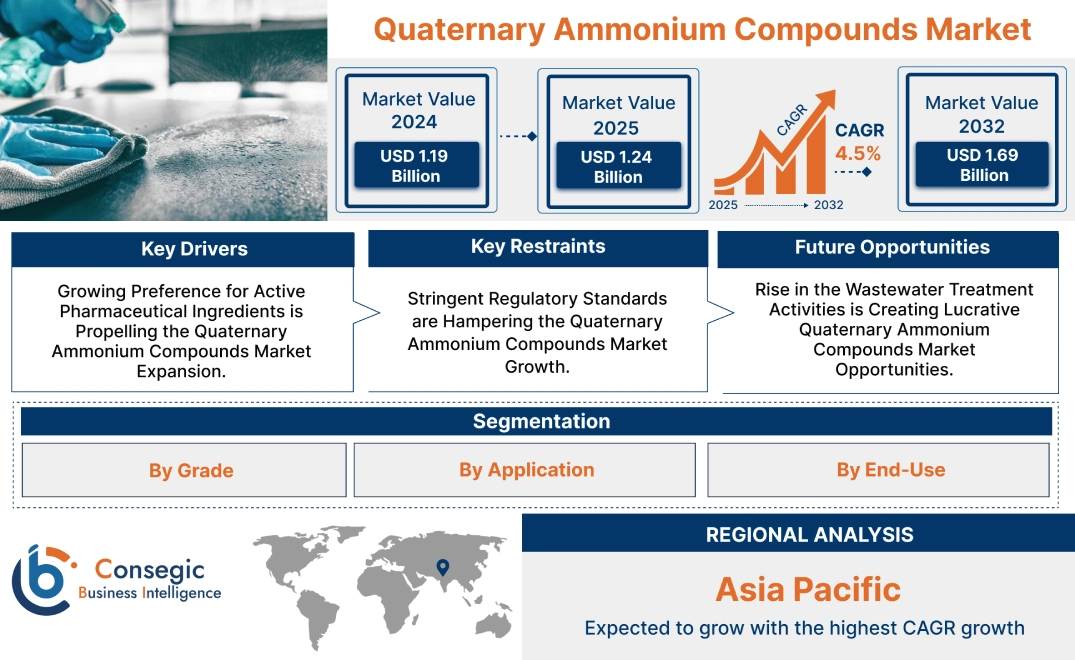
Quaternary Ammonium Compounds Market size is growing with a CAGR of 4.5% during the forecast period (2025-2032), and the market is projected to be valued at USD 1.69 Billion by 2032 from USD 1.19 Billion in 2024. Additionally, the market value for the 2025 attributes to USD 1.24 Billion.
Quaternary Ammonium Compounds Market Scope & Overview:
Quaternary ammonium compounds, also called quats or QACs, are a group of chemicals used for a variety of purposes. These compounds are characterized by a central nitrogen atom bonded to four alkyl or aryl groups, along with a counterion, typically a halide such as chloride or bromide. This unique molecular structure imparts a positive charge to the nitrogen atom, enabling QACs to interact electrostatically with negatively charged surfaces. The grade of QAC generally includes pharmaceuticals for medical applications, industrial for cleaning and processing, and others for specialized uses. In terms of application, the compounds are mainly utilized as disinfectants and sanitizers across various sectors, followed by their role as fabric softeners, key ingredients in personal care products, wood preservatives, and others. The end-use landscape is diverse, with healthcare and food & beverages representing significant sectors due to stringent hygiene requirements, followed by water treatment, the personal care and cosmetics sector leveraging their surfactant and preservative properties, agriculture, textiles for antistatic effects, and other industrial consumers.
Quaternary Ammonium Compounds Market Dynamics - (DRO) :

Key Drivers:
Growing Preference for Active Pharmaceutical Ingredients is Propelling the Quaternary Ammonium Compounds Market Expansion.
The rising demand for pharmaceutical products, driven by the increasing prevalence of chronic conditions and aging populations, is significantly boosting the development of the active pharmaceutical ingredients (APIs) market. Certain quats act as active pharmaceutical ingredients (APIs) in spermicidal products. In these applications, their mechanism of action involves disrupting the sperm cell membrane, leading to immobilization and preventing fertilization. The compound also functions as APIs in oral and dental formulations, where their antimicrobial properties help combat plaque formation, gingivitis, and other oral infections. As healthcare systems worldwide prioritize access to affordable and high-quality solutions, the requirement for APIs is steadily increasing.
For instance,
- According to the data published by Invest India, Active Pharmaceutical Ingredients (APIs) are the fundamental building blocks of pharmaceutical products, contributing significantly to the overall pharma sector. These core compounds constitute approximately 35% of the Indian market, underscoring their critical role in drug development and manufacturing.
Thus, the surge in requirements, coupled with advancements in manufacturing technologies, is propelling the market.
The rise in Health Care-Associated Infections (HAIs) is Driving the Quaternary Ammonium Compounds Market Demand.
HAIs poses a substantial threat to patient safety and contributes to increased healthcare costs, prompting healthcare facilities worldwide to implement stringent infection control protocols. QACs, with their broad-spectrum antimicrobial efficacy against bacteria, viruses, and fungi, are widely adopted as key components in disinfectants and sanitizers used for surface disinfection, medical equipment sterilization, and hand hygiene. The rise in the number of patients affected because of HAIs is influencing the growing use of quats.
For instance,
- Healthcare-associated infections (HAIs) are a significant global health concern, affecting approximately 1 in 10 patients. A 2023 study by Balasubramanian et al. states that 136 million cases of antibiotic-resistant HAIs occur annually worldwide, highlighting the need for effective prevention strategies.
Thus, the increasing prevalence of HAIs fuels the expanding utilization of Quats in healthcare settings as a critical measure for infection prevention and control.
Key Restraints:
Stringent Regulatory Standards are Hampering the Quaternary Ammonium Compounds Market Growth.
The quaternary ammonium compounds industry faces significant hurdles due to stringent regulatory standards imposed by various regulatory bodies worldwide. These regulations, designed to ensure product safety and efficacy, mainly involve rigorous testing, extensive documentation, and lengthy approval processes. Compliance with these standards is time-consuming and costly, particularly for smaller companies or those developing novel ingredients.
Additionally, changes in regulatory guidelines or the introduction of stricter regulations disrupt established processes and require significant investments in research, development, and manufacturing to meet the new standards. Growing environmental awareness and stricter regulations regarding the biodegradability and aquatic toxicity of quats encourage manufacturers to invest in developing more sustainable alternatives or modify existing formulations, potentially increasing costs. These factors contribute to increased costs, delayed product launches, and limited market access, ultimately hindering the development of the market.
Future Opportunities :
Rise in the Wastewater Treatment Activities is Creating Lucrative Quaternary Ammonium Compounds Market Opportunities.
Increasing concerns about water scarcity are driving greater investment in advanced wastewater treatment processes. Quats play a crucial role in these processes, primarily as effective biocides to control the growth of harmful microorganisms and prevent biofouling in treatment systems. Proper wastewater treatment is essential for preventing the spread of waterborne diseases and protecting public health. This factor influences the rise in wastewater treatment plants.
For instance,
- The Clean Watershed Needs Survey by the U.S. EPA estimates that around 200 new publicly owned wastewater treatment plants (POTWs) will be operational by 2042 in the U.S.
Thus, the expansion and upgrade of wastewater treatment infrastructure creates quaternary ammonium compounds market opportunities for the use of Quats as biocides and flocculants in these facilities.
Quaternary Ammonium Compounds Market Segmental Analysis :
By Grade:
Based on the grade, the market is categorized into pharmaceutical, industrial, and others.
Trends in the Grade
- The rise in awareness of hygiene and sanitation influences the trend for industrial-grade Quats in various cleaning and disinfection applications across industries and institutions.
- The trend in pharmaceutical formulations involves the increasing utilization of high purity quats, such as benzalkonium chloride, as preservatives in multi-dose ophthalmic, nasal, and topical products to maintain their sterility throughout use.
The industrial segment accounted for the largest market share in 2024.
- The industrial grade quats are used because of their potent antimicrobial and surfactant properties, making them useful in a wide array of industrial and commercial settings.
- They are vital for disinfection and sanitation in diverse facilities like food processing and agriculture.
- They act as crucial biocides in water treatment, controlling microbial growth and sometimes acting as flocculants.
- Additionally, they function as surfactants in industrial cleaners, antistatic agents in textiles, and wood preservatives, highlighting their broad utility beyond healthcare.
- Thus, as per the quaternary ammonium compounds market analysis, the rise in the use of industrial-grade compounds in various applications is influencing the development of the segment.
The pharmaceutical segment is expected to grow at the fastest CAGR over the forecast period.
- The pharmaceutical grade of quats is distinguished by their high purity levels and stringent manufacturing processes adhering to pharmaceutical regulations such as cGMP and ICH guidelines.
- These grades are specifically designed for use in medicinal and healthcare-related applications, where safety and efficacy are necessary.
- A key application lies in their role as preservatives in multi-dose pharmaceutical formulations, including ophthalmic solutions, nasal sprays, and topical creams, effectively preventing microbial contamination and ensuring product sterility throughout their use.
- Some pharmaceutical grade quats function as active antimicrobial ingredients in topical antiseptics, wound care products, and oral hygiene solutions like mouthwashes, combatting bacterial and fungal infections.
- The rise in the use of pharmaceutical grade quats in various applications is influencing manufacturers to enhance the distribution of these compounds in various regions.
- For instance, in 2024, Actylis and Novo Nordisk Pharmatech partnered for the distribution of Benzalkonium Chloride, a pharmaceutical-grade Quat, across European countries, indicating a strategic move to expand its market reach.
- Thus, the rise in the use of pharmaceutical-grade compounds and the growing distribution of these compounds is driving the development of the segment.
By Application:
Based on the application, the market is categorized into disinfectants & sanitizers, fabric softeners, personal care products, wood preservation, and others.
Trends in Application:
- The growing awareness of microbial threats influences the development of disinfectants and sanitizers that are effective against a broad spectrum of pathogens, including emerging viruses and antibiotic-resistant bacteria.
- There is a growing trend for products with fewer harsh chemicals, encouraging manufacturers to explore milder Quat alternatives or combinations.
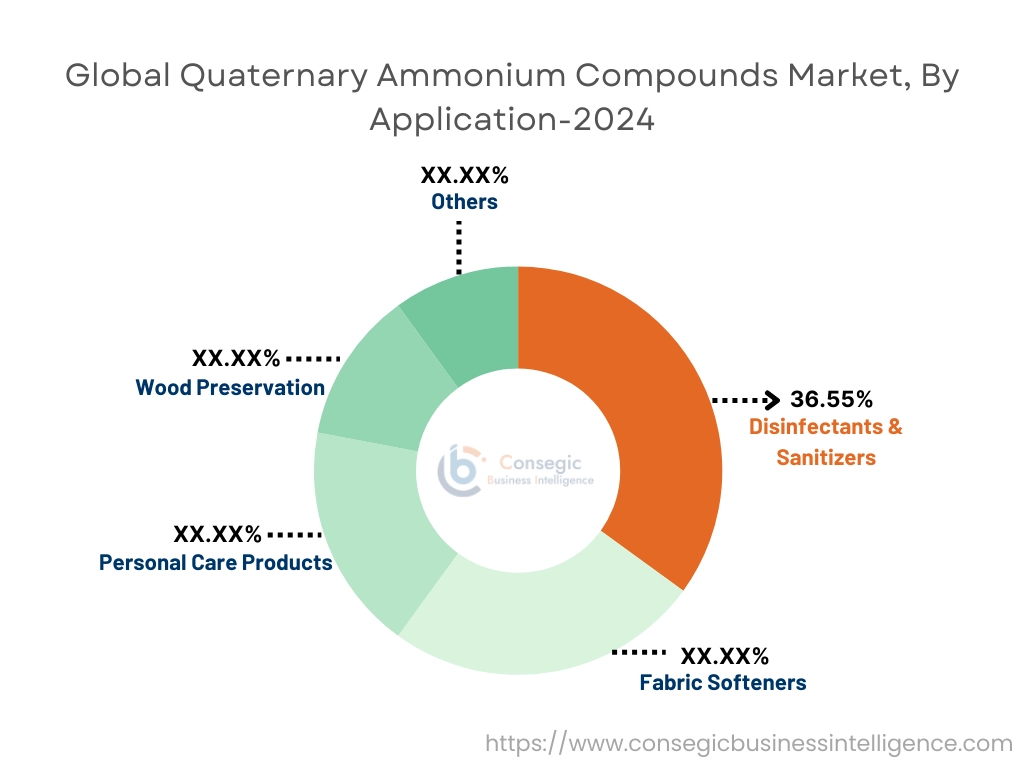
The disinfectants & sanitizers segment accounted for the largest Quaternary Ammonium Compounds market share of 36.55% in the year 2024.
- Quats find their dominating application in disinfectants and sanitizers due to their broad-spectrum antimicrobial activity and surfactant properties.
- The cationic nature of Quats enables effective disruption of microbial cell membranes, providing broad-spectrum disinfection against bacteria, enveloped viruses, fungi, and algae.
- This versatility makes them vital in healthcare for surface cleaning and equipment sanitization, crucial in the food sector for preventing foodborne illnesses, and widely used in household and commercial cleaners for overall hygiene.
- Their surfactant properties enhance cleaning and antimicrobial action.
- The rise in the number of HAIs is encouraging manufacturers to provide various disinfectant products.
- For instance, in 2021, State Industrial Products launched 7 in One Disinfectant, a new concentrated quaternary formula providing seven benefits mainly cleaner, sanitizer, fungicide, mildewstat, virucide, deodorizer, and bactericide.
- Thus, as per the analysis, these aforementioned factors are influencing the Quaternary Ammonium Compounds market expansion.
The personal care products segment is expected to grow at the fastest CAGR over the forecast period.
- In personal care products, Quats serve diverse functions, primarily leveraging their preservative, antimicrobial, and surfactant properties.
- As preservatives, certain Quats like benzalkonium chloride are crucial in preventing microbial contamination in a wide array of formulations, from eye drops and nasal sprays to lotions and creams, ensuring product safety and longevity.
- Their antimicrobial action is also used in products like mouthwashes (e.g., cetylpyridinium chloride) and some skin cleansers to reduce bacteria and promote hygiene.
- Furthermore, the cationic surfactant nature of Quats like cetrimonium chloride and behentrimonium chloride makes them highly effective as conditioning and antistatic agents in hair care products, reducing frizz, improving detangling, and imparting a smooth, manageable feel to the hair.
- Thus, the growing use of the ingredients in personal care products is influencing the quaternary ammonium compounds market demand.
By End-Use:
Based on the end-use, the market is categorized into healthcare, food & beverages, water treatment, personal care & cosmetics, agriculture, textiles, and others.
Trends in End-Use:
- The growing emphasis on patient safety and infection prevention is influencing the use of quats.
- There is a growing trend for products with fewer harsh chemicals, encouraging manufacturers to explore milder Quat alternatives or combinations.
The healthcare segment accounted for the largest Quaternary Ammonium Compounds market share in the year 2024.
- The healthcare sector stands as a dominant end-use market for quats due to the importance of infection prevention and control within medical facilities.
- The broad-spectrum antimicrobial efficacy of Quats against bacteria, viruses, and fungi makes them essential for disinfecting surfaces, sterilizing non-critical and semi-critical medical equipment, and as active ingredients in some hand sanitizers and antiseptic wipes.
- The stringent hygiene standards mandated in hospitals, clinics, and long-term care facilities to reduce healthcare-associated infections drive a consistent and substantial demand for disinfectants.
- Furthermore, the increasing prevalence of antibiotic-resistant microorganisms amplifies the need for effective surface disinfection strategies where Quats play a crucial role in breaking the chain of transmission.
- Thus, as per the analysis, these aforementioned factors are influencing the Quaternary Ammonium Compounds market trends.
The personal care & cosmetics segment is expected to grow at the fastest CAGR over the forecast period.
- The personal care and cosmetic sector are experiencing rapid growth as an end-use for quats.
- The increasing consumer demand for effective preservatives in a wide array of personal care products, from skincare and haircare to toiletries, drives the incorporation of Quats like Benzalkonium Chloride to ensure product safety and shelf life.
- The growing awareness of hygiene and the need for antimicrobial agents in formulations such as hand sanitizers, mouthwashes (utilizing Quats like cetylpyridinium chloride), and specialized skin treatments contribute significantly.
- Additionally, in hair care, the conditioning and antistatic properties of Quats make them crucial for detangling, smoothing, and improving hair manageability, aligning with consumer preferences for high-performing hair products.
- Some Quats, like benzalkonium chloride, have antimicrobial properties and are used as preservatives in cosmetic formulations to prevent the growth of bacteria and other microorganisms.
- The rise in the cosmetic and personal care sector influences the use of quats in them.
- For instance, in 2021, the South Korean cosmetics industry demonstrated strong growth, with production reaching USD 14.5 billion, a 9.8% increase from the previous year.
- Thus, the rise in the personal care and cosmetic sector is influencing the development of the segment.
Regional Analysis:
The regional segment includes North America, Europe, Asia Pacific, the Middle East and Africa, and Latin America.
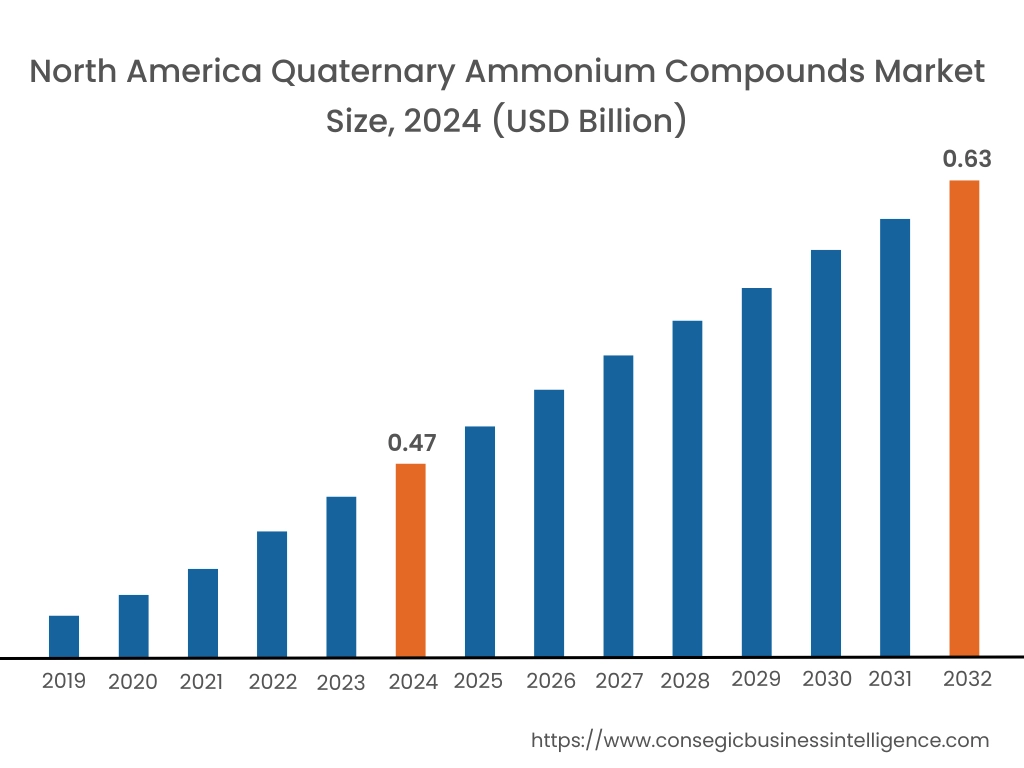
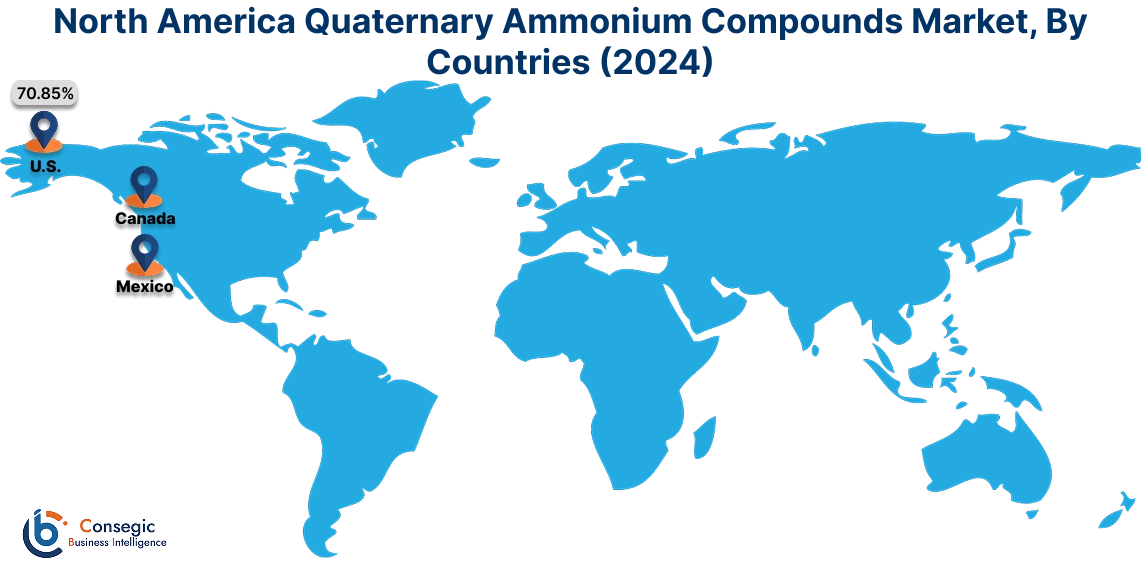
In 2024, North America accounted for the highest market share at 39.88% and was valued at USD 0.47 Billion and is expected to reach USD 0.63 Billion in 2032. In North America, the U.S. accounted for the highest market share of 70.85% during the base year of 2024. Quats are used as active pharmaceutical ingredients (API) in many spermicidal products such as gels, creams, foams, sponges, and soft capsules. Common Quats used for this purpose include benzalkonium chloride. This application highlights the direct therapeutic role of certain Quats beyond their use as excipients. Additionally, APIs are essential components in pharmaceuticals, and their production mainly requires stringent contamination control and a sterile environment. Quats provide strong antimicrobial properties and are used in surface disinfection, and preservatives in various manufacturing facilities to ensure product safety and compliance with regulatory standards. The rise in the use of disinfectants is encouraging manufacturers to develop products with enhanced activity and easy packaging.
For instance,
- In 2022, SC Johnson Professional announced the release of its Quaternary Disinfectant Cleaner in a new easy-to-measure, squeeze-and-pour bottle In North America. The product cleans, disinfects, and deodorizes in one labor-saving step and the packaging format simplifies measuring for dilution in a bucket, automatic scrubber, or spray bottle.
Thus, the rise in the use of disinfectants is influencing the market in the North America region.
Asia Pacific is experiencing the fastest growth with a CAGR of 6.0% over the forecast period. The Asia Pacific region is a rapidly growing market driven by the rise in awareness and requirement for wastewater treatment. This growing awareness stems from growing concerns about water scarcity, environmental pollution caused by untreated industrial and domestic discharge, and the associated public health risks. Quats act as a disinfectant and biocide in the wastewater treatment process, effectively controlling microbial contamination and improving the water quality. Thus, as per the market analysis, the rising requirement for wastewater treatment is influencing the development of the market in the Asia Pacific region.
The European market for quaternary ammonium compounds is a dynamic and highly regulated landscape. It is characterized by stringent regulatory standards, a focus on sustainability, and a growing consumer requirement for safe and efficient products. The European Union's emphasis on scientific evidence and consumer safety has led to a robust regulatory framework for these compounds, particularly in the pharmaceutical and cosmetic sectors. The region consists of several leading pharmaceutical companies and research institutions, driving innovation in the development and production of these compounds. Based on the market analysis, as consumer preferences shift towards more efficient products, the use of quats is expected to grow in the European market.
The Middle East and Africa (MEA) region is witnessing a surge in the requirement for quaternary ammonium compounds, driven by factors such as rising disposable incomes, increasing healthcare awareness, and a growing population. The healthcare sector in the region is experiencing significant development, fueled by the increasing prevalence of HAIs. This has led to a rising requirement for high-quality disinfectants and sanitizers. Thus, as per the Quaternary Ammonium Compounds market analysis, these aforementioned factors are influencing the quaternary ammonium compounds market trends in this region.
Latin America presents a dynamic market for quats, fueled by a growing middle class with increasing disposable income and a greater focus on hygiene and personal care products. This expanding consumer base drives demand for Quats in household cleaning products, personal care items like shampoos and conditioners (leveraging their conditioning and antistatic properties), and as preservatives in cosmetics. Simultaneously, the development and modernization of agricultural practices in the region are creating opportunities for Quats as disinfectants in animal husbandry and potentially in crop protection. Thus, these factors are influencing the quaternary ammonium compounds market growth in this region.
Top Key Players and Market Share Insights:
The global Quaternary Ammonium Compounds market is highly competitive with major players providing precise products to the national and international markets. Key players are adopting several strategies in research and development (R&D) and product innovation to hold a strong position in the global Quaternary Ammonium Compounds market. Key players in the Quaternary Ammonium Compounds industry include-
- Arkema (France)
- Dishman Carbogen Amcis Ltd (India)
- Ashland (United States)
- Lonza (Switzerland)
- Global Amines Company Pte. Ltd. (Singapore)
- Syensqo (Belgium)
- Evonik (Germany)
- BASF SE (Germany)
- DuPont (United States)
- Novo Nordisk Pharmatech (Denmark)
Quaternary Ammonium Compounds Market Report Insights:
| Report Attributes | Report Details |
| Study Timeline | 2019-2032 |
| Market Size in 2032 | USD 1.69 Billion |
| CAGR (2025-2032) | 4.5% |
| By Grade |
|
| By Application |
|
| By End-Use |
|
| By Region |
|
| Key Players |
|
| North America | U.S. Canada Mexico |
| Europe | U.K. Germany France Spain Italy Russia Benelux Rest of Europe |
| APAC | China South Korea Japan India Australia ASEAN Rest of Asia-Pacific |
| Middle East and Africa | GCC Turkey South Africa Rest of MEA |
| LATAM | Brazil Argentina Chile Rest of LATAM |
| Report Coverage |
|
Key Questions Answered in the Report
How big is the Quaternary Ammonium Compounds market? −
In 2024, the Quaternary Ammonium Compounds market is USD 1.19 Billion.
Which is the fastest-growing region in the Quaternary Ammonium Compounds market? +
Asia Pacific is the fastest-growing region in the Quaternary Ammonium Compounds market.
What specific segmentation details are covered in the Quaternary Ammonium market? +
Grade, Application, End-Use segmentation details are covered in the Quaternary Ammonium Compounds market.
Who are the major players in the Quaternary Ammonium Compounds market? +
Arkema (France), Dishman Carbogen Amcis Ltd (India), and Syensqo (Belgium) are some of the major players in the market.
Overview
Reputation & Certifications


Our Services
- Market Intelligence & Forecasting
- Custom Research Solutions
- Market Entry Strategy
- Competitive Intelligence
- Customer Insights
- Industry Innovation Analysis
- Investment Advisory