Jump to Content
Robotaxi Market - Size, Share, Industry Trends, and Forecasts (2025-2035)
Robotaxi Market 2025 - 2035:
- The Global Robotaxi Market reached USD 1.39 billion in 2025.
- The market is forecast to grow at a CAGR of 66.50% between 2025 and 2035.
- The global market size is projected to reach USD 228.09 billion by 2035.
- Asia Pacific is expected to register the fastest growth during the 2025–2035 forecast period.
Market Scope & Overview:
Robotaxis are self-driving vehicles that are designed to provide driverless ride-hailing services using artificial intelligence, sensors, and sophisticated navigation systems. The industry includes vehicle manufacturing, autonomous driving software, fleet management platforms, connectivity infrastructure, and passenger mobility services. Robotaxi operations are deployed through shared mobility networks and are integrated with urban transport ecosystems. The main stakeholders in the robotaxi industry are automobile manufacturers, autonomous technology companies, ride-hailing services, and mobility service providers, which operate in the urban transportation network.
The robotaxi industry is expanding due to growing investment in autonomous vehicle technology and increasing demand for on-demand urban mobility services. Pilot deployments across the US, China, and selected European cities are supporting early commercialization of driverless transport networks. Development of high-definition mapping, LiDAR sensors, and AI-based driving systems is strengthening operational capability. Partnerships between automotive companies, technology developers, and ride-hailing platforms are accelerating testing programs and fleet deployment strategies.
Market Size & Forecast
- 2024 Market Size : USD 836.67 Million
- 2025 Market Size : USD 1.39 Billion
- 2035 projected Market Size : USD 228.09 Billion
- CAGR (2025-2035) : 66.50%
- Largest Market in 2025 : North America
How is the Robotaxi Market Affected by AI?
Artificial intelligence forms the core technology for robotaxi operations through real time decision making, object detection, and route optimization. AI models process data from LiDAR, radar, cameras, and onboard sensors to interpret road conditions and surrounding traffic. This improves navigation accuracy and supports safe autonomous driving in complex urban environments. Continuous data learning from fleet operations also improves driving performance and system reliability.
Moreover, AI-driven analytics also support fleet management, predictive maintenance, and passenger demand forecasting. AI systems analyze traffic patterns, passenger demand, and vehicle performance data to optimize dispatch and route planning. Furthermore, the integration of AI with cloud and edge computing infrastructures enhances the communication between vehicles and the network in real-time, enabling the large-scale deployment of autonomous ride-hailing services in cities.

Market Dynamics - (DRO):
Key Drivers:
The population living in cities is growing, which is increasing transportation demands in cities such as the US, China, India, and European countries. Increasing traffic congestion and lack of parking spaces have created pressure on existing transportation networks. Autonomous ride-hailing services have been considered by cities and transportation providers to improve transportation efficiency and reduce dependency on vehicle ownership. Robotaxi services can be considered for shared mobility solutions, which can be used to optimize transportation efficiency.
- For instance, United Nations stated that 2.5 billion people will be added to existing cities by 2050. Increasing population is creating pressure on transportation networks, which is increasing demands for efficient transportation solutions such as robotaxi services.
Therefore, rapid population growth is increasing demands for autonomous transportation services such as robotaxi.
Key Restraints:
High development and deployment cost of autonomous vehicle technology is limiting large scale commercial rollout
Robotaxi is a product that needs advanced sensor systems, high-performance computing systems, and software validation. Robotaxis also involve the integration of LiDAR, radar, cameras, and AI processing systems, which increases the cost of producing a robotaxi. Testing and safety are also a costly process, which is slowing the deployment of robotaxis in the market.
Therefore, the high cost of developing and deploying robotaxis is a major constraint in the deployment of robotaxis.
Future Opportunities:
Growth in smart city initiatives is pushing the deployment of connected autonomous mobility solutions
Governments in different countries in Asia, Europe, and America are investing in the creation of smart city infrastructure, which includes connected transport systems. The creation of intelligent traffic management systems, communication between vehicles and infrastructure, and the creation of data platforms are improving the environment in which autonomous vehicles operate. Robotaxi services have the potential to operate in a connected network with smart city systems, enabling the sharing of transport services. Technology and automotive companies are increasing the number of robotaxi pilots in cities with digital transport infrastructure.
- For instance, the Union Budget 2024-25 of India has allocated about 19.67 billion USD for the Smart Cities Mission. Out of the 8,062 projects planned under the Smart Cities Mission, about 93% of the projects were completed by March 2025. This indicates the development of digital infrastructure and intelligent transportation in cities across India. This, in turn, would support the robotaxi service in the country.
Therefore, the expansion of smart cities is providing growth opportunities for the robotaxi service segment.
Market Segmental Analysis:
By Component:
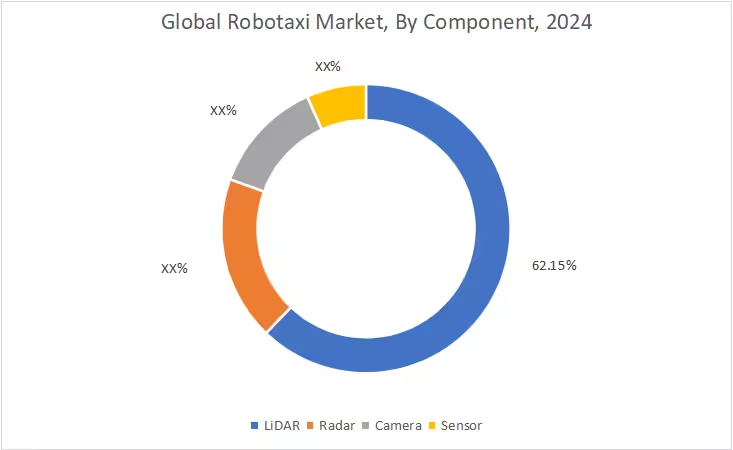
On the basis of component, the robotaxi market is segmented into LiDAR, radar, camera, and sensor.
Trends in the Component:
- Declining LiDAR cost is improving commercial feasibility of autonomous vehicle systems.
- Advancements in multi sensor fusion technologies are strengthening real time road perception capabilities.
The LiDAR was responsible for the highest revenue share of 62.15% in 2024.
- LiDAR systems provide high precision 3D mapping for autonomous navigation.
- Moreover, accurate distance measurement improves obstacle detection in complex traffic environments.
- In addition, integration with AI perception systems strengthens driving decision capability.
- Further, continuous technology improvements are improving sensor reliability and range.
- Therefore, strong role in environmental mapping is supporting dominance of the LiDAR segment.
It is anticipated that the camera will exhibit the highest compound annual growth rate (CAGR) during the forecast period.
- Camera systems support visual interpretation of traffic signs and road markings.
- Also, advancements in computer vision algorithms are improving image processing capability.
- In addition, lower hardware cost supports wider adoption in autonomous vehicle platforms.
- Moreover, integration with AI perception models improves lane detection and object recognition.
- Therefore, increasing reliance on visual data processing is driving growth of the camera segment.
By Vehicle Type:
On the basis of vehicle type, the robotaxi market is segmented into cars and shuttles/vans.
Trends in the Vehicle Type:
- Urban mobility services are increasing demand for compact autonomous passenger vehicles.
- Fleet operators are evaluating multi passenger autonomous shuttles for shared mobility networks.
The cars was responsible for the highest revenue share in 2024.
- Passenger cars remain the primary platform for autonomous ride hailing services.
- Moreover, existing vehicle platforms support easier integration of autonomous driving systems.
- In addition, ride hailing operators are expanding pilot fleets based on autonomous passenger cars.
- Further, urban infrastructure supports car based mobility services across most cities.
- Therefore, broader deployment of autonomous passenger vehicles is supporting dominance of the cars segment.
It is anticipated that the shuttles/vans will exhibit the highest compound annual growth rate (CAGR) during the forecast period.
- Autonomous shuttles support shared mobility for fixed urban routes.
- Also, public transport operators are testing driverless shuttle services in smart city programs.
- In addition, higher passenger capacity improves operational efficiency for fleet operators.
- Moreover, deployment in airports and campuses is expanding use cases.
- Therefore, increasing focus on shared autonomous transport is driving growth of the shuttles or vans segment.
By Level of Autonomy:
On the basis of level of autonomy, the robotaxi market is segmented into level 4 and level 5.
Trends in the Level of Autonomy:
- Autonomous mobility companies are expanding pilot programs using level 4 driverless systems.
- Continuous AI training using real world driving data is improving autonomous driving capability.
The level 4 was responsible for the highest revenue share in 2024.
- Level 4 vehicles operate autonomously within defined operational areas.
- Moreover, geo fenced environments improve safety validation and regulatory approval.
- In addition, technology companies are deploying level 4 robotaxi fleets for commercial testing.
- Further, current sensor and computing systems support level 4 functionality more reliably.
- Therefore, higher commercial readiness is supporting dominance of the level 4 segment.
It is anticipated that the level 5 will exhibit the highest compound annual growth rate (CAGR) during the forecast period.
- Level 5 autonomy targets fully driverless operation in all environments.
- Also, advancements in AI perception and decision making systems are supporting technology progress.
- In addition, ongoing research in sensor redundancy is improving system reliability.
- In addition, the automobile sector is investing in the development of next-generation autonomous driving platforms.
- Therefore, the innovation in autonomous technology is fueling the growth of the level 5 segment.
By Service Type:
On the basis of service type, the robotaxi market is segmented into car rental and station-based.
Trends in the Service Type:
- Mobility platforms are expanding autonomous ride hailing services through digital booking applications.
- Shared mobility networks are testing station based autonomous vehicle access models.
The car rental was responsible for the highest revenue share in 2024.
- On demand mobility platforms enable users to book autonomous vehicles through mobile applications.
- Moreover, flexible pickup and drop services improve convenience for urban commuters.
- In addition, ride hailing companies are integrating robotaxi fleets into existing mobility platforms.
- Further, digital payment systems support seamless service transactions.
- Therefore, growing demand for on demand mobility is supporting dominance of the car rental segment.
It is anticipated that the station-based will exhibit the highest compound annual growth rate (CAGR) during the forecast period.
- Station-based robotaxi services operate through designated pickup and drop points.
- Also, structured fleet management improves vehicle utilization efficiency.
- In addition, urban transit hubs provide ideal deployment locations for station-based mobility services.
- Moreover, integration with public transportation networks improves last mile connectivity.
- Therefore, expanding smart mobility infrastructure is driving growth of the station-based segment.
By Application:
On the basis of application, the robotaxi market is divided into passenger transport and goods transport.
Trends in the Application:
- Urban ride hailing demand is encouraging deployment of autonomous passenger mobility services.
- Logistics companies are evaluating autonomous vehicles for short distance urban delivery.
Passenger transport accounted for the largest revenue share in the year 2024.
- Robotaxi services are primarily designed for urban passenger mobility.
- Moreover, ride hailing platforms are focusing on driverless passenger transportation services.
- In addition, autonomous vehicles improve operational efficiency for shared mobility fleets.
- Further, growing urban commuting demand is strengthening service adoption.
- Therefore, expansion of autonomous ride hailing services is supporting dominance of the passenger transport segment.
Goods transport is anticipated to register the fastest CAGR during the forecast period.
- Autonomous vehicles support short distance logistics and parcel delivery operations.
- Also, e-commerce growth is increasing demand for automated delivery solutions.
- In addition, robotaxi platforms can be adapted for small goods transport during low passenger demand periods.
- Moreover, logistics companies are testing autonomous delivery fleets in urban areas.
- Therefore, expanding autonomous logistics applications are driving growth of the goods transport segment.
Regional Analysis:
North America, Europe, Asia Pacific, the Middle East and Africa, and Latin America are the regions of coverage.
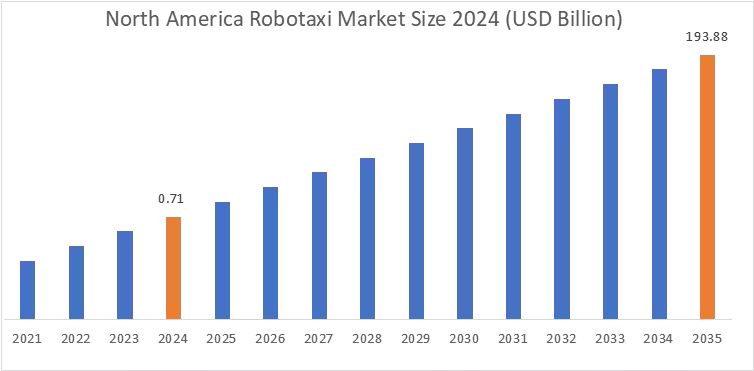
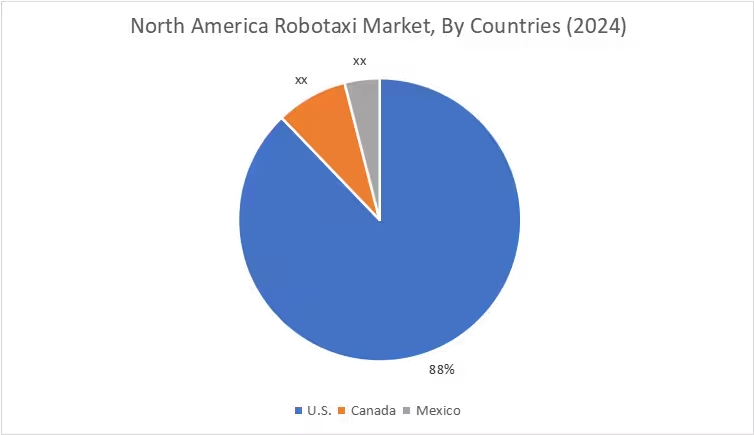
In 2024, North America accounted for the highest market share at 85% and was valued at USD 711.17 Million, and is expected to reach USD 193.88 Billion by 2035. In North America, the U.S. accounted for the highest market share of 88% during the base year of 2024. Market growth is supported by early deployment of autonomous vehicle testing programs and strong investment from technology companies and automotive manufacturers. Presence of companies developing autonomous driving software and mobility platforms is strengthening commercial robotaxi pilots across major US cities.
- For example, in January 2026, Tesla also announced the launch of the Robotaxi expansion to seven new cities in the US, including Dallas, Houston, Phoenix, Miami, Orlando, Tampa, and Las Vegas, by the middle of 2026. This is based on the success of the unsupervised operation in Austin and the safety driver tests in the Bay Area, where there have been 700,000+ paid miles driven.
The Asia Pacific region is expected to experience the highest growth rate during the predicted period. This is due to China’s expanding zones for testing autonomous vehicles and intelligent mobility systems in major cities. Japan is also backing the tests for autonomous mobility through its smart city and sandbox initiatives. India is also stepping up investments in intelligent transportation systems and digital mobility systems. The urban population is driving the adoption of autonomous vehicles in major cities.
- For example, In March 2026, Lenovo is working with SWM to launch the next generation of level 4 robotaxis, which will run on NVIDIA DRIVE AGX Thor, along with SWM's AP-700 platform, which promises 50% lower costs for software, 40% faster commercialization, and up to 60% lower production costs, targeting the Seoul/Gwangju, South Korea, robotaxi service market in 2027.
The robotaxi market in Europe is increasing due to the expansion of autonomous vehicle pilot programs in Germany, France, and the UK. Governments are launching frameworks to aid the testing of autonomous vehicles.
The growth of the robotaxi market in Latin America is fueled by the mobility challenges faced in Brazil and Mexico. Increasing traffic congestion in large cities is encouraging exploration of autonomous shared mobility services.
The Middle East and Africa robotaxi market is driven by smart city investments in the UAE and Saudi Arabia, where governments are investing in intelligent transportation infrastructure to support autonomous driving systems.
Top Key Players & Market Share Insights:
The robotaxi market is moderately fragmented, with players operating in the market for autonomous driving technology, vehicle manufacturing, and mobility services platforms. Companies are investing in the development of autonomous vehicle testing programs and sensor and AI-based driving systems for improved reliability of robotaxis. Partnerships are also being made between automotive manufacturers, technology developers, and ride-hailing platforms for robotaxi pilots in major cities. Key participants in the market for robotaxi include:
Recent Industry Developments:
- In March 2026, Pony.ai revealed that its Gen-7 Robotaxi has achieved unit economics breakeven in Shenzhen, with 34 sensors, including 9 LiDARs, 14 cameras, and 4 radars, enabling a 650m detection range, a 70% cost reduction due to the use of automotive-grade components, and a 600,000 km lifespan.
- In February 2026, Baidu has partnered with Uber to test and deploy Apollo Go robotaxis in Dubai, marking the first launch outside China to provide driverless ride-hailing services on Uber's platform to scale driverless services in the Middle East.
Robotaxi Market Report Insights:
| Report Attributes | Report Details |
|---|---|
| Study Timeline | 2019-2035 |
| Market Size in 2035 (USD Trillion) | USD 228.09 Billion |
| CAGR (2025-2035) | 66.50% |
| By Component |
|
| By Vehicle Type |
|
| By Level of Autonomy |
|
| By Service Type |
|
| By Application |
|
| By Region |
|
| Key Players |
|
| Report Coverage |
|
Key Questions Answered in the Report
How big is the robotaxi market? −
The robotaxi market size is estimated to reach over USD 228.09 Billion by 2035 from a value of USD 836.67 Million in 2024 and is projected to grow by USD 1.39 Billion in 2025, growing at a CAGR of 66.50% from 2025 to 2035.
Which segmentation details are covered in the robotaxi report? +
The robotaxi report includes specific segmentation details for component, vehicle type, level of autonomy, service type, application, and regions.
Which is the fastest segment anticipated to impact the market growth? +
Level 5 autonomy is the fastest growing segment, driven by development of fully driverless mobility systems.
Who are the major players in the robotaxi market? +
The key participants in the robotaxi market are Waymo (US), Apollo Go (China), Pony.ai (US), Xpeng Inc. (China), General Motors (US), Zoox (US), WeRide (China), Motional (US), Avride Inc. (US), DiDi Autonomous Driving (China), and others.
What are the key trends in the robotaxi market? +
Expansion of autonomous vehicle pilots, rising AI integration in driving systems, and growth in smart city mobility infrastructure.
Overview
Reputation & Certifications


Our Services
- Market Intelligence & Forecasting
- Custom Research Solutions
- Market Entry Strategy
- Competitive Intelligence
- Customer Insights
- Industry Innovation Analysis
- Investment Advisory