Jump to Content
Smart Meter Market - Size, Industry Share, Growth Trends and Forecasts (2026-2034)
Smart Meter Market Size:
Smart Meter Market size is estimated to reach over USD 65.09 Billion by 2034 from a value of USD 27.15 Billion in 2025 and is projected to grow by USD 29.43 Billion in 2026, growing at a CAGR of 9.2% from 2026 to 2034.
Smart Meter Market Key Takeaways
- Growing investments in smart grid infrastructure and energy efficiency programs are driving market growth.
- Asia Pacific dominated the market in 2025, supported by large-scale smart meter deployments and utility modernization initiatives.
- Smart electric meters held the largest market share due to widespread adoption across residential and utility sectors.
- The residential segment accounted for a significant share, driven by growing demand for accurate billing and energy monitoring.
- Increasing integration of IoT, AI, and advanced metering infrastructure (AMI) is enhancing grid reliability and operational efficiency.
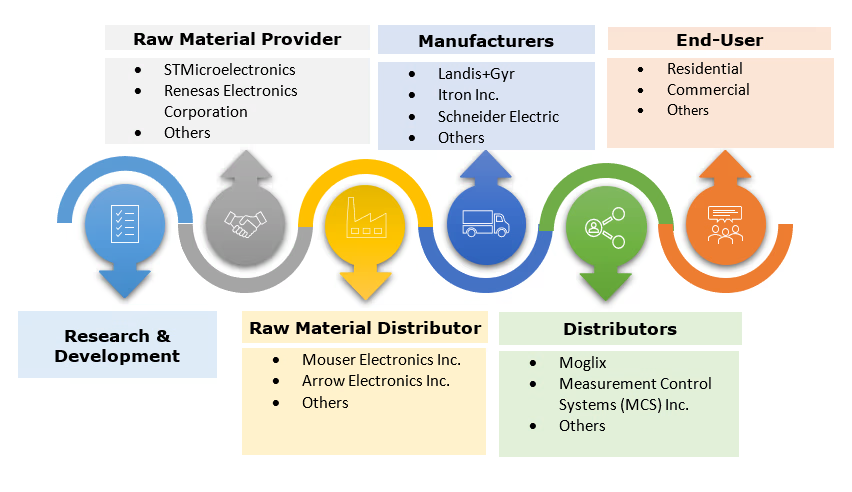
- Landis+Gyr, Itron, Schneider Electric, Siemens, Honeywell, and Sagemcom were among the leading market participants.
Smart Meter Market Scope & Overview:
A smart meter is a digital device that records utility consumption (electricity, gas, or water) in real time and communicates that data directly to the user’s utility provider. It eliminates the need for manual meter readers by facilitating automated, two-way communication between the user’s home and the supplier. It offers continuous data and clear insights into users’ daily usage, which in turn helps them easily optimize energy-efficient habits, lower unnecessary costs, and seamlessly support the grid. Additionally, the market is driven by factors such as the prevalence of stringent government mandates for grid modernization and growing consumer demand for real-time tracking of utility usage to improve energy efficiency.

Smart Meter Market Dynamics - (DRO):
Market Drivers:
Rising installation of advanced metering infrastructure is propelling is driving the market growth
The rising installation of advanced metering infrastructure (AMI) is among the primary factors driving the market growth. Advanced (smart) metering infrastructure is automated and enables on-demand real-time interrogations with metering endpoints. Moreover, advanced metering infrastructure offers various benefits, including reduced costs for meter reading and billing, faster outage response, optimized energy usage, real-time monitoring, and others. Furthermore, AMI architecture acts as an essential tool for operational optimization, allowing grid operators to instantly detect infrastructure anomalies, identify technical line or pipe leakages, and isolate power outages without waiting for customer complaints. The aforementioned benefits of advanced metering infrastructure are key determinants for increasing the installation of smart energy meters in residential, commercial, and industrial spaces.
- For instance, according to the Indian Press Information Bureau, approximately 47.6 million smart meters have been installed in India under various government schemes as of December 2025.
Hence, the rising installation of advanced (smart) metering infrastructure is driving the smart meter market size.
Market Restraints:
High initial investment associated with the installation of advanced metering infrastructure is restraining the smart meter market growth
The integration of advanced (smart) metering infrastructure is often associated with high initial costs, which is a prime factor restricting the market. For instance, according to the U.S. Department of Energy, the per-meter deployment cost of advanced metering infrastructure typically ranges from USD 130 to USD 1,895 per meter, depending upon the type of installation.
Likewise, advanced metering with customer-site costs typically ranges from USD 1,000 or more, which is relatively higher in comparison to traditional metering infrastructure. Hence, the high initial investment associated with the implementation of advanced metering infrastructure is hindering the smart meter market expansion.
Future Market Opportunities :
Rising residential construction is expected to drive the smart meter market opportunities
The rise in residential construction is expected to provide lucrative aspects for market growth. Smart energy meters are mainly integrated in residential sector for delivering automated net metering for electricity, water, and gas consumption, facilitating pre-paid metering, monitoring energy quality, and enabling easy access to critical utility information for enhanced visibility. Moreover, the integration of smart energy meters in residential spaces offers various benefits such as real-time energy monitoring, usage pattern analysis, improved billing accuracy, enhanced control over energy consumption patterns, and others.
- For instance, according to the S. Census Bureau, the residential construction spending in the United States was valued at approximately USD 909.9 billion in April 2026.
Hence, as per the analysis, the rising residential construction is anticipated to increase the adoption of smart energy meters for delivering automated net metering for electricity, water, and gas consumption, monitoring energy quality, and enabling easy access to critical utility information for enhanced visibility. The above factors are further projected to boost the market opportunities during the forecast period.
Smart Meter Market Segmental Analysis:
By Produt Type:
Based on the product type, the market is segmented into smart electric meter, smart water meter, and smart gas meter.
Trends in the product type:
- Growing need for energy efficiency, rising government mandates for utility digitalization, and expanding smart city infrastructure are key trends driving the market.
- There is a rising trend towards utilization of smart electric meters in residential, commercial and industrial settings, attributing to its high power capacity, enhanced measurement accuracy, and balanced load monitoring.
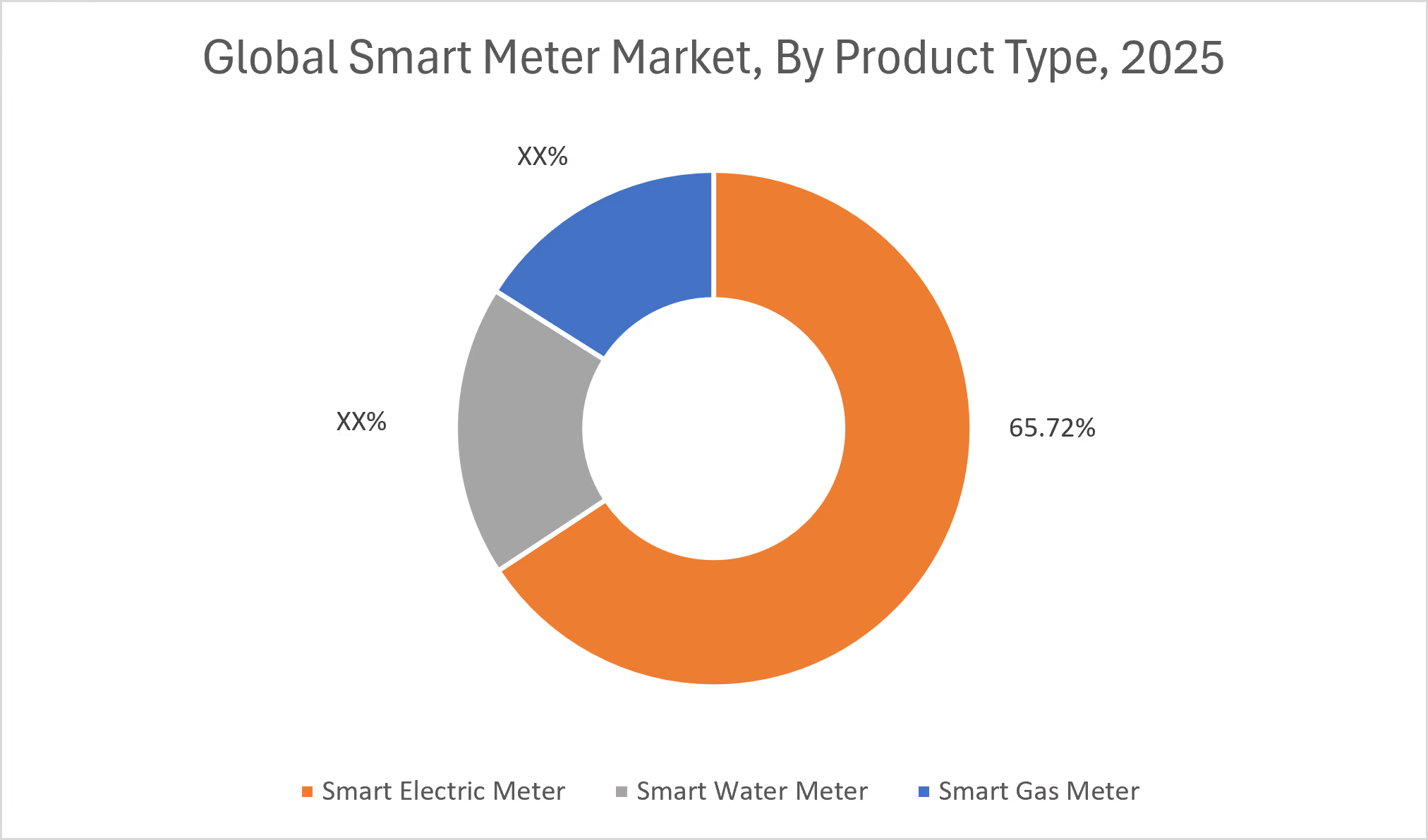
The smart electric meter segment accounted for the largest revenue share of 65.72% in the market in 2025, and it is anticipated to register a significant CAGR during the forecast period.
- Smart electricity meters are advanced meters which are designed for recording electricity consumption in real-time and further communicating that information to both consumers and utility companies over a secure network.
- Moreover, smart electric meters offer several benefits such as real-time monitoring of electricity consumption, two-way communication, remote management, accurate billing, billing optimization, increased cost savings, and others. The above benefits of smart electric meters are key determinants for increasing its utilization in residential, commercial, and industrial sectors.
- In addition, the market is primarily driven by the rising demand for energy efficiency, increasing government mandates for utility digitalization, and expanding smart city infrastructure, among others.
- According to the smart meter market analysis, the above factors are further propelling the market growth.
By Communication Technology:
Based on communication technology, the market is segmented into power line communication (PLC), radio frequency (RF), cellular, and others.
Trends in the communication technology:
- Rising trend towards the adoption of radio frequency (RF) communication technology due to its low battery consumption, high signal penetration in dense urban areas, scalability, and flexibility, among others.
- The segment is driven by the growing need for grid modernization, real-time consumption monitoring, and prevalence of stringent energy efficiency mandates, among others.
The radio frequency (RF) segment accounted for the largest revenue share in the market in 2025, and it is anticipated to register a significant CAGR during the forecast period.
- Radio frequency (RF) communication utilizes wireless radio signals for transmitting data among smart energy meters and utility companies.
- Radio frequency (RF) communication technology often involves a dedicated RF network, and it is commonly adopted due to its high signal penetration in dense urban areas, scalability, flexibility, and the ability to handle uninterrupted multi-node data flow without requiring physical meter access.
- For instance, Genus Power Infrastructures Ltd. offers SAKSHAM-125/145 model of smart electric meter in its product offerings, which includes a built-in RF communication modem. The smart electric meters feature plug and play deployment along with RTC time synchronisation.
- Therefore, increasing advancements associated with RF technology-based smart energy meters are driving the market growth.
By Sales Channel:
Based on sales channel, the market is segmented into direct sales and distributor sales.
rends in the sales channel:
- Factors including higher product quality, availability of excellent support and warranty, along with reliable shipping and return policies, are primary aspects driving the direct sales channel segment.
- Factors including higher flexibility, higher accessibility to a variety of products, and expanded reach are key prospects for boosting the distributor sales channel segment.
The direct sales channel segment accounted for a significant revenue in the smart meter market share in 2025.
- In direct sales channel, smart energy meters are sold directly to customers through numerous physical outlets, including company outlets, among others.
- Moreover, the direct sales channel also consists of an online mode, wherein the manufacturers sell smart energy meters through its own company websites.
- Also, purchasing smart energy meters from a direct sales channel offers various benefits, including higher return on investments, higher product quality, competitive pricing, faster response time, and others, which are primary determinants for increasing the purchase of smart energy meters from direct sales channel.
- Therefore, the increasing availability of smart energy meters in direct sales channels is driving the market growth.
The distributor sales segment is anticipated to register a substantial CAGR during the forecast period.
- The distributor sales channel involves an indirect distribution of smart energy meters, wherein the smart energy meter is purchased from several regional distributors operating in multiple regions worldwide.
- Moreover, distributor sales channels offer various benefits, including lower capital expenditure, expanded market reach, increased cost efficiency, and others. The aforementioned benefits of distributor sales channels are further increasing its utilization for sales of smart energy meters.
- For instance, Moglix, Measurement Control Systems (MCS) Inc., and others are few of the distributors of smart energy meters.
- Hence, the increasing availability of smart energy meters in distributor sales channels is anticipated to boost the market during the forecast period.
By End Use:
Based on end use, the market is segmented into residential, commercial, industrial, and utilities.
Trends in the end use:
- Factors including the presence of favorable government initiatives for development of smart homes and rising adoption of advanced metering solutions are key aspects driving the residential segment.
- The commercial sector has witnessed a significant increase in utilization of smart energy meters, attributing to its several benefits including accurate invoicing, improved energy management, and others.
The residential segment accounted for a significant revenue share in the market in 2025.
- Smart energy meters are mainly integrated in residential sector for delivering automated net metering for electricity, gas, and water consumption, facilitating pre-paid metering, monitoring power quality, and facilitating easy access to critical utility information for enhanced visibility.
- Moreover, the integration of smart energy meters in residential spaces offer several benefits such as real-time energy monitoring, usage pattern analysis, improved billing accuracy, and enhanced control over energy consumption patterns, among others.
- Furthermore, factors including stringent government mandates for grid modernization, increasing consumer awareness regarding energy efficiency, and rising consumer demand for accurate real-time energy tracking are key prospects driving the segment.
- According to the analysis, the aforementioned factors are driving the smart meter market trends.
Commercial segment is anticipated to register a substantial CAGR during the forecast period.
- Smart energy meters are often used in commercial sector to facilitate automated meter reading, real-time energy consumption monitoring, demand management, detailed analytics, and others.
- Moreover, the rising installation of advanced (smart) metering infrastructure in commercial sector is further increasing the adoption of smart energy meters.
- For instance, according to the U.S. Energy Information Administration, the total number of commercial advanced metering installations in the United States reached approximately 13,908,481 installations in 2022.
- Consequently, the increasing installation of smart metering infrastructure in commercial spaces is projected to drive the industry during the forecast period.
Smart Meter Market Regional Analysis:
The regions covered are North America, Europe, Asia Pacific, Middle East and Africa, and Latin America.
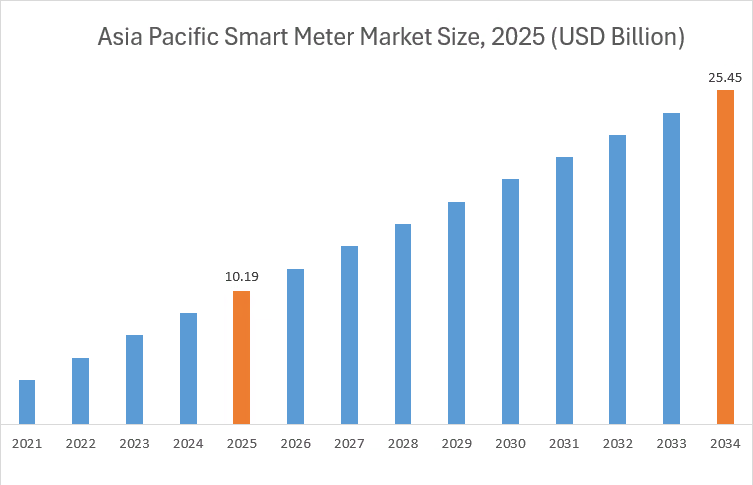
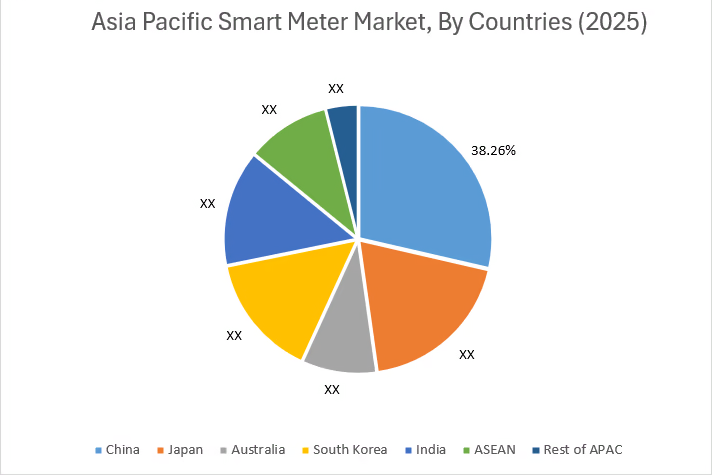
Asia Pacific region was valued at USD 10.19 Billion in 2025. Moreover, it is projected to grow by USD 11.10 Billion in 2026 and reach over USD 25.45 Billion by 2034. Out of this, China accounted for the maximum revenue share of 38.26%. As per the market analysis, the adoption of smart energy meters in the Asia-Pacific region is primarily driven by government-mandated grid modernization and rising smart city programs, among others. Additionally, the rising adoption of smart energy meters in residential and commercial sectors due to its real-time monitoring, automated metering, and scalability is further accelerating the market expansion.
- For instance, according to the Building and Construction Authority of Singapore, the total construction demand, including residential and commercial construction in Singapore, was valued at USD 39.3 billion in 2025, witnessing an increase from USD 32.5 billion in 2024. The above factors are further driving the adoption of smart energy meters in residential and commercial spaces, thereby driving the market in the Asia-Pacific region.
North America is estimated to reach over USD 16.82 Billion by 2034 from a value of USD 7.10 Billion in 2025 and is projected to grow by USD 7.69 Billion in 2026. In North America, the smart meter industry is mostly driven by rising federal grid modernization funding, broadening energy conservation mandates, and growing need to integrate renewable energy and distributed energy resources. Furthermore, rising investments in residential, commercial and industrial construction, along with increasing installation of advanced metering infrastructure, are further contributing to the smart meter market demand.
- For instance, according to the U.S. Energy Information Administration, the total number of advanced metering installations in industrial sector in the United States reached up to 574,726 installations in 2022. The above factors are expected to propel the market trends in North America during the forecast period.
Meanwhile, according to the regional analysis, factors including the presence of governmental mandates prioritizing energy efficiency and rising transition to smart grid infrastructure are driving the industry in Europe. Furthermore, according to the market analysis, the market in Latin America, Middle East, and African regions is expected to grow at a considerable rate due to factors such as growing pace of urbanization, rising smart city initiatives, supportive government regulations mandating grid modernization, and increasing investments in upgrading aging utility infrastructure
Top Key Players & Market Share Insights:
The global smart meter market is highly competitive with major players providing solutions to the national and international markets. Key players are adopting several strategies in research and development (R&D), product innovation, and end-user launches to hold a strong position in the smart meter market. Key players in the market include-
- Landis+Gyr (Switzerland)
- Itron Inc. (USA)
- Schneider Electric SE (France)
- Siemens AG (Germany)
- Honeywell International Inc. (USA)
- Sagemcom SAS (France)
- Kamstrup A/S (Denmark)
- Wasion Group Holdings (China)
- Xylem Inc. (USA)
- ABB (Switzerland)
Smart Meter Market Ecosysytem:
Recent Industry Developments :
Product Launches
- In December 2023, Xylem launched its new Sensus Stratus IQ+ model of smart electric meter for residential applications. The smart residential meter offers improved communication and faster delivery of data.
Mergers & Acquisitions:
- In June 2026, Adani Energy Solutions Limited, India's premier private transmission and energy services firm, announced the acquisition of IntelliSmart Infrastructure Private Limited. IntelliSmart is a prominent smart/advanced metering joint venture co-owned by the Energy Efficiency Services Limited (EESL) and the National Investment and Infrastructure Fund (NIIF). The strategic acquisition aims at strengthening Adani’s overall position as the nation's premier smart (advanced) metering network.
- In October 2024, Kaynes Technology acquired an India-based electricity meter business from Iskraemeco Group. Iskraemeco India is projected to serve the Indian market under Kaynes Technology’s ownership, with a specific focus on supply, operation, and maintenance of smart electric meters.
Smart Meter Market Report Insights :
| Report Attributes | Report Details |
| Study Timeline | 2021-2034 |
| Market Size in 2034 (USD Billion) | USD 65.09 Billion |
| CAGR (2026-2034) | 9.2% |
| By Product Type |
|
| By Communication Technology |
|
| By Sales Channel |
|
| By End Use |
|
| By Region |
|
| Key Players |
|
Key Questions Answered in the Report
How big is the smart meter market? −
The smart meter market was valued at USD 27.15 Billion in 2025 and is projected to grow to USD 65.09 Billion by 2034.
Which is the fastest-growing region in the market? +
Asia-Pacific is the region experiencing the most rapid growth in market.
What specific segmentation details are covered in the smart meter report? +
The smart meter report includes specific segmentation details for product type, communication technology, sales channel, end use, and region.
Who are the major players in the market? +
The key participants in the market are Landis+Gyr (Switzerland), Itron Inc. (USA), Schneider Electric SE (France), Siemens AG (Germany), Honeywell International Inc. (USA), Sagemcom SAS (France), Kamstrup A/S (Denmark), Wasion Group Holdings (China), Xylem Inc. (USA), ABB (Switzerland), and others.
Overview
Reputation & Certifications


Our Services
- Market Intelligence & Forecasting
- Custom Research Solutions
- Market Entry Strategy
- Competitive Intelligence
- Customer Insights
- Industry Innovation Analysis
- Investment Advisory