Jump to Content
Smart Mirror Market - Size, Share, Trends, and Forecasts (2025 - 2035)
What Are Smart Mirrors and Why Are They Gaining Popularity?
Smart mirrors are interactive mirror systems that use digital displays, sensors, and connectivity to provide real-time information. These systems combine reflective glass with display technology to show details such as time, weather, and multimedia content. The ecosystem includes hardware manufacturers, software developers, connectivity providers, and consumer electronics distributors.
The market is expanding due to an increase in smart home devices. Consumers are looking for multifunctional electronics that provide convenience, wellness, and home automation features. An increase in smart home systems, voice assistants, and touch screen displays helps expand the market for smart home devices.
Takeaways from Report
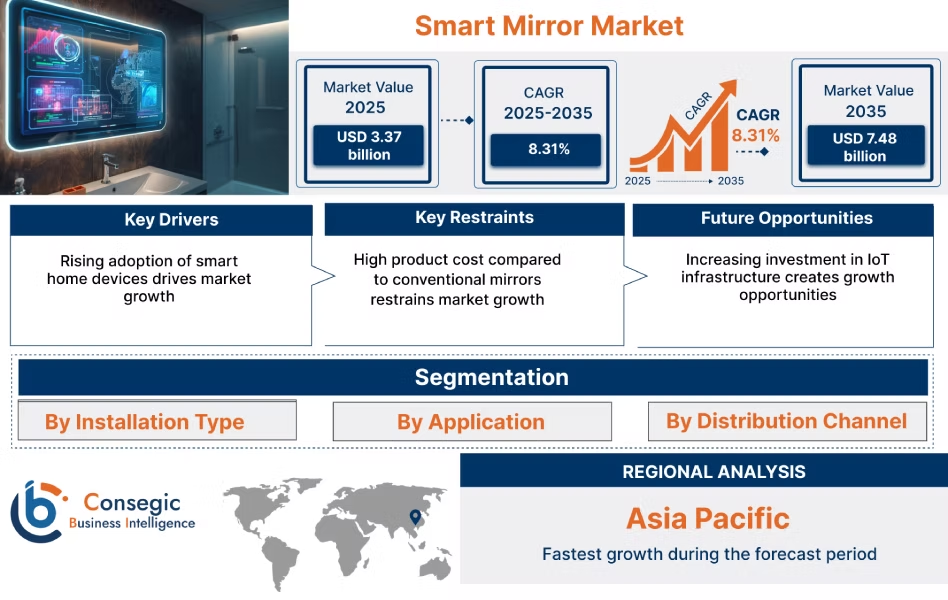
- The market is expected to expand from USD 3.37 billion in 2025 to USD 7.48 billion in 2035, indicating a steady increase at a CAGR of 8.31%.
- Increasing consumption of smart home systems and products is the major factor driving market demand.
- The integration of AI technology is significantly improving product capabilities through personalization, face detection, and interactive experiences.
- However, high product costs relative to traditional mirrors remain a major hindrance for market penetration.
- The residential market leads, followed by commercial markets like retail and fitness, which have the highest potential for market growth.
- Asia Pacific is expected to have the highest market growth rate due to urbanization and increased adoption of smart home systems.
Drivers
Rising adoption of smart home devices drives market growth
Smart home ecosystems are expanding across residential areas, which increases demand for connected devices. Consumers prefer smart solutions that improve convenience and automation. Smart mirrors support display, voice assistant, and connectivity features that align with smart home systems. Consumer electronics companies are launching integrated solutions that include smart mirrors.
For instance, in February 2026, ACEP developed an enhanced version of its Smart Mirror AI technology, which allows for optical measurements and virtual visualization in retail spaces. An increase in smart home devices helps expand the market for smart mirrors.
Growth in disposable income supports adoption of premium consumer electronics
Increase in levels of disposable income among urban population groups leads to a corresponding increase in levels of expenditure on premium consumer electronics, thus fueling demand for smart mirrors with premium features such as AI-based personalization and touch-based control options. For example, the US-based Energy Information Administration revealed that global levels of disposable income are estimated to rise from around USD 10,677 in 2025 to around USD 13,116 in 2035, thus growing by 22.8% during this period. Premiumization trends in consumer behavior encourage adoption of aesthetically advanced and multifunctional devices, which strengthens market penetration in developed and emerging economies.
Growth in luxury real estate projects expands installation scope of premium smart mirrors
Increase in levels of luxury residential and commercial property development leads to a corresponding increase in levels of demand for smart living, thus fueling demand for smart mirrors in bathrooms, dressing areas, and hospitality settings. According to data from Cleveland City Hall, commercial construction permits reached USD 2.3 billion in 2024 in Ohio, US. This is more than double the little over USD 1 billion recorded in 2023. Developers are keen on adding value to the property through the integration of smart infrastructure, which is likely to include the inclusion of connected mirror systems as part of the feature package in high-end developments.
Challenges
High product cost compared to conventional mirrors restrains market growth
Smart mirrors include advanced components, and this makes the product very expensive. The ordinary mirror provides an alternative, especially to residential and commercial consumers. Price-conscious consumers are likely to prefer the ordinary mirror and other display devices. The high cost of the product is, therefore, likely to affect the adoption rate of smart mirrors.
Opportunities
Increasing investment in IoT infrastructure creates growth opportunities
Governments and tech companies are investing in IoT infrastructures, and they facilitate smart device ecosystems. For example, smart mirrors can integrate with other smart home devices through IoT platforms. Tech companies are developing smart mirrors that can integrate with voice assistants and smart homes. For instance, GSMA reports that the total number of IoT connections worldwide is estimated to rise from 15.1 billion in 2021 to 23.3 billion in 2025, showing a rapid growth rate in smart device ecosystems.
Integration with voice assistants strengthens product utility across smart homes
Integration of smart mirrors with voice assistants such as Amazon Alexa and Google Assistant enhances hands-free functionality, which improves user convenience in daily routines. Voice-enabled control supports seamless interaction with other connected devices, which increases the overall utility of smart mirrors within the broader smart home ecosystem. For example, in January 2024, Baracoda launched its smart mirror, BMind, with voice assistant features that allow users to receive personalized mindfulness guidance and control features through voice commands.
Smart Mirror Segments
By Installation Type
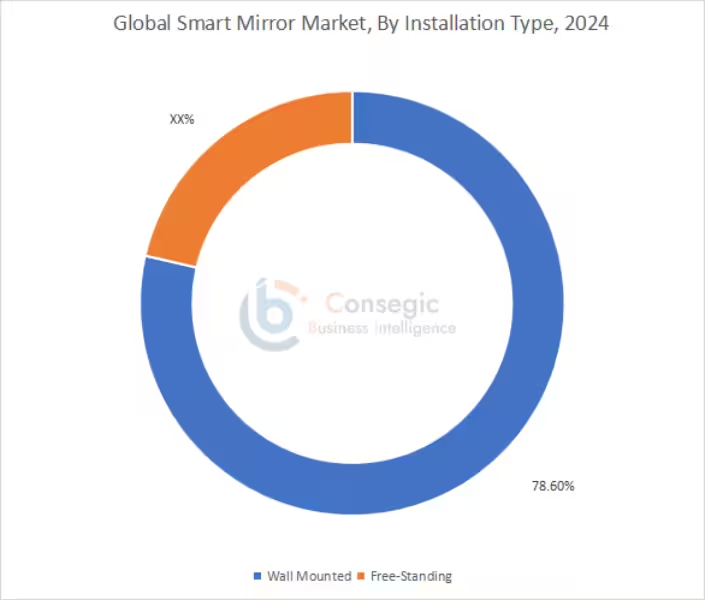
The market includes wall mounted and free-standing.
Dominant Segment
Wall Mounted
Largest revenue share of 78.6% in 2024. Easy integration with modern interiors increases adoption. Preference for permanent installation supports demand.
Fastest Growing
Free-Standing
Fastest CAGR during the forecast period. Flexible placement across residential and commercial spaces increases adoption. Growth in portable and AI-enabled designs supports expansion.
By Application
The market includes residential and commercial.
Dominant Segment
Residential
Largest revenue share in 2024. Adoption of smart home solutions increases demand. Integration with home automation improves user experience.
Fastest Growing
Commercial
Fastest CAGR during the forecast period. Increasing use in retail, hospitality, and fitness supports growth. Demand for digital customer engagement solutions increases adoption.
By Distribution Channel
The market includes online and offline.
Dominant Segment
Offline
Largest revenue share in 2024. Preference for product demonstration increases store-based purchases. Strong retail presence supports market penetration.
Fastest Growing
Online
Fastest CAGR during the forecast period. Wider product availability and price comparison increase adoption. Growth in e-commerce platforms supports expansion.
Geographic Overview
North America, Europe, Asia Pacific, the Middle East and Africa, and Latin America are the key regions covered in the market.
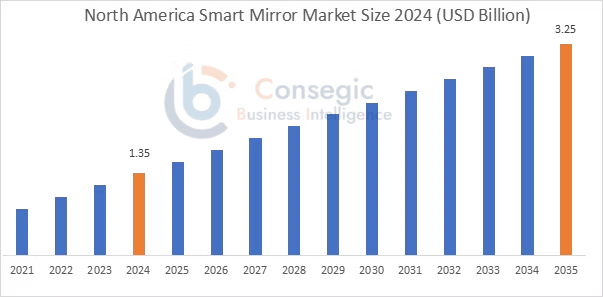
North America accounted for the highest share of 43.4% in 2024 and reached USD 1.35 billion, with projections to reach USD 3.25 billion by 2035. The US held the largest share in the region in 2024. Strong adoption of smart home technologies and connected consumer electronics drives the market growth. Higher spending on home automation devices, as well as the adoption of advanced technologies, further increases the demand in the market. For example, in January 2026, Lorazzo launched a smart LED mirror cabinet, which has lighting, anti-fog, and storage features to support modern home interiors.
Asia Pacific is expected to record the fastest growth during the forecast period. Rising urbanization and increasing adoption of smart home devices support market expansion. China and India are the key markets driving the demand for consumer electronics, while Japan has high adoption rates of home automation technologies. For example, in May 2025, Dharpan.ai launched AI-powered smart mirrors and virtual trial rooms, which provide fast digital try-on capabilities to the consumer.
Leading Player Analysis
The competitive landscape for the smart mirror industry is moderately fragmented, with the presence of consumer electronic players and new technology start-ups. Companies are increasingly focusing on broadening product offerings with new and advanced features such as AI, sensor technologies, and interactive displays. Product development is aligned with applications across residential, retail, and fitness environments. Strategic expansion through offline retail networks and online platforms is increasing market reach. Competitive intensity is rising due to continuous innovation in smart home integration and user interface technologies.
Key participants in the market for smart mirror include:
- Séura – US
- Capstone Companies Inc.– US
- Electric Mirror - US
- HiMirror (New Kinpo Group company) – US
- Gentex Corporation – US
- Murakami Corporation – Japan
- MAGIC MIRROR, INC. – China
- Kohler Co. – US
- Ad Notam AG – Germany
- Pro Display – UK
Latest Industry Developments
- In February 2026, Lorazzo announced a new range of smart LED mirror cabinets, including features such as lighting, anti-fog, and storage, to optimize space and organize modern bathrooms.
- In January 2026, Swan Beauty launched a new AI-powered smart mirror that offers personalized skincare advice, facial analysis, augmented reality makeup lessons, and product suggestions on a single platform.
Smart Mirror Market Report Insights:
| Report Attributes | Report Details |
|---|---|
| Study Timeline | 2019-2035 |
| Market Size in 2035 (USD Billion) | USD 7.48 Billion |
| CAGR (2025-2035) | 8.31% |
| By Installation Type |
|
| By Application |
|
| By Distribution Channel |
|
| By Region |
|
| Key Players |
|
| Report Coverage |
|
Key Questions Answered in the Report
How big is the smart mirror market? −
The smart mirror market size is estimated to reach over USD 7.48 Billion by 2035 from a value of USD 3.11 Billion in 2024 and is projected to grow by USD 3.37 Billion in 2025, growing at a CAGR of 8.31% from 2025 to 2035.
Which segmentation details are covered in the smart mirror report? +
The smart mirror report includes specific segmentation details for installation type, application, distribution channel, and regions.
Which is the fastest segment anticipated to impact the market growth? +
Commercial application is the fastest growing segment due to increasing use of smart mirrors across retail stores, hospitality facilities, and fitness centers.
Who are the major players in the smart mirror market? +
The key participants in the smart mirror market are Séura (US), Capstone Companies Inc. (US), Electric Mirror (US), HiMirror (US), Gentex Corporation (US), Murakami Corporation (Japan), MAGIC MIRROR, INC. (China), Kohler Co. (US), Ad Notam AG (Germany), Pro Display (UK), and others.
What are the key trends in the smart mirror market? +
Rising adoption of smart home ecosystems and integration of AI enabled features are shaping the market.
Overview
Reputation & Certifications


Our Services
- Market Intelligence & Forecasting
- Custom Research Solutions
- Market Entry Strategy
- Competitive Intelligence
- Customer Insights
- Industry Innovation Analysis
- Investment Advisory