Jump to Content
Stolen Vehicle Recovery Market - Size, Share, Industry Trends, and Forecasts (2025-2032)
Stolen Vehicle Recovery Market Size:
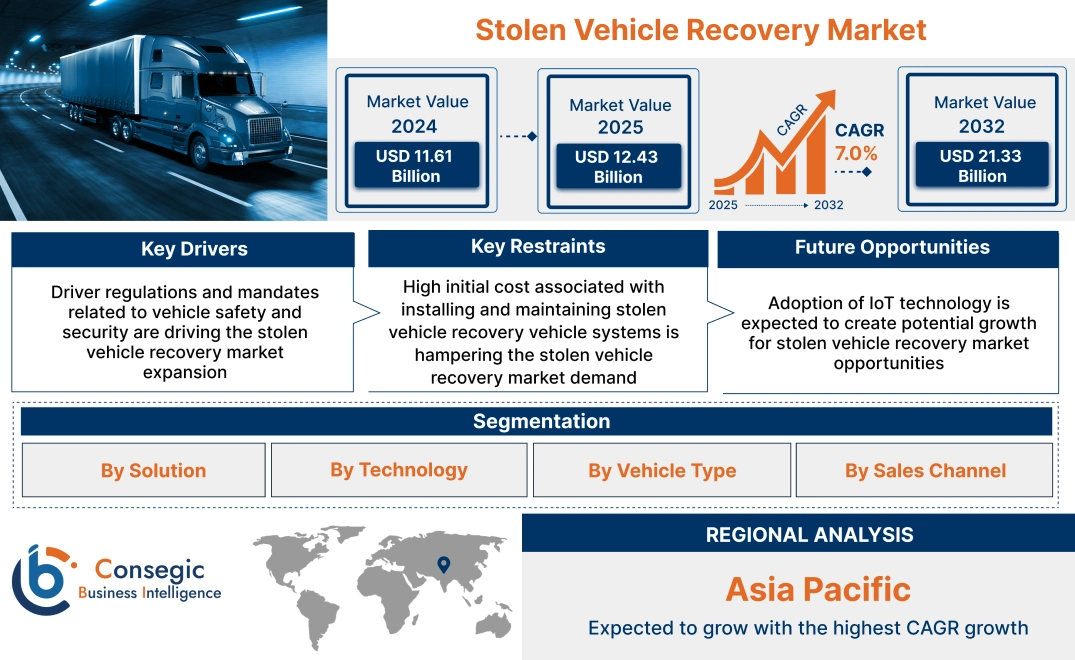
Stolen Vehicle Recovery Market Size is estimated to reach over USD 21.33 Billion by 2032 from a value of USD 11.61 Billion in 2024 and is projected to grow by USD 12.43 Billion in 2025, growing at a CAGR of 7.0% from 2025 to 2032.
Stolen Vehicle Recovery Market Scope & Overview:
A Stolen Vehicle Recovery (SVR) system assists owners and drivers in reclaiming their cars following a theft. These systems operate by discreetly installing a sensor in the vehicle that monitors its location. If the car is stolen, the sensor relays this location information to the authorities, enabling them to locate and recover the vehicle. This technology is becoming increasingly popular due to a rise in car theft, particularly among luxury vehicles. Criminals are employing more advanced techniques to steal cars, including hacking into their computer systems. This poses a significant risk, especially for vehicles equipped with keyless entry, which may be susceptible to unauthorized access. In response to these thefts, major car manufacturers are integrating anti-theft systems into their vehicles, making these systems an essential tool for car owners.
Stolen Vehicle Recovery Market Dynamics - (DRO) :
Key Drivers:
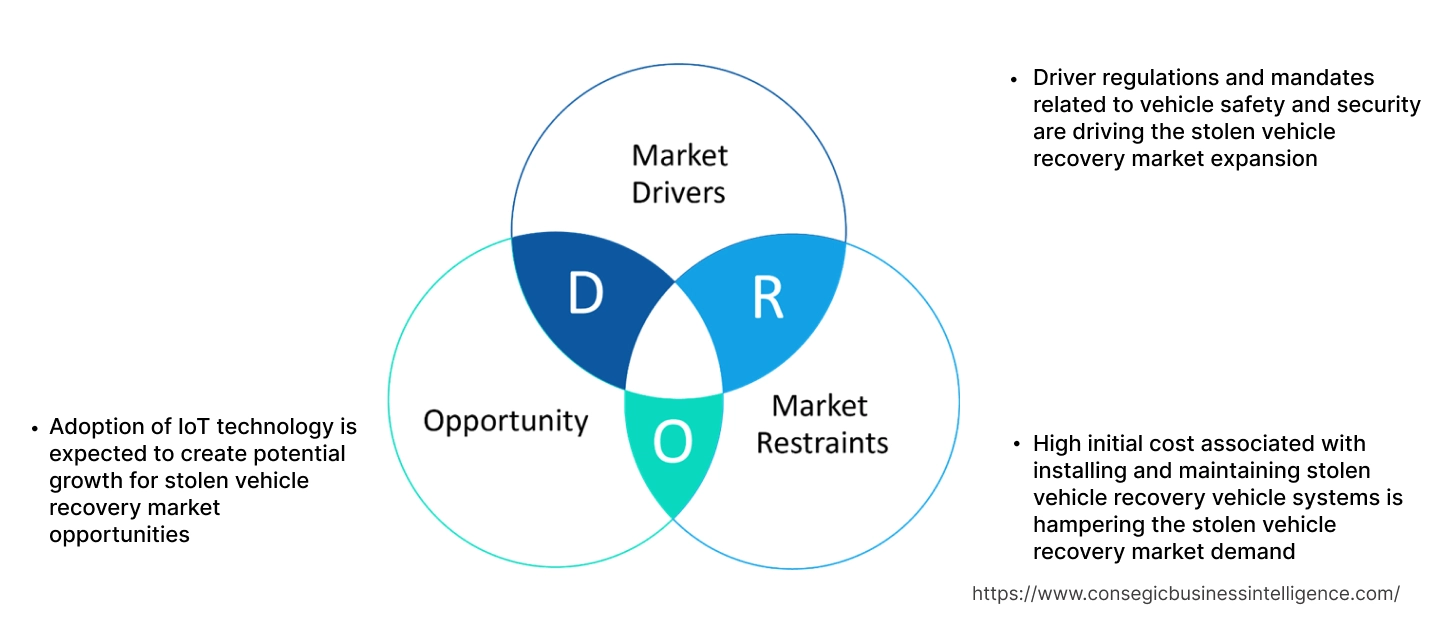
Driver regulations and mandates related to vehicle safety and security are driving the stolen vehicle recovery market expansion
Certain security features in vehicles can be mandated by standards and regulations established by governmental and regulatory bodies. Manufacturers need to incorporate vehicle recovery system technologies into their vehicles to comply with these regulations, as such systems are recognized as valuable tools in combating vehicle theft. In many regions, vehicles undergo certification processes before being sold or used on public roads to ensure they meet safety and security standards. Further, regulatory approvals are partially dependent on the integration of SVRs technologies, requiring manufacturers to demonstrate compliance with government security regulations. To address issues related to vehicle theft and security, government agencies have partnered with the insurance industry. This collaboration lead to the formulation of laws that require or incentivize vehicle owners to install certified vehicle recovery systems to mitigate the effects of vehicle theft on public safety and security.
- For instance, in February 2024, Government of Canada announced a federal investment of USD 15 million to support law enforcement agencies to combat auto theft. Out of USD 15 million dollars, USD 9.1 million would be extend to territorial, provincial, and municipal police forces through the Contribution Program to Combat Serious and Organized Crime (CPCSOC), to increase their volume to take safekeeping of stolen vehicles from the federal agency.
Thus, according to the stolen vehicle recovery market analysis and trends, the government regulations are driving the stolen vehicle recovery market size.
Key Restraints:
High initial cost associated with installing and maintaining stolen vehicle recovery vehicle systems is hampering the stolen vehicle recovery market demand
Before investing in a stolen vehicle, potential users typically conduct a cost-benefit analysis. The benefits, including improved chances of vehicle recovery in the event of theft and potential insurance discounts, need to outweigh the initial investment costs. To enhance the attractiveness of the initial investment, providers could emphasize the long-term advantages. Different consumer segments may experience the cost barrier variably. Owners of luxury vehicles may be more willing to invest in advanced security systems, while budget-conscious consumers may find the upfront cost challenging. To improve accessibility, system providers could explore various financing options or pricing strategies. Economic conditions can also influence consumer willingness to invest in non-essential services. During economic downturns, individuals and businesses may prioritize essential needs over optional security features, potentially affecting SVRs adoption. Thus, the above factors are affecting the stolen vehicle recovery market growth.
Future Opportunities :
Adoption of IoT technology is expected to create potential growth for stolen vehicle recovery market opportunities
The integration of Internet of Things (IoT) technology into SVR offers substantial opportunities for the market. IoT enables SVR companies to present a new value proposition. These devices are compact, easily installed, and can be discreetly hidden within any vehicle. Moreover, they are energy-efficient and capable of monitoring battery usage, thereby lowering maintenance costs. The affordability of batteries further enhances their appeal for stolen vehicle revival firms. Additionally, IoT devices and networks introduce a fresh proposition for SVR companies. Their compact dimension allows for concealed placement inside a vehicle, and their simple installation process – which does not require connection to the car’s on-board diagnostics or panel disassembly as wired solutions do – minimizes installation expenses and reduces the risk of faulty setups. Furthermore, IoT-based solutions feature long-lasting, battery-operated devices that can be strategically placed in various locations within the vehicle, making it challenging for thieves to locate them.
- For instance, in January 2021, Aeris announced the partnership with RevFin for EV projects with investments of USD 15 million. These EVs are integrated with IoT solutions powered by the Aeris Asset Assurance Platform, which assists financial institutions in tracking, lending, and understanding the utilization of movable assets. The partnership with Aeris has enabled RevFin to achieve its vision of developing an integrated lending platform with embedded IoT, aimed at helping drivers enhance their earnings, ensure better repayments, and decrease their insurance claims.
Thus, based on the above analysis and trends, the technological advancements in vehicle recovery systems are driving the stolen vehicle recovery market opportunities.
Stolen Vehicle Recovery Market Segmental Analysis :
By Solution:
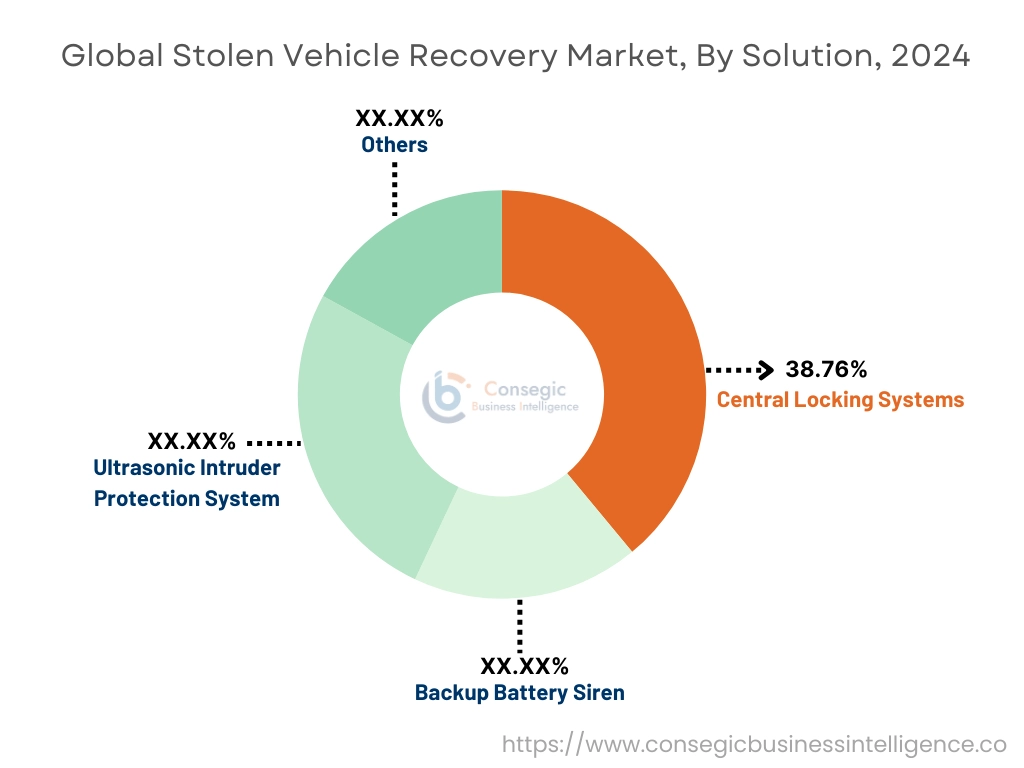
Based on solution, the market is segmented into ultrasonic intruder protection system, backup battery siren, central locking systems, and others.
Trends in the solution:
- The rising adoption of AI, machine learning, blockchain, and edge computing to enhance system capabilities and improve efficiency.
- The increasing collaboration among law enforcement, vehicle manufacturers, and technology providers to create more effective SVR solutions.
The central lock system segment accounted for the largest revenue share of 38.76% in the year 2024 and is expected to register the highest CAGR during the forecast period.
- Central lock systems are widely used as they represent one of the earliest vehicles locking solutions available. The increasing demand for enhanced in-vehicle security systems is also contributing to market growth. Furthermore, these systems provide various lock types, including window locks, steering column locks, and other essential components critical for vehicle security.
- Central locking systems have experienced a rising adoption rate in both passenger and commercial vehicles due to consumer demand for elevated safety standards and the adaptability of these technologies. Additionally, the rise of connected cars and smart mobility features is further stimulating the demand for such systems.
- For instance, Huf and Volkswagen Group developed an individual four-track locking system. With the Huf Twin System, they will encounter significant limitations. Unlike locking cylinders where tumblers operate on a single axis, the tumblers in the Huf Twin System function on two intersecting axes in four distinct directions. Consequently, the key is milled on all four sides of the rectangular key bit, rendering it nearly impossible to replicate.
- These trends and analysis in locking systems would further drive the stolen vehicle recovery market size during the forecast period.
By Technology:
Based on technology, the stolen vehicle recovery market is segmented into ultrasonic, radio frequency identification RFID, GPS tracking, real time positioning, and others.
Trends in technology:
- Companies such as LoJack, CalAmp, and Spireon are at the forefront of the SVR market, boasting established product portfolios and robust customer bases.
- As concerns about vehicle theft rise and technology advances, these tracking solutions have become vital for both private and commercial vehicle owners seeking to protect their assets.
- Governments globally are significantly contributing by investing in vehicle security initiatives and implementing regulations that mandate manufacturers to adopt theft-deterrent technologies, further propelling the market. These regulatory measures are motivating vehicle owners to invest in tracking software in order to meet security requirements, thereby fostering favourable conditions for market growth.
GPS tracking segment accounted for the largest revenue share in the year 2024 and is expected to register the highest CAGR during the forecast period.
- The demand is driven by the need for a reliable vehicle locating system that provides accurate data feeds to law enforcement agencies for precise vehicle tracking. GPS systems also play a crucial role in the vehicle recovery process, further enhancing the segment's share.
- The rise in road accidents has prompted fleet management companies and government authorities to mandate the installation of tracking devices in all vehicles to monitor their location and speed. Additionally, the growing adoption of intelligent transport systems and the introduction of 5G technology in vehicle connectivity are expected to accelerate segment growth. The increasing need for autonomous and semi-autonomous vehicles also fuels the need for advanced and standard vehicle tracking systems.
- For instance, in April 2023, iTecknologi Group has partnered with Vehari Police to implement Advanced Vehicle Tracking Services aimed at improving the safety and oversight of the police fleet. This partnership will deliver actual tracking capabilities, allowing the police to access current information regarding the location of their vehicles.
- Thus, on the above factors such as focus on real-time tracking capabilities would further supplement the global market during the forecast period.
By Vehicle Type:
Based on the vehicle type, the stolen vehicle recovery market is segmented into passenger vehicles and commercial vehicles.
Trends in the vehicle type:
- Luxury cars, high-performance vehicles, and classic cars are frequently targeted by professional thieves, necessitating advanced vehicle recovery systems equipped with enhanced security features.
- Stolen vehicle recovery systems are progressively incorporating telematics systems to offer comprehensive vehicle management solutions, which include diagnostics, maintenance alerts, and monitoring of driver behaviour.
passenger vehicles segment accounted for the largest revenue share in the year 2024.
- Passenger car SVRS solutions are designed to meet the unique requirements and characteristics of vehicles primarily used for personal transportation. These systems are typically compact and seamlessly integrated into passenger car designs.
- The emphasis is on providing vehicle owners with discreet and efficient tracking functionalities to safeguard their personal assets. Given the prevalence of passenger cars, this segment constitutes a significant portion of the global market.
- The utilization of a tracking system by app-based transportation car leasing and rental companies, including Ola, Uber, Careem, and Lyft, Inc., is fuelling growth in the sector. This tracking system allows these companies to collect data on average speed, distance travelled, daily ride count, and idle time, thus enhancing operational efficiency and profitability.
- For instance, in October 2021, Ford introduced stolen vehicle services for the FordPass application to help customers protect their vehicles and provide 24-hour support in the event of vehicle theft. With this application, drivers who are notified of their vehicle being stolen reach out to a specialized call center, allowing the police to track the vehicle and enhance the likelihood of recovery.
- Thus, the global requirement for stolen recovery solutions for passenger segment across the globe would further drive the market during the forecast period.
commercial vehicles segment is anticipated to register the fastest CAGR during the forecast period.
- Commercial vehicles, including vans, trucks, and other work-related automobiles, must adhere to specific standards concerning dimensions, payload capacity, and operational factors. Commercial vehicle SVRS solutions are tailored to address the distinct needs of fleet managers and companies.
- These systems may also offer additional features such as fleet management capabilities and cargo monitoring. The automotive market is segmented by vehicle type, reflecting the diversity of the sector and the differing security requirements of passenger and commercial vehicle owners. While both segments have the common objective of preventing and recovering stolen vehicles, SVRS solutions are specifically designed to accommodate the unique attributes and applications of each vehicle type.
By Sales Channel:
Based on the sales channel, the stolen vehicle recovery market is segmented into OEMs and aftermarket.
Trends in the sales channel:
- Vehicle manufacturers are progressively incorporating SVR systems as standard features or optional upgrades in the vehicle purchase process, capitalizing on their established dealer networks and customer relationships.
- Sales channels are evolving to offer personalized recommendations tailored to customer needs and vehicle types.
- Collaborations among SVR providers, insurance companies, telematics providers, and other stakeholders are increasingly vital for market success.
OEMs segment accounted for the largest revenue share in the year 2024.
- OEMs distinguish their vehicles by incorporating integrated SVR systems as a significant selling proposition, appealing to safety-minded consumers.
- OEM-integrated SVR systems offer customers reassurance and a sense of security, ensuring their vehicles are safeguarded against theft.
- OEMs are packaging SVR solutions with additional connected car services, including remote diagnostics, over-the-air software updates, and driver assistance features.
- These factor and trends would further drive the global market during the forecast period.
Aftermarket segment is anticipated to register the fastest CAGR during the forecast period.
- Consumers have the option to select systems that align with their specific needs, including hidden trackers, plug-in devices, or those equipped with distinct features such as remote engine shutdown.
- Numerous aftermarket providers present adaptable subscription models, enabling customers to select the service and monitoring level that best suits their budget.
- The aftermarket serves as a hub for innovation, with companies perpetually creating new technologies and features for SVR systems
- Thus, based on the analysis these factors would further drive the stolen vehicle recovery market trends during the forecast period.
Regional Analysis:
The global market has been classified by region into North America, Europe, Asia-Pacific, MEA, and Latin America.
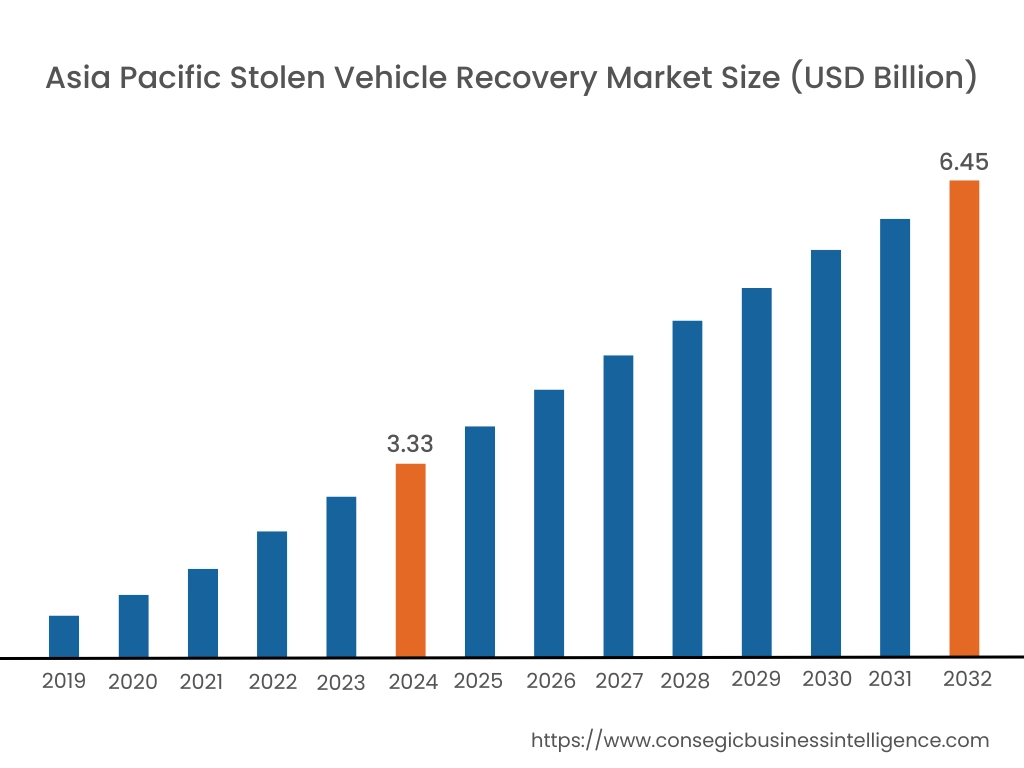
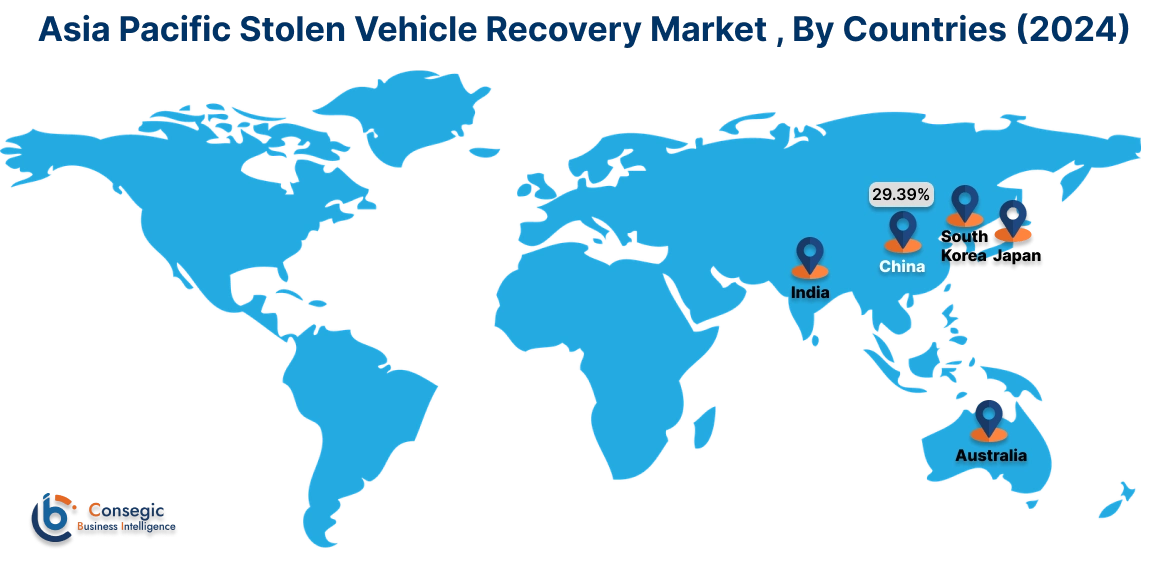
Asia Pacific stolen vehicle recovery market expansion is estimated to reach over USD 6.45 billion by 2032 from a value of USD 3.33 billion in 2024 and is projected to grow by USD 3.59 billion in 2025. Out of this, the Chinese market accounted for the maximum revenue split of 29.39%. Asia-Pacific is currently one of the most prominent automotive markets worldwide, primarily due to the region's rapidly growing population. Governments in Asia-Pacific are emphasizing the adoption of technological innovations to enhance personal mobility for consumers. This focus has resulted in a greater uptake of anti-theft systems in vehicles, contributing to the expansion of the Asia-Pacific automotive market. Companies are investing in research and development to deliver advanced solutions that provide improved accuracy, real-time tracking, and additional functionalities such as geofencing and remote immobilization. These technological advancements are expected to draw more consumers and further broaden the market. These factors and analysis would further drive the regional stolen vehicle recovery market growth during the forecast period.
- For instance, in September 2023, Shenzhen Jimi IoT Co., has introduced a new VL103M series in the stolen vehicle recovery, ideal for fleet management organizations. The series is a 4G multifunctional vehicle tracker that offers benefits such as positioning data, compact dimension, precise, health monitoring, and various other features that are highly favoured by fleet owners.
North America market is estimated to reach over USD 7.53 billion by 2032 from a value of USD 4.14 billion in 2024 and is projected to grow by USD 4.43 billion in 2025. The regional growth can be attributed to the growing incorporation of telematics and GPS technology into car security systems. These technologies enhance the chances of recovering stolen vehicles by facilitating real-time tracking and monitoring. The rise of advanced security systems has been significantly driven by government initiatives and regulations. Moreover, an increased adoption rate is due to consumers' heightened awareness of the benefits of stolen vehicle recovery systems. The North American SVR market features a variety of major players offering a range of solutions. These companies often focus on technological innovation and strategic partnerships to strengthen their market position. Additionally, collaborations with insurance providers and law enforcement agencies are now common, which bolsters the credibility and effectiveness of SVRS solutions in the region. These factors would further drive the regional stolen vehicle recovery market share during the forecast period.
- For instance, in October 2023, IBM has signed three memoranda of understanding (MoUs) with three entities affiliated with the Ministry of Electronics and Information Technology (MeitY) to promote and enhance innovation in AI, semiconductor, and quantum technology in India. This initiative aims to expedite India's national strategy for AI, bolster efforts toward semiconductor self-reliance, and advance the National Quantum Mission.
According to the stolen vehicle recovery industry analysis, the European market has seen robust progression in the coming years. Connected car platforms leverage telematics technology to facilitate communication between vehicles and external systems, allowing for real-time data exchange and remote monitoring capabilities. By incorporating stolen vehicle recovery systems with connected car platforms, vehicle owners and law enforcement agencies benefit from enhanced tracking and recovery functionalities, such as GPS tracking, remote immobilization, and geofencing. This integration promotes seamless communication between stolen vehicle recovery systems and connected car platforms, enabling automated alerts and notifications in cases of theft or unauthorized access. Through continuous monitoring and data transmission, connected car platforms can provide timely updates on the location and status of stolen vehicles, thereby facilitating swift recovery efforts by law enforcement agencies. Additionally, customization and tailoring of solutions for specific market segments are vital in the Latin American market. Acknowledging that various customer segments have unique needs and preferences, key players in the market provide customized solutions to effectively meet specific requirements. By understanding the distinct challenges faced by different customers, such as vehicle owners, fleet operators, or insurance companies, providers can create tailored offerings that deliver maximum value and satisfaction. Furthermore, the energy sector is the largest consumer of rolling equipment in the Middle East region. Wagons are the primary rail vehicles utilized for transporting oil within this industry. Additionally, in the Middle East and Africa region, there is heightened awareness among vehicle owners regarding the availability and advantages of stolen vehicle recovery systems that is driving the adoption rate of advanced solutions. Additionally, marketing campaigns and educational initiatives by government agencies and private companies are promoting the significance of vehicle security. Thus, on the above stolen vehicle recovery market analysis, these factors would further drive the regional market during the forecast period.
Top Key Players and Market Share Insights:
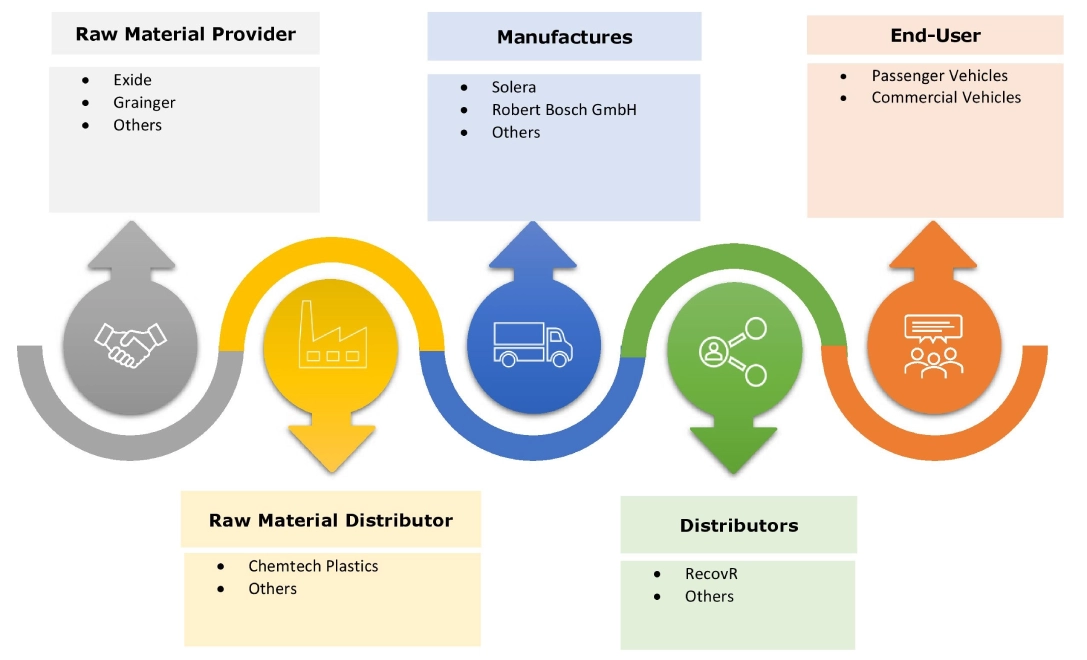
The global stolen vehicle recovery market is highly competitive with major players providing vehicle recovery solutions to the national and international markets. Key players are adopting several strategies in research and development (R&D), product innovation, and end-user launches to hold a strong position in the market. Key players in the stolen vehicle recovery industry include-
- Vodafone Limited (U.K.)
- Solera (U.S.)
- TRACKMATIC UK (U.K.)
- Aptiv Plc (Ireland)
- Tokai Rika Co. (Japan)
- Robert Bosch (Germany)
- Ford Motor Company. (U.S.)
- BMW (Germany)
- Mercedes (Germany)
- Kia Motors Corporation (South Korea)
Recent Industry Developments :
Partnership:
- In June 2023, Hyundai Motor Company and Vodafone Automotive have partnered to provide customers with advanced connected features and services. As a result of this collaboration, Vodafone Business will implement its IoT connectivity for connected car service in various Kia, Genesis, and Hyundai models, which are sold in the European market.
Stolen Vehicle Recovery Market Report Insights :
| Report Attributes | Report Details |
| Study Timeline | 2019-2032 |
| Market Size in 2032 | USD 21.33 Billion |
| CAGR (2025-2032) | 7.0% |
| By Solution |
|
| By Technology |
|
| By Vehicle Type |
|
| By Sales Channel |
|
| By Region |
|
| Key Players |
|
| North America | U.S. Canada Mexico |
| Europe | U.K. Germany France Spain Italy Russia Benelux Rest of Europe |
| APAC | China South Korea Japan India Australia ASEAN Rest of Asia-Pacific |
| Middle East and Africa | GCC Turkey South Africa Rest of MEA |
| LATAM | Brazil Argentina Chile Rest of LATAM |
| Report Coverage |
|
Key Questions Answered in the Report
How big is the Stolen Vehicle Recovery market? −
Stolen Vehicle Recovery Market Size is estimated to reach over USD 21.33 Billion by 2032 from a value of USD 11.61 Billion in 2024 and is projected to grow by USD 12.43 Billion in 2025, growing at a CAGR of 7.0%from 2025 to 2032.
Which is the fastest-growing region in the Stolen Vehicle Recovery market? +
Asia-Pacific is the region experiencing the most rapid growth in the market. The growing demand for luxury vehicles in the region has made them prime targets for thieves, highlighting the need for effective recovery solutions. Additionally, public awareness campaigns aim to inform vehicle owners about theft prevention strategies and the significance of reporting incidents.
What specific segmentation details are covered in the Stolen Vehicle Recovery report? +
The stolen vehicle recovery report includes specific segmentation details for solution, technology, vehicle type, sales channel, and region.
Who are the major players in the Stolen Vehicle Recovery market? +
The key participants in the market are Vodafone Limited (U.K.), Solera (U.S.), Robert Bosch (Germany), Ford Motor Company. (U.S.) BMW (Germany), Mercedes (Germany), Kia Motors Corporation (South Korea), TRACKMATIC UK (U.K.), Aptiv Plc (Ireland), Tokai Rika Co. (Japan) and others.
Overview
Reputation & Certifications


Our Services
- Market Intelligence & Forecasting
- Custom Research Solutions
- Market Entry Strategy
- Competitive Intelligence
- Customer Insights
- Industry Innovation Analysis
- Investment Advisory