Climate change in 2026 is no longer seen as an issue far removed from environmental aspects but has evolved into a pressing social, economic, and health problem experienced in daily life globally. The rising global temperature, unprecedented high heat of the oceans, prolonged droughts, and flooding have caused immense disruption in all areas. Specialists note that 2026 might prove to be one of the hottest years ever as a result of the greenhouse gases emitted by people and strengthened El Niño conditions.
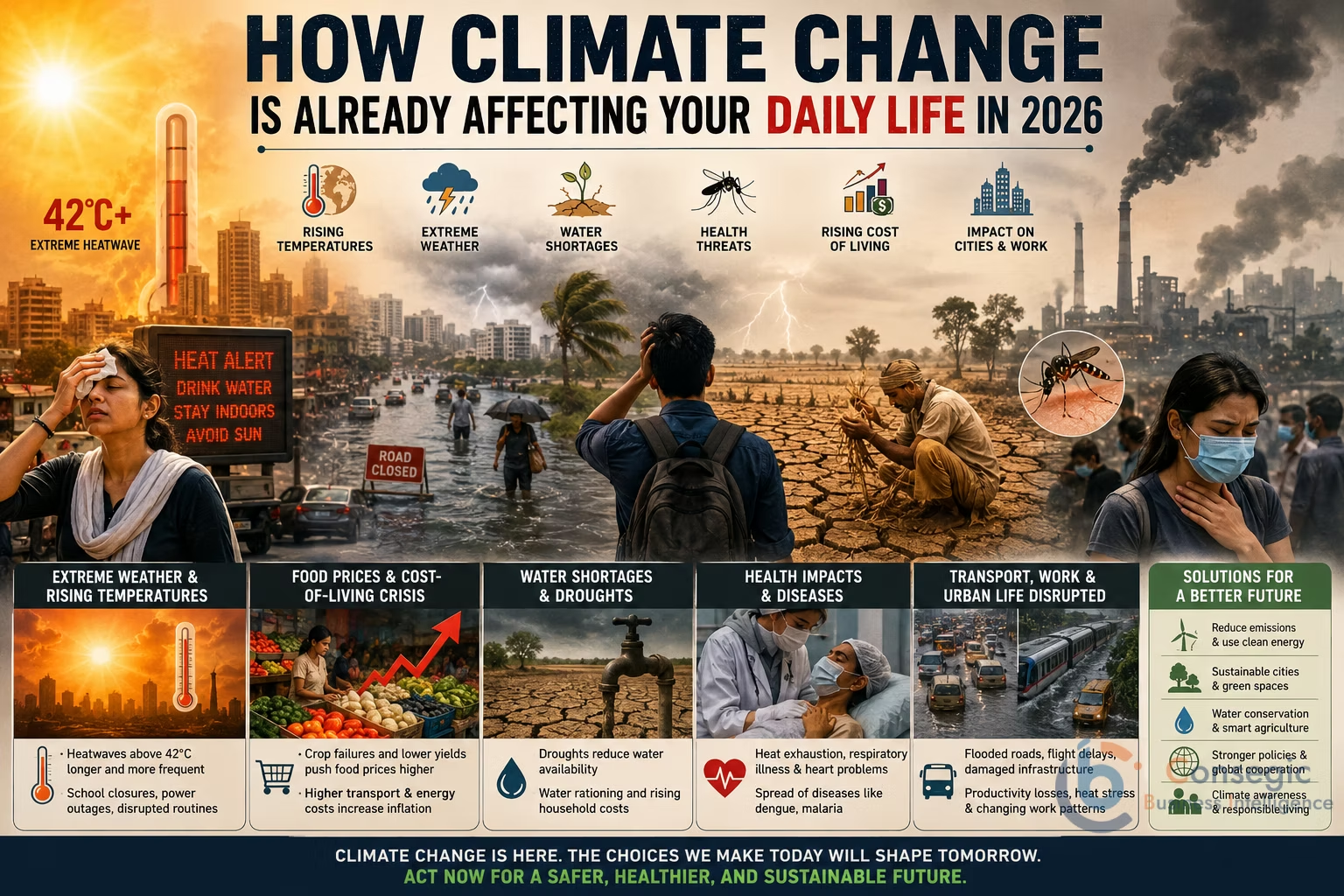
In developing nations such as India, heatwaves are coming early and more often and are causing great harm to people living in towns. In 2026, research revealed that there has been a considerable rise in heatwave severity during the last twenty years, making Indian megacities extremely vulnerable due to rapid urban development and the “urban heat island” effect. Moreover, climate change is now impacting daily spending on electricity usage, transportation costs, healthcare costs, and food bills.
Extreme Weather and Rising Temperatures Are Changing Daily Routines
Extreme weather conditions experienced in 2026 have had a huge impact on the lives of people. With heatwaves in Europe, Asia, and North America exceeding the critical mark of 42°C and leading to schools' closures, health issues and disruption of outdoor operations. As claimed by climate scientists, current heatwaves last almost twice as long compared to the previous period owing to warm oceans and atmospheric instability.
The most affected people live in urban areas since such regions accumulate much heat with the help of concrete surfaces, dense traffic and lack of green spaces. Moreover, heat waves are spreading at an unprecedented rate in highly populated zones.
Additionally, climatic changes have led to an increase in the need for electricity to operate the air conditioning systems, creating power outages, increasing energy bills, and increasing the cost of living. Furthermore, floods and heavy rains in various parts of the world affect the movement of the population by creating obstacles such as blocked highways, cancelled flights, and other means of transport.
Food Prices, Water Shortages, and the Cost-of-Living Crisis
Climate change continues to be the reason behind high living costs due to disturbances in agriculture, food logistics, and the availability of clean water. According to the United Nations in 2026, extreme heat has been identified as the cause of disruption in the food system of the world, putting the lives of more than one billion people at risk.
The scientific literature reveals that there are certain thresholds beyond which the yield of staple crops such as wheat, rice, maize, and soybean declines drastically. Furthermore, livestock is also being harmed in the form of low milk production, infertility, and decreased livestock performance. In several regions of South Asia and Latin America, farmers will potentially encounter up to 250 days of unsafe working outside per year due to extreme heat.
In addition, another serious issue that arises from climate change is that of water scarcity, particularly in cities where the issue of water scarcity is aggravated by drought and less rainfall. In addition, the effect of climate-related disasters on increased transport costs and higher electricity rates adds to the problem of rising prices and inflation levels. In several countries' economies, recent evidence suggests sharp price increases related to adverse weather and its impact on production.
Health Impacts: Heatwaves, Pollution, and the Spread of Diseases
Health implications have been exacerbated significantly due to heatwaves, pollution, and climate-sensitive diseases. Heat exhaustion, dehydration, respiratory issues, cardiovascular problems, heat strokes are just a few examples of health emergencies resulting from climate change in the form of heatwaves. The Lancet Countdown Report for Europe in 2026 states that climate change health emergencies and fatalities are increasing exponentially compared to the capacity of healthcare facilities to cope up.
The increase in heat wave related mortality rates in the coming years due to climate change has been highlighted by recent scientific research conducted in India. Moreover, the increase in urbanization, population density, and lack of cooling systems are rendering poor people, seniors, and the working class susceptible to harm.
Additionally, air quality degradation is another result of climate change as heat worsens pollution levels and increases wildfires. Furthermore, warming effects coupled with rainfall changes lead to mosquito breeding in other locations causing spread of diseases like dengue and malaria. Mental health issues are also gaining significance with the increasing number of climate-related anxieties, stress caused by natural calamities, and heat-induced fatigue in the millions of people.
How Climate Change Is Reshaping Transportation, Work, and Urban Life
The impacts of global warming continue to revolutionize the way transport systems, urban infrastructures, and workplaces operate. There have been many cases whereby the roads, railways, airports, and energy infrastructures were damaged by high temperatures and climate extremes, leading to serious interruptions of commuting activities and economic production. Additionally, flooding events are becoming more common in the urban centres, while heat waves are impacting on transport systems through the expanding surfaces and overheating the equipment used for transportation.
There is an increasing number of productivity losses in labour-intensive industries due to the unfitness of workers during extreme heat conditions. Recently, the FAO (Food and Agriculture Organization) and WMO (World Meteorological Organization) issued a warning statement about the possible consequences of global warming on the lives of farmers, especially the outdoor agricultural labour that could be rendered impractical within specific months of the year.
In addition to that, modern cities need to rethink their designs due to the adverse effects of global warming. Cooling centres, green roofs, electric mass transit system, resilient flood structures, sustainable urbanism, and flexible work hours are some of the measures being adopted in urban centres.
Conclusion
Climate change in 2026 is no longer an issue limited to the environment; instead, it has become a huge threat at a global scale impacting economics, the health sector, infrastructure, and people’s day-to-day lives. High temperatures, severe weather conditions, hunger, droughts, water shortage, and increased health threats have significantly transformed people’s lifestyles around the world. However, people living in urban areas are highly exposed to the challenges posed by climate change because of high levels of industrialization and poor environmental management. With such developments, immediate global actions, stringent environmental laws, and sustainability have become crucial for securing a better future for everyone.