America’s Debt Disaster: The $40 Trillion Crisis Reshaping the Economy and Your Wallet
America’s national debt has crossed $39 trillion as of May 2026, and for the first time since World War II, debt is officially larger than the entire US economy. What is even more alarming is at the speed at which it is growing- the debt is increasing nearly by $6.12 billion every single day, putting the country on track of a $40 trillion debt.
But this isn’t just a Washington problem- rather, the effects are showing up in everyday life. Higher interest rates are being pushed up due to national debt making mortgages, car loans and credit cards more expensive. It also adds inflationary pressure, meaning people lose purchasing power slowly as everyday costs rise.
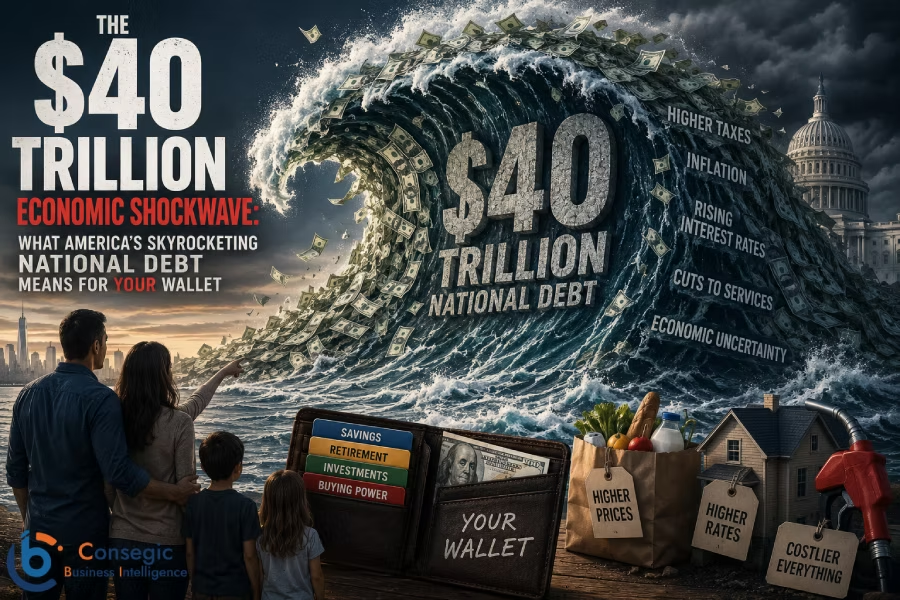
The federal government is now spending up to $1 trillion a year alone in just interest payments- more than it spends on the country’s military. Over 75% of federal income taxes are being diverted and spend on interest payment instead on schools, roads, healthcare or infrastructure.
When broken down, the debt rounds up to roughly $285,000 per household, highlighting just how massive the debt has become. Economist warn that if spending and borrowing remains the same, the long-term impact could mean slower economic growth, weaker public services and more financial pressure on future generations.
Key Factors About America’s National Debt Situation
America’s national debt has climbed to a staggering $39.17 trillion and for the first time since World War II, the country owes more money than the entire economy produces in a year, with debt standing to roughly 100.2% of GDP.
To put that into perspective, the debt equals around $114,000 for every American and is still growing rapidly- by roughly $6-8 billion every single day.
What is concerning even more is the cost of simply maintaining the debt. The US government is now paying close to $1 trillion in interest rate alone, the number that has tripled since 2020. Interest payment has become the biggest expense of the government, now costing more than both national defence and medical budget.
The situation is being fuelled by years of federal budget deficits, higher interest rates and continued government spendings. If the current situation continues, economists predict that federal debt can rise nearly up to 120% of GDP by 2036, while total interest cost over the next decade may exceed $16 trillion.
Persistent debt growth can also worsen inflationary pressure. The causes of inflation can vary, however, government borrowing and spending which is too large could contribute to raising prices in the economy over time as there is too much money around. The purchasing power of families with housing, food and school bill expenses already consuming the largest portion of the family budget, is likely to decrease with continued inflation.
What Are the Main Causes of America’s Debt Explosion?
The United States did not suddenly wake up with $39 trillion of debt hanging over their heads, but the crisis is a result of multiple economic shocks, decades of deficit spendings, expensive wars, tax policies, rising healthcare costs and now soaring interest payments- all colliding at the same time.
Economists often describe this situation as “the perfect storm” because several major factors begin unfolding each other simultaneously. The result is the fastest and the most expensive debt buildup in modern American history.
One of the biggest reasons for recent debt surge was the COVID-19 pandemic. Between 2020 and 2022, the US government spent nearly $6 trillion on stimulus checks, unemployment benefits, healthcare funding, business reliefs and emergency economic measures to prevent a financial collapse during lockdown. While this spending helped stabilize the economy, it was largely funded through borrowing, causing debt to rise rapidly.
Soon after, inflation surged, forcing the federal reserve to aggressively raise interest rates. That made government borrowing far more expensive, pushing annual interest to $1 trillion. This has meant that the US is now spending a lot more on paying interest and a substantial proportion of taxpayers' money is now being spent on servicing past debt, rather than investing in infrastructure, healthcare, education etc.
Programs with a long-term structural aspect to them have also significantly contributed to the growth in the crisis. Programs such as Social Security and Medicare will increasingly be costing more to fund as America's population ages and the cost of healthcare escalates and government revenues are nowhere near being high enough to fund such commitments.
In parallel, a succession of tax cuts in the last two decades have increased the problem, leading to ever-diminishing revenue. Combined with post 9/11 wars, 2008 financial crisis, pandemic era spending and persistent annual deficits, the government has for years continued to spend much more money than it takes. Now interest payments are adding another problem- they are making debt more expensive to hold.
How does this affect your wallet?
America’s $39 trillion huge debt is not just a political issue anymore and is increasingly affecting everyday people through higher borrowing costs, inflation and slower economic growth. As government debt rises and interest stay elevated, mortgages, car loans, student loans and credit cards become far more expensive. Even a small increase in rates can significantly raise monthly payments, making homes, vehicles and other everyday borrowings more expensive.
Meanwhile the mounting debt exerts further pressure on wages and jobs. With less money available to spend on infrastructure, schools, health services and other important expenses, the amount left to invest in future shrinks due to interests being paid to debt holders. Experts warn that this can discourage businesses from investing, making jobs scarce.
Also, the majority of experts suggest that increases in taxation may eventually have to be introduced to help curb growing debt and the $1 trillion in yearly interest payments. At the same time Social Security type programs are unfunded for the long-term meaning future retirees could get less money than current ones if something is not done about it. Inflation adds another layer of pressure by reducing purchasing power, meaning people pay more for groceries, rent, fuel and other essentials while their money buys less.
The broader concern is that as interest payments consume a larger share of federal revenue, the government has less flexibility to invest in public services or respond to future economic crisis.
America’s $40 Trillion Debt Crisis: A Growing Threat to the Economy and Everyday Americans
America’s rapidly growing national debt is no longer just a government problem– it is increasingly affecting everyday people. Increased government spending, coupled with several expensive crises, growing entitlement and interest payments, has brought the national debt closer to $40 trillion and there are predictions that it could go even higher in the years ahead.
Increased interest payments leave the government with even less money to invest in infrastructure, health, education and other essential public services. Economists caution that with this trend, future generations may suffer from increased taxes, slower economic growth and more financial strains.