The United States' economy may appear stable on the surface, but underneath the headlines there are several signs that show how quiet but dangerous a recession might already be happening beneath all the positivity. Stocks continue to soar and reach all-time records, employment numbers still look good, and most of the official reports will usually talk about how resilient the country's economy is. However, the financial state of many average citizens paints quite a different picture. High living expenses, increasing debt, dwindling savings, and job insecurity have turned into the norm for many people.
In contrast with the 2008 financial crisis or the rapid decline of the economy during the pandemic, this recession is developing rather gradually. Moreover, consumers have started using their credit cards to pay for basic expenditures such as food, rent, and gasoline. Meanwhile, businesses, particularly those small ones, find themselves having difficulty staying afloat amid high-interest rates. Additionally, large corporations have also been letting go of workers and reducing hiring without widespread public attention. At the same time the property market is currently experiencing its first setback, with high mortgage rates being a major problem.
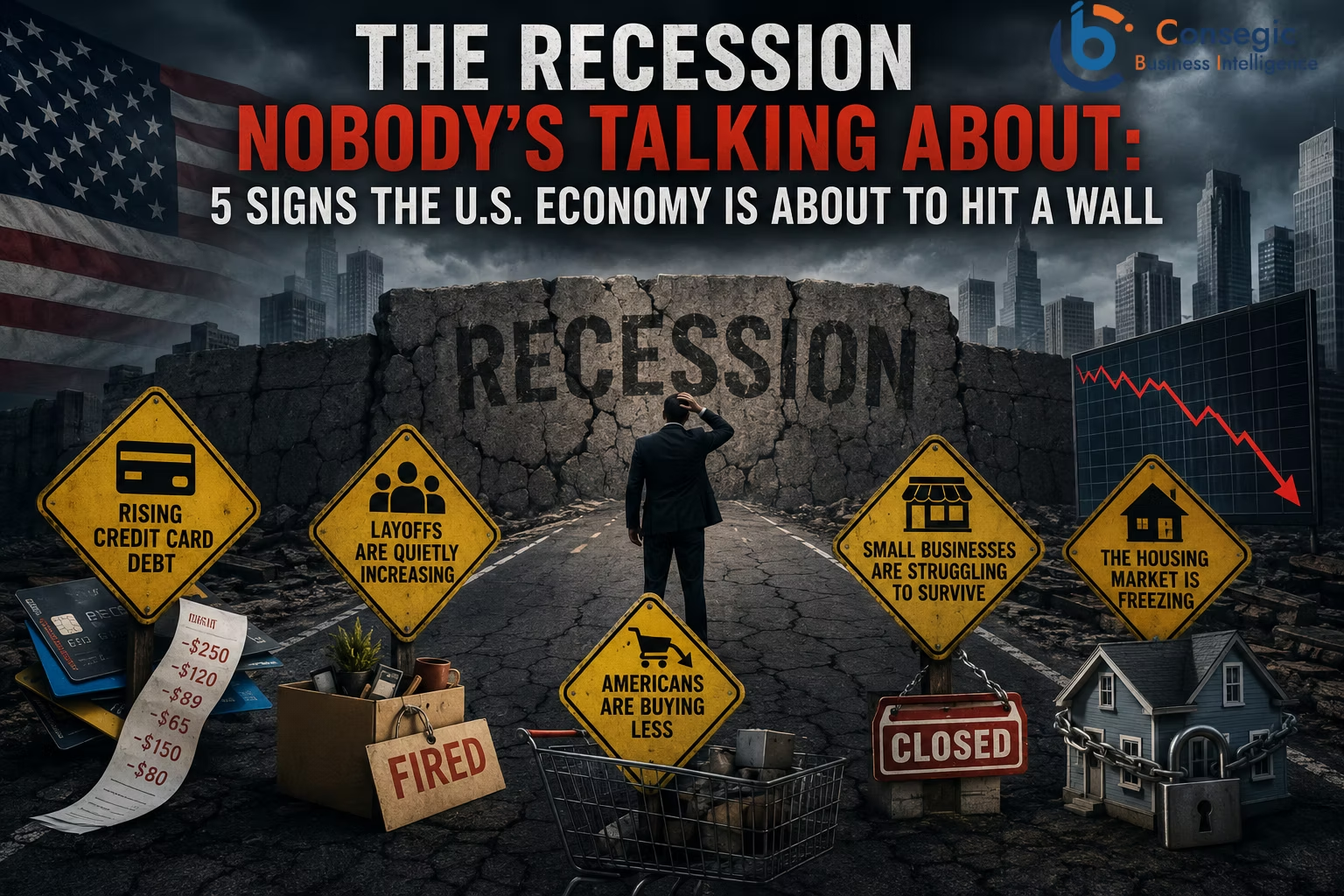
What is alarming about the scenario here is that the majority of these indicators precede any formal declaration of recessions in the past. While experts debate over whether or not there is an impending recession on the horizon, regular citizens are already feeling its repercussions in the form of financial distress and limited disposable income.
This blog delves into five warning signs that clearly indicate the fact that the United States economy is heading toward a wall – a recession which many are yet unwilling to recognize.
Is Rising Credit Card Debt a Hidden Warning Sign of Recession?
An evident indication of the imminent recession can be found in the increasing dependence on borrowing just to survive. In the USA, millions of families are using their credit cards to buy necessities such as food items, gas, rent, and utilities as wage levels have failed to match inflation rates. Though macroeconomic factors may suggest stability, the truth is that there are serious financial issues behind the curtains.
Moreover, it becomes evident that an average household has higher levels of revolving debt in comparison with pre-pandemic times, while saving rates are becoming weaker. A relevant example of a consumer that faces problems is that of the middle-class person who could afford all necessary expenses until recently, but now uses "buy now, pay later" products or carries credit card balances over from one month to another. In such cases, consumers spend less money and borrow more, creating a dangerous loop that hinders recovery.
Historical patterns show that the emergence of consumer strain precedes recessions in the past. When consumers find themselves forced to borrow not for leisure items but for necessities, it means that the economic pressure is already affecting everyone, not only those with lower incomes.
Layoffs Are Quietly Increasing in Tech, Media, and Finance
Unlike past recessions, which saw massive layoffs take place overnight, the recession today is taking place more covertly. From technology, finance, media, retail to manufacturing, organizations are downsizing their employees in a gradual way by placing hiring freezes, restructuring, trimming contracts, and silently laying off employees. The “slow-motion layoff cycle” is likely to be among the most underappreciated indications of the current recession in 2026.
In the technology sector, some companies have already laid off thousands of workers this year, as they focus on artificial intelligence and efficiency rather than expanding their workforces. According to estimates, the number of technology layoffs alone in 2026 exceeds 100,000. Moreover, the impact on the regular employees is more clearly observable. A software developer who used to have several jobs offer to choose from might end up spending months in job search. Additionally, marketing departments are being downsized; freelancing jobs are drying up; even the most experienced individuals can find themselves uncertain about their future at work.
Furthermore, the danger here is that the first few rounds of layoffs start almost unnoticed but by the time they become widespread, the economy is usually already in recession.
Why Are Americans Buying Less Even During Major Sales Seasons?
The consumption expenditure of American consumers drives the economy, but now people are more cautious about spending money than ever before. Even during the sales periods or holiday seasons, retail stores notice low demand for goods, as people tend to buy only what they need and avoid unnecessary expenses. This change in consumer behaviour indicates the onset of an economic recession.
Until some years ago, consumers did not hesitate to invest in travel, electronics, food away from home, and other lifestyle products. Now, consumers are reducing their expenditures. An example of this is when a household buys grocery items using generic labels rather than fancy ones, delays their holidays, and avoids buying expensive items such as furniture and electronics. The same applies to restaurants, where consumers eat less or choose not to dine out at all.
This reduction in consumer spending is significant because companies are highly dependent on consumer spending. If people are spending less, it means that the revenue of the firms will be affected, which will result in slower hiring and lower growth of the economy. Even though retailers will keep providing discounts and deals to attract customers, discounts could mean that consumers have reduced their purchasing power.
Small Businesses Are Struggling to Survive High Interest Rates
Small businesses are regarded as the foundation of the American economy but many are currently under intense financial pressure. The problem is that high interest rates make any borrowing extremely costly for them, hindering their development, as well as their opportunities to create jobs, acquire necessary equipment, and even work. Although large companies can withstand such conditions, small businesses usually fail to cope.
A relevant example is a business owner within the local community who faces increased payments on loans obtained for kitchenware or goods purchase relative to a couple of years ago. Moreover, small stores, as well as start-ups, are also postponing plans for expansion due to an increase in risks related to loan financing. It should be noted that many business owners also face lower consumer demand coupled with higher costs.
Additionally, the problem of economic uncertainty grows more serious if the concerns of entrepreneurs and consumers come together. Employers cut jobs because their sales drop, and customers cut back on spending because they feel insecure about job prospects. This leads to a vicious economic cycle that can spread very quickly.
It has been noticed historically that the problems faced by small enterprises tend to precede the onset of national recession officially recognized. The economic hardships affect the Main Street well before the Wall Street gets affected.
The Housing Market Is Starting to Freeze
The real estate industry has been a significant factor that determines the performance of an economy for a very long time, and according to recent developments, the market seems to be losing its momentum. The interest rates for mortgages exceed 6% in several forecasts, the level of affordability remains high, and the number of transactions has decreased considerably compared to last year. Many economists currently refer to the housing market as “frozen,” rather than being healthy.
Moreover, American consumers who wanted to purchase houses have delayed their decisions since they can no longer afford to pay monthly mortgage expenses. On the other hand, current homeowners prefer not to sell the property due to their unwillingness to let go of very low-interest rates that they obtained in previous years.
For example, a young couple who earn respectable incomes but yet do not have enough money to buy their first house because of expensive mortgage payments, insurance premiums, and property taxes. Even in places where housing prices seem to stabilize, affordability continues to be the key issue preventing middle-class households from buying homes. Furthermore, slowing down in housing construction is very significant to the economy since it impacts building, lending, consumers' spending, and employment at once.
Conclusion
The indicators of potential issues with the American economy cannot be ignored any further. The mounting debts, quiet firings, careful consumer expenditure, the problems faced by small businesses, and the downturns in the housing industry all hint at an underlying issue that can lead to economic troubles in the coming days. Although there is no official declaration of an economic problem, the struggles of average citizens give a strong indication that the country might be headed for yet another recession in the near future.