What Is Vertical Farming?
Vertical farming is an advanced form of agriculture where crops are produced in vertically stacked layers rather than the conventional open fields. This type of agriculture is normally carried out indoors through the use of technologies such as hydroponics, aeroponics and climatic control systems. In hydroponic systems, plants are grown in water rich in nutrients without soil.
Unlike the conventional agricultural production that requires fertile soils, correct season and ample water resources, vertical farming is relatively more efficient when it comes to resource utilization and space usage. As this technique utilizes several layers within the same area to plant various crops making it particularly applicable in cities where land is scarce and expensive. Moreover, due to the controlled nature of the technique, there are fewer chances of disease and pest attack eliminating the need of chemical fertilizers and pesticides.
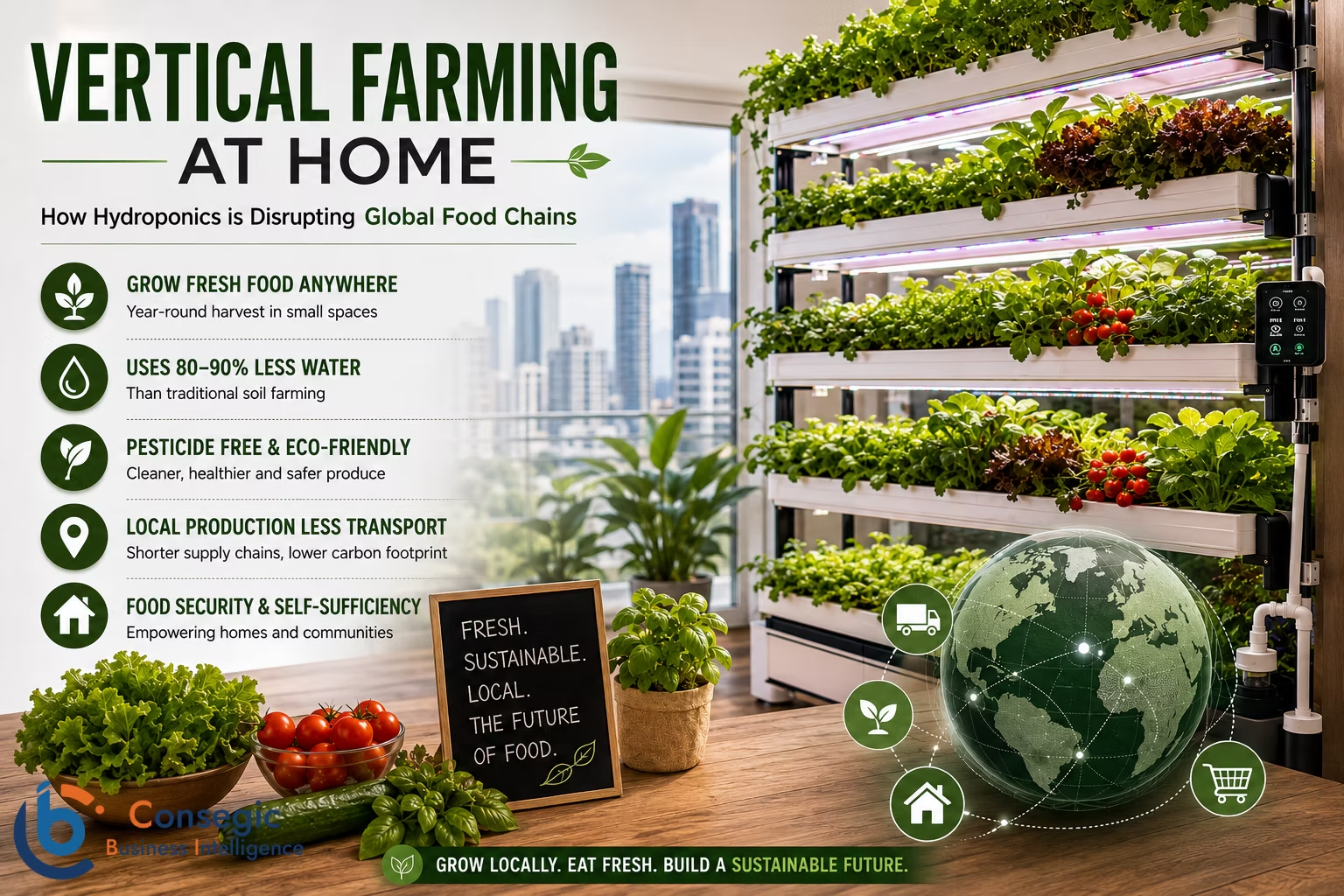
One more benefit of vertical farming is the capacity for continuous crop growing throughout the year. Traditional agriculture has certain limitations that affect the timing of crops because the process depends on season, climatic conditions and geography. However, in vertical farms, the above-mentioned factors do not have any influence since artificial conditions make it possible to produce crops continually. Consistent production is an essential factor that ensures the continuous flow of products without the necessity of shipping them through long distances like that in global food chains.
In summary, vertical farming is a step forward from traditional agriculture toward innovation and efficiency. Vertical farms are the future of agriculture because they ensure the provision of healthy food at right places, where people live while consuming few resources.
Understanding Hydroponics
Hydroponics is a technique of growing plants without soil where the roots of plants is directly supplied with a carefully balanced and nutrient rich water solution. Instead of searching for nutrients in the soil, plants receive essential nutrients such as hydrogen, phosphorous, potassium, calcium and magnesium in dissolved form, which allows for faster and much better absorption.
In this system, the plant roots are supported using inert mediums such as coco peat, perlite or rock wool, which provides stability but do not provide nutrients. In addition, water is considered as the key nutrient source in this system and is constantly supplied to the plants by the pumps in the system. Hydroponics is very economical on the usage of water since they use about 80-90% less water compared to the conventional way of growing plants on the soil.
Moreover, hydroponics allows cultivation year-round, irrespective of weather or soil condition. Be it heavy rains, high temperature or bad soil, plants will be able to grow all year round with the help of artificial indoor environment and LED grow light technology. Thus, hydroponics is very relevant in urban areas and other places that have trouble with agriculture.
However, the system demands certain investment and continuous monitoring. Despite its drawbacks, hydroponics is considered sustainable and a good choice for the future in combination with vertical farming, specially for homes.
Vertical Farming at Home
Vertical farming at home is the process of growing fresh fruits, vegetables and herbs at home, specially in small indoor or balcony spaces using stacked or layered systems. Its compact structure combined with innovative technologies allows for food production even in apartment or urban settings where regular agriculture is impossible.
A home vertical system could vary from quite simple to relatively sophisticated. The basic ones will involve do-it-yourself projects using plastic bottles, pipes or trays stacked vertically in order to save room. The more sophisticated ones will come equipped with automatic timers, pH controllers and special grow lights that provide an optimal growing environment with minimum human effort.
The most obvious benefit of home vertical farming is saving space. A small vertical unit can grow multiple plants in the same area where only one or two could grow traditionally. Home vertical farming also promotes sustainability and self-sufficiency. It reduces dependence on store brought vegetables, cut down plastic use and eliminates the carbon footprint associated with transporting food and vegetables over a long distance.
However, there are still a few things that require consistency for successful vertical farming, such as checking the levels of water, nutrients and light needed by the plants. The truth is that the concept of vertical farming is more than just an innovative way of gardening, it is a new approach to life in general.
Disrupting Global Food Chains
Hydroponics disrupts global food supply chains by localising production, slashing transport needs and shielding against weather, labour shortages and geopolitical shocks like tariffs.
Traditional food supply systems are long and complex. Production typically occurs in rural settings, followed by distribution through urban settings or even international boundaries, storing in warehouses and distributing to retailers. Such procedures raise production costs, cause massive food wastages and generate excessive amounts of carbon dioxide from transport and refrigeration.
Vertical farming disrupts this whole process by reducing the distance between production and consumption. Rather than depending on farmland, cities are capable of producing their own foods on rooftops and buildings. This decentralization reduces the need for long supply chains, cutting down transportation time and ensuring the consumer receive fresh food.
Despite its challenges, vertical farming and hydroponics face their fair share of challenges such as high energy consumption and difficulty in scaling profitably on a large level. Some large vertical farming ventures have struggled vertically due to these factors.
Over time, the increase in use of home hydroponics may reduce the vulnerability of food systems across the globe. This is due to its promotion of local farming, as well as reduction of dependence on long supply chain processes.
Final Thoughts
Vertical farming at home, powered by hydroponics, represents a significant shift in the way food is produced and distributed across the world. By moving agriculture from large traditional fields to compact urban spaces, it challenges the traditional, long and resource intensive global food supply chains.
At the same time, this approach promotes sustainability by conserving water, reducing the use of harmful chemicals and reducing carbon emission. Also, it powers individuals and households to become more reliant, specially those in urban areas.
In summary, the idea of vertical farming at home goes beyond being an agricultural advancement, it is a groundbreaking development that will solve food security issues in the coming years. This technology builds a sustainable food chain system that makes production closer to the point of consumption.