It is no secret that climate has always played a major role in economies around the world; food production depends on reliable seasonal weather and power depends on a balance of resource. When it comes to influential climate events El Niño tops the list-one of the strongest influences in the planet’s climate patterns. The ocean-warming phenomenon-occurring when surface waters in the eastern/central Pacific are unusually warm, changing weather across the globe-is back on scientist’s minds as 2026 approaches.
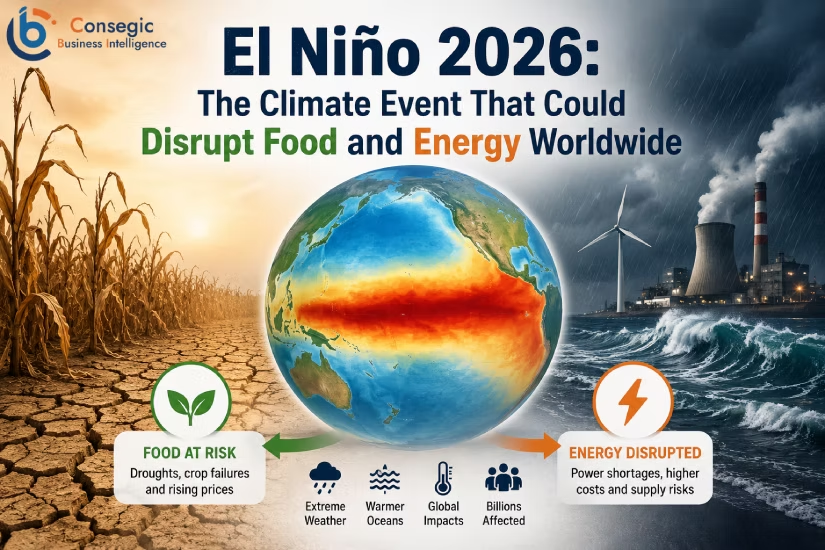
El Niños come and go, lasting from months to years, impacting agriculture and a myriad of global industries that most of us never consider until there's a drastic shortage or spike in prices.
How El Niño Works
El Niño is part of El Niño-Southern Oscillation, an entire natural weather cycle characterized by warming waters in the eastern and central Pacific and its effects. The warm ocean water causes winds to slow, which allows warmer surface water to pool. Because water circulates the world, these warm temperatures can have effects that span continents-from droughts and intense heatwaves in the Pacific to heavy rains and floods elsewhere. In 2026, many worry that another El Niño will continue the cycle of disruptions.
Food Production Faces Growing Risks
Agriculture, both for human consumption and animal livestock-is the sector of the economy most at the mercy of weather patterns. Relying on the predictable seasons for crop yield is essential. However, if weather becomes too severe (either through too much rain/flooding or severe droughts and heat), the impact on our foods can become significant. Countries dependent on specific climate for food production (e.g., the Philippines for rice and Indonesia for palm oil) could be forced to buy grain, rice, or other agricultural necessities on the open market, driving up prices for us all.
Similarly, farmers who supply these crops for the U.S. may struggle to deliver as crop yields decrease. This fluctuation means consumers likely face prices at the grocery store.
Livestock and Fisheries Also Feel the Impact
Livestock are another aspect of the economy that face challenges during El Niño. Increased heat and dry conditions from drought-as well as reduced food sources, such as grazing land-can have massive economic impacts.
Heat stresses the animals, which leads to reduced meat and milk production-another potential strain on resources and prices. Seafood Markets suffer another major food supply that can be heavily influenced: fish. A change in ocean temperatures can alter migratory pathways and can influence nutrient levels within those locations, leading to declining fish catches. Coastal fishing communities may experience shortages, and the U.S. can face a decreased import of seafood.
Energy Systems Under Pressure
A nation’s energy use depends on a consistent supply. However, an El Niño could put considerable stress on national and international energy grids: Hydropower Impact. If dams can't capture water in droughts and if rainfall is too heavy to allow proper management of reservoirs, hydropower energy production will decline dramatically. The loss of this energy may create pressure to utilize more power sources-many of which could increase energy prices for all. Heat, but too much of it may seem counter-intuitive, but the higher temperatures associated with an El Niño could actually stress energy consumption.
More people will rely on air conditioning, leading to an increase in energy usage. However, if power grid supply decreases because of issues with hydropower production, this dual demand for energy can create the worst possible outcome: decreased power availability alongside increased demand.
Renewable Energy and Weather Variability
While reliance on renewable energy sources, like wind and solar, helps stabilize markets against climate-related volatility, even these may not be entirely immune to El Niño. Change in wind or weather patterns may affect wind production rates, while cloudiness may affect solar production. This simply serves as another variable within the international energy market.
Economic Consequences Beyond Food and Energy
While the above are arguably the two largest and most immediate impacts from El Niño, it's not just our kitchens and energy bills that will feel the heat. Transportation- networks can be disrupted from intense storm activity, road closures from flooding, and reduced access to critical ports. Many industries reliant on agricultural materials could find sourcing significantly challenged-think textiles or biofuels. Higher operating costs for businesses, a lack of consumer spending and a decrease in purchasing power due to rising prices all lead to economic hardship-especially when seen globally.
El Niño resilience is Becoming a Critical factor
If this sounds like a bleak prediction, do not fear. Instead, it’s an opportunity to reflect and prepare. Governments and private enterprises are becoming savvier on climate planning. Better planning of weather forecasting tech, infrastructure updates that account for and anticipate severe weather events-these are all becoming more prominent parts of business planning and global economics.
Building Resilience in Supply Chains
We're already experiencing some supply chain disruption from the Covid-19 pandemic, El Niño adds a significant new threat that many companies aren’t prepared for.
As a result, building more resilience into these supply chains has never been more important. Investing in the systems and planning needed to withstand weather extremes will be more important than ever moving forward.
Looking ahead
The prospect of a El Niño 2026 has served as a notice that our world economies are deeply influenced by nature’s climate systems. Scientists work to improve their prediction accuracy with each occurrence; however, uncertainty is unavoidable as nature simply does not always go by prediction, not even accurate ones. The organizations, institutions and governments that continue to prepare, develop their own resilient systems, manage natural resources and adopt proactive responses would be best prepared in the face of any potential crisis. Previous El Niño occurrence records will certainly give organizations strategic options for risk preparedness when it comes to climate events.
In as much as the globe will continue to grow in its number of inhabitants and in demand for natural resources like fuel and foods, it must now be a part of learning to better live with phenomena that affects our climate like El Niño.
Conclusion
Whether it affects farming or fuel supply, global commerce or our homes, the potential effects of El Niño 2026 would not only have the power to disrupt weather - they would also affect supply chains, commerce and economic activity.
It goes beyond climate and to the way we go about everyday life far beyond the geographic areas under pressure. The bright side is that improved predictions and advanced technology can also support nations in responding to weather event surprises by investing in resilience, adaptive plans and sustainable solutions to lessen some of these vulnerabilities for the climate events ahead.