Consumers are spending at a pace they have never done before. Payments, once just an interesting alternative to cash, have evolved over the last few years and the way they are being used has now reached a point where cash is no longer needed. Shopping online, instant transfers, paying with digital wallets or payments embedded within a mobile application, the expectation from the consumer is instant, secure, convenient payments.
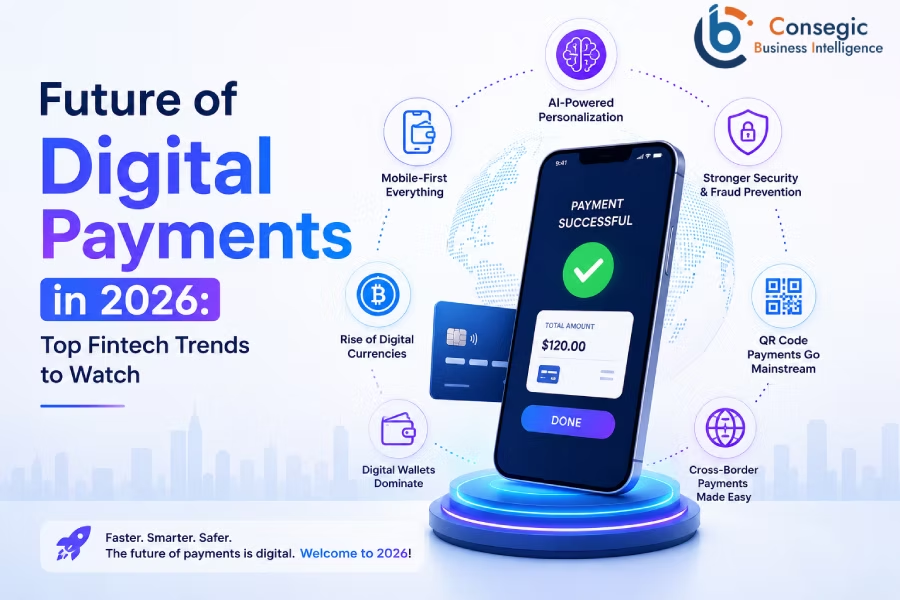
In 2026, the financial technology (fintech) landscape is set to move into its next wave of innovation. The implementation of Artificial Intelligence, real-time payments, digital wallets, new payment technologies will transform the way money moves globally and businesses and consumers must get informed.
Let's take a look at the top digital payments trends to watch out for in 2026, and what they mean for future payment transactions:
Artificial intelligence is the new brain behind digital payments
One of the major Fintech trends defining 2026 and beyond: Artificial Intelligence in payments. It's no longer just about customer service bots or simpler automation, the technology is now directly integrated into payment infrastructure to enhance efficiency, security and customer experience.
The financial institution can keep a real-time track on transactions using this AI system and pinpoint suspicious patterns of behavior. In addition to this, it can manage the routing of payments and limit the risk of fraud. Furthermore, this intelligent system allows financial institutions to customize services and offers smart financial advice, thus personalizing services for customers.
As AI continues to grow and mature, payment transactions are set to become ever more intelligent and more responsive to the behavior of the customer.
Digital wallets continue their explosive growth
Digital wallets are quickly becoming one of the most important drivers behind innovative payment solutions. Customers increasingly demand a mobile-first payment experience allowing them to store payment card details, loyalty programs and other financial information in a single platform.
In many regions of the world, digital wallets have started to replace the need for physical cash and cards. Looking to the future, beyond just making payments, digital wallets are expected to integrate digital identity, reward systems, budgeting tools and digital assets.
This trend is helping consumers and businesses to move towards simpler payment methods.
Real-time payments will become the standard
Nowadays, people expect financial transactions to be instantaneous. Long waits (even days) for payment settlement are also a thing of the past. Real-time payment networks provide instantaneous transfer of money that has a positive impact on cash flow and overall efficiency of the financial system. Banks are gradually transitioning to real-time payment infrastructures, which can handle transactions 24/7 across countries and time zones.
In the coming years, real-time payments are likely to move from being a competitive advantage to being the expected norm.
Embedded finance is changing how we pay
The other major trend to watch out for in 2026 is the continued rise of embedded finance. Rather than relying on visits to banks or dedicated financial service platforms, payments and financial services are being incorporated directly into everyday digital experiences.
Customers will soon be able to access loans, insurance, payment facilities and a range of other services directly within e-commerce sites, marketplaces and other digital platforms, thus creating a smoother and more intuitive payment experience.
The expansion of embedded finance is helping businesses to unlock new revenue streams and make services much more readily accessible.
Digital identity as a security priority
With digital payments booming, it's imperative that they are secure. Fintech companies and financial institutions are highly focused on digital identity systems, with security enhancement and removal of friction at payment occurring. Modern identity solutions enable users to authenticate more securely and with ease during sensitive financial transactions and upon accessing banking systems. Industry experts believe that digital identity will form the cornerstone of payment systems of the future.
Stronger identity verification will further help secure digital payments and contribute to the ongoing success of online shopping and transactions.
Cross-border payments are getting faster and simpler
Traditional international money transfers are often characterized as being expensive, cumbersome and time-consuming. The recent fintech explosion aims to address these problems by offering increasingly rapid and efficient cross-border payment solutions.
Advances in payment infrastructures, digital currencies and blockchain technology are all helping to improve the speed and reduce the costs associated with these transfers, whilst also making them more accessible. Stablecoins, thanks to their rapid transmittability over the entire global network and above all in the international context, are therefore becoming more and more important in the payment system in order to increase speed and decrease costs for cross-border payments.
In step with the ongoing growth of global e-commerce, the demand for fast and inexpensive solutions for cross-border payments will increasingly increase.
Fraud prevention gets smarter
Even with the exponential growth in digital payment usage, the threat landscape remains a real challenge and security must remain a top priority for fintech companies and financial institutions. Today, AI solutions are able to detect payment anomaly events in real-time and secure payments through intelligent systems. Security has also improved using biometrics and behavioral analysis. Future security solutions are aimed to securing customer trust.
The future of digital payments
It is clear that future digital payments will be more intelligent, integrated and customer-centric, with artificial intelligence, digital wallets, real-time payments, embedded finance and state-of-the-art security technologies completely reshaping how financial transactions work. Customers expect fast, simple, secure and personalized payments. Businesses require greater efficiency, reduced transaction costs, and increased customer engagement. Innovative solutions within the fintech industry that have emerged in 2026 meet both these needs and create further opportunities for businesses to increase sales.
Conclusion
Innovation throughout the payment ecosystem in 2026 has defined what it means to perform payments digitally more interconnectedly and intuitively than before. Payment systems built on AI, digital wallets, real-time payments infrastructure and more advanced security will lead to all payment transactions remaining more efficient, easy and safe. Those companies that integrate with the latest advancements in the payments space will build more stable bases on which to service upcoming consumer needs, and so will remain more competitive. New forms of payment are expected to be more intelligent, quick and secure, and fully integrated into daily lives. For businesses, consumers and financial institutions, the digital payments revolution is not a possibility anymore; it has already arrived.