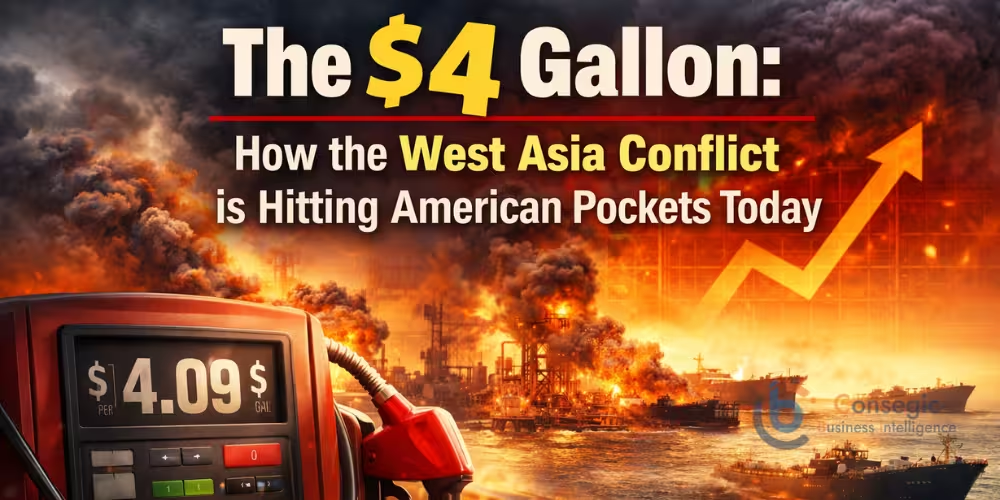
Rising tensions in West Asia, especially in countries like Iran and Iraq has sent shockwaves throughout the world with its effect being felt in different regions and industries. The most recent one being the surge in gas prices in the US, with gas reaching as high as $4 a gallon, which was last seen in august of 2022 due to the invasion of Ukraine by Russia. This is also because of the effective close of the Strait of Hormuz by Iran. Economists forecasted that the $4 gallon for diesel and gasoline will rise to $6 a gallon until the situation in Middle East changes. The US national average have increase about $1.06 per gallon or by 36%, since the US and Israel attacked Iran at the end of February.
As oil prices rise due to disruptions and uncertainties surrounding how long the war will last, the ripple effect is felt by the whole economy, specially for middle class and lower middle-class families who are already dealing with high living cost and fuels inflation.
In this blog we take a closer look at how a conflict thousands of miles away is affecting families living in the United States and increasing their financial burden while affecting everyday things from daily commute to grocery bills.
What factors are fuelling this conflict?
The ongoing war between Iran, Israel and US is fuelled by deep rooted and historic grievances, politics and economic strategies. Long standing rivalries between regional powers, dispute over territories and the involvement of global superpowers trying to protect their own interests is forming the center stage for this conflict.
The strategic value of oil rich regions, especially the Strait of Hormuz, is a central factor. This strait is a narrow passageway connecting the Gulf of Oman with the Persian Gulf. It has significant strategic and geographic importance because a significant portion of the world oil supply passes through this port and any military or political instability immediately raises concern regarding supply disruptions.
Additionally, geopolitical events such as global power conflict involving United States and its allies play a crucial role. Strong military buildup, economic restriction and ongoing diplomatic tensions in the region tend to escalate the situation instead of easing it.
In simpler terms, this conflict hasn’t occurred as a result of a single event but overlapping political powers and economic conflicts. Since west Asia sits at the centre of world oil supply, even a small conflict can have large repercussions.
Crude Shock and Volatility: Why Oil Prices Rise and Fall Quickly
Oil markets are extremely sensitive to global events and during periods of conflicts in oil rich regions such as the middle east, prices rarely move in a stable or predictable way. Instead, they go through “crude shock” and price volatility. Together these forces explain why oil price surge randomly and then fluctuate continuously.
A crude shock typically begins with a sudden event, like the recent attack of US on Kuwait oil container. The moment such news breaks, global bench oil prices jump sharply on Brent Crude, the global price metric for oil. This jump is driven less by actual oil shortage and more by fear of oil shortage and supply disruption.
However, this just doesn’t end with the initial price hike. What follows is volatility or continues ups and downs in oil prices as market only reacts to facts but also rumours and possibilities. This creates a situation of confusion in real life among the minds of producers and consumers. Gas station adjusts price frequently and industries such as logistics, ride sharing and aviation continuously revise their pricing to cope with these changes.
This combination of crude shock and price volatility makes the price of oil very uncertain. It not just reflects the market demand and supply but ongoing uncertainty in the global environment.
Why Are US Gas Prices Rising and What is its Impact on the American Consumer?
Rise in gas prices are influenced by a combination of global tensions and market reactions, most of which begin far outside the US. When conflicts intensify in key oil producing regions, like the Middle East, oil price rises significantly. This higher cost adds up through the entire supply chain, from refineries till the gas stations, signifying the high price listed and available for the consumer.
For American customers specially, this rise is immediately noticeable. Daily commute is becoming expensive. Rideshare drivers, delivery workers and small businesses are being affected heavily as this increased cost is directly affecting their income. At the same time, high transportation cost led to increased prices for groceries, online deliveries and other essential goods, further increasing the financial burden on households.
Government Reponses: Strategic Reserves and Policy Moves
The Trump government is now looking for ways to decrease the oil prices for American to make gas more affordable and accessible. To counter the rising price, the US government has resorted to protective measures such as Strategic Petroleum Reserve (SPR) and implementing regulatory or fiscal measures to help the customers.
One key tool, the SPR, is a reserve of crude oil that can be released in the market to temporarily increase supply and reduce the price burden. Along with this, policymakers can implement regulatory or fiscal measures like temporary reduction in fuel tax, subsidies for public transportations or incentives for alternative energy use.
While these steps can provide short term relief, long term effectiveness is majorly dependent upon how long this conflict will last for. As a consequence, even with the government intervention, the American public will continue to face high gas prices.
Will prices stabilize?
Predicting whether the prices will stabilize is difficult because it is greatly dependent on a mix of economic, political and geographical factors. Temporary declines can occur, such as in situations of releasing reserves in the market or ease in conflict areas, prices will often be dependent on sudden movements.
Further, domestic factors like sudden increase in demand, policy change or maintenance of oil refineries can further influence price stability.