India’s 2026 Heatwave Surge: Rising Temperatures and Climate Triggers
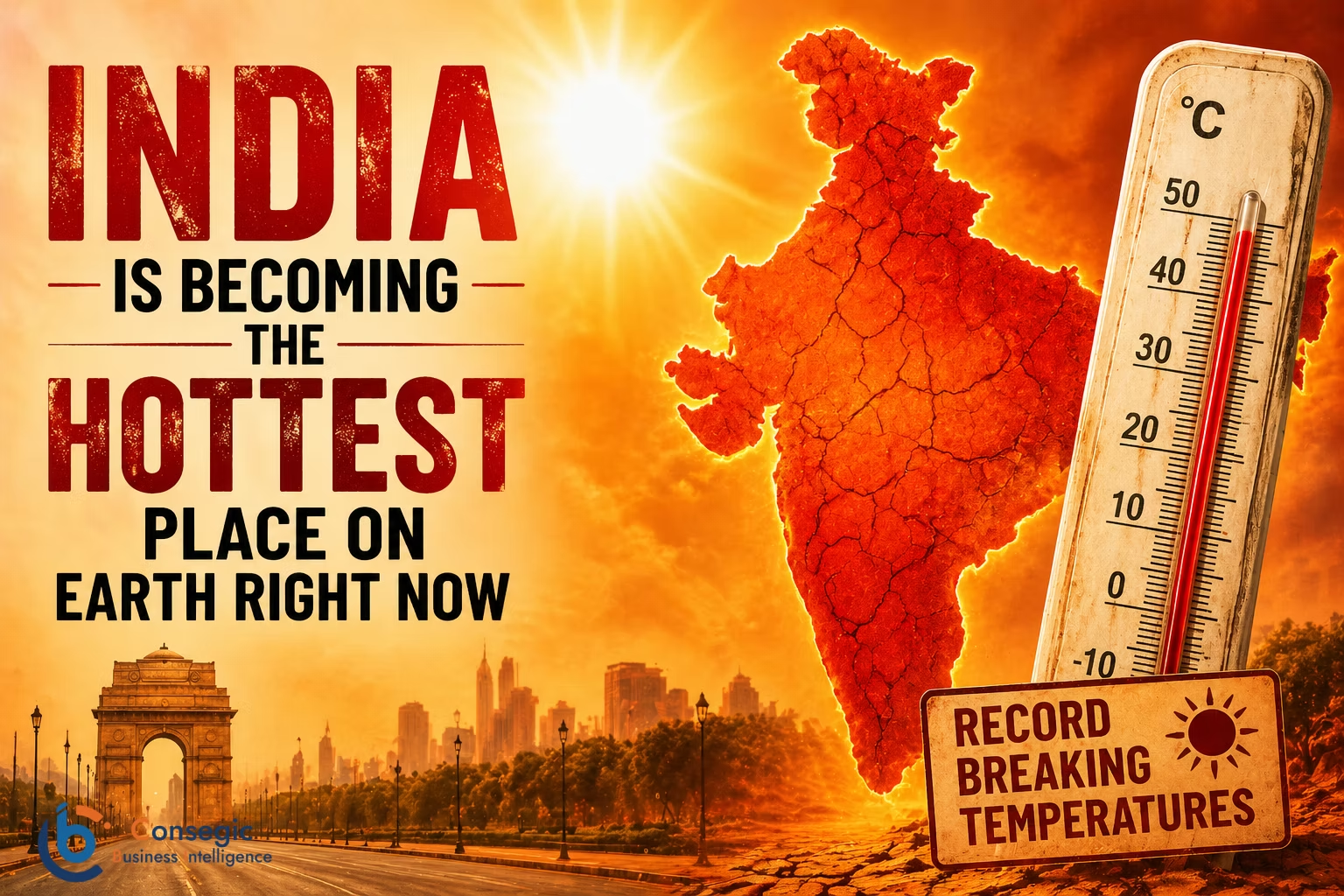
India is on the verge of early onset of summer and extreme heat events in 2026, with 98 of the top 100 hottest cities being located here, with many facing temperatures above 44-46° Celsius. This had made India effectively the “hottest country” on the planet, specially across the Indo Gangetic plain and parts of central and eastern India.
Temperatures have surged past 45° across parts of northern, central and eastern India with cities like Varanasi, Bhagalpur, Talcher and Asansol leading the global heat rankings. In Delhi, the season’s highest so far has already hit about 42.8 °C, and many north‑central districts are seeing 40–45 °C for days on end, well above climatological norms for April.
Additional to this, the weather experts predict that a ‘super El Nino’ could develop this year, potentially sending temperatures even higher and triggering more extreme heat events across the country. El Nino alone isn’t the problem, but when it is mixed with climate change it becomes much more dangerous as heatwaves become record breaking, recovery between hot days become harder and extreme weather changes become more frequent.
Why does India Feels Like The “Hottest on Earth”?
The scorching heat in India makes it "the hottest place on Earth" due to multiple reasons that contribute to making the country hot. First, India lies in the tropical and subtropical zones therefore, the sunlight in the country is very intense during the summer season. Consequently, the Indian landmass warms up quickly, particularly when speaking about northern and central parts of the country where dryness prevails.
Secondly, humidity in India plays an important role in making the climate in the country extremely hot. Coastal and eastern regions have humid climate, which makes it impossible to dissipate sweat easily. As a result, the heat index becomes higher in such a way and the weather in the mentioned areas gets even warmer.
The urban heat island effect makes Indian cities even warmer due to lack of green spaces. Moreover, concrete buildings are able to retain warmth during the day and release it at night time. In this case, the days get extremely warm, while the nights provide no coolness.
Moreover, the heat waves have become increasingly common, longer-lasting and severe and the increase in the population and energy consumption adds extra pressure. Since these highly stressful situations affect a large population simultaneously, India tends to feel like the hottest spot on the planet, even though it may not register the highest temperature.
Role Of Climate Change and El Nino
Climate change and El Niño phenomena are mutually reinforcing each other, resulting in an increase in the frequency and severity of heat waves in India in 2026.
Firstly, climate change will cause an increase in the background level of temperature in India in comparison with the last century. In this case, any increase in the temperature during heat waves will quickly go beyond critical boundaries, reaching extremes or records. In addition, global warming is associated with increased frequency and duration of heat waves and shortening of winter periods.
Secondly, El Niño is essential for causing changes in atmospheric circulation and disrupting the Indian monsoon. The development of this phenomenon will lead to the reduction of precipitation and clouds, contributing to more sunshine on Earth's surface. Thus, heat accumulation will significantly strengthen during the dry season, mainly in the northern and central regions of the country.
Climate change coupled with El Nino leads to an added risk through a “stacked effect.” Since global warming causes higher temperatures, the effect of El Nino further increases the problems by causing less rainfall and increasing the time when temperatures remain high. As a result, heat waves occur early, reach their peak more intensely and last longer. This becomes problematic for public safety, agriculture and water resources.
In 2026, this effect can be seen in most of India because of extreme temperature increases. Due to the effects of both climate change and climatic variations, the heat wave seems widespread and unbearable. That is why India stands among the hottest regions in the world.
Urban ‘Heat Island’ And Other Factors
The ‘heat islands’ in urban centers and other factors that vary according to individual Indian cities have contributed to the perceived intensity of the Indian heatwaves, particularly in large metropolitan cities such as Delhi, Mumbai, Bengaluru, Chennai and Pune.
While these conditions alone cannot produce heatwaves, they play a critical role in amplifying heat in cities and trapping heat in the urban environment, sometimes increasing both day and nighttime temperatures relative to the rural surroundings.
The Urban Heat Island is an environmental effect whereby urban centers are warmer than rural surroundings due to human factors. Due to the fast pace of urbanization in India, this factor has gained even greater significance. The temperature of the city in India is generally between 2°C and 5°C warmer than the surrounding countryside.
Since urban centers comprise hard surface materials such as concrete, asphalt, and metals, they tend to absorb significant heat during the day and subsequently give off the energy at night. The impact of urban heat islands is such that India’s cities have become ‘hotspots within hotspots.’ Whereas the phenomenon of global warming and El Niño cause the heat wave itself, local urban factors make the experience of the phenomenon much harsher than what is experienced by the countryside.
How Are Heatwaves Affecting India?
Heatwaves in India are no longer just uncomfortable weather, but are becoming multilevel crisis affecting health, economy, environment and daily lives.
Human health: Extreme temperatures increase risk of dehydration, heat exhaustion and heatstroke, specially among vulnerable groups like the elderly, children and outdoor physical labour workers. Exposure to higher temperatures, along with hot night temperatures with minimal relief, causes stress to the body system and may cause health-related illnesses and even deaths.
Agriculture: Excessive heat causes damage to agricultural produce, low yields and drying of soil. Farmers end up losing produce due to failure of crops while heat stress causes livestock to yield poorly.
Water scarcity: Higher temperatures cause increased evaporation and hence, there is a decrease in size of water bodies such as rivers, lakes and dams. Moreover, the groundwater level lowers because of heavy use. Consequently, the lack of water becomes severe especially during summers, adding on to the problems of people living in cities and countryside areas.
Environmental impacts: Dry conditions make forests vulnerable to fires, at the same time, there is land degradation due to drought. Animals die in large numbers as they lack water sources. Unequal access to resources like water and proper healthcare services to the poorer classes highlights social inequality.
Conclusion
India’s 2026 heatwaves highlight how climate change and El Niño are combining to create more intense and widespread extreme heat. In addition to the urban heat island effect, this worsens the effect of heat, especially in urban areas. The effects on health, agriculture and the economy clearly show that heatwaves are no longer just seasonal events, but an urgent issue requiring immediate attention.