The Rise of Mega Cities: Understanding Population Growth in 2026
Mega cities are considered to be those urban areas which have a population of over 10 million individuals and have become the major centers of economic growth and development in the world. Mega cities growth has accelerated significantly over the years due to factors such as migration from rural areas to urban centres in search of better employment opportunities, quality healthcare, and improved education. In the year 2026, the trend of migration of people to the cities from the rural areas is at its peak as people migrate to the urban areas looking for better living conditions. In 2026, the continent of Asia and Africa have been experiencing the fastest growth of urban areas with cities like Mumbai, Delhi, Lagos, Dhaka, and Jakarta experiencing continuous growth in their population. Moreover, industrial development, consumer demands, and business ventures are on the rise in these areas as a result of this migration. However, urban population growth rate has outdone infrastructure development and there is a strain in terms of provision of public roads, housing, health facilities, educational institutions, and utilities in these regions.
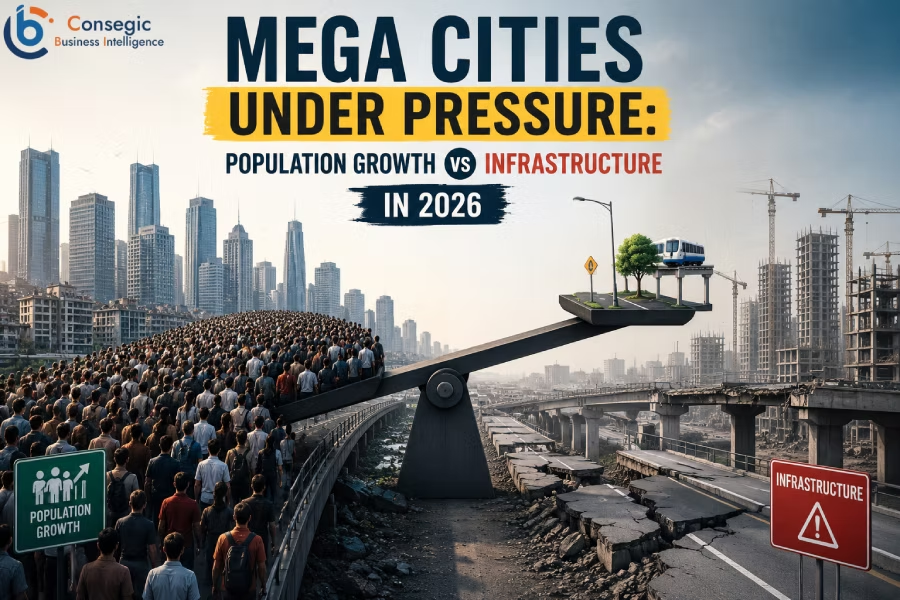
Infrastructure Under Strain: Housing, Transportation, and Public Services
One of the most significant consequences of rapid population growth is the increased strain on urban infrastructure. Many of the world’s largest cities are suffering an urban infrastructure crisis. In mega cities the demand for housing has increased greatly, causing an increase in property prices and rental charges. In addition, the availability of affordable housing is limited, compelling many low-income families to reside in overcrowded informal settlements with inadequate sanitation and public facilities. Transportation infrastructure is another area under great pressure. The increasing number of private cars has led to serious traffic jams and buses, subways and trains are often crammed beyond capacity in peak hours. Moreover, public utilities are struggling to keep up with the demands of rapid population growth. Water supply systems have to cope with increasing consumption, electricity grids with increasing energy demand and increasing amounts of solid waste have to find better waste management solutions. In addition, hospitals are becoming overcrowded and schools must accommodate more students. The situation is aggravated by ageing infrastructure that requires modernisation. These difficulties have made it necessary for smart cities 2026 initiatives to make more investments in which governments will utilize the latest technologies and urban planning concepts that are environmentally friendly to solve the existing urban infrastructure problem.
The Impact of Rapid Urbanization on Sustainability and Quality of Life
Urban sprawl has led to numerous environmental and social problems that affect the sustainability of megacities. Urban sprawl entails the replacement of natural landscapes by residential areas, commercial structures, and transportation systems that contribute to increased urban heat island effects and loss of biodiversity. There is also an increase in the number of factories that release toxic gases into the atmosphere and vehicles causing air pollution which poses health hazards to millions of people. Moreover, there is water shortage in cities, especially because there is a lot of pollution of water bodies and depletion of underground water. Drainage facilities have been deteriorating and, when coupled with global warming, many cities are prone to floods whenever it rains heavily. Moreover, there is an ever-increasing waste generation which calls for an effective waste management system. Apart from environmental problems, urbanization is also increasing social disparity. For instance, wealthier individuals enjoy good infrastructure whereas poor ones lack basic amenities such as hospitals and schools. They are also poorly served in terms of sanitation and public transport, thus resulting in long commutes, congestion, and high living expenses.
Smart City Innovations and Government Strategies to Address Urban Challenges
Governments around the world have taken up the task of implementing smart city technologies and urban sustainability policies to tackle increasing challenges posed to mega cities. AI technology along with IoT are used in traffic management system for decreasing traffic congestion and making the transport system efficient. Digital governance systems help people make use of government services efficiently and increase the effectiveness of the administration. Additionally, the metro rail system, electric buses, and other forms of public transport facilities promote sustainable movement and reduce dependency on personal transport means. Most cities are developing green buildings that save on energy and construction materials. Various renewable energy projects such as solar and wind energy help decrease carbon emissions and increase energy security in cities. There are also affordable housing facilities and mixed urban development plans to provide space for the increasing number of people. Furthermore, private companies are increasingly getting involved in the infrastructure projects as well. Cities like Singapore, Seoul, Copenhagen and Dubai show how technology, innovation and good governance can improve urban sustainability and people’s lives.
The Future of Mega Cities: Balancing Population Growth with Sustainable Infrastructure
The survival of mega cities in the future will depend on how well they strike the right balance between increasing population growth and developing resilient and sustainable infrastructure development. Population growth in urban areas is likely to increase even further over the next few decades. Thus, it becomes extremely important to invest in the necessary infrastructure development in order to address future challenges. It will be necessary to provide sufficient infrastructure that will facilitate the functioning of transport systems, provide affordable housing, generate clean energy sources, manage water resources, ensure health services, and develop adequate digital infrastructure. Furthermore, climate-resilient infrastructure that will allow cities to cope with any extreme weather conditions will be increasingly important. Transit-oriented development, implying dense urban development around public transit stations, can be one solution that can help with traffic management and mobility. Moreover, using digital twins can help urban planners model development processes and optimize infrastructure investments even prior to construction.
Conclusion
Mega cities will remain influential in shaping the world economy; however, their sustainability depends upon how well the gap between population growth and infrastructure development will be handled in the future. The increasing demands for residential facilities, transport systems, health care, energy, and public utilities will necessitate sustainable urban development along with resilient infrastructure. Moreover, mega cities can become liveable and sustainable by taking into consideration the concepts such as smart cities technology, renewable energy, public transport, and climate resilient development. It will be important for governments, organizations, and individuals to work together in addressing the future challenges.