The Rise of Software-Defined Vehicles in the Automotive Industry
The emergence of Software-Defined Vehicles (SDVs) is changing the paradigm within the automotive industry by making the functionality of vehicles less dependent on the hardware aspect and more reliant on the software one. While in conventional vehicles there is limited potential for improving the characteristics of the car itself due to the fixed hardware used, SDVs are built on the principles of centralized computing and modern software, which provide an opportunity for improving the performance of the car through regular software updates. This trend is driven by the fast development of AI, cloud computing, 5G technology, and electric cars. Cars have become intelligent machines, highly interconnected, and able to evolve and adapt during their lifecycle. At the same time, customers are getting used to receiving personalized services in various fields of consumption and the demand for such solutions is rising, which makes automakers adopt software-first approach in order to open new channels for earning additional money from subscriptions. Recently Volkswagen made steps towards the improvement of its SDV strategy through the expansion of its software subsidiary Cariad.
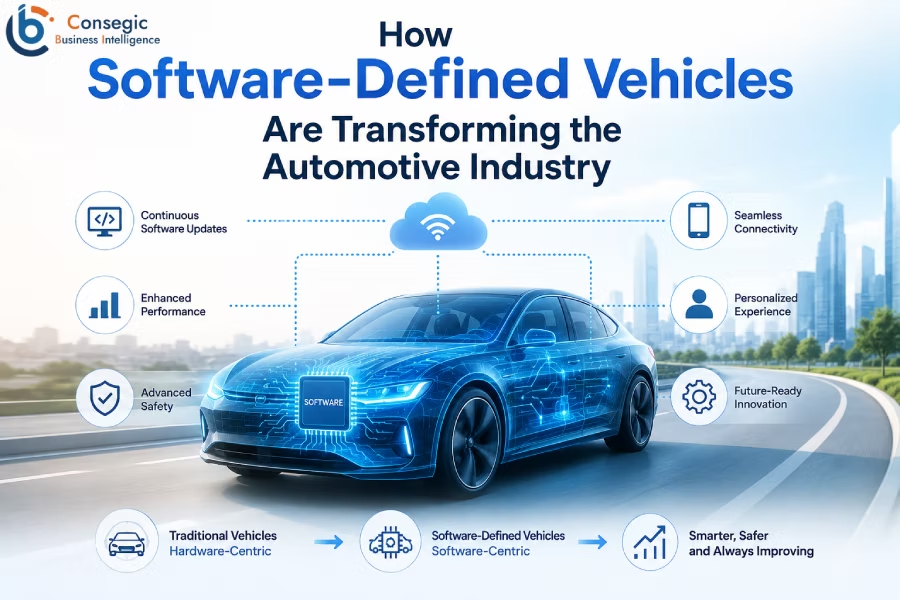
What Is Software-Defined Vehicles and How Do They Work?
Software-Defined Vehicles (SDVs) are the future generations of automobiles in which all the functionalities of the car are controlled by software and constantly upgraded during the entire lifetime of the vehicle. In contrast to legacy cars that have been using the combination of different ECUs (Electronic Control Units), SDVs use centralized computerized architectures that are able to control multiple functionalities of the vehicle with the help of software platforms. Such automobiles use innovative operating systems, software development kits, cloud capabilities, and powerful processors that allow for efficient communication between software and hardware. Thus, it becomes possible for the manufacturers to add any kind of new functionalities, update or fix existing software features without making any changes in hardware. Additionally, artificial Intelligence, machine learning, and cloud analytics technologies make driving experience smarter by providing navigation systems, predictive maintenance, and assistance to drivers. Some of the major automobile companies, such as Tesla, BMW, Mercedes-Benz, BYD, and Rivian, continue developing SDV platforms. It has recently been revealed that almost half of the worldwide automotive manufacturers treat Software-Defined Vehicles as a priority.
Enhancing Vehicle Performance Through Over-the-Air Updates
Over-The-Air (OTA) Updates is another capability that can be used as one of the hallmarks of SDVs, allowing auto producers to provide their users with the necessary improvements while the vehicle is at home and does not need to undergo repairs in the service center. With the adoption of secure wireless connection, manufacturers can send software updates from afar which will increase the performance of batteries, optimize the performance of the powertrain system, improve infotainment and cybersecurity protection. With OTA, Advanced Driver Assistance Systems (ADAS) get improved with better algorithms of adaptive cruise control, lane-keeping assist and parking. Apart from the maintenance, manufacturers can use OTA for introduction of new functions and services through a lifetime of the vehicle. On CES 2026, several automotive and technology companies presented AI-based platforms for delivering lifetime software upgrades, proving the willingness of the industry to innovate constantly. The growing connectivity of the modern vehicles allows to reduce maintenance costs, improve reliability and keep Software-Defined Vehicles technologically up-to-date even after leaving the production facility.
The Role of Artificial Intelligence and Connectivity in SDVs
Artificial Intelligence (AI) and connectivity technologies are the key components of the Software-Defined Vehicle concept, which makes driving more intelligent, safe and personalized. AI-based systems are constantly processing data received from various sensors, cameras, radars, and vehicle network to assist decision making, traffic awareness, and driver assistance systems. Moreover, machine learning algorithms make it possible to predict the failure of vehicle components before it happens, thus preventing downtime and maintenance expenses. On the other hand, cloud computing and 5G allow for effective communication between vehicles, traffic infrastructure, and platforms via Vehicle-to-Everything (V2X) technology. Such functionality contributes to better navigation, traffic control and increased safety of driving experience, while providing personalized infotainment, voice assistance and remote management of vehicles. It is also important to mention the issue of cybersecurity, since connected vehicles require advanced security measures in response to the new challenges. The recent industry trends include an increased use of AI-based software platforms for automobiles, when such companies as BlackBerry are actively implementing QNX into the production of secure, intelligent and connected Software-Defined Vehicles.
Future of the Automotive Industry: Benefits and Challenges of Software-Defined Vehicles
Software-Defined Vehicles are anticipated to define the future of the automobile industry through innovation, improvement of customer experience, and the introduction of new digital business models. SDVs differ greatly from conventional cars as they offer manufacturers an opportunity to integrate new capabilities, security updates, and improved performance on the entire lifetime of the car. The rising number of subscriptions and software-based functionality also brings additional revenue streams to manufacturers and cuts the costs of software development in the long term through reusable software platforms. Despite numerous advantages, the emergence of Software-Defined Vehicles also poses certain challenges. The more connectivity a vehicle has, the more problems there are in terms of cybersecurity, data protection, software validation and regulatory compliance. Moreover, consumer confidence is crucially dependent on the reliable operation of software and data protection. Furthermore, 2026 is considered the key year of Software-Defined Vehicles development as manufacturers move from planning and strategy stage to full-fledged implementation of SDVs. The future development of artificial intelligence, cloud computing, and automation is expected to be based on Software-Defined Vehicles.
Conclusion
The automotive industry is undergoing a transformation with the rise of Software-Defined Vehicles, as cars become intelligent, connected and ever-evolving mobility platforms. With centralised computing systems, artificial intelligence, cloud technology, 5G connectivity and over-the-air updates, SDVs offer automakers the opportunity to improve performance, increase safety and deliver unique customer experiences throughout the entire lifecycle of a car. SDVs also open up new revenue opportunities via the use of software-based solutions. But strong cybersecurity and data protection is important for the sustainability of the SDVs. As leading automakers accelerate large-scale SDV adoption, software will become a key competitive differentiator. With the progress of the artificial intelligence and autonomous driving technologies, Software-Defined Vehicles are ready to lead the next wave of smart, efficient and sustainable transportation around the world.