Buying versus renting is among the most significant monetary choices people make. For many people and households, the most substantial financial commitment someone can make will involve their home-a spot where they reside and raise families-but additionally a financial commitment that may create long-term wealth and stability. With increasing property prices, interest rates fluctuating, and shifting way of living choices shaping how many individuals utilize housing, the decision to rent or acquire has turn out to be far more complicated and more critical than in past times. There’s no one-size-fits-all reply for whether renting or buying is the higher decision. The choice varies tremendously on the individual-and their scenario-so for anybody wondering whether they ought to hire or buy, we’ll examine each choice for the current market.
Renting Vs Buying A Home Insights:
Understanding the Current Housing Market
It is not a surprise that real estate marketplaces-both those intended to rent and those for sales-are continuing to evolve. Around the previous couple of decades, house values in numerous cities have actually seen a substantial jump. These boosted rates have actually been brought about by growing demand from home purchasers, low stock, urban development, and the continued fascination with homeownership. However, mortgage interest rates fluctuate over time and have an effect on an individual’s buying power when trying to find a home. Rental prices vary drastically depending on location, yet the rise in real estate values in lots of communities may make hiring financially preferable to buying in some instances. For prospective buyers or leaseholders, understanding the basic conditions of the existing housing market-including housing rates, interest rates, and local demand-is important for making sound monetary decisions.
Benefits of Renting a Home
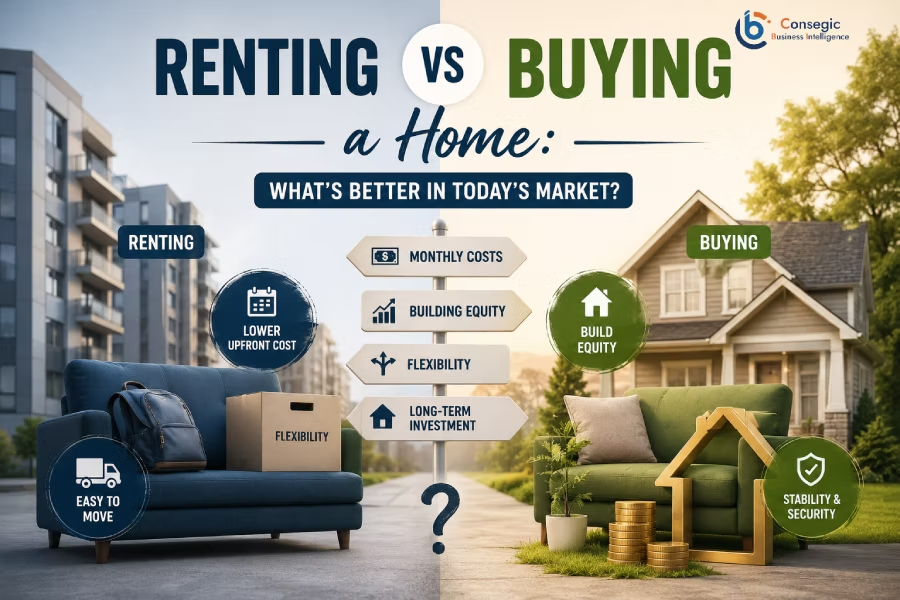
Renting your house offers benefits over buying: Flexibility. Maybe among the biggest advantages of renting is the overall flexibility it offers. Renting your home permits you to easily choose to live anywhere you’d like and transfer your life as soon as you need without a huge hassle and financial loss. If you have a job with long-term job or are unsure where your profession may require you over the following numerous years, leasing is an excellent choice that lets you adapt quickly. Lower upfront costs. When you opt to acquire a residence, you’ll likely have to have to save for a substantial down payment, plus numerous other charges connected with purchasing that can quickly accumulate. As soon as you decide to lease, the price tag is considerably lower with just a small deposit or first and last month's rent to contend with. Maintenance included. If something in your home is in need of repair or fixing, you likely will not have to cover the costs yourself; rather, you can alert your landlord or leasing firm and they can deal with it, saving you cash and time. Many individuals who prefer to lease can spend less of their spending plan on these unexpected fixings, in comparison to an individual who owns their own home.
Downsides of Renting
Renters can suffer from a few significant downsides to the rental arrangement. Rent is cash lost when you retire. Unlike a mortgage loan payment, where even a component is invested into building a portion of the ownership for yourself (equity), monthly rent costs are gone once you’ve made them. Over a number of decades, you can end up paying hundreds of thousands of dollars for rental accommodation, with absolutely nothing to show for it financially when you get your final check and move out. Rental rate increases are not uncommon. Landlords may enhance your month-to-month rental rate at the end of your lease term based on market demand, your past lease history, or an adjustment for the cost of living. This can make your monthly costs unpredictable or financially prohibitive over time. Restricted control. You do not own your home when you lease it, which means you have significantly restricted control over modifications or decorations. Certain changes will certainly not be permitted in a leased space, and also there is little you can do if the landlord chooses to market the property or transform the structure of their investment-such as renting it as short-term vacation rental units, for instance.
The Advantages of Buying a Home
Purchasing your residence has a few perks. Equity. Homeowners develop wealth over time. Every mortgage payment made by a buyer contributes a portion of that amount toward owning a piece of that residence. As a home appreciates in value, that increase represents additional net worth the buyer possesses. Fixed month-to-month payments. When you secure a fixed-rate home mortgage, your month-to-month repayment for principal and interest will stay the exact same over the life of the loan-often 15 to 30 years. This predictable month-to-month payment can help you stick to a household budget and also avoid the uncertainty of future lease price increases. Stability. Homeowners are not subject to a landlord deciding to terminate their lease and force a move. They are settled in their homes and their communities for the long term, providing a strong sense of security for them as well as their families. Tax deductions. Some homeowner expenditures, such as mortgage interest and property taxes, can be deducted from your federal tax bill, lowering your tax burden each year. This is a perk that leaseholders can’t receive.
The Financial Responsibilities of Homeownership
Along with the many advantages of homeownership come a number of drawbacks, primarily associated with financial obligation. Large down payment, plus additional closing costs. In addition to your loan, the initial transaction to get a house requires putting a sizable quantity down (generally 5%–20% of the home price), as well as other costs like appraisal fees, inspection costs, attorney fees, recording charges, and more, all of which can include tens of thousands of dollars before you actually even get the keys. Costs for maintenance and repairs. As a property owner, the maintenance of your house is completely your responsibility. That implies that if the roof requires replacement, a pipe burst, or the heating system breaks down, you are on the hook for every dime. Insurance premiums and also property taxes. You can expect to have to pay for home insurance (homeowner’s insurance policy), in addition to home taxes, annually as well as each month as part of your financial obligations. These can add up significantly throughout the year.
Lifestyle Considerations Matter
Beyond just finances and market prices, there’s the plain personal matter of lifestyle that should inform your selection to hire or acquire. Some people simply don’t like the concept of maintaining property. Others like having a yard where their kids can play or that they can landscape themselves. For the majority of people, nevertheless, these differences boil down to movement as well as longevity. Do you see yourself remaining in this town for 5 years or longer? Do you need flexibility and a feeling of journey that permits you to be mobile? If you know you might be moving soon for work or another life opportunity, renting provides freedom. If you’re ready to settle down in a community, purchase a pet, have children, and invest in your property as a home base, acquiring makes sense.
Market Conditions and Timing
Market conditions also play a significant duty in the renting versus buying choice. When property values climb high and rates of interest are high, renting is often far more fiscally reasonable than acquiring. When rates of interest decrease and housing stock becomes plentiful, it’s usually a far better time to acquire. However, the future of the marketplace is rarely predictable with certainty, and also attempting to time the marketplace might backfire. Often the very best approach is to concentrate on what you can control: your own financial state and long-term goals.
Making the Right Decision
So, which choice is better for you right currently? There is no single response that satisfies everybody. As an individual or household, you need to review the advantages and also disadvantages of renting and buying your residence. Those that plan to make a long-term commitment to their community, have the financial capacity to handle additional costs, and desire a house to use as a financial investment and individual safe place may discover buying is a fantastic alternative. If you’re looking for flexibility and also desire to stay clear of the high upfront expenses related to purchasing, as well as you aren’t interested in the long-term responsibility of home maintenance as well as repair services, leasing could be a more realistic and fulfilling option for your existing circumstance.
Conclusion
Choosing whether to hire or get a house is a significant financial decision with far-reaching consequences. While both renting and owning offer their advantages and disadvantages, these need careful thought regarding a person’s circumstances and needs. When considering buying versus renting a house, you need to reflect on what fits best within your financial situation and personal circumstances – including your life plan, your habits, and the property market. Ultimately, the right answer is a unique decision.