Unmanned Aerial Vehicles (UAVs), or more commonly known as drones, originated almost a century ago, while modern UAV technology has been developing in military and civilian contexts for the past four decades. A drone is like an aircraft that operates without any human pilot, crew, or passenger on board. These are essentially flying robots that can be controlled using onboard sensors and GPS.
Drones date back to Venice, 1849, when Venice was fighting Austria for its independence. Austrian soldiers attacked Venice with hot-air hydrogen- and helium-filled balloons, equipped with bombs. In World War 2, the drones saw more practical use. They were mainly used as target practice aircraft to train soldiers in shooting and defence. These early drones were simple and remote-controlled, but they set the future foundation for drones.
In recent years, drones have evolved from military use to commercial and civilian use. Including uses such as photography, agriculture, delivery services, and filmmaking.
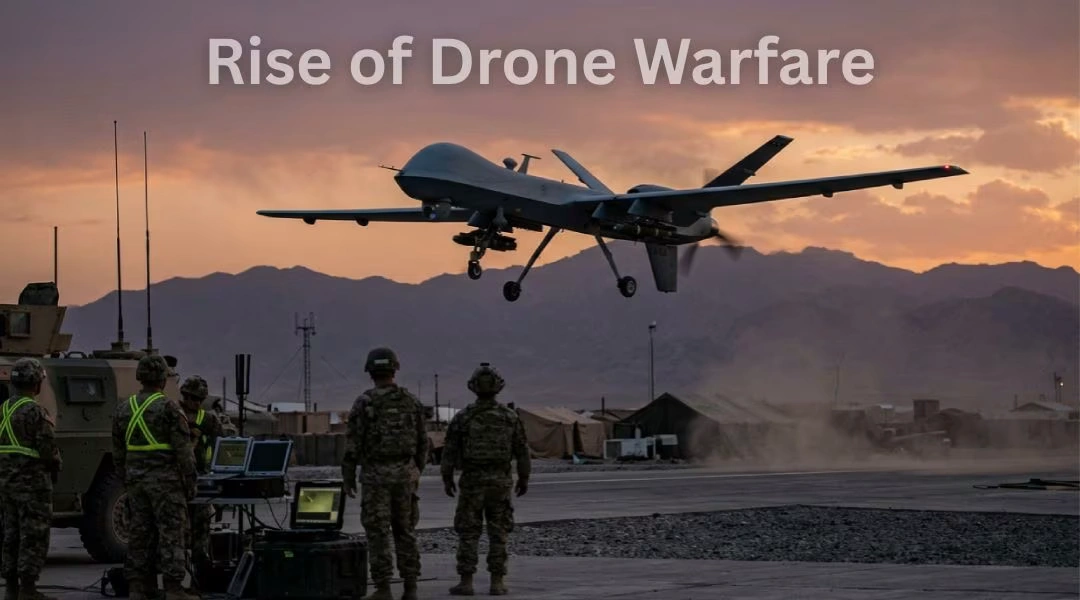
Drones in Modern Warfare
Drones have become an essential part of modern warfare as they attack the enemy territory without putting human lives at direct risk. They are widely used in surveillance, helping the military monitor the movement of the enemy army. Armed drones are also used for targeted strikes, allowing precise attacks with minimum collateral damage.
Even in the recent Iran, Israel, and US war, drones played a major role, with Iran using a large amount of low-cost “kamikaze drones” to attack US bases, Israel, and other allied countries.
At the same time, Israel has used drones for covert operations, including smuggling and launching drones from inside Iran to destroy air defences.
Overall, this war clearly stated that drones have become an essential war element. Used for various reasons such as surveillance, attack, and even protection of one's own territory. Their low cost and precision make them one of the most important weapons in today’s warfare.
When Ethics Meet Technology
The physical and psychological distance between the drone operator and the target reduces the direct risk to the operator but makes the war feel more detached. This raises concerns about accountability and morality as decisions are made on a screen rather than on the real battlefield.
The use of drones for surveillance also raises several privacy-related questions. The ethical question arises of whether the surveillance of civilians without their consent is legal, with convincing arguments from both parties making this a difficult decision to conclude upon.
In addition to privacy, doubts regarding civilian safety are also there. While drones are considered to be very precise, mishaps can happen from anywhere, causing irreversible damage to the life and property of innocent people and animals. The ethical use of drones in warfare is a complex and layered issue, making them one of the most controversial weapons of modern warfare.
How Are Drones along with AI transforming Combat
Artificial intelligence is increasingly becoming an important factor in modern military warfare, especially in regions affected by the ongoing Middle Eastern war. The integration of AI into drones and surveillance cameras is changing how quick decisions are made and actions are being taken. Iran’s evolving UAV system is a prime example of this change.
Historically, war decisions involved human intervention and decision-making at each stage, with proper coordination and approval required before taking any action. Modern AI has allowed drones to capture and process information without the role of any human operators. This shift is contributing to a faster pace where decisions and actions can be taken in response to threats far more rapidly.
Iran’s drone program successfully showcased how instead of investing in costly, heavy weapons, investing in drones, which are lightweight and produced in bulk, can be beneficial during times of war where quick actions and responses are required.
The Future of AI Driven Warfare
The growing role of artificial intelligence in drones, surveillance systems, and missile technologies suggests that future conflicts will rely heavily on autonomous and semi-autonomous modes of destruction. Another trend that can be seen is drone swarms. Large number of small, coordinated drones that can communicate with each other to track targets simultaneously. These swarms can confuse even advanced systems, making them cost-effective and a necessary investment.